
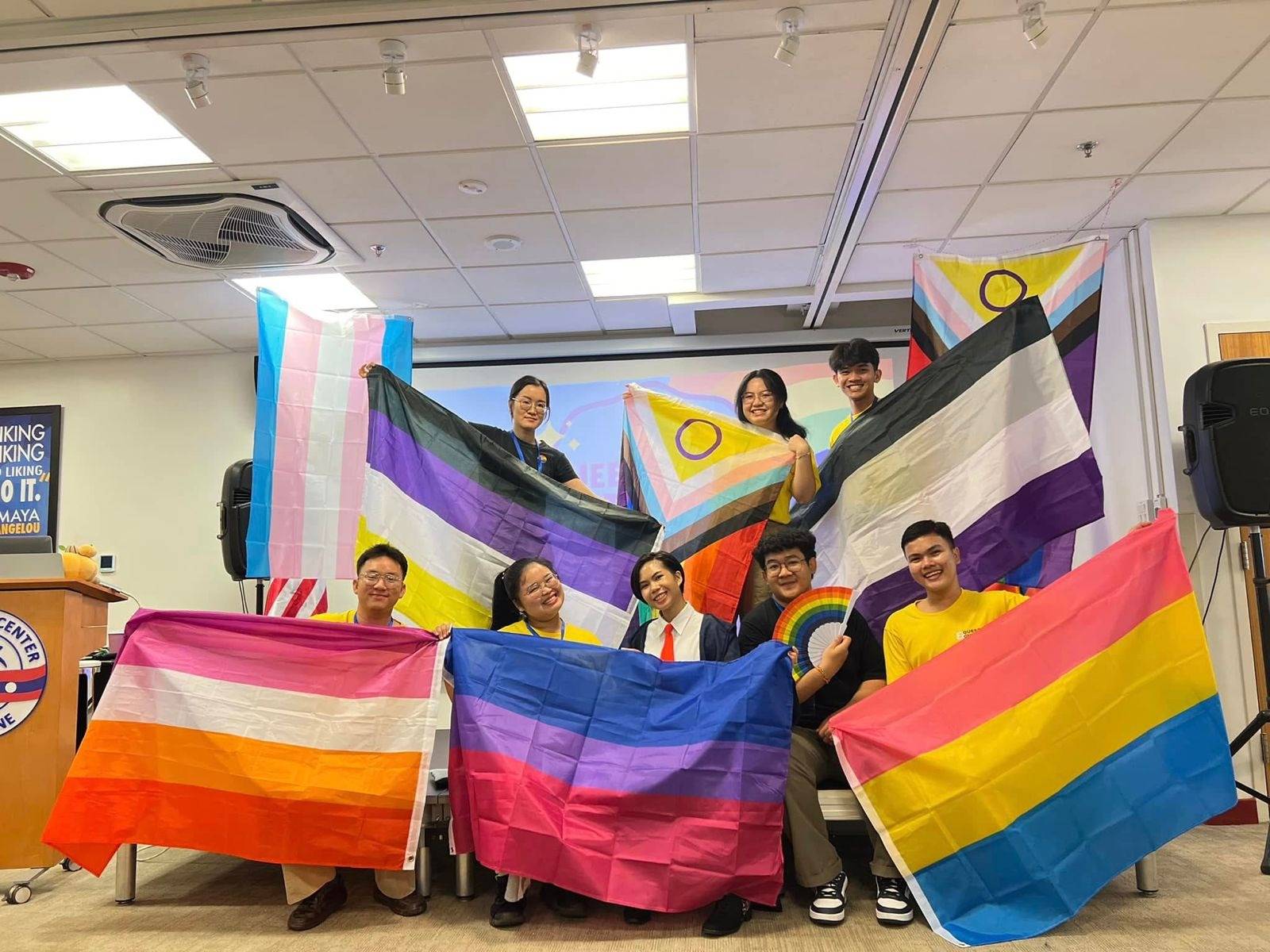
Vientiane — It’s Friday night. A young transgender woman has just finished her 8-to-5 shift at a bank and is heading home to start her “other life.” The life where she gets to be her true self.
She sheds the slacks, button-down shirt, blazer, and the formal shoes worn by every bank teller, and she begins her two-to-three hour night-out routine. She applies makeup, puts on a long-haired wig, and picks out a purple blouse and a blue skirt. Finally, she’s ready. She’s off to a birthday party at one of the local bars in town.
Because she works at a bank, she asked to be identified only by her nickname, Jay, fearing she might risk her job if her identity were public.
Actually, society in Laos’s capital is quite open when it comes to gender fluidity and diversity. It’s not unusual to see biological women dressing in men’s clothes, or biological men wearing makeup and nail polish to the office every day. While same-sex marriage and gender fluidity are not technically codified in Laos’s law, you won’t see many people blink twice at gay or lesbian couples out on the streets, and many more people are accepted to express themselves in public spaces.
You’ll even find transgender people working as tour guides quite often.
Accepted by society, invisible under the law
For Thavadxai Xaiyakoumman, 36, project officer at the LGBTQ+ organization Proud to Be Us Laos, being a transgender woman has never really been an issue.
Being part of a diverse sexual orientation and gender identity community is deeply accepted in Laos society.
“In here we are not divided or abuse each other,” she said. “I can firmly say that being LGBTQ or transgender in Laos and our neighbouring country has been the best.”
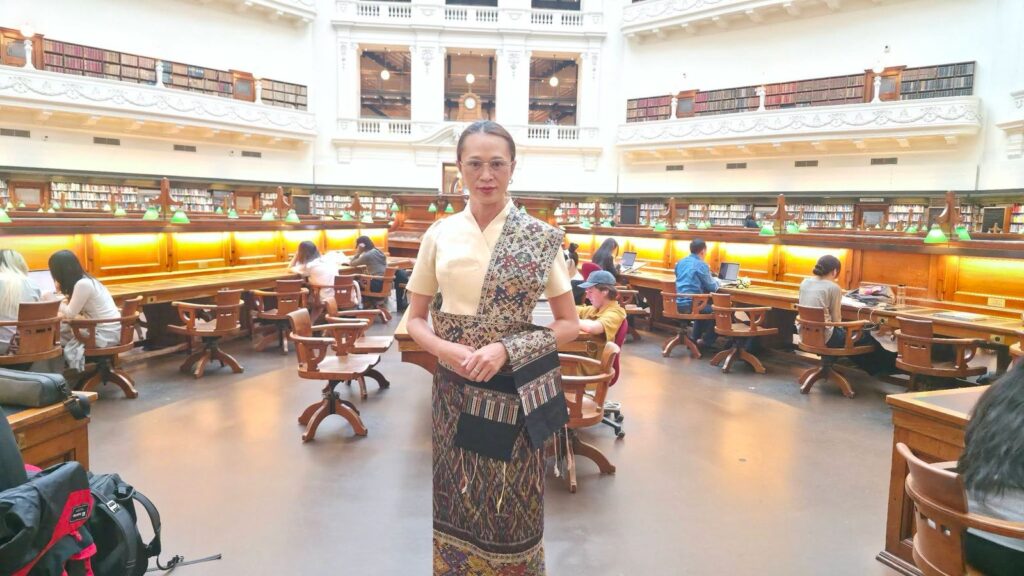
While she noted that being transgender, especially as a transwoman, comes with unique hurdles, particularly regarding appearance, self-expression, and professional opportunities, she feels that people in Laos are largely eager to reach mutual understanding.
“We cannot expect society to understand us, expect a workplace to understand us,” she explained. “We have to understand other people, understand our workplace and their rules, their culture. So that we can fully adapt and blend into each other.”
Thavadxai Xaiyakoumman said attitudes in Laos are generally relaxed and that most people are accepting as long as individuals do not try to impose their lifestyle on others.
“As long as you’re not forcing anyone to be like you or change their way of living, everybody is fine,” she said. “Maybe they’d look at you on the streets, but that’s it mostly.”
However, her experience is largely shaped by life in Vientiane, where exposure to different lifestyles and identities is generally greater compared to the rest of the country. Attitudes can be different in rural areas and smaller communities, where social expectations tend to be more conservative and LGBTQ+ individuals may face greater pressure to conform to traditional norms.
Still, in Vientiane, she has seen positive shifts especially in the private sector, which are now more inclusive, often using “All gender/All age” in job requirements, rather than requiring candidates to select “male” or “female.”
On a personal level, Thavadxai Xaiyakoumman feels fortunate to have grown up in a supportive environment.
“My parents have never ever said something insulting to me. … They treat me normally. That created my social protection,” she shared.
When she has faced bullying, she has used those experiences as fuel for her ambition to create positive change.
“As a transgender person I want to prove to them that I am competent and capable of standing at a point where I can make a greater change to society.”
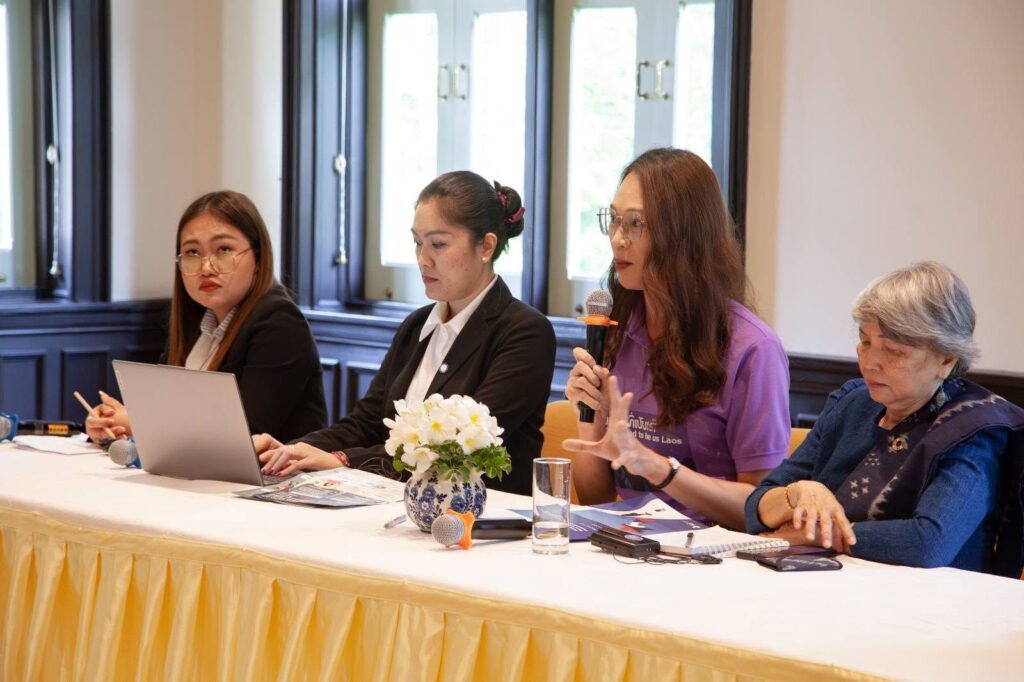
Looking ahead, she hoped for better systemic support, such as dedicated health benefits for transgender individuals, including specialized healthcare like hormone therapy and mental health support that integrated gender-fluid perspectives.
“I would like to have benefits for LGBTQ,” she said, noting the need for support during gender-affirming surgeries. “But I didn’t set my expectations that high because right now it is enough.”
Still, even though people are used to seeing gender fluidity and same-sex couples, the country’s laws and social protections are lagging far behind the culture.
“We need protection. That’s the main thing,” she said. “That’s what we’re all hoping for in the future.”
Growing up queer in Laos
Sadavout “Saiy” Souliyong, 21, also aspires for greater social protections for gender expression nationwide, as he pursues International Relations studies at the National University of Laos. When it comes to the queer community, he said, “I’ve been interested in this kind of area since I was in middle school, but you know, in Laos there’s a lot of censorship.”
In the constitution, there are only two genders recognized, male and female, so other genders don’t exist in the eyes of the law.
“We do not have anything, whether it’s like a policy, we do not have the rule, we do not have the law or anything that could protect us or support our rights,” he said.
While he felt that Laos society was aware and accepting, he was concerned that without policies enshrined in the law, the queer community still could face risks in the future.
“We all have the awareness, but if we lack the policies, if we lack the protections under the law, how can anything protect us? When something happens, we cannot run to the police, we cannot run to the government and need them to protect us.”
Saiy said this motivates his studies, and he hoped to help shape policies that ensured LGBTQ+ people were protected under the law.
“Everyone deserves equal rights and legal safeguards,” he said.
Saiy mentioned that since he was young, he was often confused. Every year, kids go through that stage of questioning, wondering, “is this a sin or whatever?”
“I think I’m quite lucky because I like to read,” he said. “I read a lot and I like to listen to people who come from different places of background, so I read a lot and I was wondering what I am, so there’s something that I could learn when I was young. Another thing I like to learn about is politics, so I read a lot from outside of Laos because there’s a lot of censorship so I cannot read anything that much.”
Most of his reading comes from Thailand, which has broadened his understanding of how the LGBTQ+ community can start to have protections under the law.
Thailand became the first and currently only ASEAN member state to legalize same-sex marriage when its Marriage Equality Act took effect in January 2025. The law not only grants same-sex couples the same legal rights as heterosexual couples but also amended the country’s Civil and Commercial Code to use gender-neutral language.
The new regulations include inheritance, adoption, property ownership, medical decision-making and other family-related protections.
The legislation was the result of years of advocacy in the country. A key milestone was reached in 2015 with the adoption of Thailand’s Gender Equality Act, which prohibits unfair discrimination based on gender. That act explicitly defines unfair gender discrimination as inclusive of male or female or of a different appearance from his or her own sex by birth.
The law is considered one of the most significant gender-equality measures enacted in Southeast Asia and established a legal framework for addressing discrimination against people based on gender identity and expression.
For Hua Boonyapisomparn, program officer at the International Trans Fund Thailand, the country’s reforms show both the importance, and the limits, of legal change.
“Marriage equality has been widely recognized as a major step forward,” Hua Boonyapisomparn said. “It has helped affirm that LGBTQ+ people should be able to form families, access legal protections, and live with dignity under the law.”
But legal recognition, Hua Boonyapisomparn believed, was only one piece of the puzzle.
“Marriage equality does not automatically protect every aspect of LGBTQ+ people’s lives, especially for transgender people,” Hua said. “Legal gender recognition remains one of the core unresolved issues. Without the ability to change legal name titles and gender markers in accordance with one’s gender identity, many trans people continue to face discrimination.”
Thailand has continued to introduce reforms beyond marriage equality, including adopting a Trans Well-Being Charter and expanding access to gender-affirming hormone care through its Universal Coverage Scheme. Even so, Hua Boonyapisomparn noted that access remained uneven and politically contested.
“It shows that social understanding and political commitment are still needed to ensure that rights on paper translate into real access and protection in daily life,” Hua Boonyapisomparn said.
For Hua Boonyapisomparn, Thailand’s experience also offered lessons for other countries because lasting change depended on involving the communities most affected.
“One of the key factors [to change in Thailand] was the strong and long-term partnership between civil society and government institutions,” Hua Boonyapisomparn said. “LGBTQ+ organizations, human rights advocates, academics, health professionals and policymakers worked together over many years to build public understanding and push legal reform forward.”
Equally important, Hua Boonyapisomparn said, was ensuring LGBTQ+ people were leading those conversations themselves.
“Nothing about us without us,” Hua Boonyapisomparn said. “LGBTQ+ people were not only beneficiaries of reform, but active leaders in shaping the agenda and engaging directly with lawmakers and the public.”
For Laos, where no legal recognition currently exists for same-sex relationships or gender identity, Hua Boonyapisomparn believed the first step did not necessarily begin with legislation.
“A realistic first step would be to create safe and meaningful spaces for dialogue, led by LGBTQ+ people themselves,” Hua Boonyapisomparn said. “Before legal reform can move forward, rights holders need opportunities to share their lived experiences, explain the discrimination they face, and express what kinds of protection they actually need.”
“Legal protection should not be designed only from the top down. It should be grounded in the voices, needs and leadership of the communities most affected.”
Laos’s legal reforms so far have not reached queer communities, but the country has issued laws introducing gender equality and women’s empowerment.
The country has adopted laws and policies aimed at promoting equal opportunities for women and strengthening their participation in economic, social and political life. The 2004 Law on the Development and Protection of Women, for example, promotes gender equality and equal opportunities.
Yet, there have been no major publicly reported legislative efforts to legalize same-sex marriage or civil partnerships in Laos. Current family law defines marriage as a union between a man and a woman, and legal recognition of same-sex relationships remains absent.
Keeping up the community
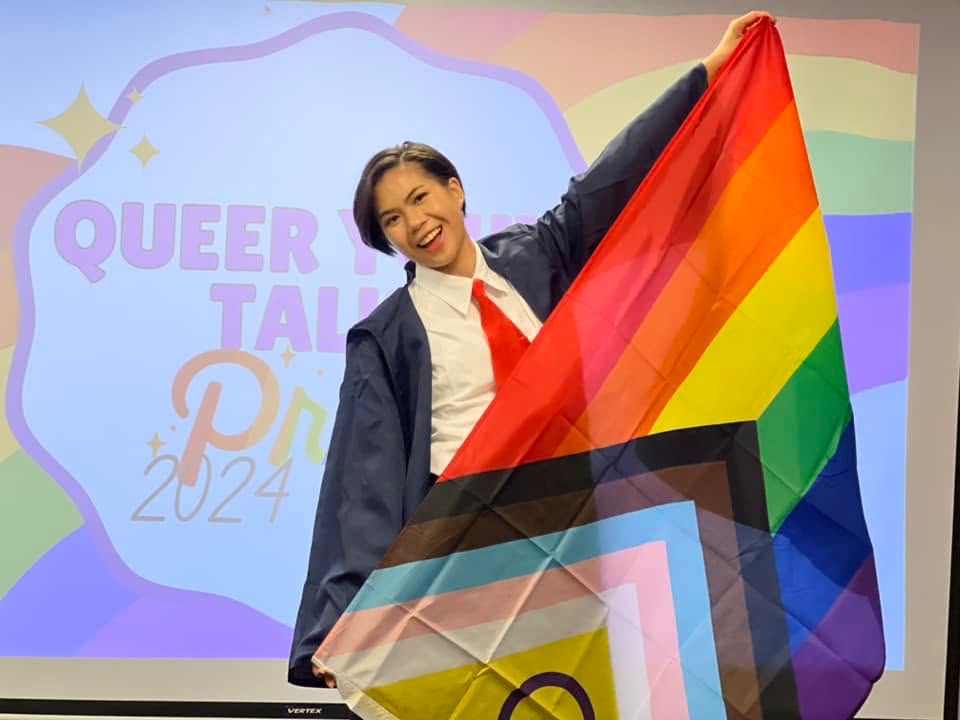
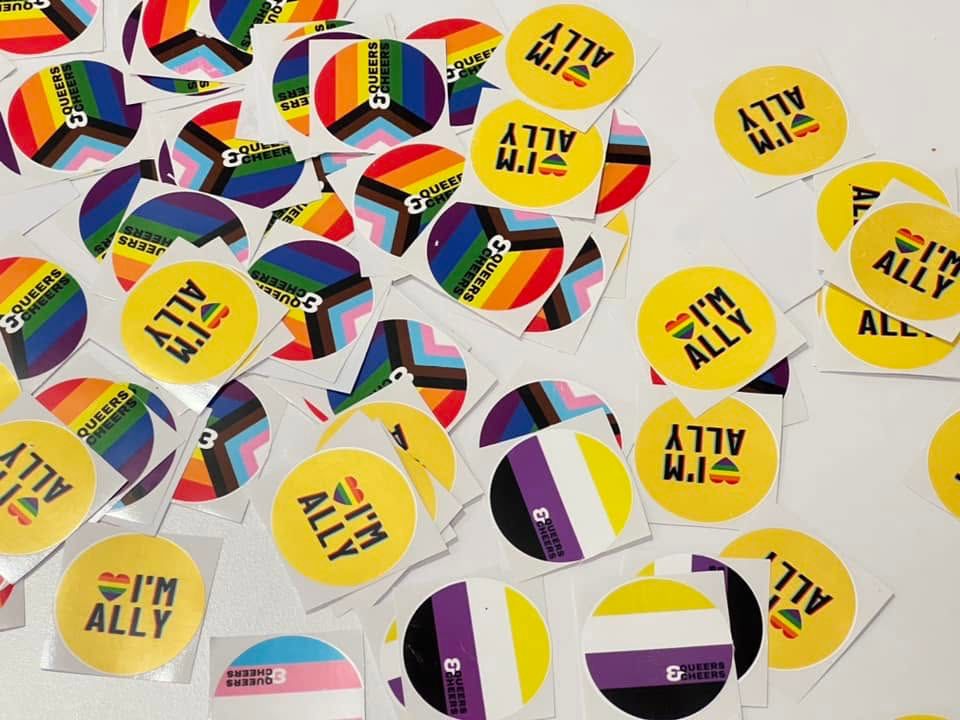
When Saiy got to high school, he had a chance to join a youth-led community group called “Queers & Cheers.” It felt like a family, a true community, he said.
“And all of us are young. We come back together because we have this thing, we have common interests in queer community in Laos.”
The group focuses on spreading awareness and strengthening the skills of local youth, mostly through workshops. They’ve organized sessions on topics like queer representation in media, and they collaborate with regional youth groups in Thailand, Cambodia and Indonesia to expand their networks. Saiy has been doing this work for five years.
However, a lot of the funding came from USAID, and after 2024, those funds were cut, leaving the community struggling to survive. While there are other options for grants, Saiy noted the difficulty in meeting strict requirements. Some organizations demand a full-time position, but since they are all students, they can’t quit their education to meet those demands.
During LGBTQ+ Pride Month in June, Vientiane celebrated with a few events across the city, mostly panels, meetups and other community building events organized by the U.N. or gender-inclusive organizations in Laos.
They gave people a chance to meet others from the community, share their experiences, talk about challenges they face, and learn about available support and resources.
While acceptance and visibility have improved in recent years, much of the community still organizes through social media, informal networks and small community events rather than large public campaigns.
When asked about gender differences in Laos and whether the environment is open, Saiy said, “it’s more open now, compared to before. When I was in middle school, when I was younger, there was nothing much about information in this area. There’s a lot of discrimination, there’s a lot of bullying, there’s a lot of homophobic or transphobic [people].”
While he saw a positive shift overall, he also noted that popular culture could often spread misinformation.
“So it’s about, they always have the perspective of gay couple, that one has to be the role of a husband and one has to be the role of a wife,” he said. “They always believe in the terms of husband and wife, but we are not like a straight couple. Yeah, so it doesn’t work like that.”
Young people may change their perspective through their consumption of media, but they are also still confined by school, an institution that is slower to adapt.
“In terms of school, I don’t see anything that has changed that much. Since I was in high school, a lot of my trans friends have wanted to express themselves through their clothes, but in [the school’s] law, we have a uniform.”
In public schools, everyone has to follow strict dress codes: boys need short hair, and girls have to wear skirts and keep their hair long. For many, it feels like “living in a cage.”
But in international schools, students have more freedom to express themselves, and the teachers tend to be more accepting.
Saiy believed the gap was also about privilege. To him, it reflected a wider divide in society. He said international schools were mostly attended by foreigners or by children from families who had connections with foreigners.
He saw it as a privilege to have access to opportunities and resources that many public school students did not. “People from elite families simply have more money,” he said.
Saiy recalled that his middle school lacked even basic facilities, making it hard to expect they had the capacity to adopt more open perspectives.
“We didn’t even have a ceiling,” he said. “I grew up in Vientiane, the capital, but my school was still in very poor condition. We only had walls and a blackboard,” he laughed. “There was no ceiling.”
However, things change a little once students get to university. There’s still a uniform, but students have more flexibility to choose the style that fits them best and express themselves more freely.
The health system, too, remains far behind. According to Saiy, it affects the trans community, especially youth, who receive a lot of misinformation about DIY hormone therapy. There aren’t enough clinics for gender-affirming care, so it’s dangerous for them to do it on their own due to the lack of local support. Many end up going to Thailand for treatment if they can afford it.
Ultimately, everyone interviewed feels relatively safe within Vientiane and Laos as a whole. Saiy said, “Society is queer friendly … they do understand that if you are a trans, you are a trans. They do not just go on the street and beat you.”
“You can be whatever you are but the thing that we lack is the policy or the law that protects us in terms of our rights, in terms of our health or in other related fields. So it’s pretty safe here,” he said.
“We do exist.”
This article’s text is published as Creative Commons. The photos are supplied and thus not to be reused or redistributed.