
Kampong Tralach district, Kampong Chhnang province, Cambodia — Chea Phally was the oldest daughter in her family at 43, and she carried her role with pride. She decided not to get married to better help her family at home, they said in June, while sewing at Can Sports Shoes factory to contribute to the income.
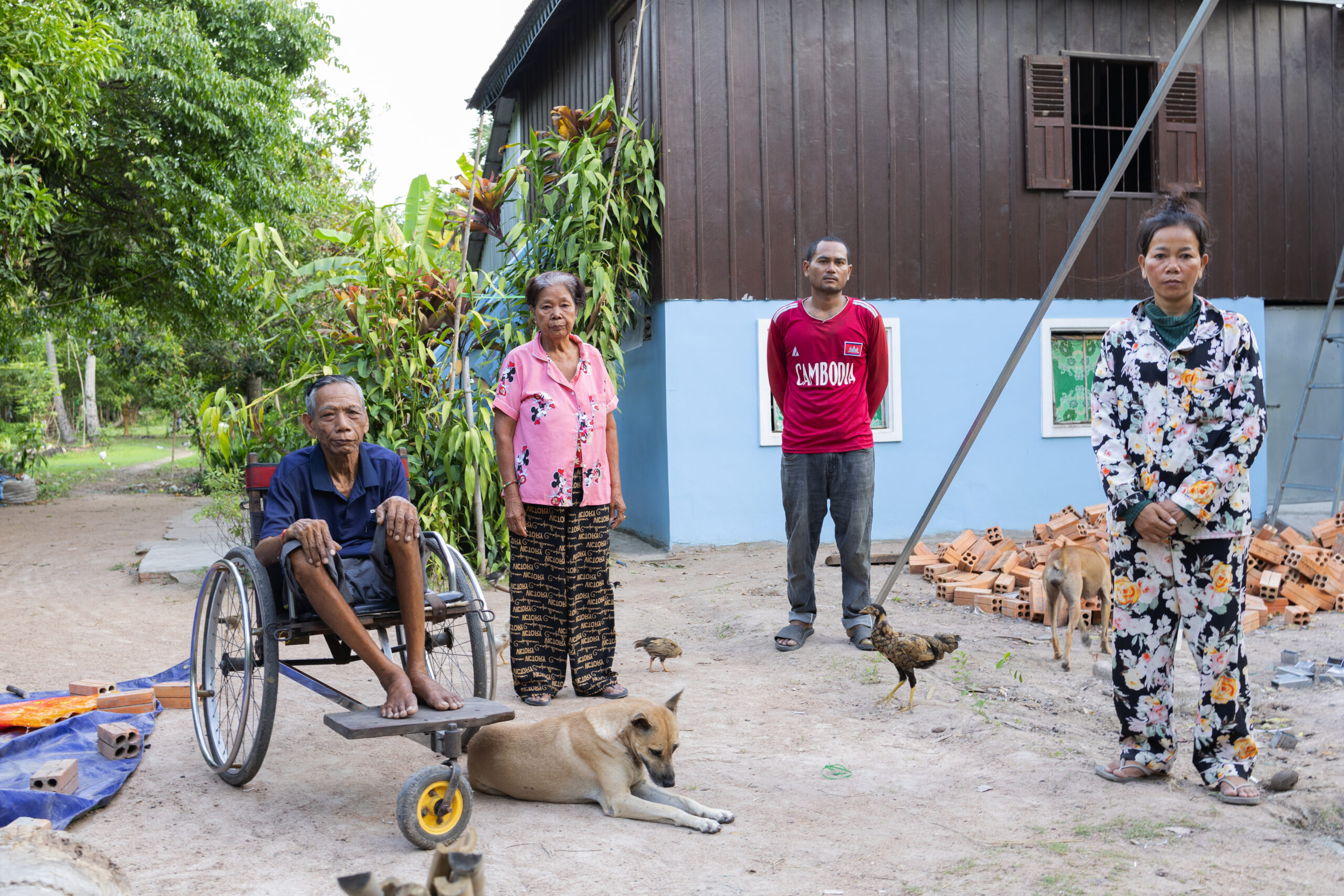
“She worked at the garment factory, she worked as a farmer, and she grew the plants around the house,” Chea Vanny, 72, said, gesturing to the canopy and lush rows of vegetables growing around the family home in Kralanh village. “She is my special daughter because my other children can’t compare to her.”
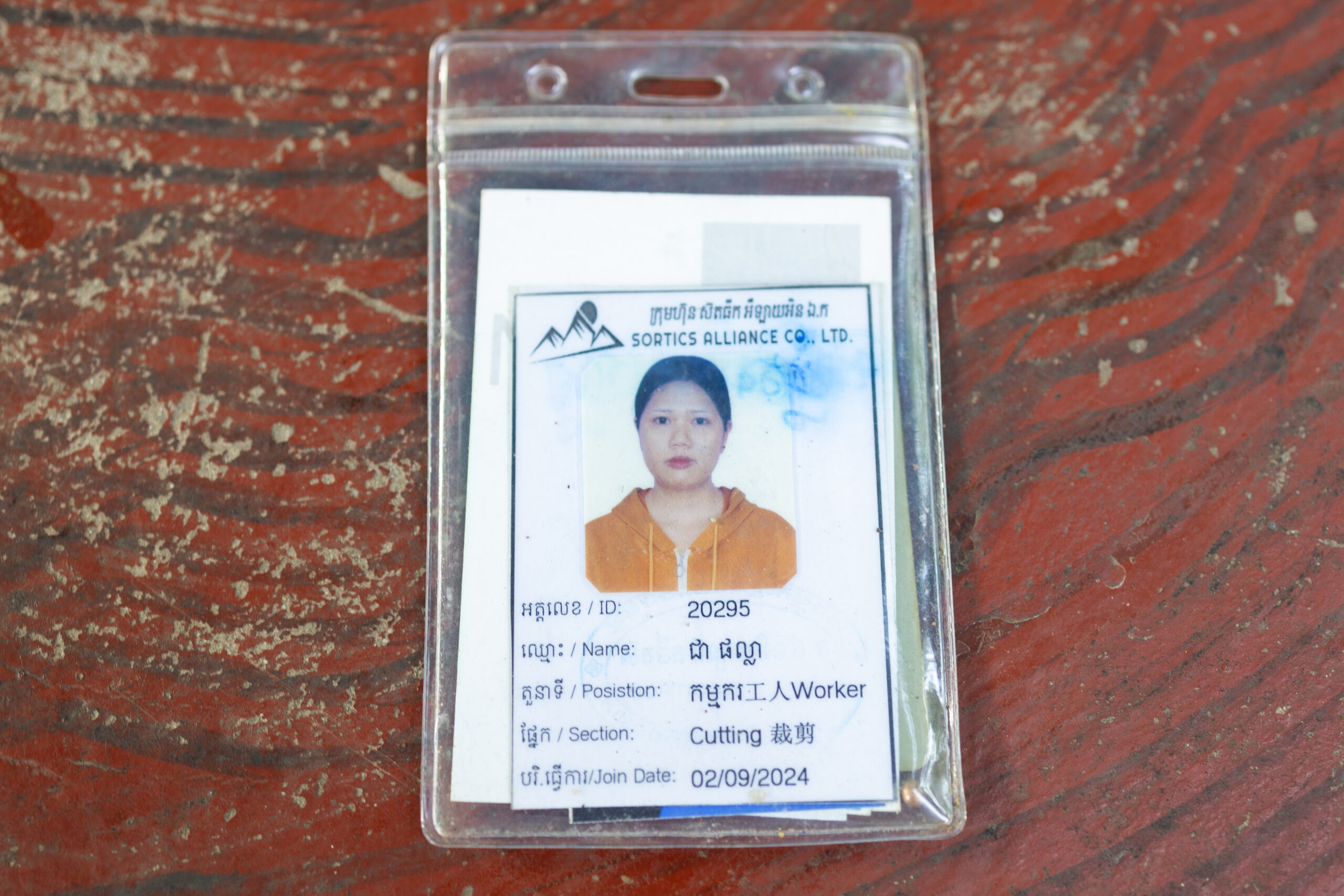
Chea Phally rode to work daily with her younger sister Chea Phalla, 33, a worker at nearby Sortics Alliance, both bringing home wages to support their mother and father, who lost his ability to walk in an accident 17 years before. Both women worked hard, almost never went out, their family recalled, coming home diligently each night to weave baskets for a little extra income. Neither daughter came home on May 23.
That morning, the family arrived at the scene of a road accident to find their oldest daughter already deceased, her head “under the tire” of the container truck that smashed into the open air garment truck. Lim Sokly, the husband of Chea Phalla, found his wife still alive on the concrete, next to one worker who appeared already deceased.
“She could only speak one sentence, ‘Bong please help me,’” Lim Sokly said.
So Lim Sokly picked up his wife to carry her through traffic to an ambulance. “I carried her, but when she arrived at the hospital she was already gone.”
The family of the sisters was tilling land for a new crop of vegetables when reporters visited on June 9. But their mother said this new season weighed down on her without two daughters at her side.
“It’s so much pain,” she said. “I can’t do anything. I can’t talk, can’t eat, and I can’t cry.”
“I lost my two beloved children. Imagine. The car comes and takes two bodies of my daughters.”
Hundreds, sometimes thousands, of workers are injured every year traveling to and from work, and some dozens die annually on the roads. On May 23, Cambodia was shocked by two fatal garment truck crashes on the same morning: one in Svay Rieng province that killed five workers, and a second in Kampong Chhnang, which killed nine people, including sisters Chea Phally and Chea Phalla.
Though the statistics are reported every year, and inch higher, garment sector observers say that unsafe commutes prevail, as the global garment industry squeezes ever more shoes, knitwear, handbags and other products out of Cambodian factories on tight margins.
Many of the workers who are injured or killed on Cambodia’s roads travel on their own motorbikes, but people also regularly get caught in road accidents in the private taxi services they take to and from work.
Workers get a benefit of roughly $7 a month to pay for their transport, one union leader observed, though sometimes they must in turn pay a higher fee: Kralanh village workers said they paid $10 per month to their driver.
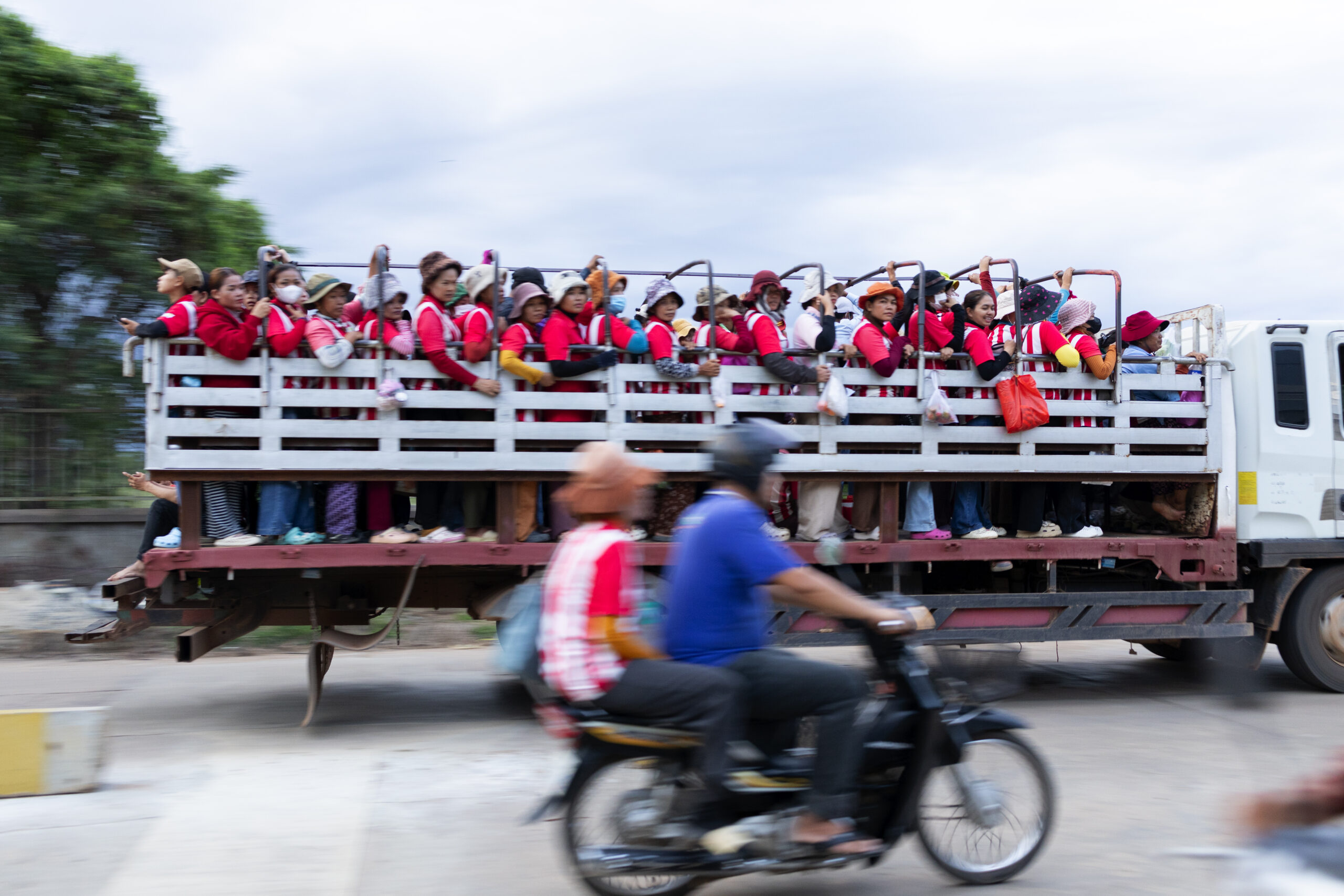
Many workers hire shared taxi services that pick up in their neighborhood and drop off at one or multiple factories; sometimes the shared vehicle is a bus, but often it’s the uncovered back of an industrial pickup truck, where most workers stand for the duration of the ride.
The workers who survived the crash in Kampong Chhnang say they commuted with a driver from their village who brought workers to work in one of the open-air trucks. The workers interviewed by Mekong Independent unanimously agreed that they did not believe their driver to be responsible for the crash, instead blaming the driver of a container truck that crashed into their vehicle. However, the surviving workers noticed that they had suffered severe injuries as a result of flying out of their truck and slamming into the pavement.
Cambodia’s Labor Ministry has said that they intend to replace the flatbed trucks for transport with buses by 2027, and Labor Ministry spokesperson Sun Mesa said they were making progress upgrading vehicles and educating all people in the sector about road safety.
However, labor advocates say the situation requires investment — an investment that can’t come from workers’ monthly salaries that start at $210 a month.
Waking up in a hospital
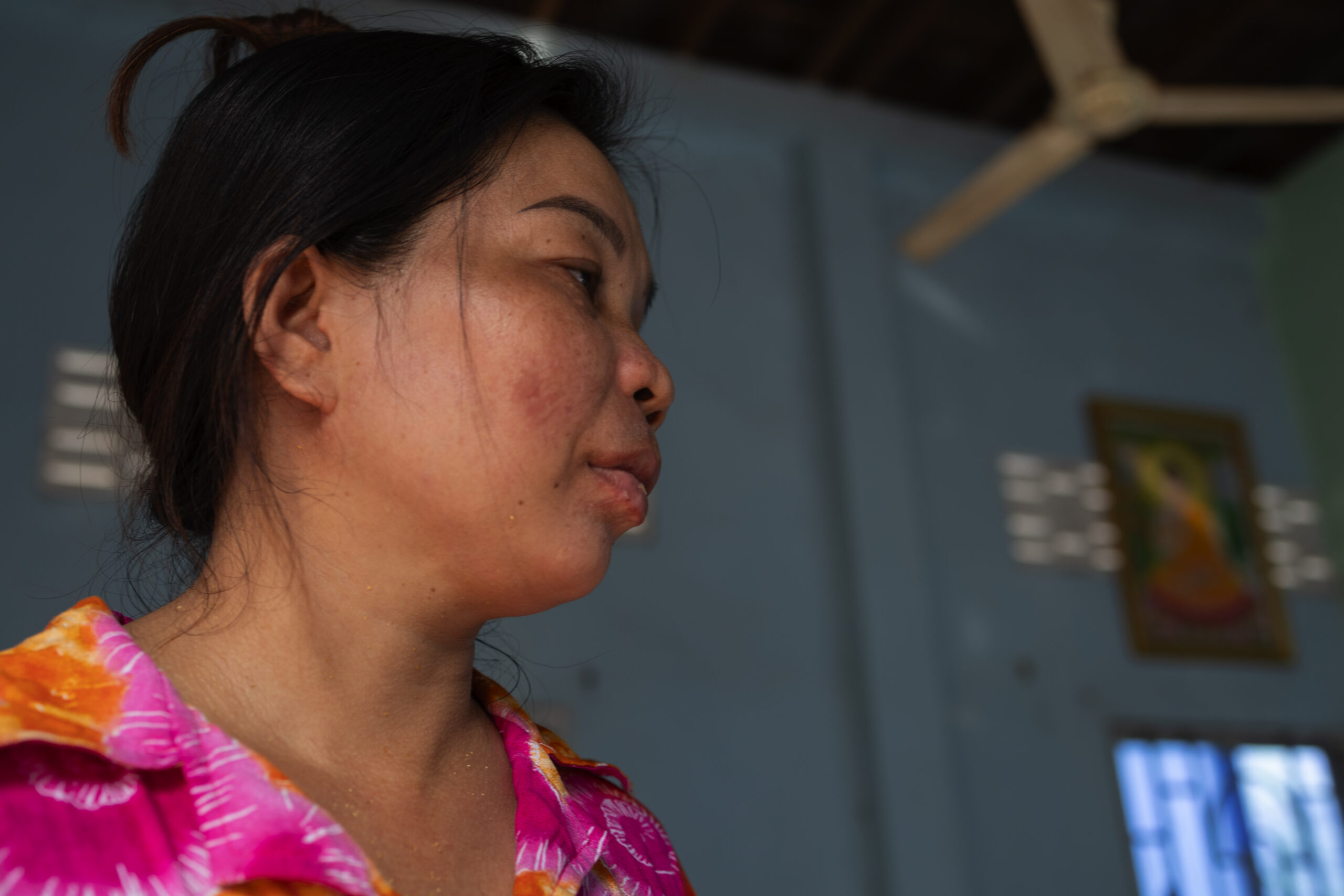
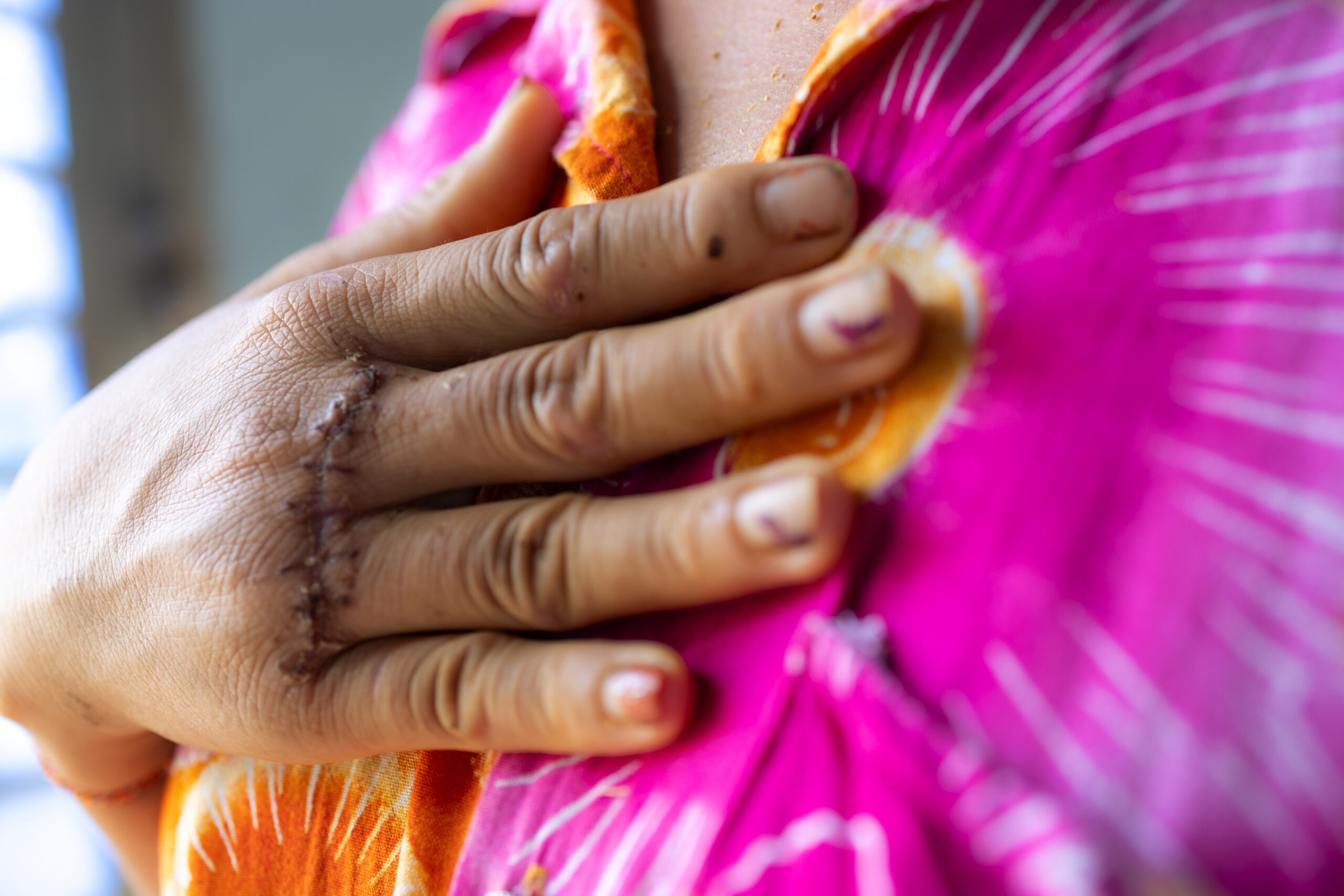
Srey Mom, 38, didn’t remember much from the ride on May 23 to her sewing job at Can Sports Shoes. She said they had maybe ridden for 15 or 20 minutes of her 30-minute commute, and then things went dark. She woke up in Calmette Hospital in Phnom Penh, her face swollen and bruised, a cut on the back of her right hand, and severe bruising.
“I just know it’s badly hit, it almost reached my kidneys,” she said from her home in Kralanh village.
Srey Mom said she didn’t have to pay for any of her multi-week stay in Calmette, as it was handled by the National Social Security Fund, Cambodia’s employment health system that garment factories and other employers are obligated to pay into. But Srey Mom is not sure how soon she’ll recover — and she needs it to be soon to pay her debts.
“My concern is for when I go back to work, I am afraid that I cannot work like normal because of my injury,” she said. “I am afraid that [Can Sports’ managers] will stop me from working for them.”
Khun Tharo, program manager for the labor rights NGO Central, said that his team had also confirmed that the NSSF was working to compensate workers and families of workers from the Kampong Chhnang and Svay Rieng traffic accidents. Families of workers who were killed received $1,250 to hold funerals, while the Labor Ministry provided $1,750 and factories were asked to contribute $500, according to Central’s data.
There have been a total of 10 worker transport vehicle crashes so far this year, said Labor Ministry spokesperson Sun Mesa in a message to Mekong Independent. He added that a total 14 workers had died in these crashes — so the only deaths occurred during the crashes on May 23, according to the ministry figures. He said this was an increase from the same period last year, when there were four accidents with a total 133 victims of injury or death.
Transitioning open trucks into safer vehicles was part of the ministry’s effort to reduce vehicular injuries and deaths, Sun Mesa said.
So far, the ministry upgraded 132 trucks this year, and Sun Mesa said they aimed to upgrade another 912 trucks by the end of the year. He didn’t specify how many would need to be upgraded to improve work transit safety nationwide, nor provide statistics about the upgrades they cna offer, but he said the ministry covered the costs.
“The costs of upgrading these vehicles are fully covered by the Ministry of Labour and Vocational Training, demonstrating the Royal Government’s commitment to improving worker safety and reducing the risks associated with daily commuting,” Sun Mesa said in a message.
Who do we blame?
Chea Malai, the middle daughter whose younger and older sisters died, just wanted her siblings back with her. She said an unnamed businessman, who rented a container truck to the driver accused of causing the fatal Kampong Chhnang accident, promised to compensate $50,000 per life lost.
“For this amount of money, I would pay it back if I could get my two sisters to come back,” Chea Malai said. “I can’t even eat prahok, I just want my sisters to come back.”
Chea Malai said most of the village wanted to see justice served to the container truck driver, who she believed had run away without facing punishment.
The victims of the crash notice that this has been a trend: accidents on the national roads, injuries and casualties, and then life resumes. After reporters spoke to workers who were injured in Kampong Chhnang, they drove past Can Sports Shoes’ entrance, finding some buses but mostly rows of open-air trucks waiting to pick up workers after their shift, looking just like the vehicle smashed on National Road 5.
The trucks have improved somewhat since Touch Seur was working in a Phnom Penh garment factory in 1997. She remembers cramming 15 workers into a van, which was old for its time, to get to and from her factory. “Right now, it’s much better,” said Touch Seur, now the president of the Free Trade Union of Workers.
Touch Seur noted that different provinces’ factories had different levels of adaptation: People in Svay Rieng or Kandal were more likely to catch a bus or use personal motorbikes to get to work, while roughly 70% of workers in Kampong Chhnang, Kampong Speu and Takeo were taking open air trucks, often called “Korean cars” because the iconic blue and white industrial pickup trucks are usually made by Korean car maker Hyundai.
“To compare observations, I notice for the Korean car, when it crashes, people will die, but in other times with the bus, it crashes but people don’t die,” she said.
Replacing every “Korean car” with buses is not a quick fix either, Touch Seur observed. She said that most drivers are just private citizens in the village with a taxi business, so they don’t have the investment to replace their vehicles.
Similarly it’d be a challenge to hold the factories themselves responsible for garment worker transport alone.
“The bosses at the companies don’t have the contract with the bus, and [vehicles] take many people who are from different factories, so how could they be responsible for that?”
Sun Mesa, of the Labor Ministry, also described the economics of replacing vehicles as a challenge.
“Some transport operators have been reluctant to upgrade their vehicles because after upgrading their vehicles, some operators have experienced reduced passenger capacity, which may affect their income if transportation fees are not adjusted accordingly,” he said in a message. “Some operators have limited financial capacity to replace or convert their existing vehicles into safer passenger transport vehicles.”
He added that this was an issue that all stakeholders needed to be working toward.
Touch Seur said that international brands, who were placing their orders with Cambodian factories, should be taking more notice and investing in their workers.
Based on media reports. Links on dates.
Click the table above to expand.
Mekong Independent contacted factories and brands where workers were affected during the May 23 crash in Kampong Chhnang province via email contacts. So far, only one brand — Adidas, which has manufacturing at Can Sports Shoes — responded. Stefan Pursche, spokesperson for Adidas, said that the brand was “deeply saddened” by the Kampong Chhnang accident and was looking into potential solutions, without specifying what actions the brand would take.
Yet Yut You, an officer at the Free Trade Union, said he believed it wouldn’t take much more than restructuring the use of benefits that factories already give out, shifting workers’ monthly transportation benefit stipend to purchasing and maintaining buses for different routes.
This is not just about avoiding road fatalities, Yet Yut You said, but a way to protect the health and sustainable development of workers, who often stand for one or two hours daily on their commutes to the factory.
“We should transform the culture of transportation in Cambodia,” he told Mekong Independent. “The country should take action in order to have the workers have comfortable transportation because related to the life of people, if you stand in the uncomfortable car, one day you will die [sooner], and then who will respond for your family, your children.”
Khun Tharo, of Central, said he had seen the issue raised any time there was a substantial road accident — people make reports, organizations create working groups, but there is no “systemic or positive change,” he said. It’s “just a matter of time before there is another incident,” Khun Tharo said.
“Brands failing in their due diligence, have neglected to address glaring safety concerns despite decades of evidence.”
The debts cut deeper
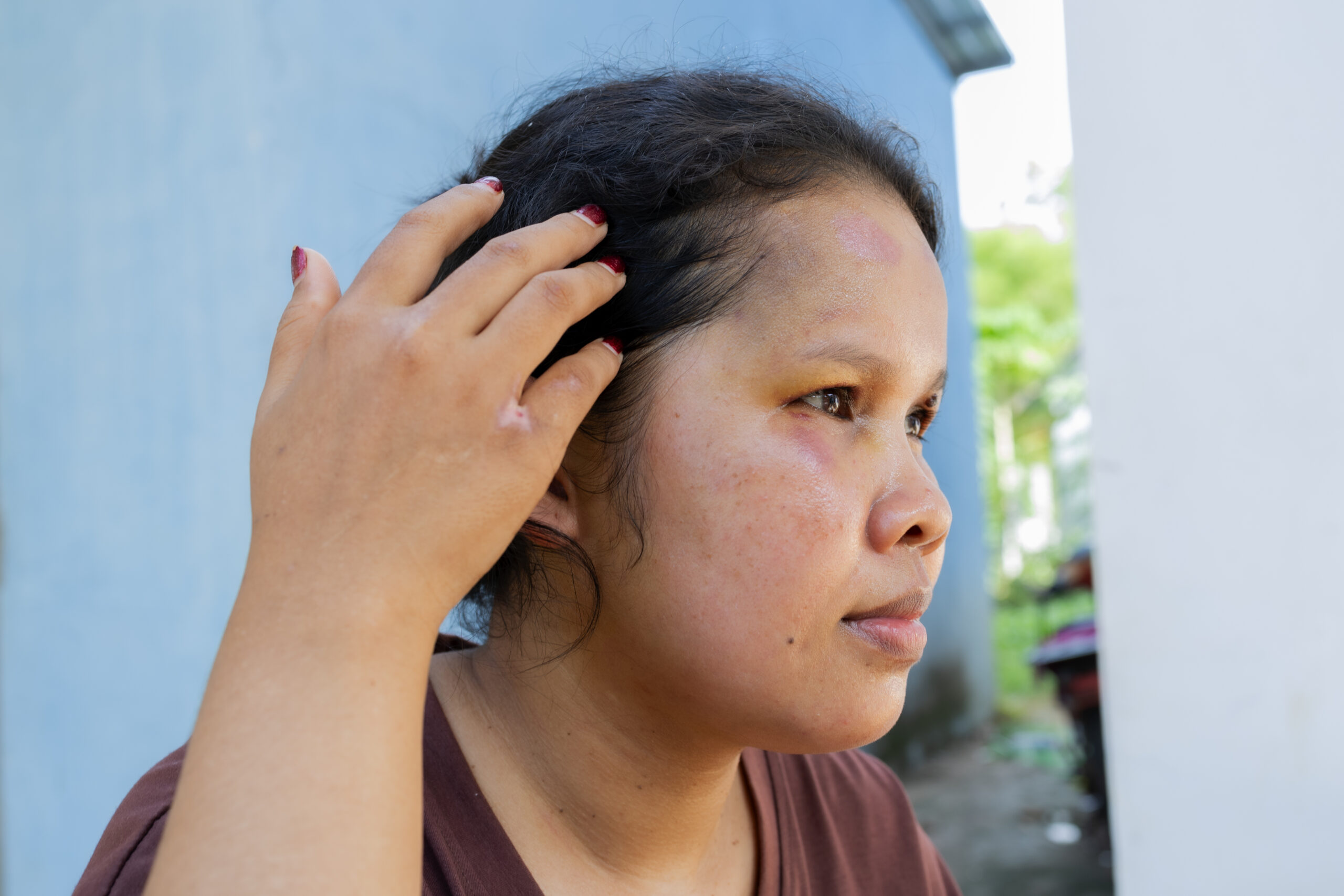
A week after she spoke to reporters, Chea Chen, 34, said she went back to working for six days a week, arriving at 8 a.m. and leaving TFG Garment at 4 p.m.
When she spoke to reporters on June 9, she said that half of her head was still numb from the accident, as was her left side of the body where she hit the concrete.
“When I get sick like this it means my husband has to take care of me, and he can’t go to work,” she told Mekong Independent. “We owe money to the bank.”
Chea Chen was happy that her health care at Calmette Hospital was covered by NSSF, but that didn’t cover the money that she still owes to Acleda Bank, nor the family’s weekly expenses. So she went back to TFG.
Pach Sem, 43, feels worried.
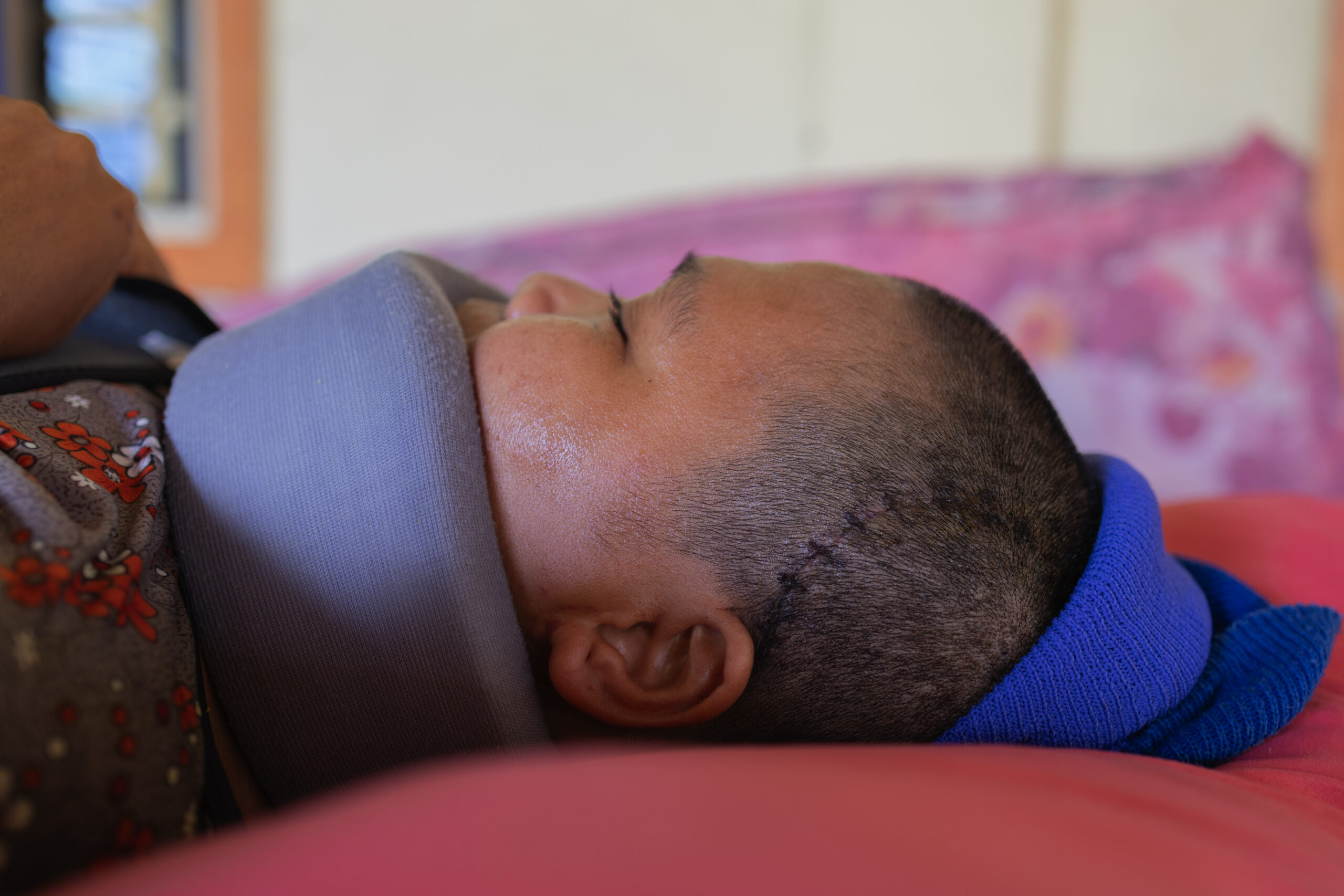
She survived the accident but came away with a huge cut where something pierced the left side of her skull. She agreed to speak to Mekong Independent where she was: laid on her back on a wooden daybed outside her home, wearing a neck brace and trying not to disturb the injured left side of her body.
Her husband Sin Ny lifted a woolen cap on her head, now shaved, to reveal more than a dozen stitches.
Pach Sem was hurt that the manager of Can Sports Shoes didn’t come to visit her, though her coworkers and their families came with small offerings of money.
“I cannot force them to come to visit me, it depends on their heart,” she said. “If they do want to come, they will come.”
But she too has microfinance debts, and she worried that she would not be able to work again, and even if she could sit up again soon, she wondered if she would be a desirable candidate anymore.
“I’m old, I don’t know how to write or read so I’m afraid no one will choose me to work,” she said.
“Because I need to support my children to go to school, but if I cannot recover, I don’t have the desire to go to work.”
Who are the traffic victims working for?
Chea Phally, Srey Mom and Pach Sem all work for Can Sports Shoes Co. Ltd. in Kampong Chhnang province, employing more than 11,000 workers according to data from the Textiles, Apparel, Footwear & Travel Goods Association in Cambodia. Their parent company is SPG Sportsgear, a Taiwanese firm that sold NTD 20.3 billion, or about US$640 million of product in 2025, with a net profit of almost US$54 million. They are a “tier 1” or primary supplier to German sportswear company Adidas, which reported “record revenues” of 24.8 billion euros (US$28.3 billion) last year while decreasing operating costs.
Adidas spokesperson Stefan Pursche was the only person to respond to reporters’ requests for comment. He wrote: “We are deeply saddened by the fatal traffic accidents that occurred in May of this year. We have been in contact with our supplier to ensure that support is provided beyond the legal requirements, for example, with regard to continued wage payments or other financial contributions. Furthermore, we have intensified our efforts with both the relevant authorities and our suppliers to identify and quickly implement measures to improve safety on the commute to work.”
He didn’t respond to a reporter’s request to clarify what “measures” Adidas would take by press time.
Representatives from Can Sports in Cambodia and SPG Sportswear in Taiwan did not respond by press time.
—
Chea Phalla was employed by Sortics Alliance, another Kampong Chhnang factory where nearly 500 workers stitch winter jackets, according to TAFTAC data. Sortics Alliance is a relatively new operation, approved for development in 2021, promising a US$5 million investment and to generate more than 1,000 jobs.
It was not immediately clear if Sortics Alliance had a parent company in Taiwan, its country of origin according to TAFTAC data, but Sortics was listed as a supplier for Norwegian outdoor clothes manufacturer Helly Hansen, German mountain gear company Vaude, and Finnish sports company Amer Sports. Amer Sports’ revenue was US$6.56 billion, Vaude earned 128 million euros (or US$145 million) in 2024, the latest data available, and Kontoor, the company that acquired Helly Hansen last year, reported that the Norwegian brand contributed US$475 million in revenue in seven months.
—
Chea Chen just went back to work at TFG (Cambodia) Garment, a Chinese factory with more than 7,000 workers according to TAFTAC. The association’s data also indicates the company is a subsidiary of Tak Fook International Trading, a private company in Hong Kong. TFG is a Tier 1 supplier to the children’s clothes brand Carter’s in North America.
Carter’s, who didn’t respond to a request for a comment, earned US$2.9 billion in net profit in 2025. TFG also did not respond.
—
Minimum wage in Cambodia’s garment sector in 2026 is $210 per month before benefits.
This article’s text is published as Creative Commons. For questions about licensing the photos, please contact Choulay.