
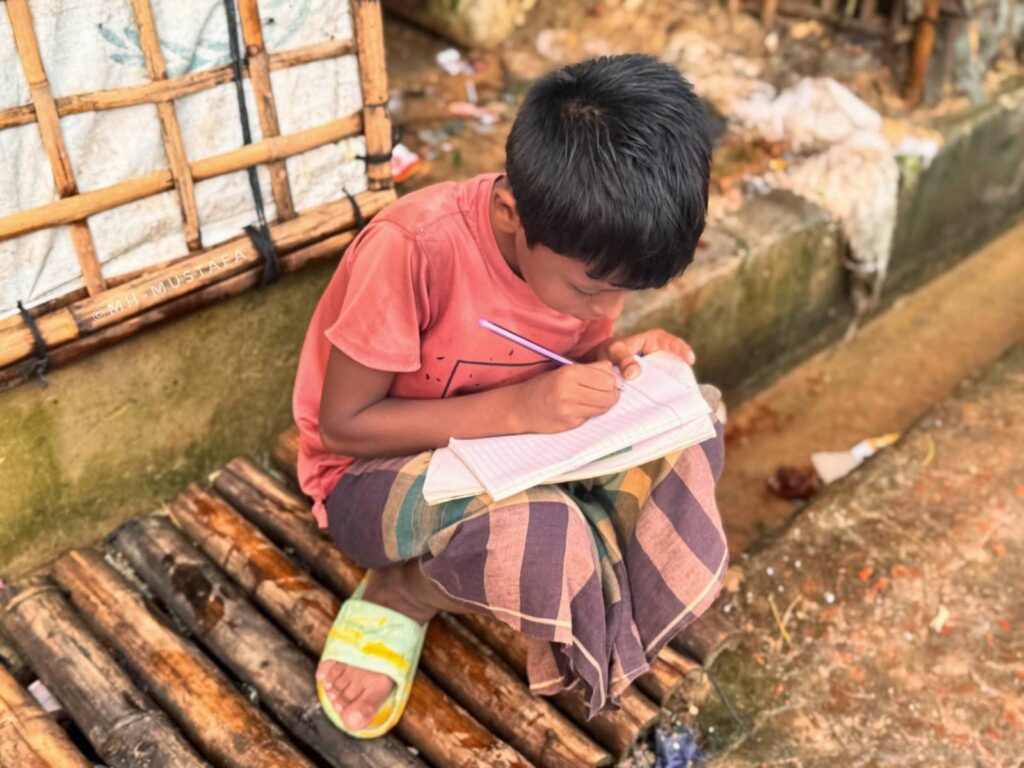
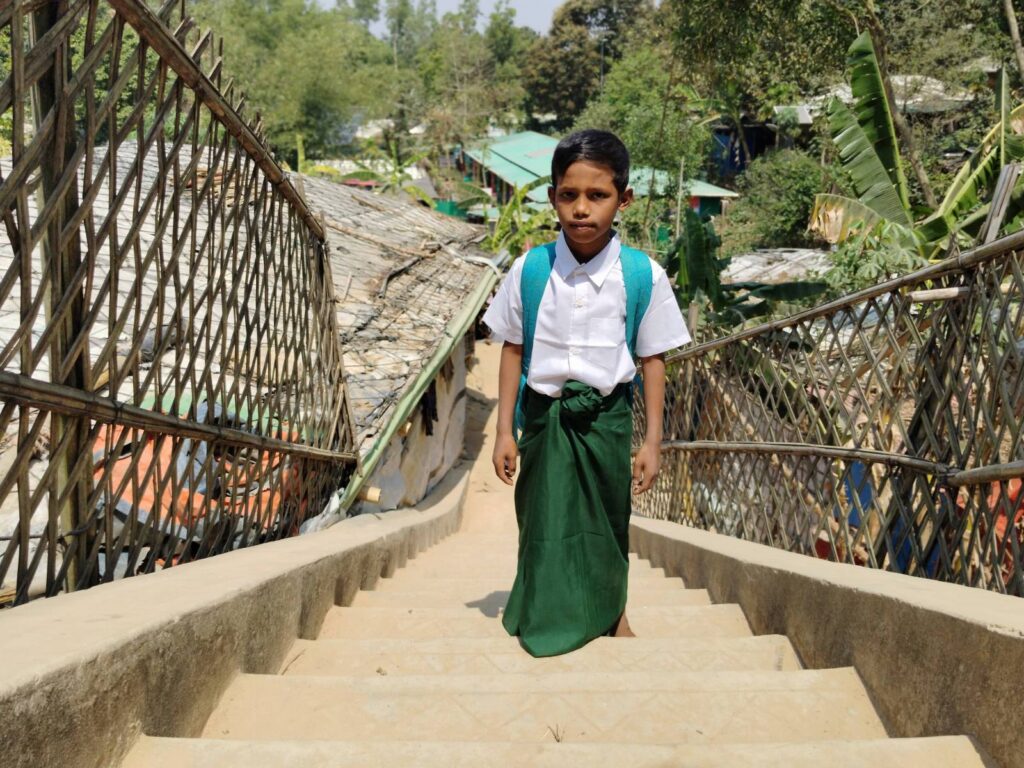
Waker Uddin, a Rohingya student living in Bangladesh’s largest refugee camp, entered grade six this year. But his textbooks and school bag, which is now torn and unusable, haven’t been replaced in two years. Like many other students, he does his best at school, but struggles to remember what he learned in class.
“I only bring my own exercise book and pen. I write what the teacher writes on the board, but when I go home, I have nothing to read,” the 13-year-old said from his home in Camp 14 of Cox’s Bazar. “I can’t remember many lessons because I can’t revise them at my shelter.”
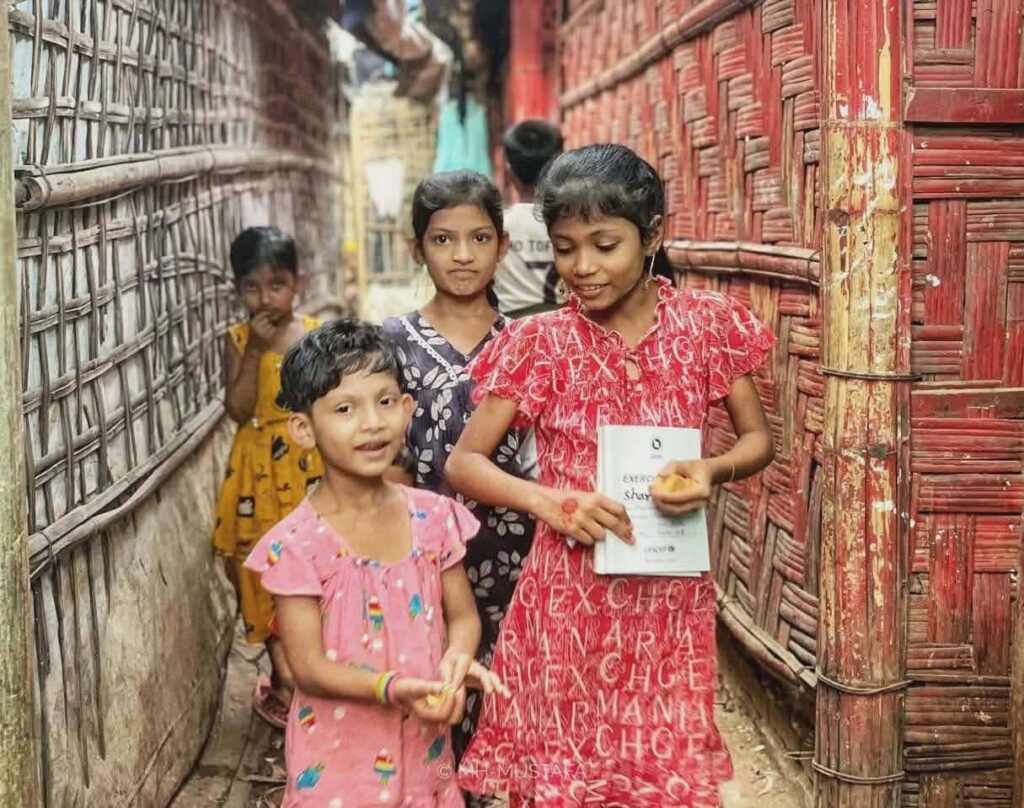
His experience is not unique — his classmates sometimes arrive to the classroom empty-handed. Following a genocide on Myanmar’s Muslim-minority Rohingya that began in 2017, estimates put the number of Rohingya refugees at more than 1 million, with some 437,000 school-age students.
Following the loss of hundreds of millions of dollars in aid funding, classrooms say the extreme conditions make it nearly impossible for students to truly absorb lessons. For those who do manage to make it to their final year of education, a lack of international recognition leaves them with few options for moving forward.
According to Cox’s Bazar District Education Officer Mohammad Golam Mostafa, education services are jointly led by UNICEF and UNHCR, the United Nations’ agencies for children and refugees, respectively. But implementing partners include as many as nine civil society groups.
Cuts to the United States Agency for International Development by the Department of Government Efficiency under the Trump administration in early 2025 impacted 130 countries, including Bangladesh, which lost about $700 million in aid.
Thousands of community learning centers have been shuttered as a result, according to a report by Human Rights Watch published in June 2025.
These cuts have directly impacted UNICEF’s ability to distribute materials across all camps, said one project manager, asking to remain nameless.
“Due to the current funding crisis, the necessary resources could not be provided at the required scale during this 2025–2026 academic year,” he said.
“As a result, many learning centers have faced shortages of textbooks, exercise books, school bags, classroom supplies, teacher guides, and other essential learning materials.”
Mekong Independent contacted UNICEF spokesperson Miguel Mateos Muñoz by email, but he did not respond by the time of publication.
‘We are expected to teach with nothing’
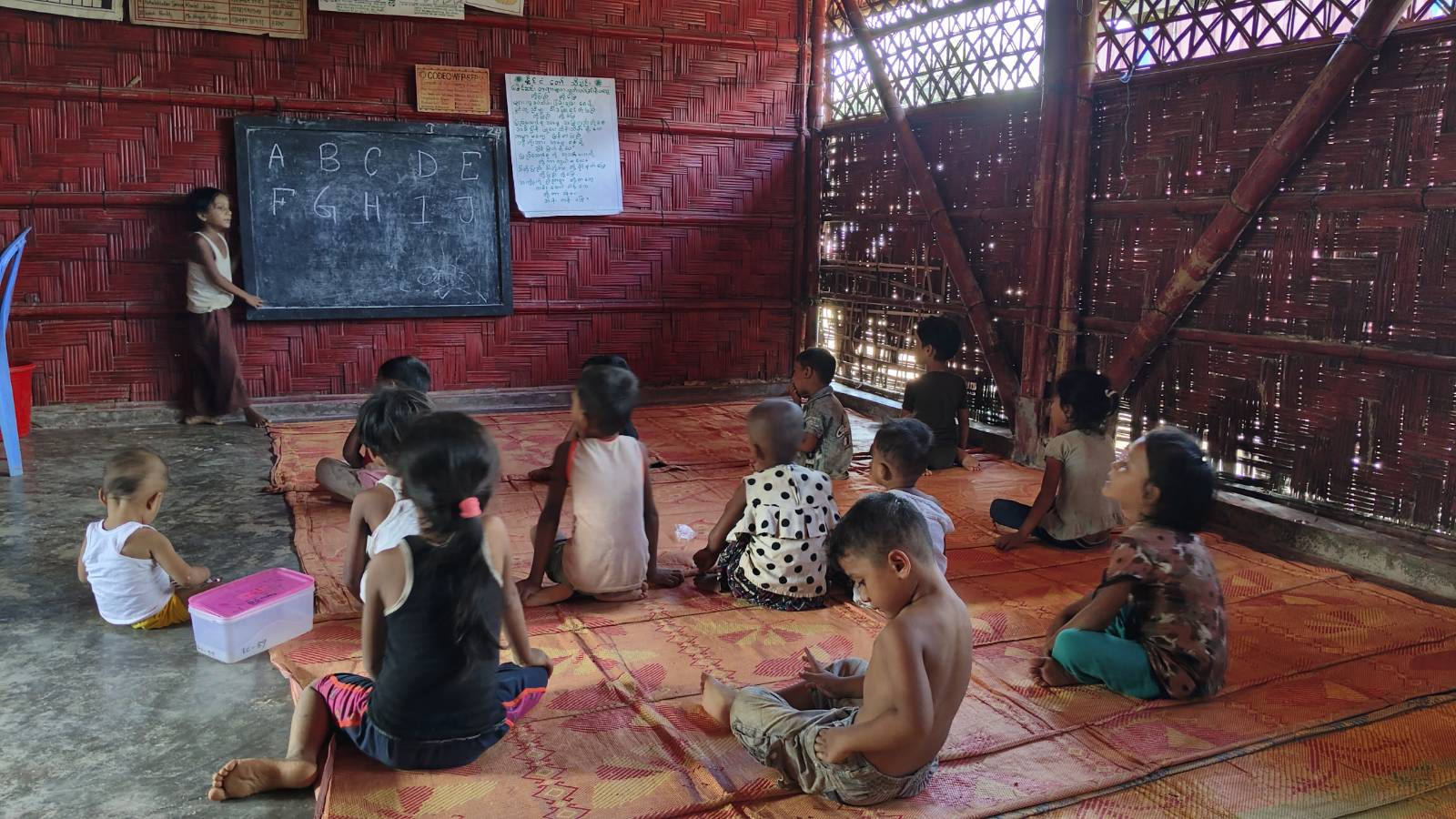
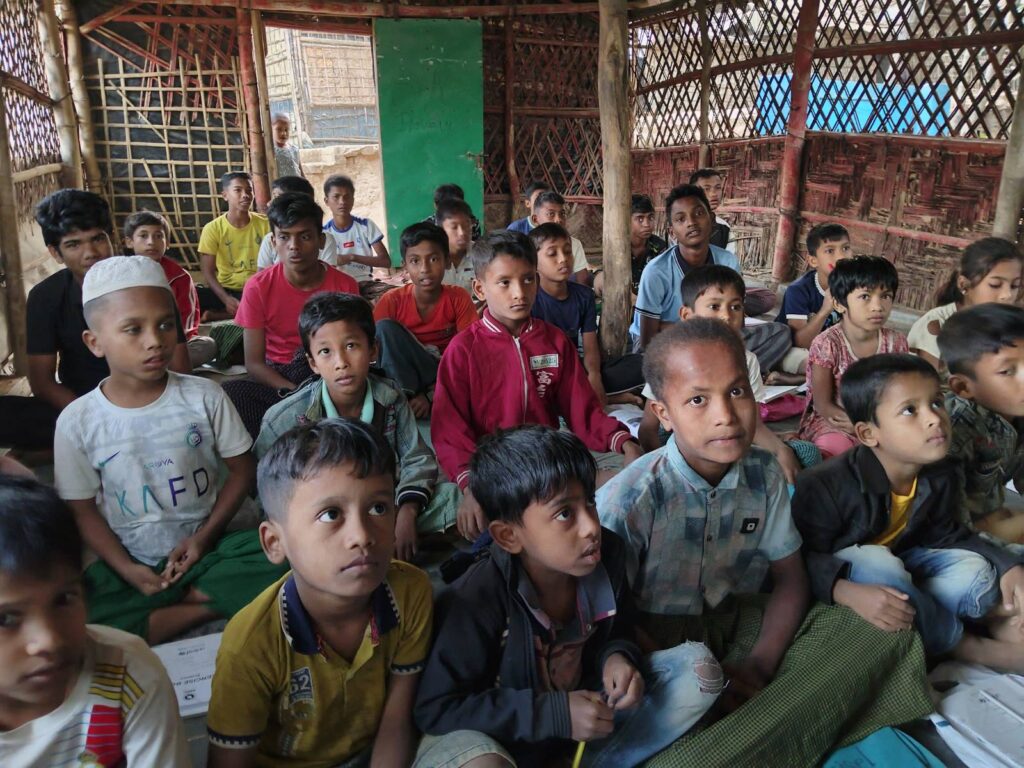
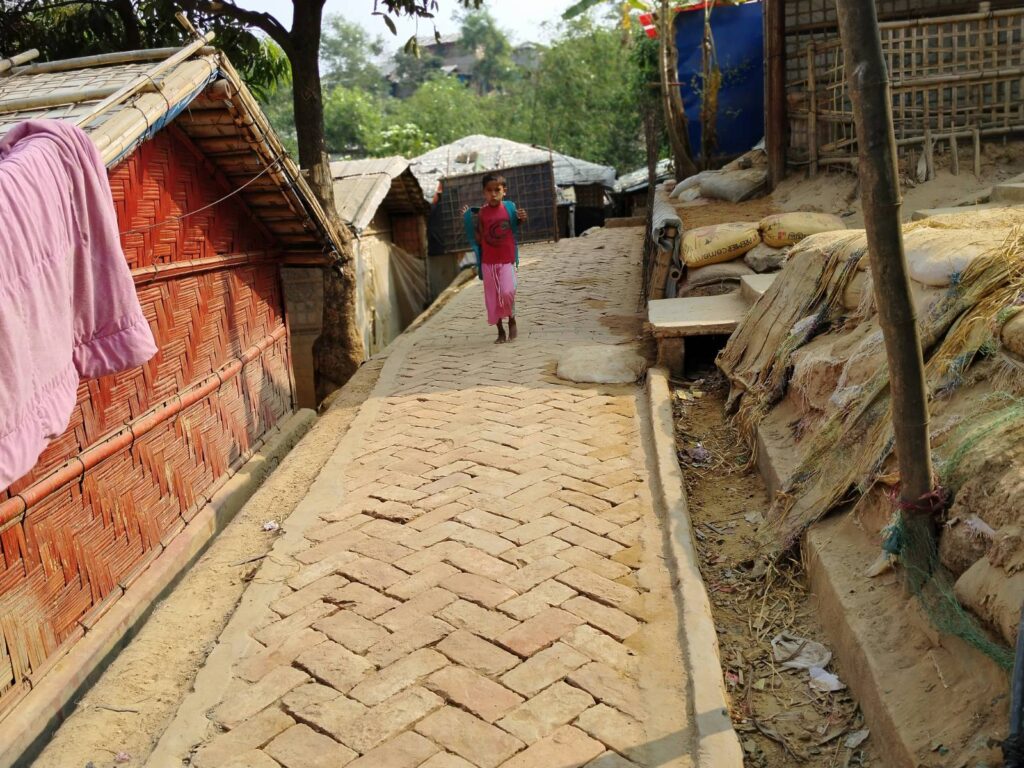
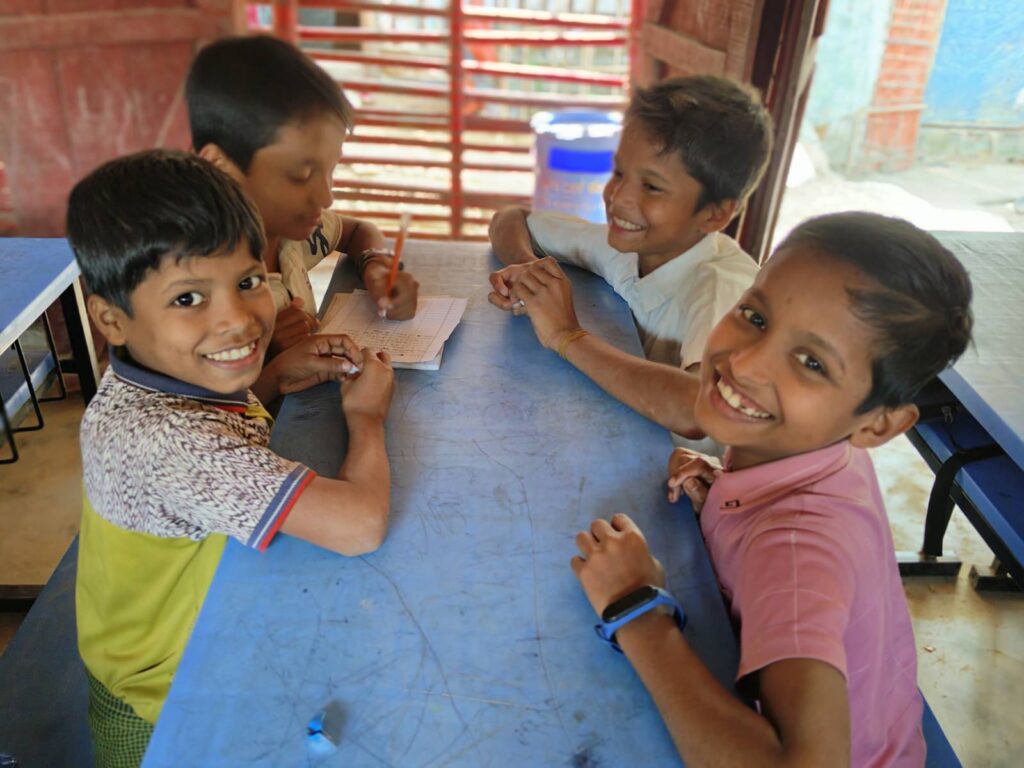
As many as 40 students file into a bamboo-and-tarpaulin learning center classroom each day. To accommodate huge numbers of students, schools from kindergarten to grade nine run in two shifts each day, with students attending for four hours each.
Teachers and students alike describe extremely challenging conditions, tasked with operating classrooms without even basic writing materials.
A teacher at a learning center in Camp 18 asking to be identified only as Saiful remembers receiving a single whiteboard marker on February 7. It ran out after five days, and he hasn’t gotten any more materials since.
“Imagine trying to teach students without being able to write on the board where textbooks are not available,” he said. “Sometimes it feels like we are expected to teach with nothing inside the learning center.”
Others described being expected to give verbal explanations only and while students take notes.
Under the Myanmar national curriculum, which includes chemistry, physics, and biology, a lack of supplies becomes a problem especially at upper levels, said one grade 11 student studying in Camp 16 of Cox’s Bazar.
“Our chemistry teacher teaches us using a [digital] copy on his smartphone because there are not enough materials,” he said, asking to remain nameless for security reasons.
“Chemistry teaches about metals, gases, reactions, and chemical properties, but without practical demonstrations, it is difficult to understand. We only listen and copy notes.”
But students themselves also struggle to bring even basic materials to class due to financial hardship, as refugees are not allowed to work under Bangladesh’s laws.
“When students come without pens, they cannot write anything,” said Rahima Akter, a teacher at Mukti Learning Center in Camp 1 of Cox’s Bazar. “They just listen. Learning becomes passive instead of active.”
Officials told Mekong Independent that the system was designed as a response to the crisis and the need has since outgrown the current resources.
“Education in the Rohingya camps was designed as an emergency response under long-term displacement, so while access has expanded, it was not originally built to provide formal accreditation or higher education pathways,” said senior project officer Muhammad Parves, who works for the Bangladesh Rural Advancement Committee, an implementing partner in the camps.
Project manager Habib Ullah from another camp education partner, the Community Development Centre, said that he was hopeful of expanding the current system.
While there have been no solid plans yet, “discussions are ongoing” with several partners, including NGOs already in the camps as well as international donors from the European Union, he added.
No accreditation
As students reach upper levels of school in grades 10, 11, and 12, classes shift from half-day to full-day, meaning fewer teachers are stretched between more subjects.
Within Myanmar, students struggle to pass the grade 12 exam, with less than 33 percent of students reported to have passed in the 2019-2020 school year. Many drop out before grade 12 as exams become more challenging in their final years.
Under the Myanmar curriculum in Bangladesh, Rohingya students who can pass the exam face an even more challenging question after completing their education.
Since the government of Bangladesh does not recognize the Myanmar curriculum as accredited, students can’t be issued any proof of completed education, and access to Bengali-language education systems are heavily restricted to prevent Rohingya from integrating into the country.
Graduates sometimes turn to making or buying fake certificates to apply to international universities and scholarships, while others become private teachers for children in their communities.
Abdu Roshid finished grade 12 on June 10 after attending nearly 10 years of school in a UNICEF-sponsored learning center of Camp 16, but instead of taking an exam, he was simply told he had graduated.
“I approached my teacher and asked, ‘Sir, since I finished grade 12, will I get the chance to study further, like college or university under the support of UNICEF?’” he recalled.
His teacher told him it was simply the end of camp-sponsored education, and that he didn’t know what further opportunities there were.
Now Roshid is trying to find a job, but says opportunities are scarce.
“We have studied for many years,” he said. “But after finishing, we don’t receive either a completion certificate nor an opportunity to continue a higher level of education inside or outside of the camp.”
No way forward
Rohingya in Bangladesh are also prevented from enrolling in universities, both due to a lack of accredited high school education under the country’s restrictions as well as their classification of Rohingya as Forcibly Displaced Myanmar Nationals, rather than formal refugees.
Other students report similar problems. Muhammad Osman completed grade 12 a year before Roshid, and said entering the humanitarian sector is impossible without any proof he received education.
“When I finished grade 12, I really believed something would open for me,” he said. A year on, he spends his days helping his family collect aid from the World Food Programme and International Organization for Migration, collecting and storing water, and studying English on his own.
“Sometimes I feel like I spent years studying, but I’m still standing in the same place, just thinking about what my life is supposed to become.”
He and other students interviewed by Mekong Independent tried to apply to the America-based tuition-free University of the People, but without an academic certificate to prove he completed his education, they were rejected.
Many students choose to drop out before entering secondary education, said teacher Sayed Ullah, who works in Camp 27. Students frequently ask him what they can do with their hard-won education.
“They want to know what will happen after they finish,” he said. “When we can’t give a clear answer about higher education or recognized certificates, it affects their confidence in continuing studies.”
It’s difficult to convince families to send their children to school when the long-term benefits remain dubious, explained community leader Hamid Ullah.
“Parents ask what their children will do after school,” he said. “If there is no clear pathway, some families stop prioritizing education over other immediate needs.”
This article is published as Creative Commons.