
The compound
Men dressed in army uniforms forced Nsubuga onto a boat and covered him and three other Ugandans with a large, smelly cloth.
“We were terrified. We lay there in fear as the boat moved for about two hours,” the 27-year-old told Mekong Independent. The trafficked workers’ full names are being withheld for their safety and privacy. “When we reached the other side, a van was waiting.”
Nsubuga had flown to Vietnam for what he thought was a customer service job he found on Telegram. A driver then drove him and the others five hours until they reached the boat. After getting off, the group was taken to My Casino in Cambodia’s Kampot province.
“Our passports were taken away, and we were not allowed to leave.”
Nkonko, 27, was also trafficked to My Casino. “That was the beginning of my nightmare. Inside those compounds, it felt like the sun no longer existed. The only light of day came through distant windows.”
Muwanguzi, 24, initially refused to scam people. “I was taken into a dark room where I was detained and mistreated for about three days without food.”
Kawemba was beaten for refusing to follow instructions. One woman told Mekong Independent she had been raped.
*
Lok and Thkov villages, on Kampot’s coast, were all rice and salt fields in 2018. By the following year, a patch of land was being cleared along a road to the Vietnamese border.
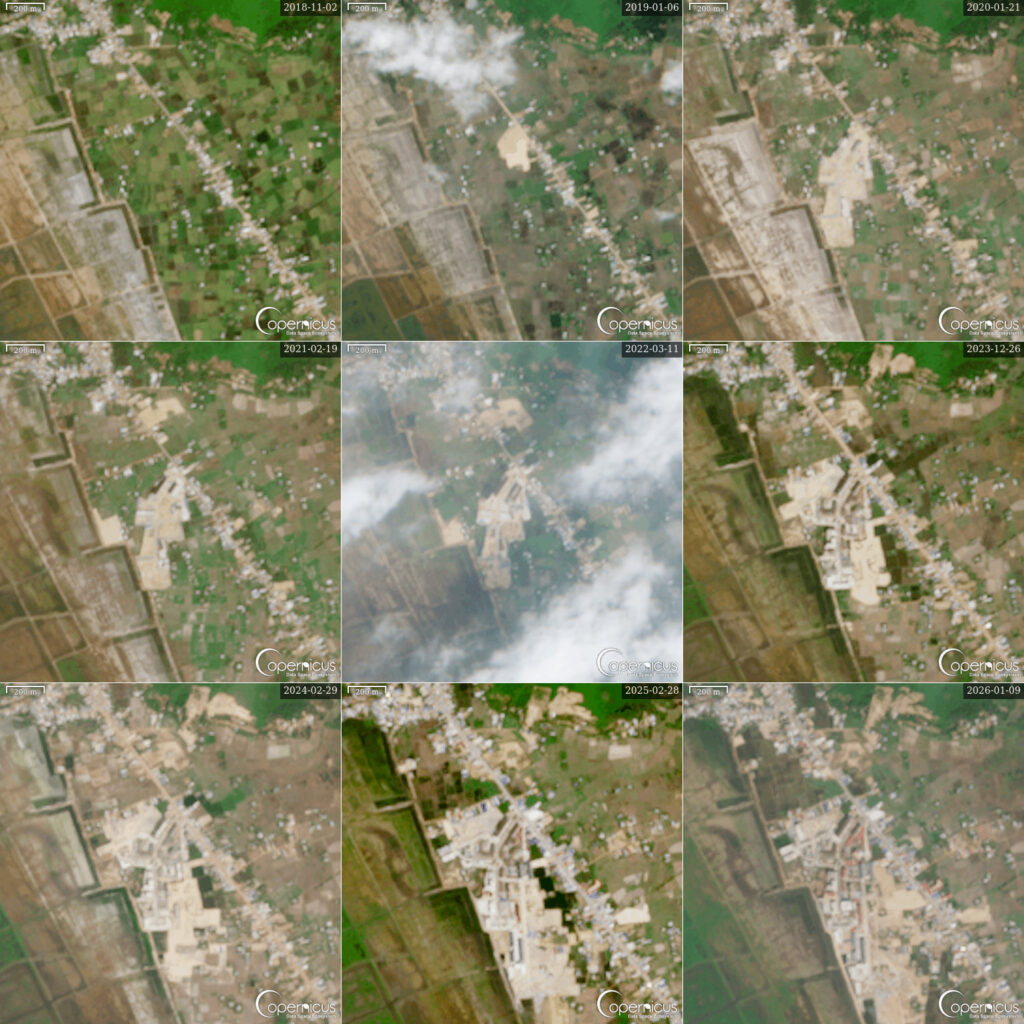
Sok Pov, a local resident, said his neighbors had begun selling their land to a developer, and the area quickly became busy with activity. Workers arrived from around the country for construction and other jobs.
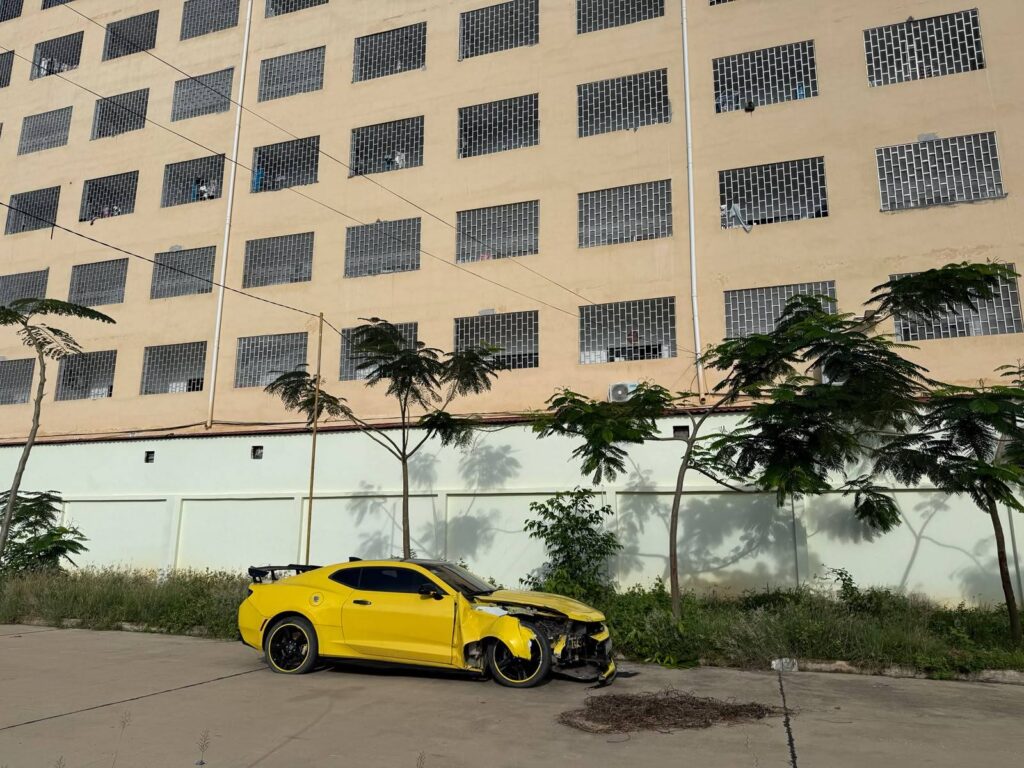
The scam business was booming in Cambodia. At My Casino, a yellow casino building at the front became flanked by rows of the kind of massive, boxy compound buildings that were rising across the country.
Inside them, foreign workers were made to perpetrate online scams worldwide under threat of violence and debt bondage. Around Cambodia — as well as in Myanmar and other locations — hundreds of thousands of workers lived in compounds believed to be run by organized crime. Pleas for rescue came streaming out over several years, and bodies have been dug up in nearby fields. The U.S. Treasury has estimated that Southeast Asian scam operations cost $10 billion to Americans in 2024 alone.
When reporters in 2022 accompanied a Chinese man to My Casino — also known as WO Casino — trying to rescue his friend from forced labor and violence, local police dismissed the allegation and instead investigated the trapped worker for “exaggeration of news.”
A 50-year-old local man declined to give his name in May, saying residents had been threatened and journalists detained for speaking out against the company. The development had drained sewage into salt fields and kept villagers awake with constant noise, he said.
“These are the criminals of ‘online.’ We do not dare to speak up against them.”
My Casino received a casino license in 2022 under the company Zhou Cheng K.P. Hotel, whose directors are Zhou Cheng and Ly Ratanak.
However, Chhay Sinarith, senior minister in charge of special missions, told Mekong Independent it was ultimately part of the operations of Li Kuong, a land developer and oknha tycoon.
“It is all in his subsidiary, and normally the person who committed [it] doesn’t want to show their identity.”
The tycoon
Li Kuong, born in Kampong Cham province, became involved in a series of casino and land development projects centered around Sihanoukville. The coastal city was once notorious for its resident Russian oligarchs before a wave of Chinese casino investments turned it into Cambodia’s epicenter of scams.
Li Kuong is registered as the director of two companies in Cambodia, Sea Snake Investment Group and Big House Commercial Corporation.
Sea Snake formerly listed Russian businessman Nikolay Doroshenko among its directors. Nikolay Doroshenko was jailed for defrauding a business partner of $10 million. Li Kuong took over the company by around 2019, according to local news outlet Voice of Democracy, with a local official linking the former snake farm to scam operations.
Phan Dich, chief of Bei commune’s Bei village, said Russian owners had sold the property to Li Kuong, who then constructed accommodations on the land.
Big House, meanwhile, registered two casinos under the “Majestic” brand. Both are in Sihanoukville, and were shut down in January.
In 2023, the BBC reported torture at the Majestic Two casino. However, the provincial administration rejected the report, saying it was “baseless” and it “would like to completely dismiss this publication.”
At the time, Li Kuong was honorary vice president of Sihanoukville’s Red Cross. The Cambodian Red Cross is run by the prime minister’s mother, and donations to it are seen as pledges of loyalty to the ruling party. Radio Free Asia last year found at least $7 million in donations from alleged cyberscammers.
Li Kuong stood with then-Preah Sihanouk governor Kuoch Chamroeun on at least two occasions in 2020 for donations to the Red Cross. Two years later, he posed for photos with National Anti-Corruption Council chair Men Sam An after donating $50,000 for a hospital. There are also photos circulating online with former Interior Minister Sar Kheng. However, Li Kuong’s social media accounts have been deleted.
Li Kuong also has a neak oknha title, an honorific given to businesspersons who donate $500,000 to the state. He donated to Cambodian troops during clashes with Thailand, and to Covid-19 relief efforts.
The 50-year-old Kampot resident who declined to give his name said Li Kuong had become too powerful for ordinary people to touch.
“People who have no land like me continue to struggle to live. … How could we protest against them because they are powerful oknha? We want peace but they do not want to give us peace.”
*
Despite his connections, Li Kuong was arrested on January 15 for unlawful recruitment for exploitation, aggravated fraud, and money laundering. He has been put in Phnom Penh’s PJ Prison awaiting trial.
His Sihanoukville casinos and Phnom Penh villa, near Camko City, were also shuttered. “This house had been rented out for three to four years and it served as a casino,” said deputy Poung Peay village chief Sun Nat.
Chhay Sinarith, senior minister in charge of special missions, said Li Kuong’s assets had been frozen.
Although bigger tycoons such as Ly Yong Phat and Kok An have been sanctioned by the U.S. for alleged involvement in scams, Li Kuong is the only prominent local businessperson prosecuted by the Cambodian government.
Jacob Sims, an expert on transnational crime and human rights in Southeast Asia, said Li Kuong’s case was an anomaly.
“It is hard for me to guess precisely why Li Kuong was chosen, but in absence of a broader move to hold compound owning oligarchs accountable by the government, it is hard not to view the charges against him as a form of token accountability,” he said.
The government’s crackdown since January appeared to have disrupted much of the visible scam compound infrastructure in Cambodia, but there was still a lack of accountability for compound owners and other key, elite-level interlocutors.
“The scam compounds are only the visible front end of the much more insidious architecture of elite impunity which gave rise to the industry in the first place,” he said.
Scattering
Resident Sok Pov said many of his neighbors had gotten swept up in the scam boom. “Some people were crying because they borrowed money from the bank to build rental houses and buildings, and at that time their children worked inside, but now they don’t have work while their rooms have no people.”
As the area became crowded with workers from across the country, local residents became involved in various ways: selling food near the compounds, selling land, renting houses, and even working inside.
When the casino compound still operated, people could earn $500 to $1000 a month doing jobs inside, he said.
“They wanted to buy my land too, but I didn’t sell it. My neighbors to my left and right sold theirs, and it’s already filled up with earth.”
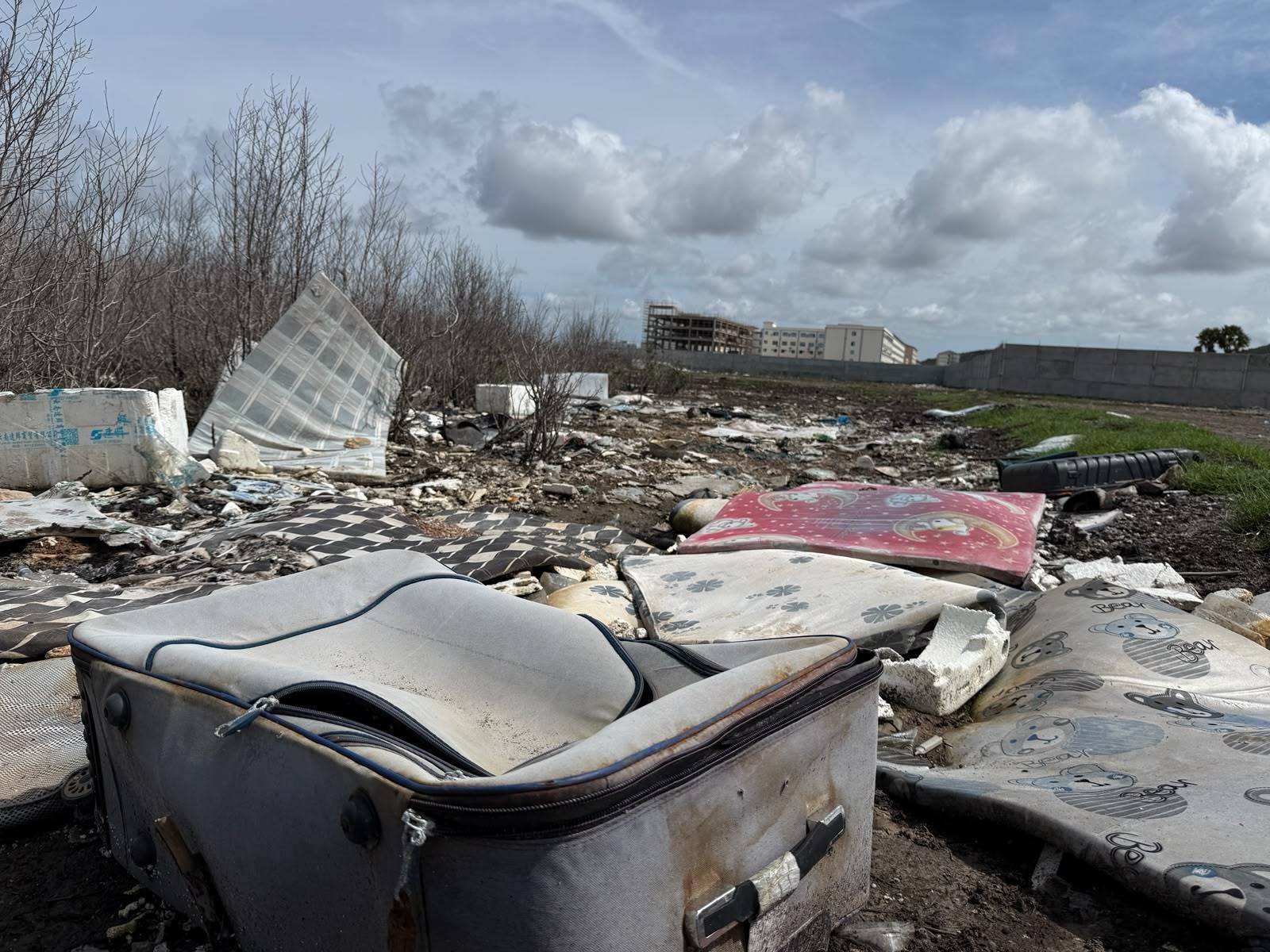
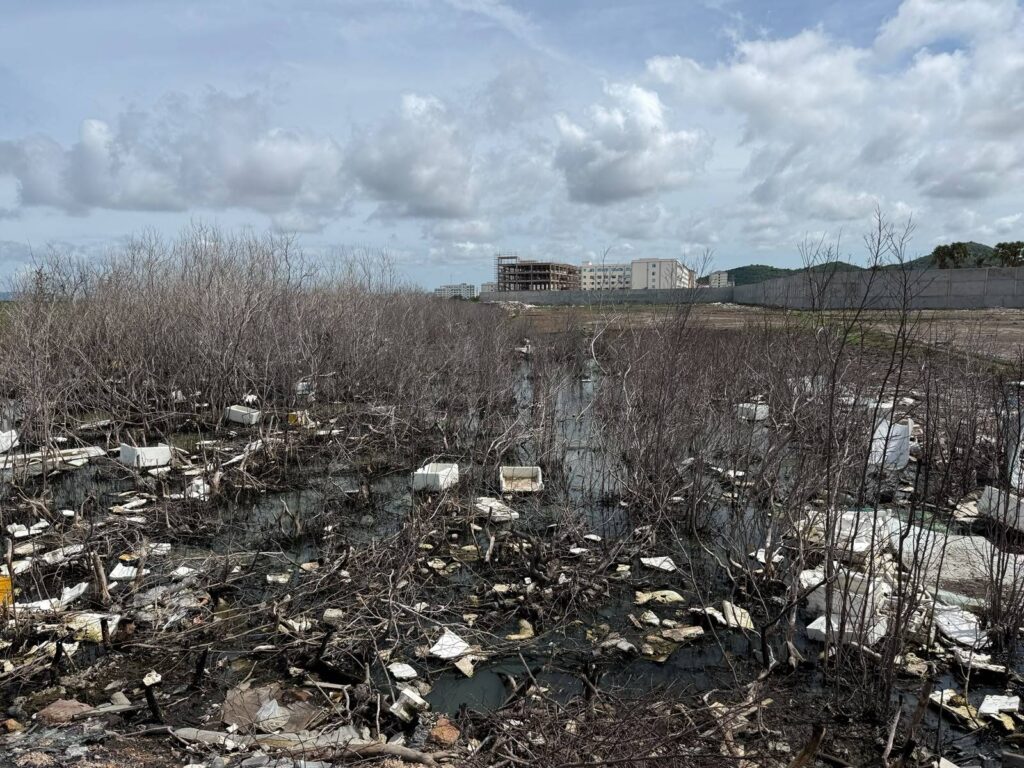
In May this year, black plastic bags, empty cans and glass bottles had piled up around My Casino’s abandoned buildings and empty roadside food stalls. Construction materials were left behind, and small trees appeared to be dying in the waste. Around 20 police officers were stationed around the building.
Residents recalled the chaotic scenes in January as thousands of workers fled the compounds.
Yan, 50, rode her old bicycle past the company’s dumpsite selling crabs. Workers had scattered into pagodas, people’s houses, rice fields, streams, mangrove forests and beaches, she said.
“They kept running from the evening until the middle of the night. They ran everywhere.”
She had previously seen workers jumping out of the buildings trying to escape, and being beaten, handcuffed and returned. “Every month, at least two to three times,” Yan said.
Sok Pov said he had seen a man die after jumping, and others severely injured.
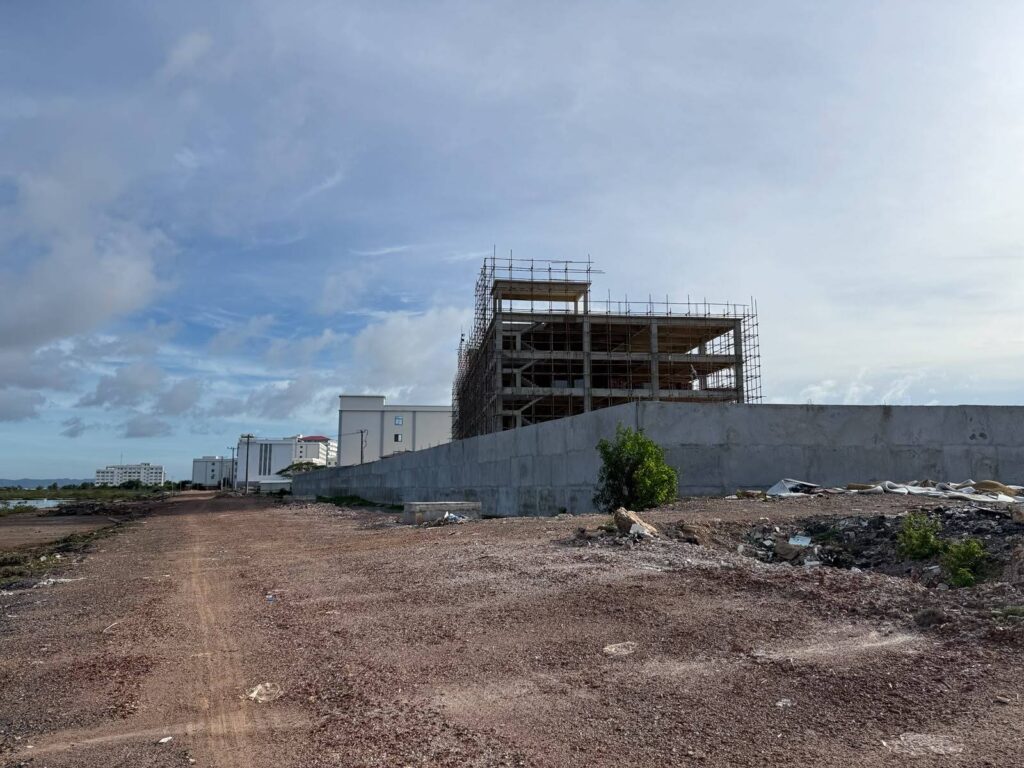
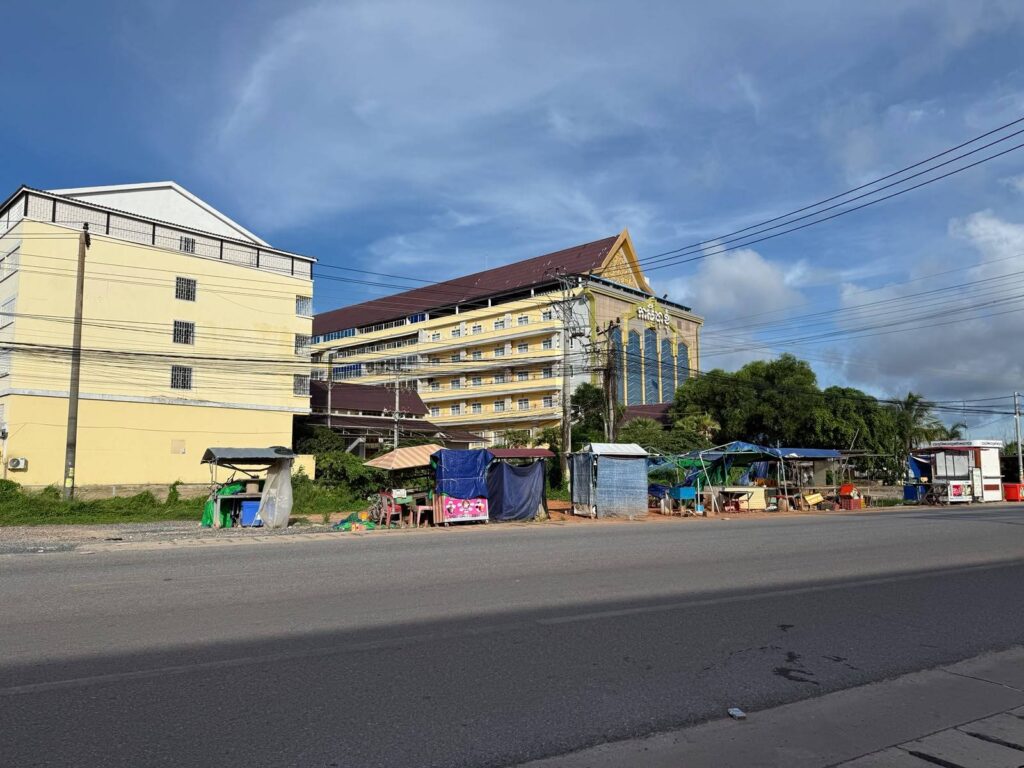
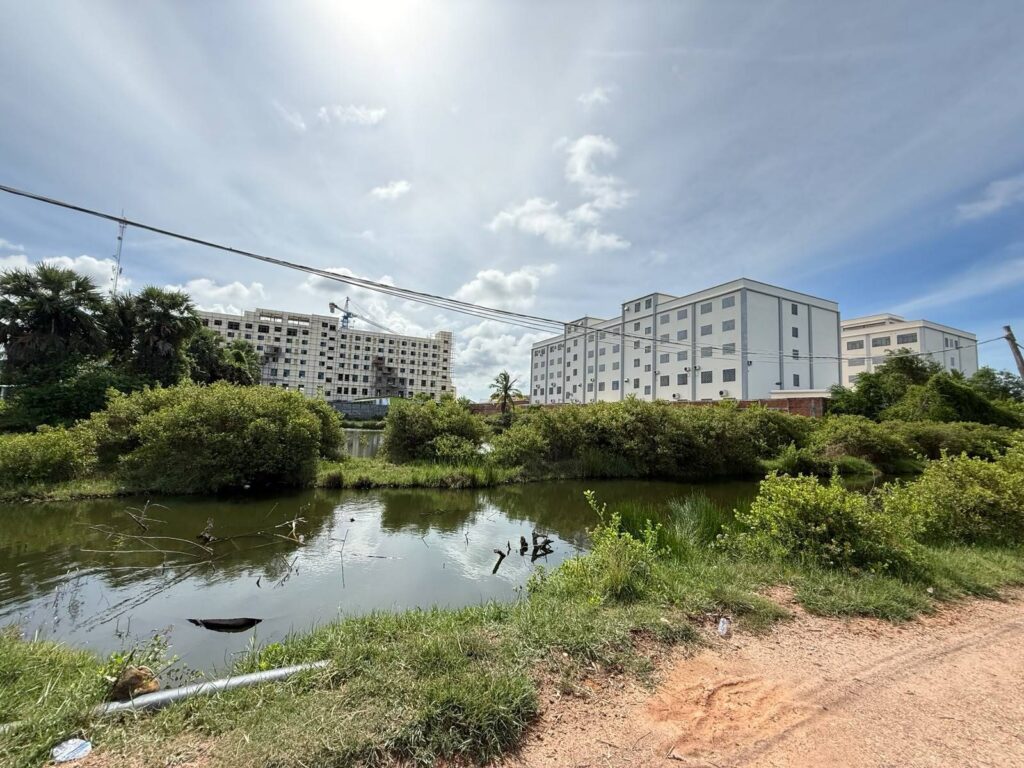
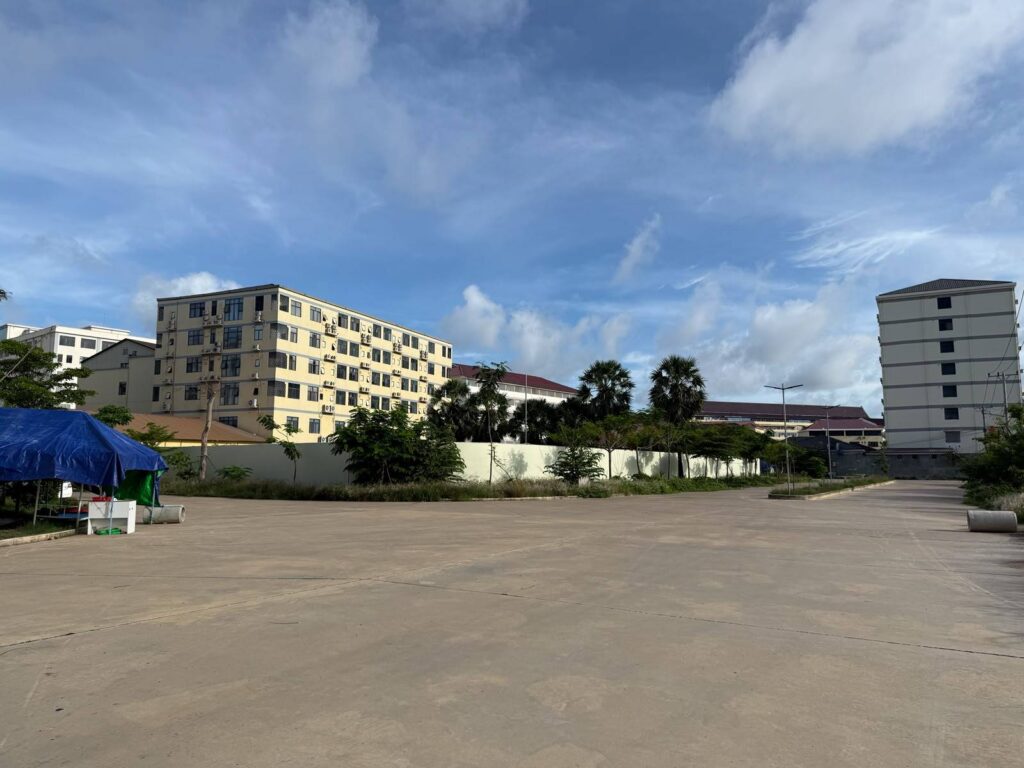
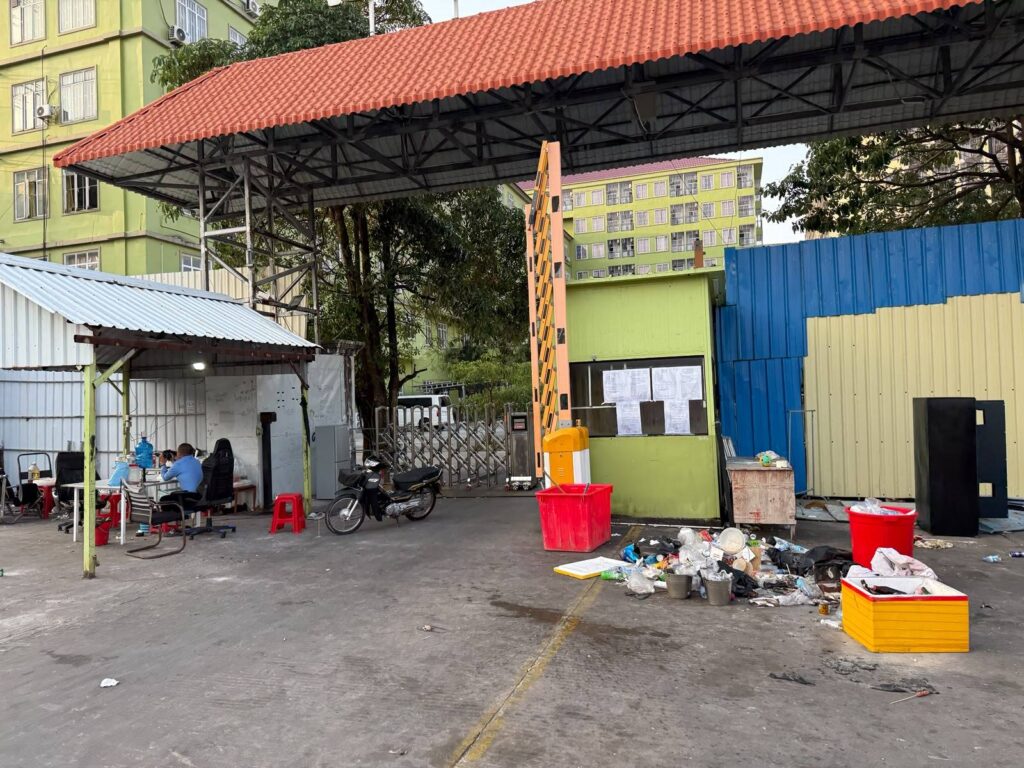
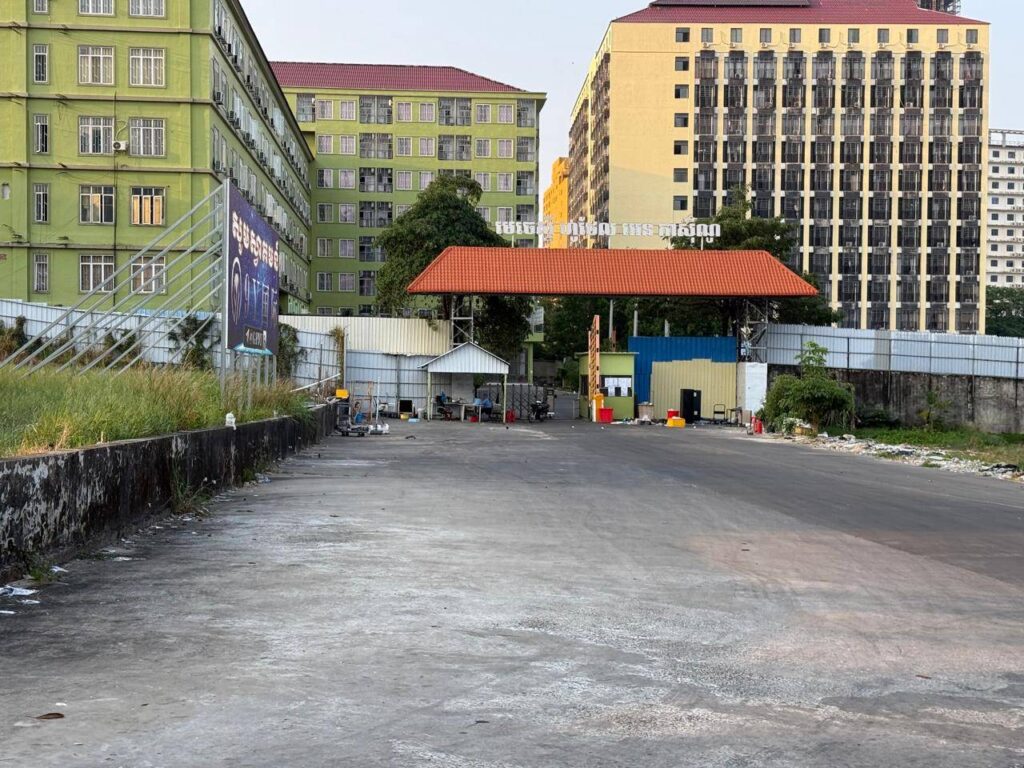
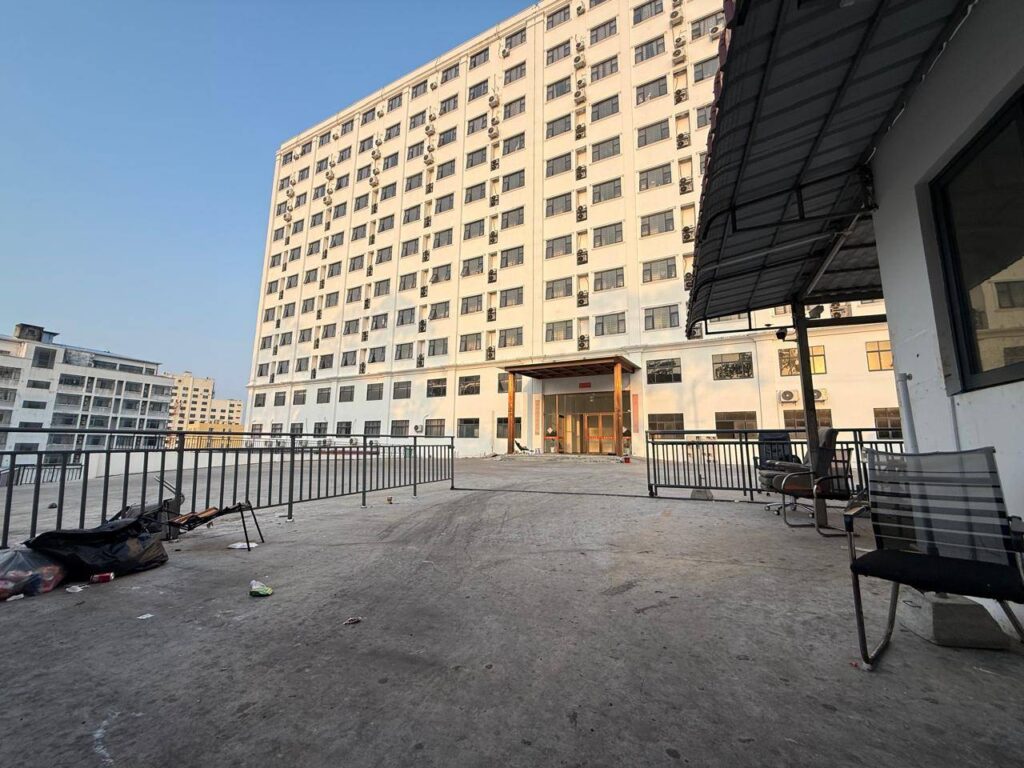
Since the compound was shut down, Kampot province has seen a stream of small-scale fines and prosecutions against residents. The crackdown appears to have already moved on from kingpins to low-level operators.
On May 11, two local residents faced a raid that confiscated two computers, two phones, two computer cables and two chargers.
“People were suspicious that they hardly left the home,” Dang Tong commune chief Chor Sarou said. No foreign workers had been involved. The court said the two residents had illegally deposited money into an online game account.
Police raided another “online scam center” the same day at a house in Kampong Trach district, announcing it had confiscated two desktop computers, two keyboards, two mice, two chargers, one phone, one Wi-Fi stick, one Wi-Fi charger, one flash drive and one lighter. Four local residents in their 20s were charged.
- On May 13, 13 foreign nationals — 11 Indian, one Sri Lankan and one Chinese — were arrested for illegally residing in Kampot after fleeing from Kep.
- On May 16, a 21-year-old resident was charged with being part of an organized online scam group. His 31-year-old Chinese and 30-year-old Vietnamese accomplices were allegedly on the run.
- On June 5, two Cambodian women were arrested in Tuek Chhou district for allegedly working with Chinese scammers in the Philippines.
Several homeowners have also been fined for housing foreign nationals:
- On May 24, a landlord in Tuek Chhou district was fined $6,000 for renting a house to six foreigners without passports.
- On May 25, another was fined $5,000 for housing five Chinese nationals without passports.
Kampot provincial police also posted photos of eight workers at a Bangladeshi restaurant, though the restaurant said they were legal employees with work permits and visas.
Police arrests
On May 31, Kampot police announced it had charged 32 officers with theft, destroying evidence and benefiting from theft. The number increased to 54 within weeks. This included 32 police officers, 18 military police, and four civilian beneficiaries of the theft.
Kampot provincial police chief Mao Chanmathurith said in an announcement that the crimes happened at a casino in Prek Chak — the name of the Cambodian-Vietnamese border crossing close to Li Kuong’s My Casino property. There are no other casinos in the area.
It is a rare — and isolated — case that appears to have wiped out the top district and commune officers around the My Casino area:
- Kampot deputy provincial police chief Chin Ratana.
- 601 battalion commander Vuth Rithy.
- 601 battalion chief of staff Pao Novakadean.
- Kampong Trach district police chief Nhorn Sary.
- District police deputy in charge of immigration Sin Vuthy.
- District police deputy in charge of identification Kong Sovutha.
- District police deputy in charge of penal crime Ing Pov.
- District police deputy in charge of administration Touch Sophea.
- District police deputy in charge of security Seng Ratha.
- District police deputy in charge of drugs Yin Somony.
- Russei Srok Khang Lech commune police chief Yong Sodoeun.
- Head of border police post, Chin Sokha
- Kampot provincial police head of immigration Chin Long.
- Kampot provincial police head of traffic Pen Sithith.
- Kampot provincial police head of identification Mongkol Nichor.
- Kampot provincial police penal crime deputy Noun Saran.
- Kampot provincial police penal crime deputy Hem Bun Taing.
- Svay Tong Khang Tboung commune police deputy Len Sok Bol.
- Kampot provincial security deputy Yam Yong Nalay.
- Kampot provincial security deputy Khlok Kimhong.
Kampot provincial police chief Mao Chanmathurith said guards had now been placed around the buildings.
“They took property to sell,” he said, but did not elaborate, saying investigations were continuing. The officers were placed in pretrial detention.
However, he deflected when asked about crimes that had happened inside My Casino before it was shut down. He could not remember how many complaints he had fielded. He added that when police had previously investigated complaints of torture, officers failed to find such cases despite questioning alleged victims.
Am Sam Ath, a director at Cambodian human rights group Licadho, said civil society wanted to see more transparency in investigations.
“When they find out that other people were involved besides Mr. Li Kuong, they must enforce it in compliance with the law,” he said.
Elsewhere in the country, immigration department deputy director Ouk Heisela and Phnom Penh deputy police chief Sar Samnang have been arrested for allegedly taking bribes from the scam industry. The Anti-Corruption Unit arrested Koh Kong’s customs deputy director over allegedly collecting more than $1 million from scam operations between 2024 and 2026. In Mondulkiri, provincial police chief Lor Sokha and military police commander Hem Bonarel were removed from their positions.
Jacob Sims, the transnational crime expert, urged the government to also confront corruption at the top levels.
This included “the uncomfortable reality that many of the ruling party’s most powerful members appear to have collaborated closely with sophisticated criminal syndicates for many years,” he said. They had cultivated a scam industry that “exported tremendous harm onto trafficking and financial crime victims from all over the world.”
*
In December and January, Nkonko, 27, toiled inside the My Casino compound. Every 20 minutes, security entered the room to see if anyone was not focused on their screen.
“One day, my tired body betrayed me,” he recalled.
“I dozed off for a moment because of exhaustion and lack of sleep. They dragged me into another room. I was told I was not there to sleep. A security man ordered me to do 100 push-ups. I am a disabled man, and my body could not handle it. I tried with all my strength and managed 30 before collapsing. Then they punished me more, ordering 50 push-ups every day after that. They denied me food.”
As the days passed, he became increasingly aware of the criminal nature of the work.
“I tried to ask what kind of job this really was,” he said. “I was warned never to ask that question again.”
Others shared an example scam script with Mekong Independent. It involved recruiting people to a fake remote marketing job. An online dashboard would show accumulating commissions for various tiers of tasks. Though not explicitly stated in the script, it hints at complications arising for victims once they try to withdraw money — a classic scam technique where victims send money believing it will give them access to funds.
“They told me people disappeared there and were never seen again. That sentence alone was enough to freeze my soul.”
This article is published as Creative Commons.