
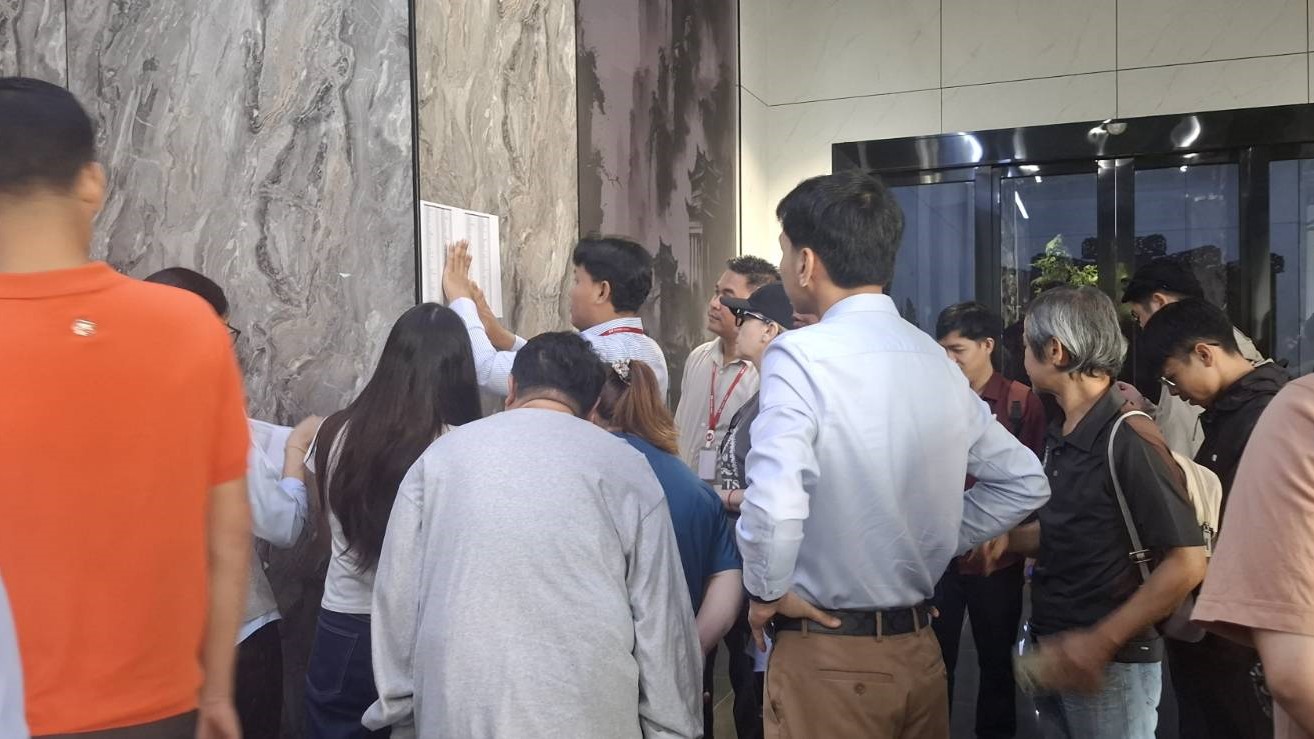
A Cambodian woman smiled as she waited in the lobby of Panda Commercial Bank’s headquarters on Thursday morning. She had just learned that she should be able to get back $20,000 she had invested in the bank’s high-interest fixed deposit program. She said she had almost given up hope until today.
“Last night, I cried [and] I could not sleep because many people in the group [of Panda Bank investors] claimed we could not get our money,” she said.
The National Bank of Cambodia revoked Panda Bank’s license in February and ordered its liquidation.
At the company’s headquarters on Thursday, staff reassured customers that the bank was working to repay them and promised dates to collect in April. But an analysis of Panda Bank annual reports raises questions about a $25 million loan to Panda Bank from former chairman Li Xiong — who was arrested and deported to China on Wednesday over alleged fraud and ties to scam operators.
As roughly 50 people gathered in Panda Bank headquarters’ lobby on Thursday morning, staff started posting lists of customers’ names with dates when they could show up to the office and reclaim their funds, with many dates falling over the Khmer New Year holiday.
Former bank chairman arrested
On Wednesday, China’s Ministry of Public Security reported that Chinese and Cambodian law enforcement had arrested Li Xiong, the former director of Huione Pay and a variety of Huione-labeled companies that were found to provide an illicit online marketplace and money laundering services.
Li Xiong was also former chair of the board of directors of Panda Commercial Bank, and had given the bank a substantial loan, though the company has recently distanced itself from Li Xiong.
The extradition of Li Xiong follows that of Chen Zhi, the chair of the Cambodian conglomerate Prince Group, who was also sanctioned by the U.S. and U.K. governments. In the Chinese state media’s reports on Li Xiong’s extradition, the Chinese government described Li Xiong’s Huione as a “subsidiary” of Prince Group — which was long rumored but not evident from Cambodian corporate listings for either company.
Like Chen Zhi, Li Xiong, 41, also gained citizenship in Cambodia, according to a royal gazette decree signed in 2018. The document said he was from Henan province in China.
Though connections between the beleaguered Huione companies and Prince Group are murky, Li Xiong’s connection to Panda Bank are well documented.
Li Xiong was chairman of Panda Bank’s board of directors through 2022 and 2023, according to a review of the bank’s annual reports. He resigned as chair of the board of directors on October 31, 2024, according to the bank’s 2024 annual report.
As news media and foreign governments raised questions about Huione Group over alleged money laundering, Panda Commercial Bank distanced itself from the company and some shared directors left the group. Li Xiong is not currently listed as a director of Panda Commercial Bank on the Commerce Ministry’s website, but his former role as bank chairman is listed on the third-party business registry aggregator OpenCorporates as of January 2021 data. The other directors at the time were the prime minister’s cousins Hun To and Hun Kimleng as well as He Yanming and Liu Tongtong, according to OpenCorporates. Only He Yanming remains on the most recent board of directors listed with the Commerce Ministry.
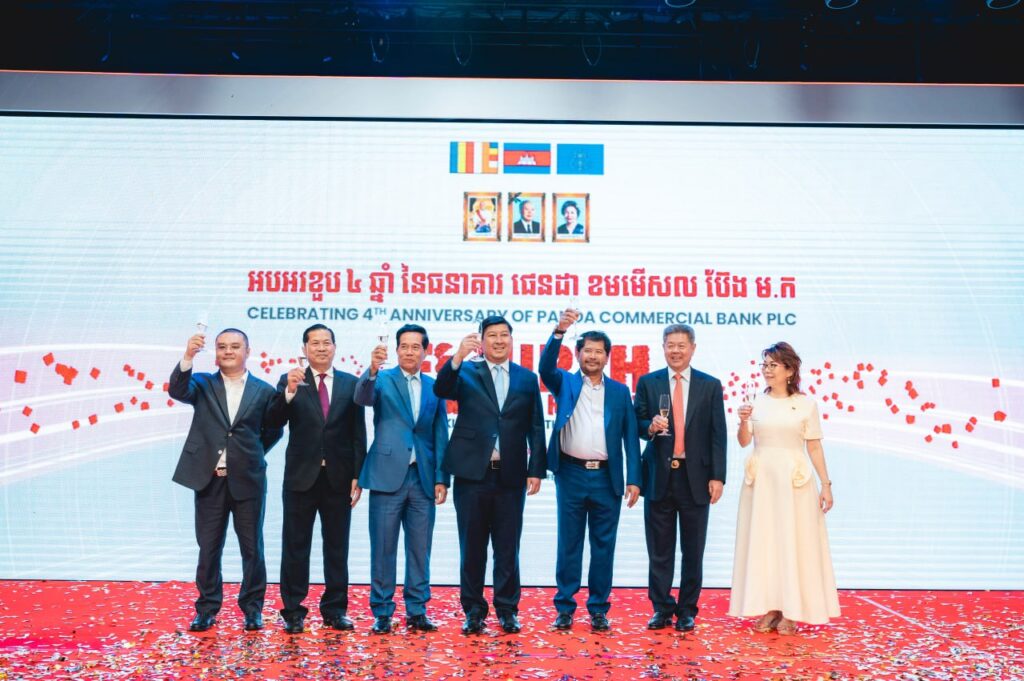
Li Xiong is also seen in photos from Telegram posts about Panda Bank’s 2024 anniversary party with Hun To.
Panda Bank’s 2022 annual report says the bank received an “interest free” $25 million loan from Li Xiong on April 7, 2021, which would mature in April 2031. The documents noted that the loan would be repayable from “year 6 onward” at a fee of $5 million annually.
The liquidating firm Morisonkak MKA and Panda Bank have been approached for comment by email.
Panda Bank’s most recent annual report available, through December 2024, showed a 375% increase in customer deposits in a year — from $63.7 million at the end of 2023 to $302.5 million in 2024. Loans to customers also increased from $31.4 million in 2023 to $92 million in 2024, the annual report showed. Panda Bank previously advertised some of the highest fixed deposit interest rates in Cambodia, which attracted customers to invest in the bank, several clients said to a reporter.
Preventing panic
Some of the staff said on Thursday they were trying to keep former Panda Bank clients calm during the liquidation process.
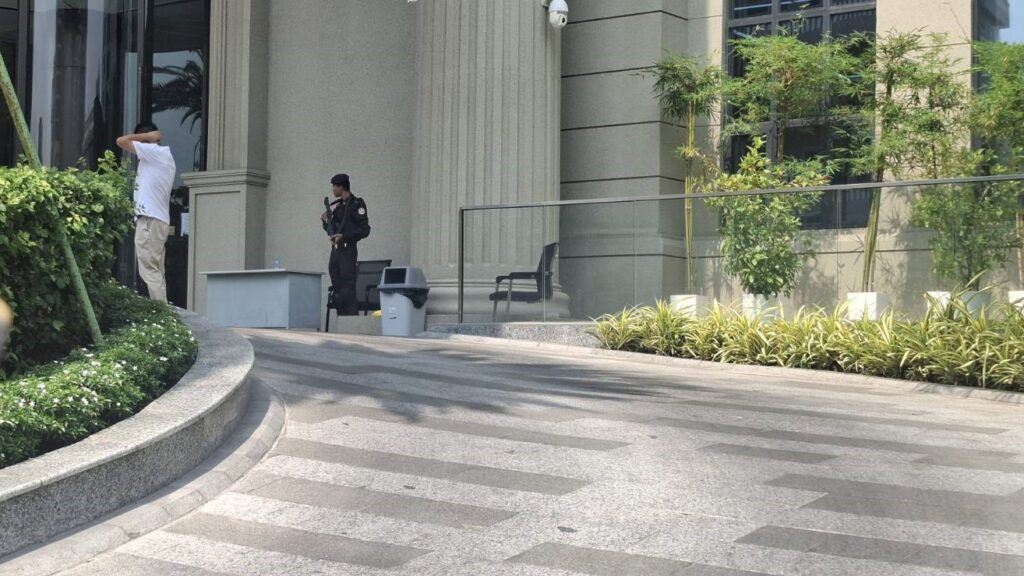
A parking lot guard said that military police had come carrying assault rifles to respond in case of any incidents.
One of the staff members said she would look for another job in the banking sector after she loses her job with Panda Bank, but this experience had not given her confidence in the sector.
She added that most customers were understanding about the situation, but they had to deal with some cases where people became angry or tense.
“Some people come to cause chaos and they do not listen to our explanation,” she said.
One woman in her 50s said she was getting concerned that Panda Bank would not pay her back, as her entire business had banked with the company, which she trusted because it was recognized by the National Bank of Cambodia up until February.
“I will not go anywhere, I will wait until I get my money,” she said. “I have to pay my staff. If I do not have money to pay, my business will go bankrupt. I just want my money and the interest.”
This article is published as Creative Commons.