
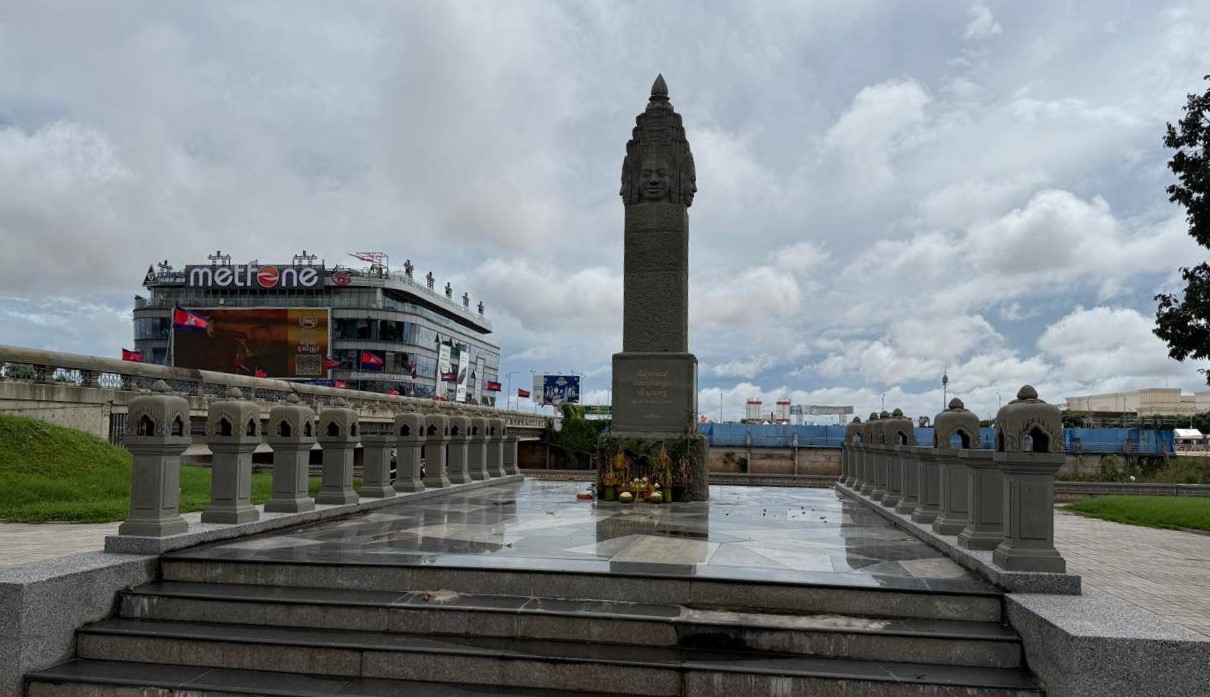
On the night of November 22, 2010, Khut was at a near standstill in traffic at Independence Monument around 10 p.m. The tuk-tuk driver eventually cut through the crowds to drop off his last customer, but then he refused to take anymore.
Khut had been excited to ferry happy festival-goers in and around the capital on his traditional tuk-tuk during one of the largest-ever Water Festivals. Everyone was so happy, he remembered. But the mood shifted while he was stuck at Independence Monument around 10 p.m. that day. Authorities began bringing bodies out of the crowd.
“I did not carry any passengers. I was scared of ghosts at that time so I did not carry any more passengers,” he recalled of that night to Mekong Independent. Instead, Khut said he drove around Phnom Penh, trying to understand what happened on the last and biggest day of the Water Festival that year.
A crowd crush in 2010 killed more than 350 people celebrating Water Festival in Phnom Penh, in what officials at the time called the single deadliest event in Cambodia since the Khmer Rouge regime held power from 1975-1979.
Fifteen years later, only a handful of people around Phnom Penh recall the event in detail, but they believe – and certainly hope – the city is prepared to prevent another crowd-related tragedy.
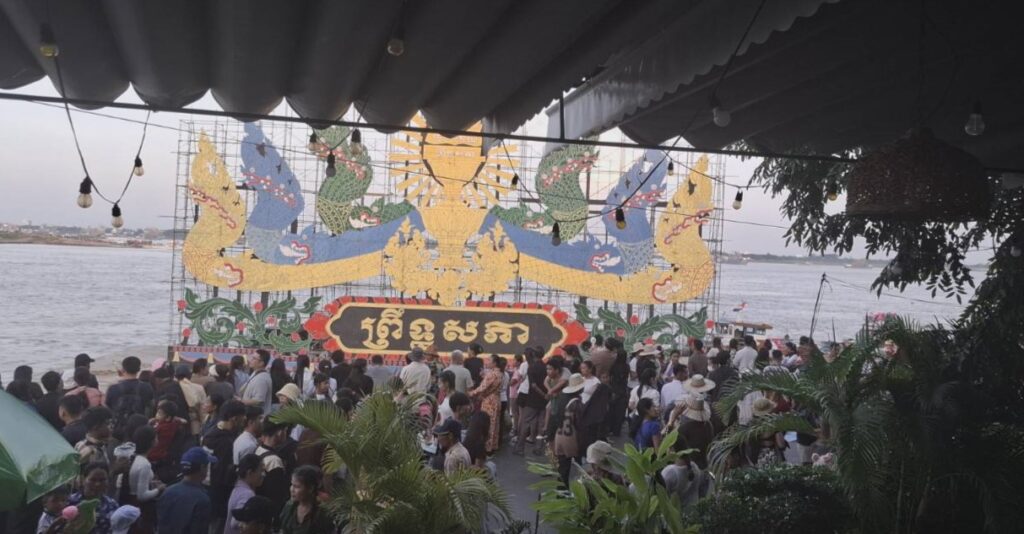
Bon Om Touk, or Water Festival, is a national three-day holiday with spiritual and royalist roots, celebrating the transition of seasons from the monsoons into fishing and farming seasons, and celebrating Cambodia’s unique Tonle Sap river system. The biggest festivities traditionally take place in Phnom Penh, where competitors race boats during the day, and party and watch light-covered floats drift down the riverside at night.
Like other crowd crushes, the Phnom Penh tragedy stemmed from a tight crowd and mass panic as a crowd thousands-strong – some news reports said 5,000 people, others reported up to 8,000 – poured across a suspended bridge called the “Rainbow Bridge,” which connects Phnom Penh to the privately controlled Koh Pich island, a real estate and commercial development. That year, an estimated 2-4 million people came to the capital to celebrate.
Different news outlets reported contrasting numbers of fatalities: the official count reported by the Cambodian government’s investigating subcommittee found 353 died, but some news reports said the death toll reached 456 people, perhaps including people who died after the incident as a result of injuries. The scene was reported graphically and gained international attention, with reporters describing bodies lined up along walkways for loved ones to identify, and hospital floors flooded with partygoers seeking treatment. The fatalities in Phnom Penh outnumbered those of a 2022 crowd crush in Seoul, where nearly 160 people died amid Halloween celebrations in the city’s nightlife district.
A report from Cambodian Center for Human Rights released a year after the incident also showed confusion among survivors about what caused the panic. Some told CCHR they saw electric sparks and thought people were electrocuted, while others noted that water cannons, reportedly fired by police to cool down festival goers, added to the panic.
Though labeled in the media as a stampede, the incident was later described as a crowd crush, where crowds become dangerous and deadly after five or more people pack into a square meter. The report from CCHR estimated that the crowd on the Rainbow Bridge was around 10 to 12 persons per square meter.
When a crush happens, the people inside can experience panic, fainting or losing sensation in their limbs. News outlets and researchers reported different potential causes in addition to the large crowd size – from gang fights to rumors that the suspension bridge was collapsing, in addition to electric shocks, according to the CCHR report.
Khut, the tuk-tuk driver, recalls how beautiful the lights on the bridge were, twinkling in the night, and the joy in the crowd.
“We Cambodians love a crowd,” he said, directing his opinion at reporters and another tuktuk driver, parked near Koh Pich. “Nobody wants to live in a quiet borey, you go move to the loud borey.”
But the beautiful lights later felt like a threat. He remembers several factors at Koh Pich’s northmost bridge in 2010 that led to trouble: the crowd, the size of the bridge, and those sparkling lights, which seemed to spark more sharply when they were sprayed by water that authorities threw onto the crowd to keep them cool and moving on the hot festival night.
“It was terrifying to see people who jumped off the bridge and just died down under the bridge because they could not swim,” Khut remembered
“People got entangled with one another and people tried to pull [these clusters] out, but it was very hard to pull them and they stuck to each other like cooked sugar or like pulling worms from the earth.”
Khut said people came out of the crowds with their mouths opening and closing, like they were gasping for air or shouting. But they didn’t make noise like a shout, he said.
“Some were still alive but very exhausted.”
Khut said police and district guards lined up to help people, but it was complicated to get the humans out of the crowd. It took four or five hours for authorities to untangle everyone, survivors and bodies, from the crowd. “There was an order, but they took them out one by one, so the ones who were still surviving there will die.”
When authorities cleared out, Khut came closer to see what happened. The bridge used to be where he was standing on the November night he spoke to reporters, on a patch of pavement next to the stupa memorializing the Water Festival disaster.
“After they had finished picking up the bodies from the bridge, their clothes were all that remained on the bridge,” he remembered.
Aftermath
After the incident, Khut recalls driving past the Calmette and Khmer Soviet hospitals, seeing rows of the dead, with only their faces visible in a line for identification. People left incense and bananas as offerings to the deceased all over the streets near Koh Pich, leaving Khut feeling afraid.
The headline-grabbing disaster triggered a surge of financial support for victims’ families and survivors: then-Prime Minister Hun Sen personally offered to pay families $1,250 each, the late King Norodom Sihanouk and his family offered $200, and officials from the U.S., China, France and others all offered to contribute. Hun Sen at the time said families of the deceased would receive around $12,000 each in total – at a time when the garment worker minimum wage was $100. However, CCHR reported it was not able to confirm if families had received the full value of charitable funds, in part because people did not know how to receive the money, while others say their compensation was less than the reported $12,000.
Hun Sen, who spoke to the nation three times on the early morning hours of the disaster, originally stated in public speeches that he and officials “did not expect” the disaster to be possible, but then later stated that the response to the crush had been adequate, while police deflected criticism.
“The biggest mistake was that we had not fully understood the situation,” the former premier said in November 2010, according to a BBC report.
Khut remembers that after the crowd crush, residents talked of seeing a bird flying over the Koh Pich bridge. He said it was believed to be a bad omen.
Mun Pisey, a 31-year-old vendor selling folded lotus for offerings near the Royal Palace, said she almost lost family members in the crush. Her two older sisters were caught in the crowd, and two cousins jumped off the bridge into the water to survive.
Pisey was near the riverside, not far from where she sells today, but she says crowds always leave her on edge. But she also thinks it was related to that period of time, saying there was a Buddhist prophecy of people suffocating and lacking water to survive.
“They [spirits] wanted to claim a group of people’s lives urgently.”
In a long-scope study of families’ interpretation of the Koh Pich crowd crush, Australia-based psychiatrist Maurice Eisenbruch found that many families and observers viewed the violent disaster as a reaction to the intense development of Koh Pich itself, where residents were evicted from wetland farms to make way for expensive offices and condos for Phnom Penh’s wealthy investors and foreign residents. Eisenbruch added that the Buddhist and animist views help residents come to terms with the brutality of the disaster.
Safer festivities
CCHR concluded its 2011 report stating that Cambodia could have done more to investigate the causes of the crowd crush and options for improvement within the first year of the disaster. Instead, the report also found officials confiscating videos of the disaster, apparently to reduce the amount of evidence.
While some experts said there was little more that Cambodia could have done to respond to a crowd crush, others considered that simple steps, like more emphasis on crowd control and clearer walking paths and exits, could have been more clear to civilians.
The Cambodian government has regularly canceled Water Festival events in Phnom Penh since 2010. The government canceled the 2011 Water Festival in memory of the previous years’ fatalities, and it was canceled again in 2012, 2013, 2015, 2020 and 2021 for various reasons, ranging from the late King Norodom Sihanouk’s death to the Covid-19 pandemic.
The government again canceled Water Festival races and festivities in Phnom Penh this year, attributing the decision to the conflict with Thailand.
The risk of crowd crushes hasn’t vanished with Phnom Penh’s development. Early this year, 4 people died in a similar crowd-related problem when tycoon Sok Kong distributed “lucky money” to civilians in front of his mansion in central Phnom Penh ahead of Lunar New Year.
Three years earlier, South Korea endured a crowd crush during their Halloween celebrations, and civilians are still calling for investigations into how the disaster could prove so fatal.
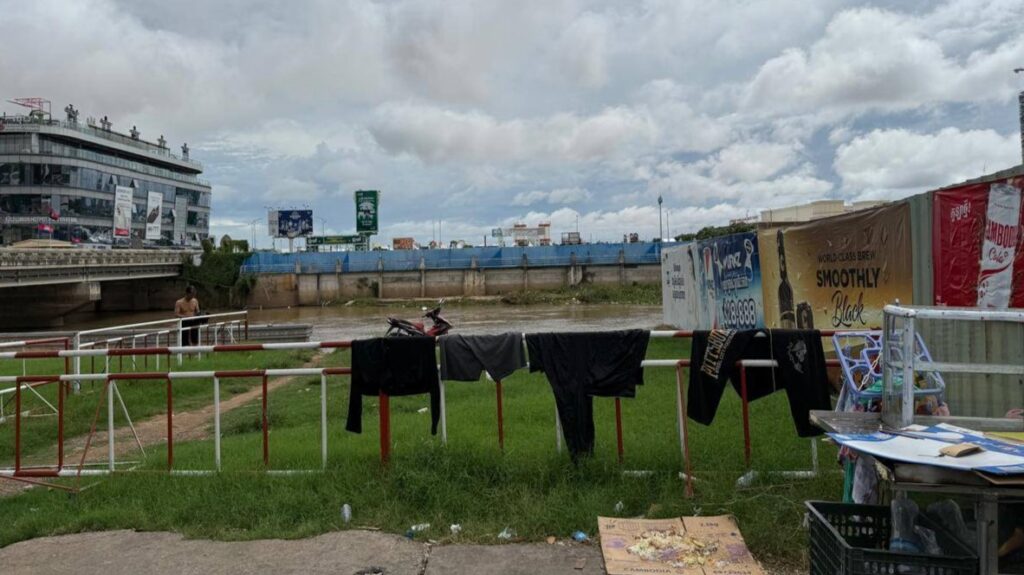
Having watched the 2010 disaster on TV, 25-year-old food vendor Kat Vei says she feels much safer selling food at the Koh Pich bridge today. She says she sees authorities appear to manage vehicle traffic during rush hours, and pedestrians during festivals, and they had installed CCTV to monitor the area. During events, she says she notices authorities set up ambulances within 50 meters of the bridge, where she today sells steamed snails and crabs.
“When they see [people] streaming or flooding into the island, they try to smooth and block them,” Vei said. “In 20 minutes or so they [crowds] are operating normally.”
Khut, the tuk-tuk driver, agreed the infrastructure in Phnom Penh is already much improved compared to 2010.
“If there had been twin bridges like this,” said Khut, gesturing to Koh Pich’s cement naga-guaraded bridges, “people would not have died.”
This article is published as Creative Commons.