
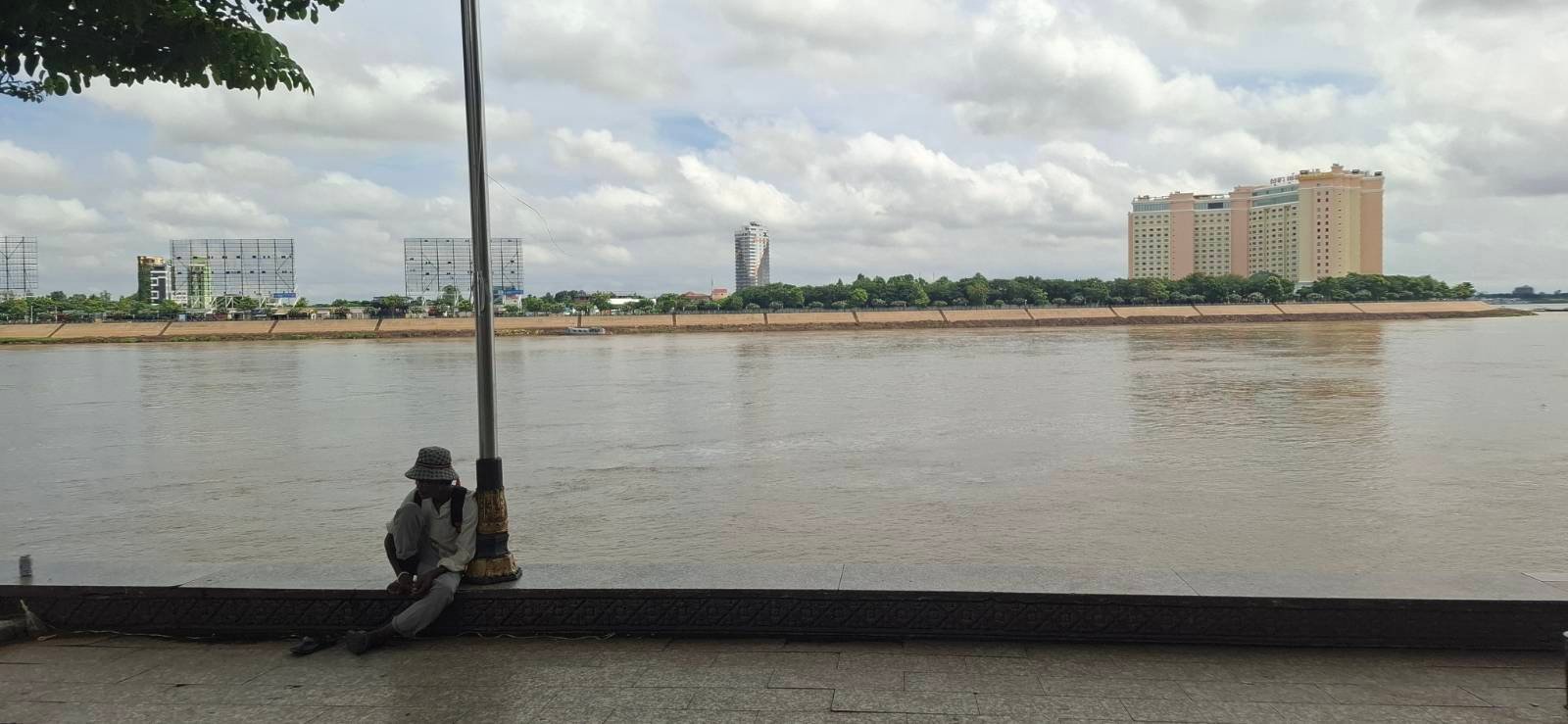
Pheak had just woken up from a mid-morning nap on a park bench when reporters approached him to chat. He traveled light, with a sack full of a few clothes, possessions and a half-eaten pastry he had saved.
After getting caught by police and district guards twice to be brought to a shelter in northern Phnom Penh, the 45-year-old said he’d much rather be outside, where at least he could eat and travel freely. At the shelter he was sick, and the conditions were “more difficult than prison,” he said, comparing it to his brother’s stories from prison.
“I got so skinny, I’m just starting to get stronger,” he told Mekong Independent.
When international delegations or major events like the Francophonie Summit come to Phnom Penh, authorities do sweeps of the city, grabbing people off the street when they appear to be houseless, begging or using drugs. While the city calls this “cleaning up,” residents around the Riverside say they dread being taken away to the rehabilitation centers.
“I’d rather go to prison than stay in a center,” said a teenager sleeping on the street, saying he hadn’t eaten in two days.
Phnom Penh’s Daun Penh District Hall posted on November 10 that it had “collected the homeless” and “dismantled homeless places,” adding that 22 people had been brought to the Social Affairs Department for “further procedures.” Stung Meanchey 1 commune shared reels of authorities chasing and catching people who were asleep under an overpass bridge.
Pheak said he and other people who have to sleep on the streets try to avoid these raids.
Dany, a 42-year-old tuk-tuk driver waiting for a Grab or PassApp order in front of a Riverside bar and restaurant on November 14, said that he had seen a few of the roundup procedures. He posted a video of one detention on Facebook two days prior, in which he saw two officials carrying a skinny man in baggy clothes by his arms and legs. They loaded him into the back of a van, and the video cut.
He said this usually happens ahead of big events like the Francophonie Summit, which was held on November 15 and 16. This event brought together 90 governments from French speaking countries, with parallel events like the Francotech Convention and Black Swan Summit.
“When they come back we see their legs and arms are swollen,” he said. “When they’re staying here, they’re okay.”
However, he said he had seen some drug users try to steal from tourists in the past, so he could understand why authorities want to make it less “disorderly.” But even with the big event, Dany said he couldn’t get as many tourists’ orders as he did before Covid-19.
Not everyone who spoke to Mekong Independent had a bad view of the centers. Yeay Ji, a woman in her 70s, sat in the grass near the Quayside building on the Riverside, telling reporters that the people who get stuck in the centers “come back with big bellies.”
“They get fat because they don’t do any work, they just eat and sleep,” she said.
Yeay Ji said she got caught by authorities only one time, when she was carrying a scale around the city, offering to weigh people for a tip as a form of begging.
“At that time I reached the district [police office], I was released, and the other 20 were sent to a center.”
Even though she said the conditions were fine, she said she was “lucky” to be turned away in the end.
Stung Meanchey 1 commune chief Chea Sareth told Mekong Independent that authorities conducted raids frequently and detained four or five people each time.
“They wander, yell, sniff glue, use drugs, steal cables and rob our brothers’ and sisters’ things,” he said over the phone. “Yesterday we rounded up four people. We do not know clearly, we just know that they are homeless doing all kinds of things including walking around naked, or yelling.”
He said when they were detained they would be sent to the Social Affairs Department in Phnom Penh, and didn’t know what happened beyond that.
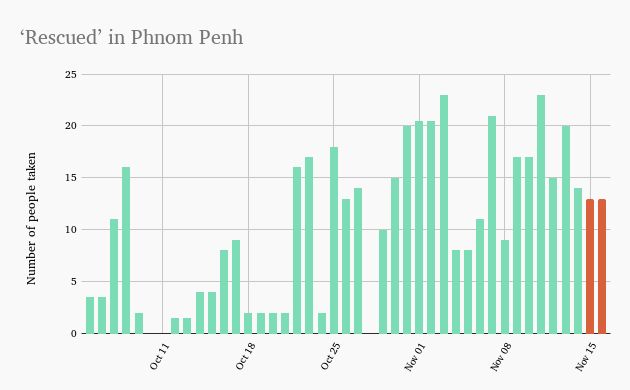
According to the Phnom Penh Social Affairs Department, a total 197 people had been taken off city streets in October, while another 253 had been taken as of November 16.
‘My chance’
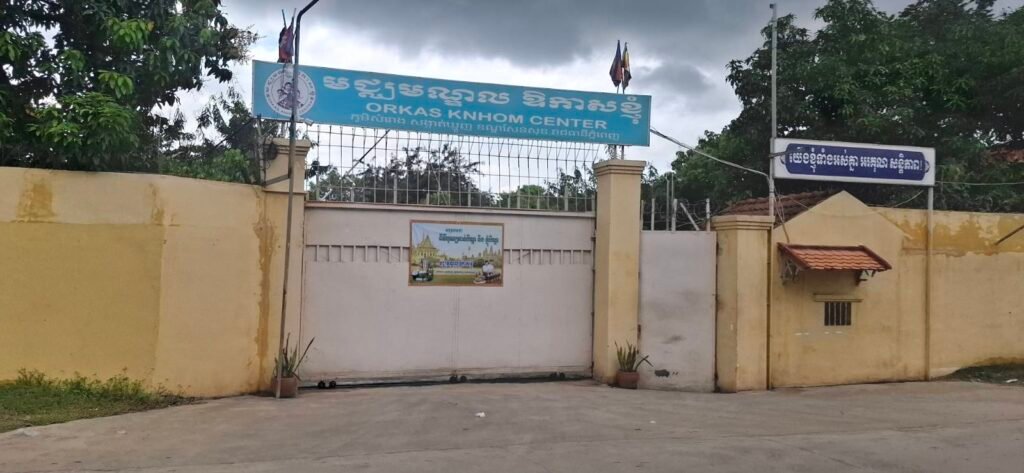
People who stay along the Riverside say authorities have two main centers where they may take people they catch: Orkas Knhom in Sen Sok district and Prey Speu in the south.
In 2013, Human Rights Watch published a report on authorities’ use of arbitrary detention to relocate various types of people they consider “undesirable,” including homeless people, beggars, street children, sex workers and people with actual or perceived mental or developmental disabilities. In interviews from 2011 to 2013, people who had been detained said they were never given any due process mechanisms — including clear charges, a court appearance or a lawyer — and many were subject to torture and abuse.
Pheak went to Orkas Knhom twice, and was kept there for several months at a time. He said he was pulled from his place on the Riverside into the authorities’ flatbed truck.
“When you’re stuck in the truck, we don’t dare jump off,” he said. “We could break our arm or leg, they drive very fast.”
The dorms were very hot, he said, as only people with family to visit can stay in a nicer facility. They got three meals a day, but he said it was only porridge and rice and he never felt full.
“I just sat in a line all day,” he said, adding that they could exercise only rarely.
Pheak said he was eventually able to convince the center to release him because he got sick. He claimed that people regularly died within the facility. If they didn’t have family anywhere, their bodies may just be cremated with no announcement, he alleged.
“Sometimes [detainees] stand outside and die outside while standing,” he said.
Pheak didn’t describe torture to the same degree as alleged in the 2013 report, claiming that they had stopped slapping people inside the facility. However, he claimed that people would be punished for stealing rice from others, or just for being new in the facility, with unpleasant actions like kneeling for an extended time, or having to sleep on the floor in front of the toilets.
Far northwest of the city, past the major developments like Aeon Mall 2 and the wedding halls around it, cars speed past a high yellow wall surrounding the Orkas Knhom facility.
One woman in her 50s waited outside the facility in one of the small LPG tuk-tuks, waiting there to see if she could visit her 30-year-old son inside.
She said she had learned he was detained six months ago for using drugs, but she had only been able to visit twice. People stopped at a grilled pork stall across the street from the facility said that visitors had to pay someone inside to see their loved ones.
In the short visits she’s had with him, she said her son just complained about the food. She didn’t know if he was receiving rehabilitation treatment.
“I tell him just to survive, you must learn to withstand the suffering,” she told reporters, while her tuk-tuk driver piped in that he wouldn’t be enjoying curry or pizza inside there.
When asked if people in shelters had enough to eat — a common complaint by people who had been to or had friends in a social detention center — Toch Channy, director general of the general technical directorate for the Department of Social Services of the Ministry of Social Affairs, Veterans and Youth Rehabilitation, deferred.
“For now, I cannot answer, and I need to check whether it is true or not,” he told Mekong Independent.
Almost silent
Prey Speu has long been criticized for treatment of people detained inside. In 2022, Licadho published a report counting at least 10 deaths reported in Prey Speu across two months, based on local testimonies from the neighborhood and a pagoda. But in between reports like this, news about the center remains quiet. A neighbor said the same, that the center was almost always quiet.
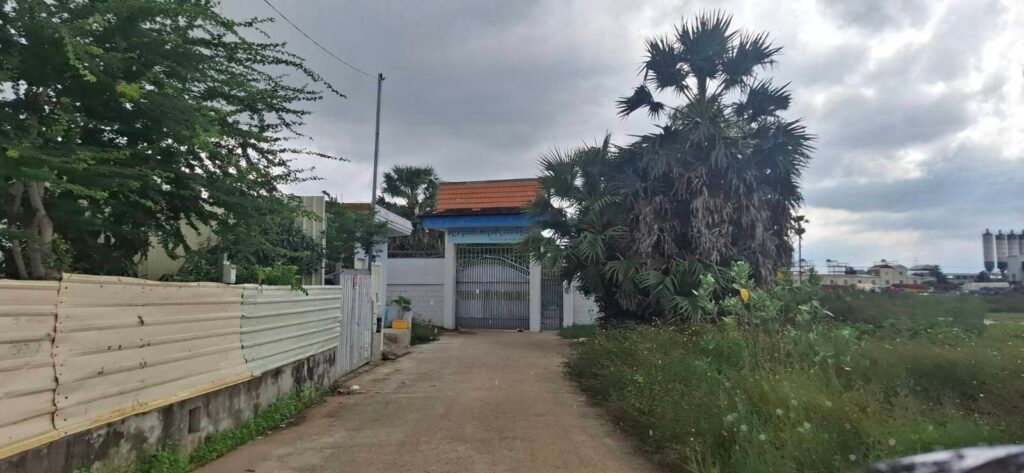
Reporters approached the gate of Prey Speu, and before they could ask questions, a guard shooed them away. The road to the gate was muddy and unpaved, and the gray-blue gate was high, topped with barbed wire.
Prey Speu is tucked inside a neighborhood of small houses and rowhomes, easy to pass if one doesn’t know where it is. Heng, a neighbor in his 50s living nearby the entry, said the facility is almost always quiet.
But about once a week, they hear sirens from an ambulance. Occasionally, they hear a scream in the night.
“Even if you ask me, I don’t know what goes on” inside the grounds, he said.
He didn’t quite know the criteria for putting someone in the facility, but he knows that some police who tried to bring a general criminal inside were not allowed.
“Sometimes they arrest a mother, and a child comes to beg for her release,” he said. “Some people who lose their memory, they will get confused and get arrested too.”
Heng said he doesn’t worry about people escaping: If they pass his house and ask directions, he’ll tell them how to get to the main road to catch a ride. Some people pace back and forth in the neighborhood, he said, suggesting they could have a mental disability or confusion.
He said he felt concerned for people inside, but didn’t know very much about what they experienced.
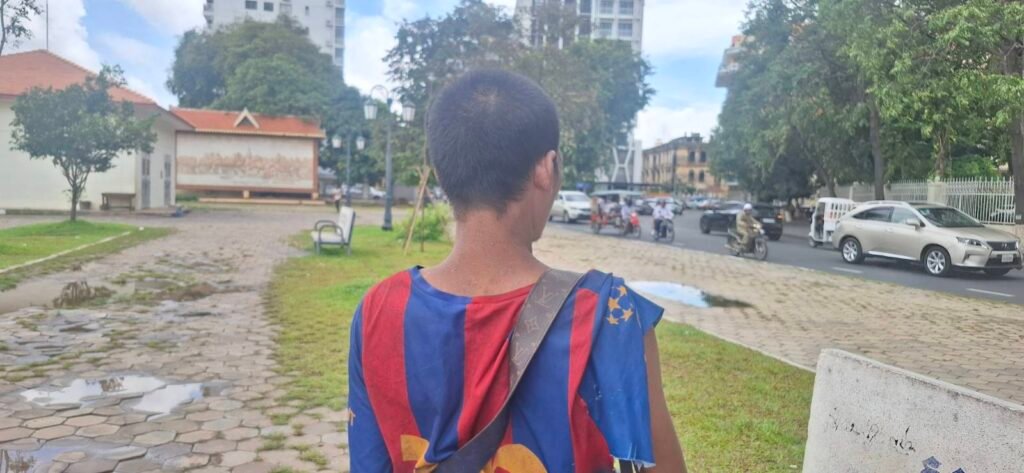
Waking up on a park bench at the Riverside on November 13, Pheak said he was feeling lucky. The day before, he was eating rice when authorities came to detain people who they deemed to be sleeping on the streets or using drugs.
He was able to run away, but the authorities ripped the left shoulder of his football jersey.
“You have to run! If you stay there you could be dying,” he said.
This article is published as Creative Commons.