
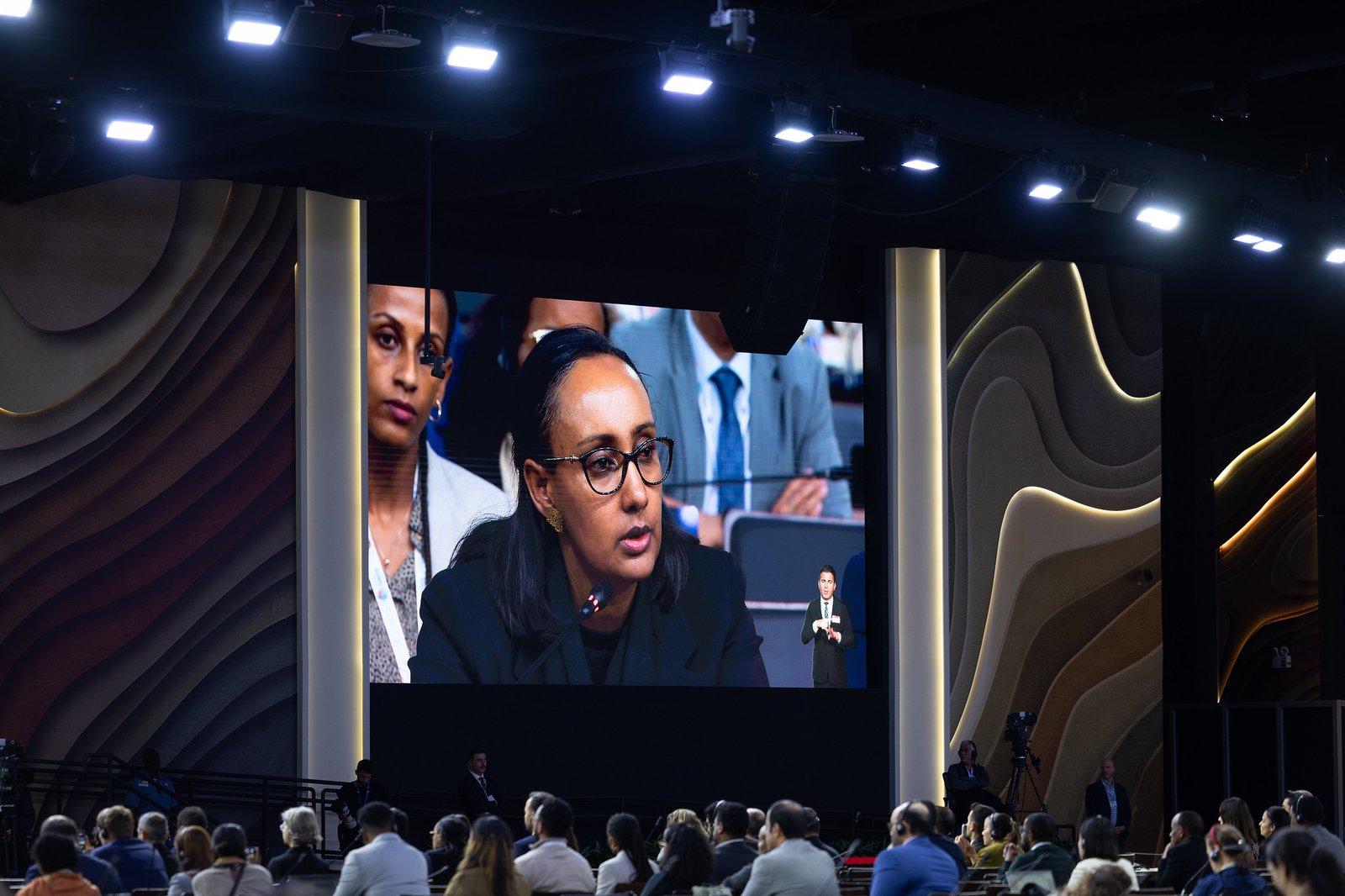
Phnom Penh — At the closing of COP31, developing countries and civil society groups said the most vulnerable communities had been left with only political declarations — and no money to protect people and ecosystems from climate disasters.
Civil society groups say the talks on finance, adaptation and a just transition are effectively “dead in the water,” as divisions persist over who should provide funding, how much should be delivered, and whether vulnerable countries will receive grants or more debts.
‘The worst COP ever’
As negotiations wrapped up, one member of civil society called COP31 “the worst COP ever.”
Power Shift Africa’s director, Mohamed Adow, said COP31 was meant to be the “Implementation COP,” but instead left key programs without a delivery plan. He accused developed countries of resisting finance commitments and blocking international cooperation.
“The COP president wants to tell us this has been a great COP. Well, as things stand, and you’ve heard from my colleague, I can tell you without any doubt that this has been the worst COP ever,” Mohamed Adow said. “Overseeing a failing COP is bad enough, but try to sell it as a success, rub salt into the wounds of those people who need it to deliver.”
Aarti Khosla, the director of Climate Trends said in a statement that the failure to reach consensus reflects a lack of political ambition and accountability. Despite talks extending into Sunday, countries failed to agree on a meaningful commitment to transition away from fossil fuels or address climate security, she said.
“Developed countries ensured there is no measurable responsibility for financing the transition, while major fossil fuel producers have blocked stronger mitigation language. The result is a diluted consensus that sidesteps obligation,” she said. “There is an overall lack of any serious intention and dilutions exist across the entire package.”
A draft without numbers
The controversy centers on the COP31 Presidency’s draft cover decision, the overarching political text that intends to capture the summit’s outcome and set the direction for future action. An earlier draft had included a proposal to increase adaptation finance to at least US$120 billion annually by 2035, but that figure was removed from later versions.
The latest draft instead reaffirms the COP30 commitment to “at least triple” adaptation finance by 2035, but does not set a baseline, a clear funding target, or a detailed plan for how the increase will be measured and delivered.
For developing countries, that omission is significant. Without a financial benchmark to meet, it is difficult to know what “tripling” means, who is responsible for delivering it, or whether the money will be new and additional.
Nakul Sharma, senior policy adviser on India’s Clean & Just Energy Transition, said the COP meetings were meant to protect vulnerable populations and build resilience against increasing climate risks.
“Developing countries came to Antalya seeking credible progress on climate finance and the means to implement their climate commitments,” Nakul Sharma said. “They are already facing the compounding pressures of climate impacts, high energy costs, rising debt and constrained public finances.”
Announcements won’t cover up deadlock
Teresa Anderson of ActionAid International said the presidency-led cover decision would not hide the fact that negotiations were struggling. She argued that developing countries are still being asked to do more than wealthy nations without adequate financial support.
“Adaptation finance is not a nice-to-have,” Anderson said. “Adaptation is how we all survive this climate crisis together.”
Meanwhile, Janet Milongo, senior manager of energy transition from Climate Action Network International, said climate finance was still stalled as negotiators tried to buy time while communities living with climate disaster paid the price.
“We need developing countries to close the implementation gap. We need them also to provide the finance, the equity, the developing countries require to also do their bit,” she said. “And we must remember that developing countries did not cause this crisis. Yet they are the ones bearing the biggest brunt of the crisis.”
The fight over adaptation finance is one of the most consequential issues at COP31. At COP30 in Belém, Brazil, governments agreed to call for efforts to at least triple adaptation finance by 2035. At this year’s conference, developing countries and civil society thought the negotiators would define the baseline or establish a clear mechanism for delivery, but it didn’t come through.
The latest draft proposes an “Antalya-to-Addis Ababa Roadmap for Adaptation and Resilience Finance,” which would identify sources of finance ahead of COP32 in Ethiopia. But civil society groups say a roadmap without a funding target or baseline risks becoming another talking shop.
Wider financing
The deadlock extends beyond adaptation. Negotiators are still divided over how to implement the New Collective Quantified Goal (NCQG), established at COP29 in Baku. The NCQG calls for climate finance for developing countries to reach at least $1.3 trillion by 2035, including at least $300 billion per year from all sources.
But questions remain over who will provide the $300 billion, how it will be divided between mitigation, adaptation and loss and damage, and whether it will be delivered as grants or loans.
The Climate Action Network warned that political attention has been watered down, diverting negotiators from the issues that matter most to developing countries.
The Pan African Climate Justice Alliance said the true measure of success will be delivering people-centered policies rather than another round of promises.
“We need to strengthen it. But what is being done? We need to see all of this signal now in the text, in the negotiation room. So our message is simple,” said Selma Huart, climate finance advocacy officer at Oxfam France. “Adaptation finance is the building block for a credible COP31 outcome. We need to have the $120 billion secured by 2035.”
This article was supported by Informed Earth.