
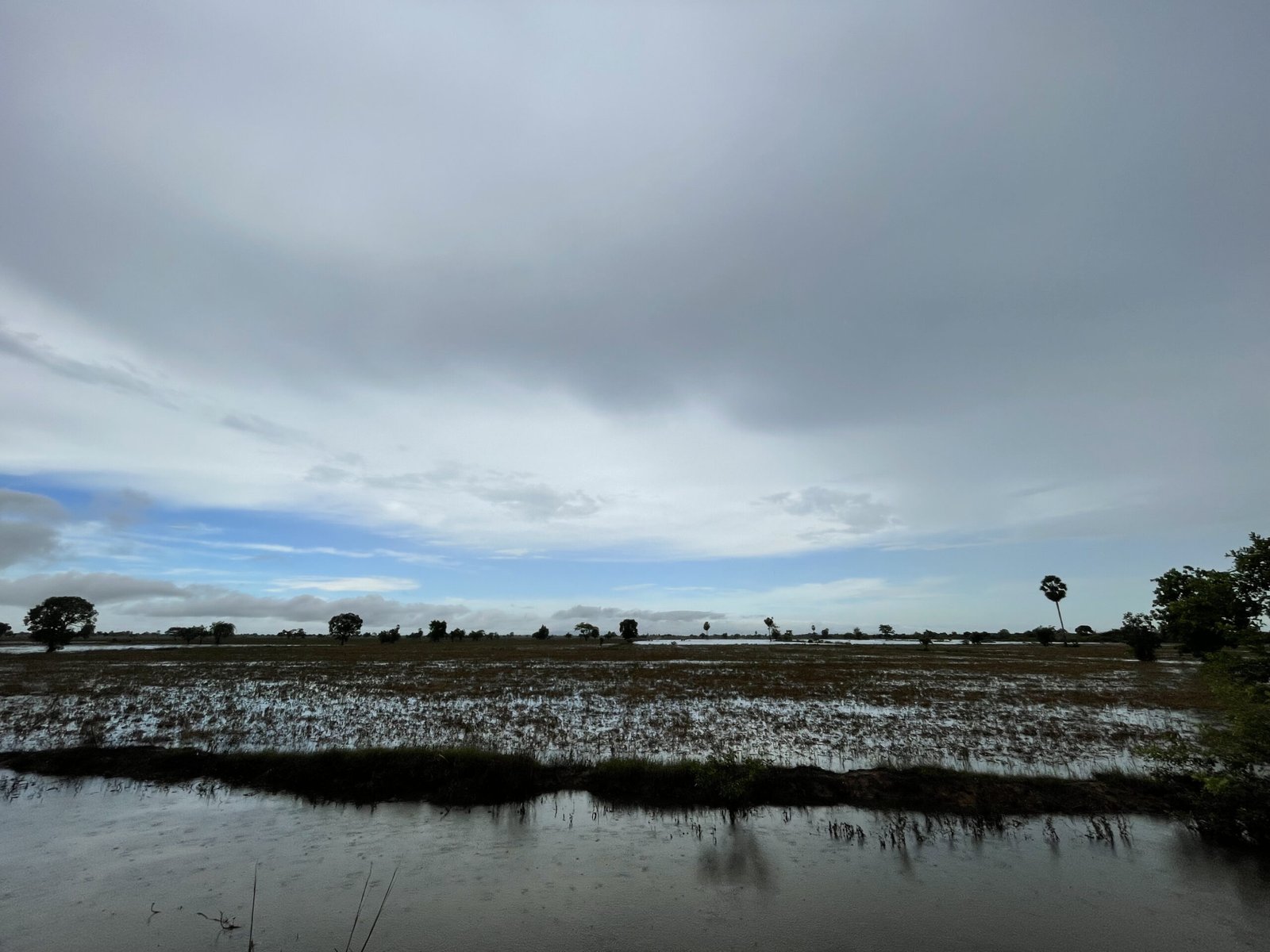
Battambang — Rain-induced floods destroyed Cambodian farmers’ crops just before harvest, following a planting season plagued by drought and water shortages.
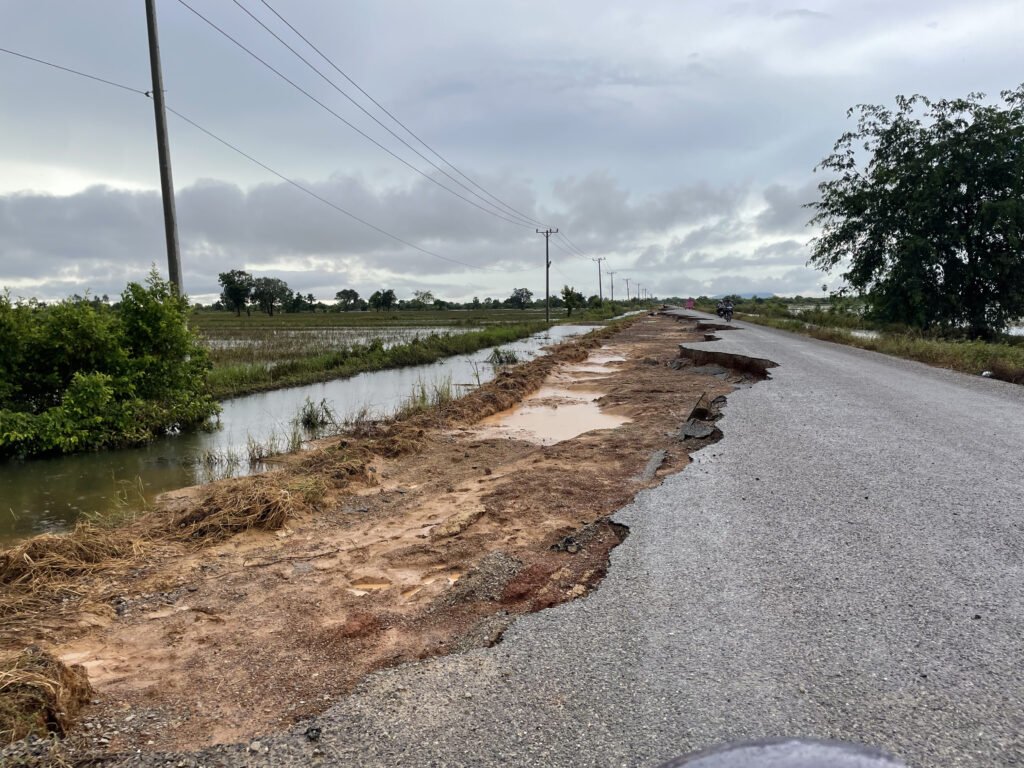
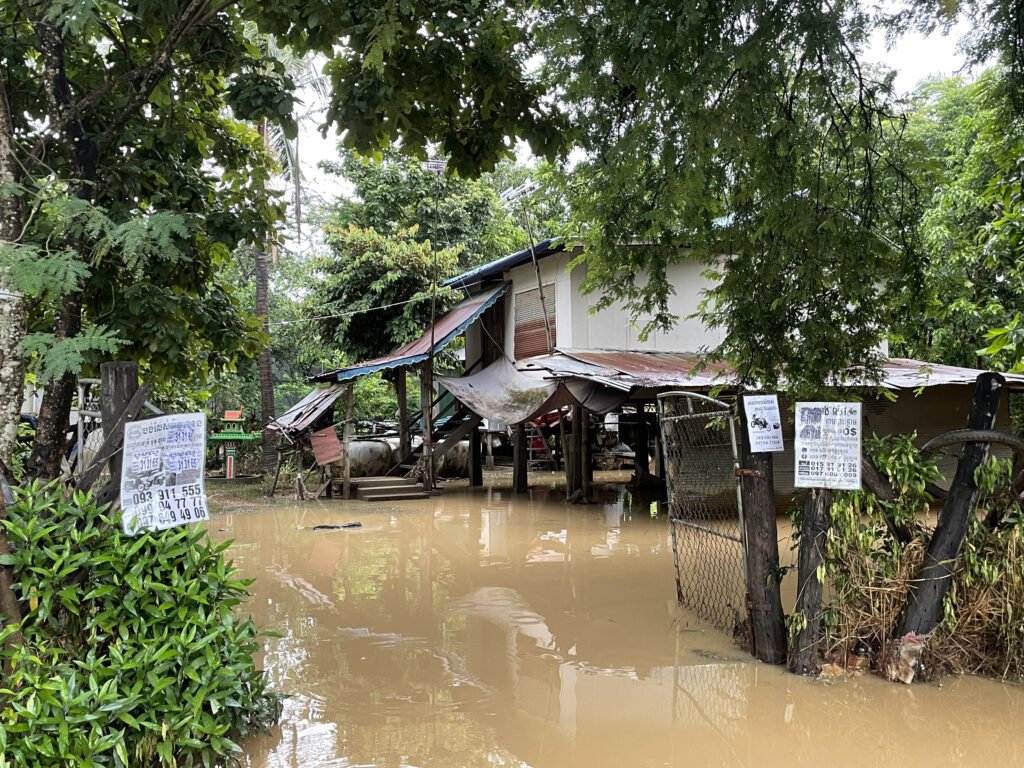
Flooding across 10 northwestern provinces of Cambodia — most of which share a border with Thailand — has been particularly severe, persisting from September through October. This has devastated the rice crops of residents who were already grappling with economic hardships, compounded by tensions along the border.
In the aftermath of the floods, the farmers now face warnings of El Niño, with authorities pushing drought-resistant rice varieties and encouraging rural residents to use water “sparingly, responsibly and with great caution.”
A lost harvest
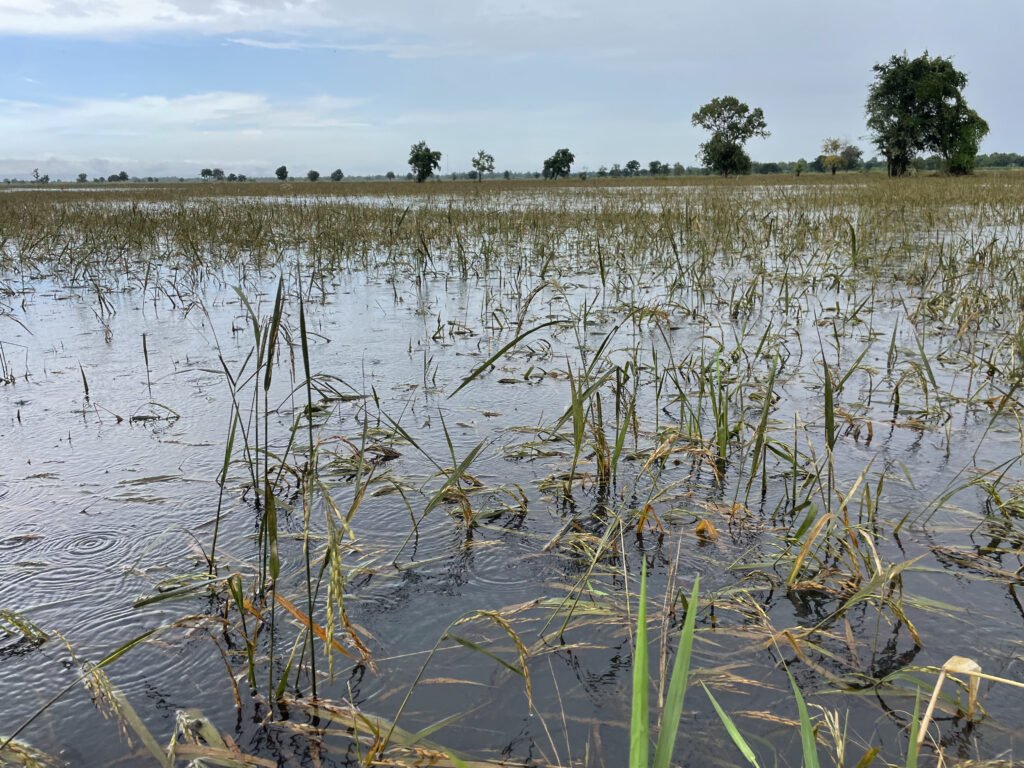
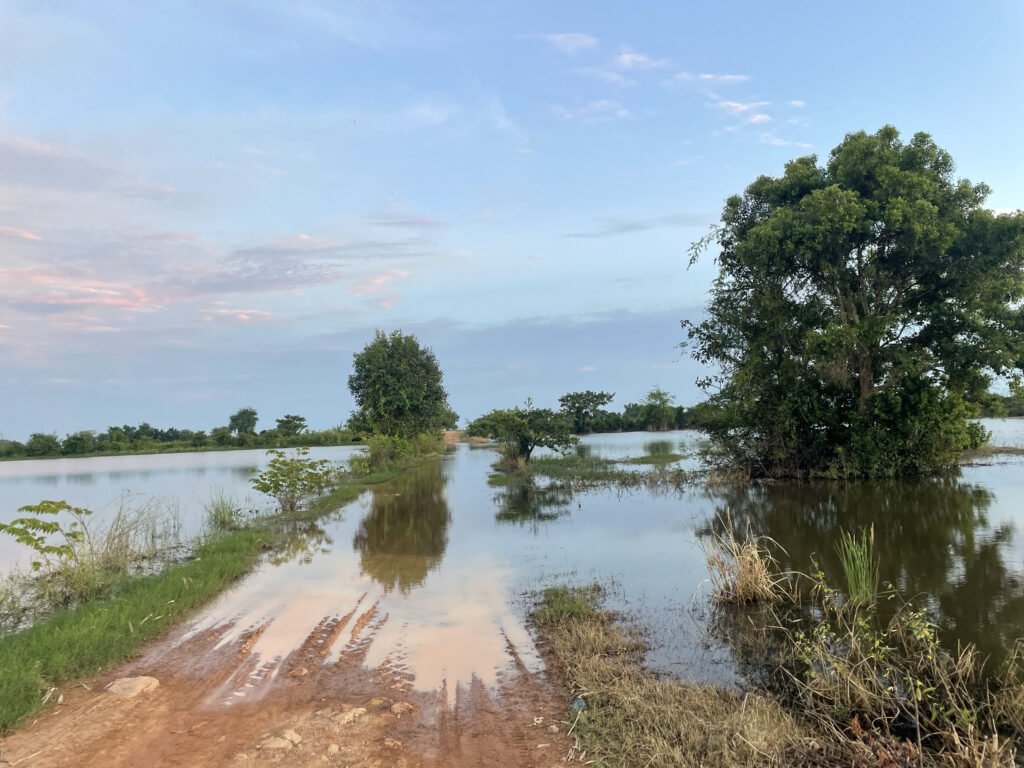
Battambang province has been hit especially hard by climate change. Farmers, who had struggled with severe drought and a lack of water for their fields, suddenly faced heavy rains and flooding just as their laboriously cultivated rice crops were ready for harvest. Preliminary reports indicate that the flooding has affected over 120,000 hectares of rice fields in this province.
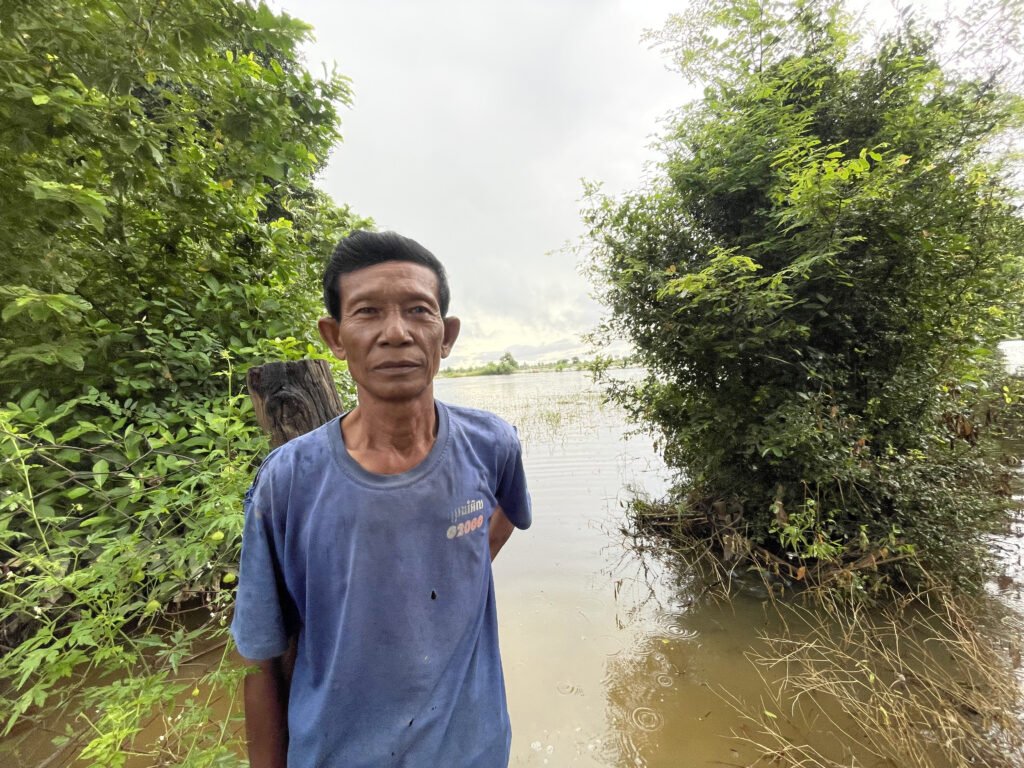
Thi Thieb, 64, a resident of Sno Village, Ou Dambang Muoy commune, Sangke district, stated that his 1 hectare of rice — for which he had invested over 1 million riel, or about $250 — is now completely submerged due to flooding.
However, he noted that even without the floods, the crop would not have yielded a good harvest; since he began sowing in late May, conditions were poor due to a lack of irrigation and a drought, which caused the rice stalks to wither and turn red. Because his fields — along with those of other villagers — are submerged and located in a deep-lying area, he was unable to reach them to see the extent of the flooding firsthand as of October 7.
Meas Saray, 50, a resident of Damnak Dangkor village, Reang Kesey commune, Sangke district, has evacuated to stay at her sister’s house because her own home was flooded — a situation that persisted as of October 7, when she was interviewed by Mekong Independent. She and her husband have placed their household belongings and supplies on a raised bed, keeping them well above the floodwaters. Much like Thi Thieb, Meas Saray saw her rice crop wither and scorch due to a dry spell that struck between late August and early September. Surprisingly, however, the drought was followed by severe flooding.
“The weather is just bizarre — I never imagined it could reach this point! It’s unbelievable that right after such scorching, dry heat the rains came and caused such sudden, overwhelming flooding,” she said.
“People were already preparing to harvest their rice, which had turned a reddish-brown color, but then the flood came and wiped everything out completely. Over 10 hectares of my aunt’s rice crop were submerged before she could harvest any of it. The same goes for my younger sibling, whose 2.5-hectare plot near the dam in the middle of the lake was also flooded before it could be harvested.”
With her entire rice crop destroyed by the flood, Meas Saray does not yet know how she will manage to cover the costs of the pesticides, fertilizers, and land-preparation services she used. For now, she sees no other option but to take on further debt to fund her next planting season.
Currently, Meas Saray’s husband works as a hired laborer, carrying and bagging rice for others to earn an income to support the family, while their son has migrated to the city for work to help cope with these difficult living conditions. Meas Saray and her daughter are discussing the possibility of the daughter finding work to help support the family, but the daughter is only 16 years old, meaning she is not yet of legal working age.
Unpredictable futures
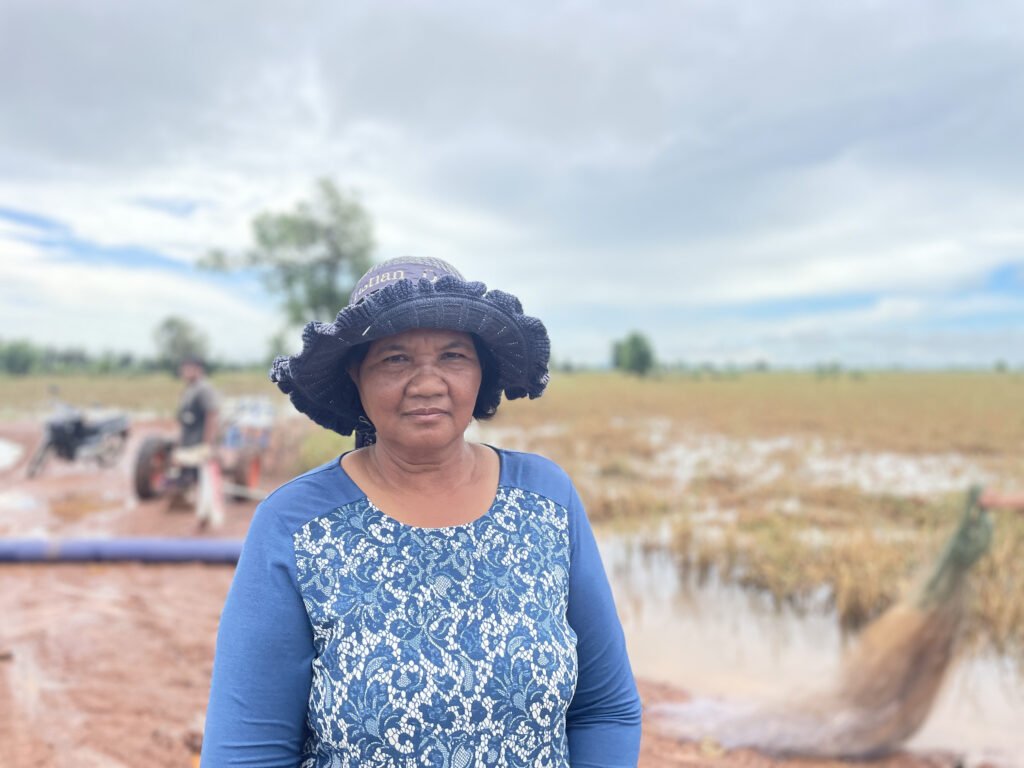
Sao Run, a 57-year-old farmer from Damnak Dangkor village, Reang Kesei commune, Sangke district, has lost her entire 10-hectare rice crop — the family’s sole hope for the future. She explained that this year’s farming season was marked by constant anxiety; shortly after she sowed the seeds on May 20, the emerging crops were repeatedly hit by heat and dry weather, causing some to wither and die. Distressed by the damage to her rice crop, she invested in nutritional supplements, herbicides, and fertilizers, which helped secure some yield — but now, the rice is being submerged by water once again.
“This flood has really made me think twice about continuing. We were supposed to harvest at the end of September, but then the floodwaters came and submerged everything. Farming under these conditions is nerve-wracking — it’s a constant state of anxiety. The thought of doing it all over again is terrifying. I’m terrified of facing water shortages again; as a farmer, I’m deeply worried. It really makes me want to give up.”
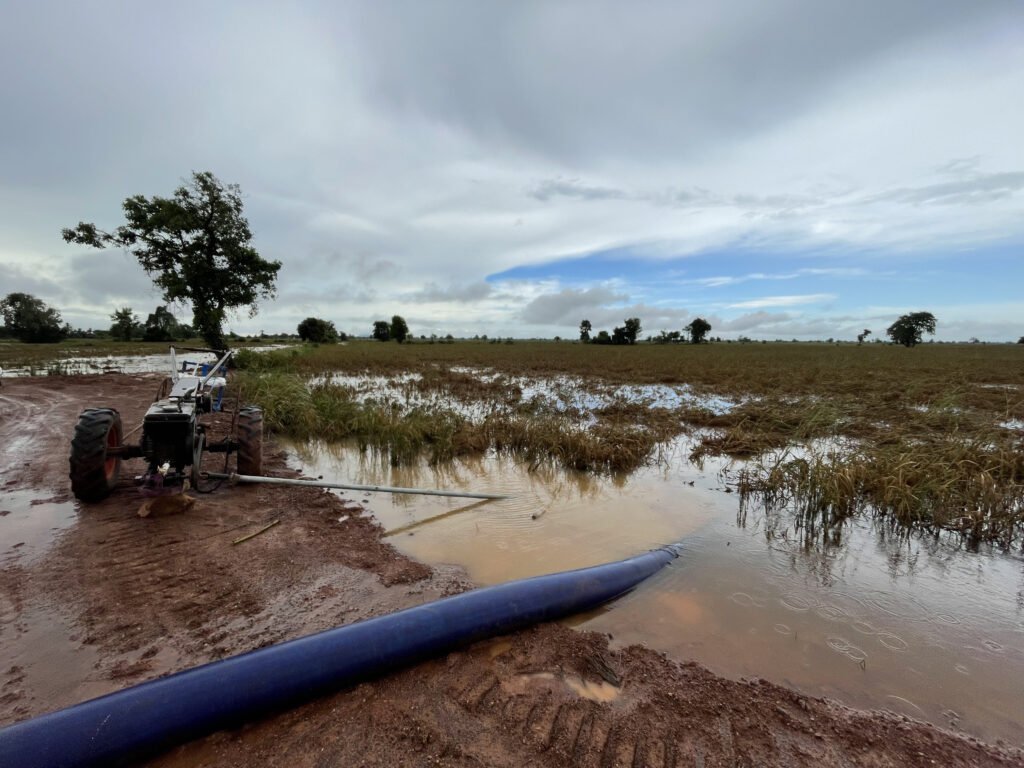
On October 7, Sao Run was overseeing her children as they pumped water out of the flooded rice fields, hoping to allow a harvesting machine to enter and salvage at least some of the crop. However, she noted that the cost of harvesting this submerged rice is essentially just for show; the yield is so low that it barely covers the cost of the harvesting machine. One hectare of this flooded rice produces less than a ton, and to make matters worse, the price for “wet” freshly harvested rice has dropped — fetching only about 800,000 Riel per ton, or about $200.
Difficulties along the border
Battambang is a province bordering Thailand. Beyond agriculture, some residents here work as migrant laborers in Thailand to cover family expenses, repay bank loans, and secure capital for local farming activities. However, following the emergence of border tensions in May last year — which escalated into two separate armed clashes — many Cambodian migrant workers were forced to abandon their jobs and return home.
Chin Bunret, 50, along with her husband and children, returned to Cambodia — specifically to Chhay Ballang village, Thibdei commune, Koas Krala district — this May, following the second round of border fighting. Upon their return, the family immediately turned to agriculture, engaging in pig farming and cultivating a 5-hectare rice field. Before leaving for Thailand, Chin Bunret had taken out a $15,000 bank loan to build a house, intending to repay the debt with the earnings from her work in Thailand. After returning from Thailand, she borrowed an additional 20 million riel ($5,000) from a private lender to invest in farming. Unfortunately, this year’s climate fluctuations — ranging from drought to subsequent flooding — completely destroyed her rice fields. She is now burdened by multiple layers of debt.
“Take my situation, for example: I’m a farmer, and because I grew rice, I ended up in debt to both a microfinance institution and a private lender — the burden is immense. I would like to go back [to Thailand], but I can’t; it’s simply not possible. I’m afraid of being arrested by Thai soldiers! If I try to cross via an unofficial route, I’ll get caught — there have been many reports.”
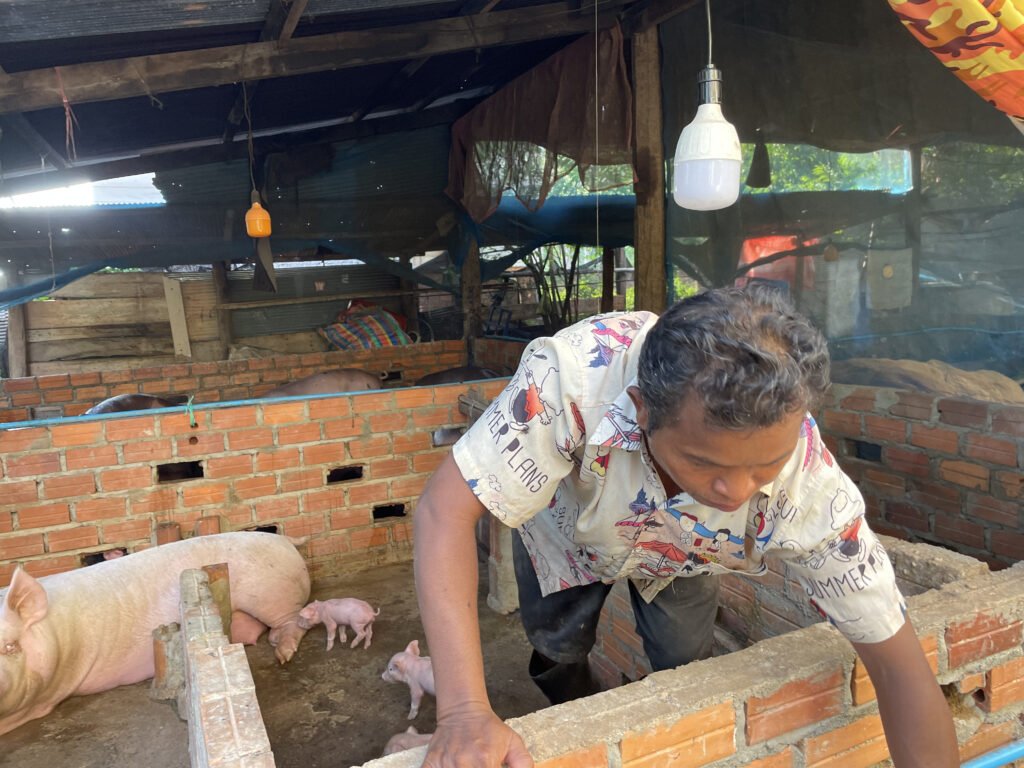
Chan Kueab, the husband of Chin Bunret — who was busy feeding pigs at the time — expressed hope in his last remaining option: pig farming.
Despite the loss of the rice harvest and the inability to return to work in Thailand, Chan Kueab feels compelled to try farming again with his wife once the floodwaters recede.
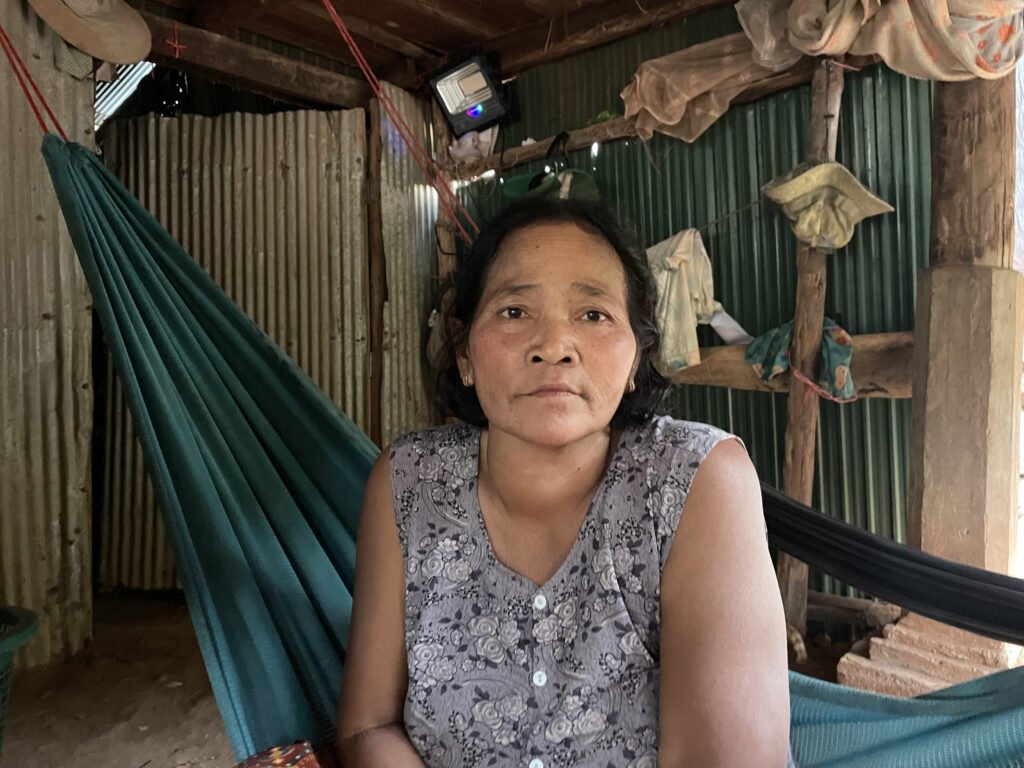
Nhanh Thau, 55, a resident of Cheung Tinh village in Thipdei commune, Koas Krala district, finds herself in a similar situation. Her husband and children, formerly migrant workers in Thailand, returned home to farm rice. However, the recent floods have caused significant hardship, leaving the family in debt due to the costs incurred from their farming activities. She expressed a desire to return to Thailand with her family for work, but noted that the current situation at the border prevents this — workers are not being accepted, and she also fears that they might be arrested by Thai soldiers.
The damage
Following the floods, authorities have been gathering data and distributing emergency food aid to those affected. In Sovannmony, deputy director of the Battambang provincial department of agriculture, told Mekong Independent that the flooding has impacted over 120,000 hectares of rice fields across the province. Of this total, more than 70,000 hectares of crops have been damaged to the point where they cannot be harvested.
Local authorities and the National Committee for Disaster Management are assessing the impact; for areas where recovery is possible, authorities will provide seeds, whereas for areas where recovery is not possible, food supplies will be provided to the residents.
Soth Kimkolmony, spokesperson for the National Committee for Disaster Management, said on October 19 that the authorities had not yet determined the specific assistance required by the affected residents.
“Only after the assessment is complete will we be able to determine the specific requirements — such as the number of hectares affected, the number of families in need, and the quantity of rice seeds required — so that we can provide support in the near future.”
Sok Lou, governor of Battambang province, declined to grant an interview, but stated publicly on October 6 that the government had offered aid to 15,000 families, with priority given to those most severely affected by flooding and those in genuine need, such as widows and the elderly with no one to care for them. He urged heightened vigilance regarding venomous animals, the risk of drowning, and dengue fever, and encouraged citizens to strive to restore their livelihoods by engaging in agricultural production and other income-generating activities once the floodwaters recede.
The climate threat
The Ministry of Water Resources and Meteorology has projected a 100% probability for the “El Niño” weather pattern to affect Cambodia in early 2027.
The ministry says the global weather pattern is expected to lead to water shortages here, as the region now prepares for its second rice planting of the year.
On the morning of October 19, the ministry issued an announcement urging continued cooperation in conserving water sources for the upcoming dry season. The public is encouraged to use water “sparingly, responsibly, and with great caution” — particularly in remote rural areas located far from water sources.
In Sovannmony, the deputy director of Battambang’s department of agriculture, said authorities were coordinating cultivation and recovery plans.
They would assess and advise farmers on where and when to plant crops to manage water supplies in coordination with industrial and household use, he said.
“In total, approximately 98,000 hectares across Battambang province have been identified for potential replanting and recovery. This includes three to four areas situated near existing water reservoirs managed by the department of water resources.”
Furthermore, the department of agriculture has provided training on irrigation and climate change adaptation covering crops such as vegetables and cassava.
In Sovannmony said traditional farming practices were no longer suitable given current climate conditions.
“Farmers cannot simply plant crops and wait for rainfall; they might lose their harvest once or twice before finally getting enough rain on the third attempt to secure a yield,” he said, instead encouraging irrigation systems such as sprinklers or drip irrigation.
The department of agriculture has advised farmers to use rice varieties resilient to climate change — such as Phka Rumduol, Sen Kra-ob, Sen Pidor, Rang Chey, Srangae Thngon, and Srangae Sral — while avoiding varieties that lack such resilience and would perish even under minor water shortages.
The next cycle
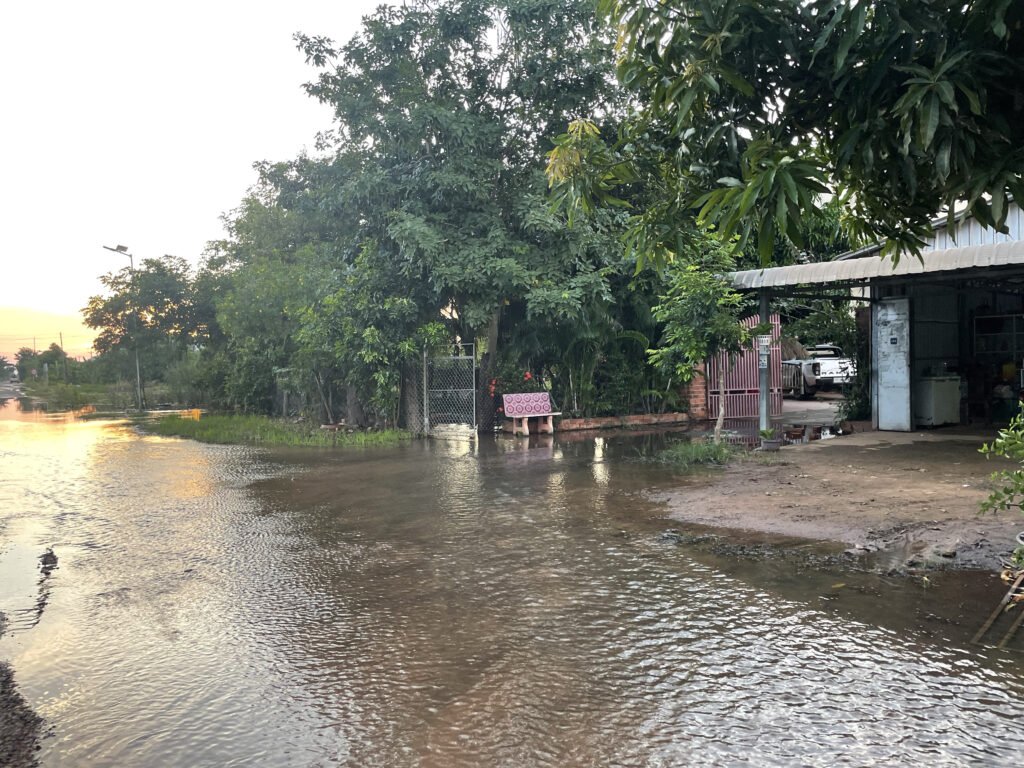
Ek Phnom district experienced four flooding events this year. The first three were the typical, recurring annual floods from the Sangke river. However, the flood in September — which caused large-scale damage to the rice crop — was triggered by water released from the Sek Sak Dam. This made it difficult for farmers to harvest their crops before they were submerged.
Sitting in front of her house watching damp rice drying in the air, 39-year-old Tuom Sophi — who lost 1.5 hectares of rice — explained that she had managed to harvest and sell some of the crop after the flood, earning 650,000 riel ($160). In contrast, the production costs for the rice farming had exceeded 3 million riel ($750). As a result of this flooding, she has fallen into debt to the suppliers of fertilizers and pesticides.
She is now worried about future cultivation, as this year has brought both floods and droughts — conditions to which farmers struggle to adapt quickly.
“Most of the time, we can only farm when the water recedes, perhaps around the end of October. If the river water doesn’t rise again during this period, people will start planting once more,” she said.
“There is some hope [that it won’t flood once more], but then there is the risk of a lack of water instead.”
This article is published as Creative Commons.