
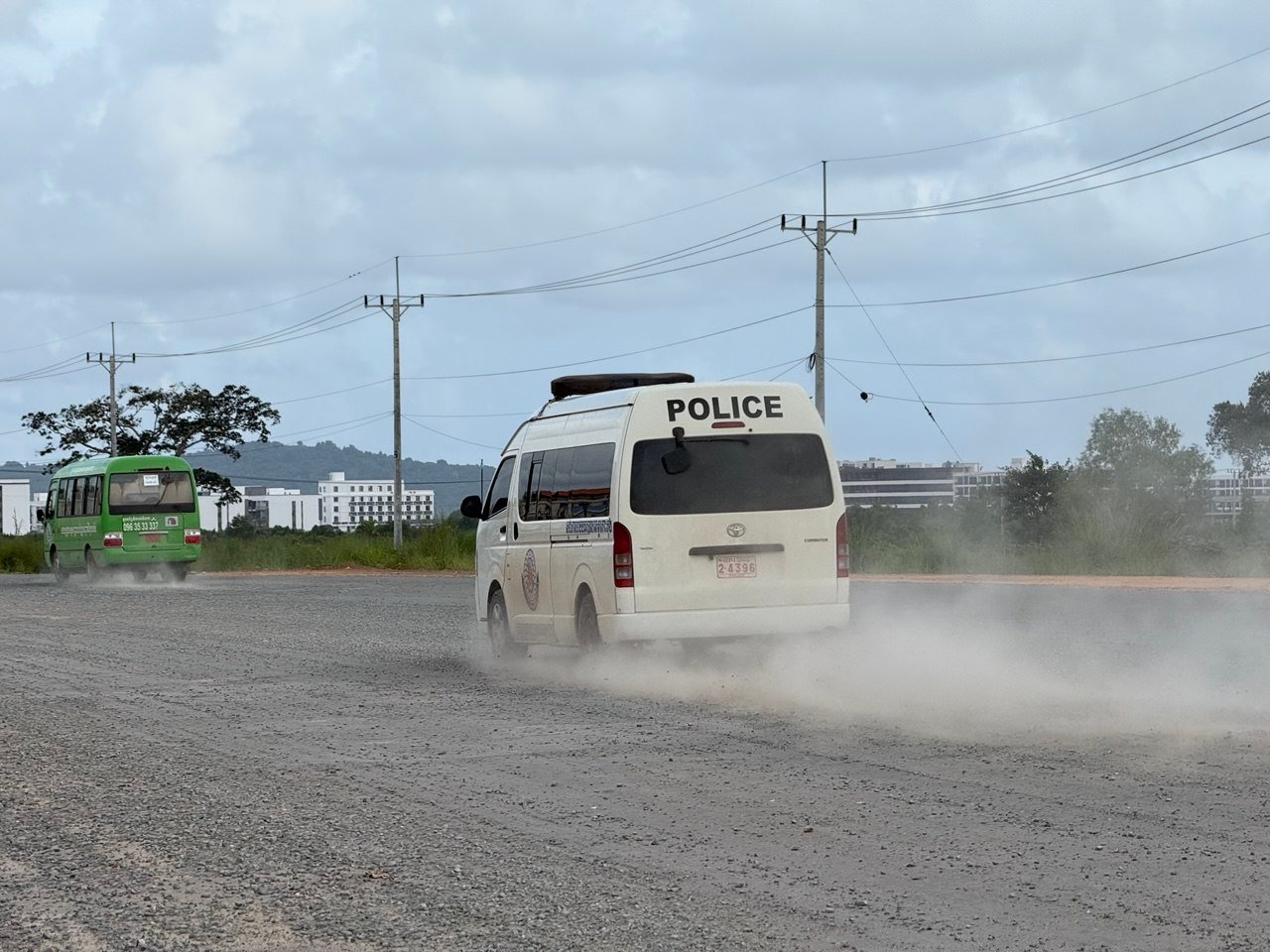
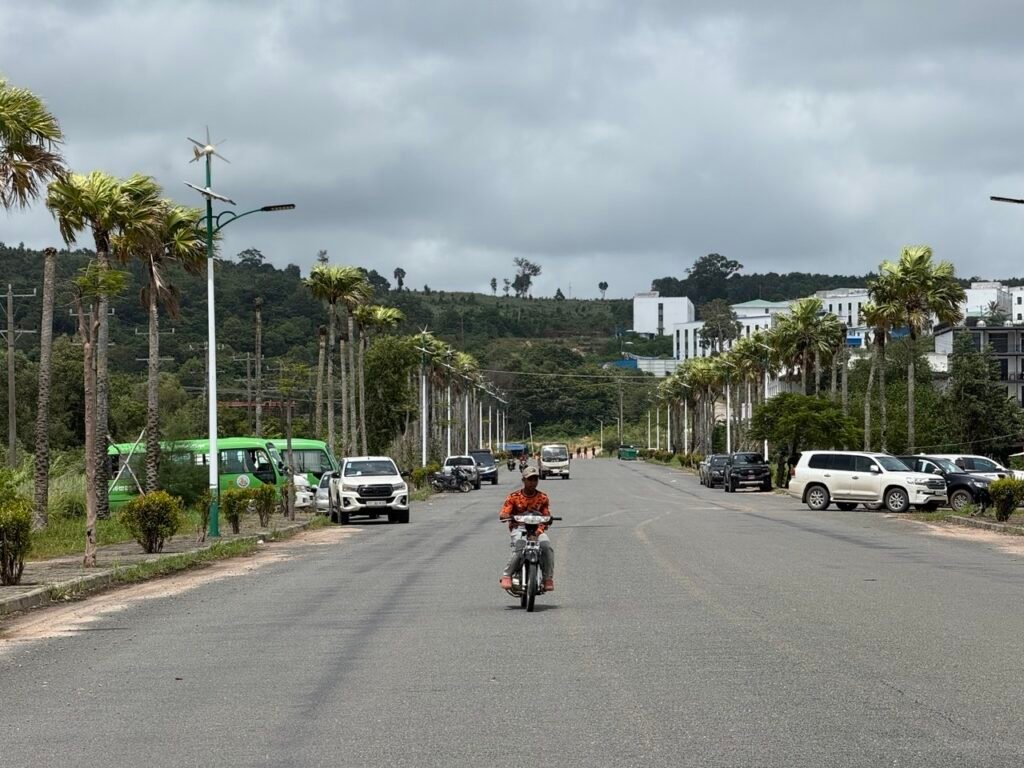
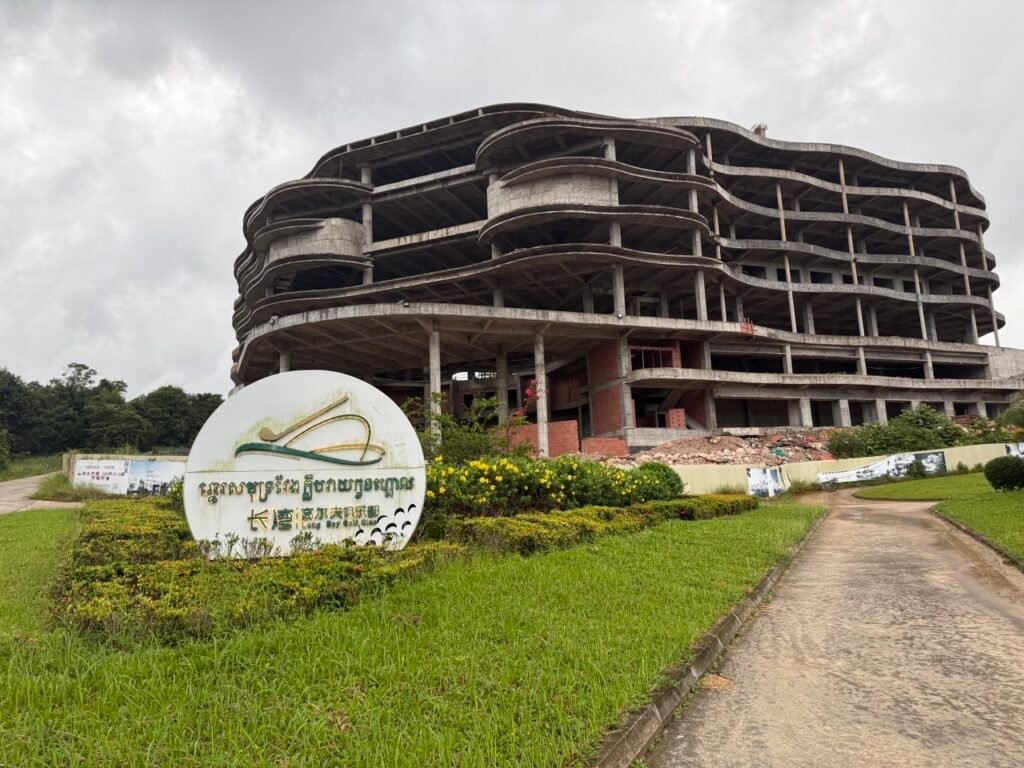
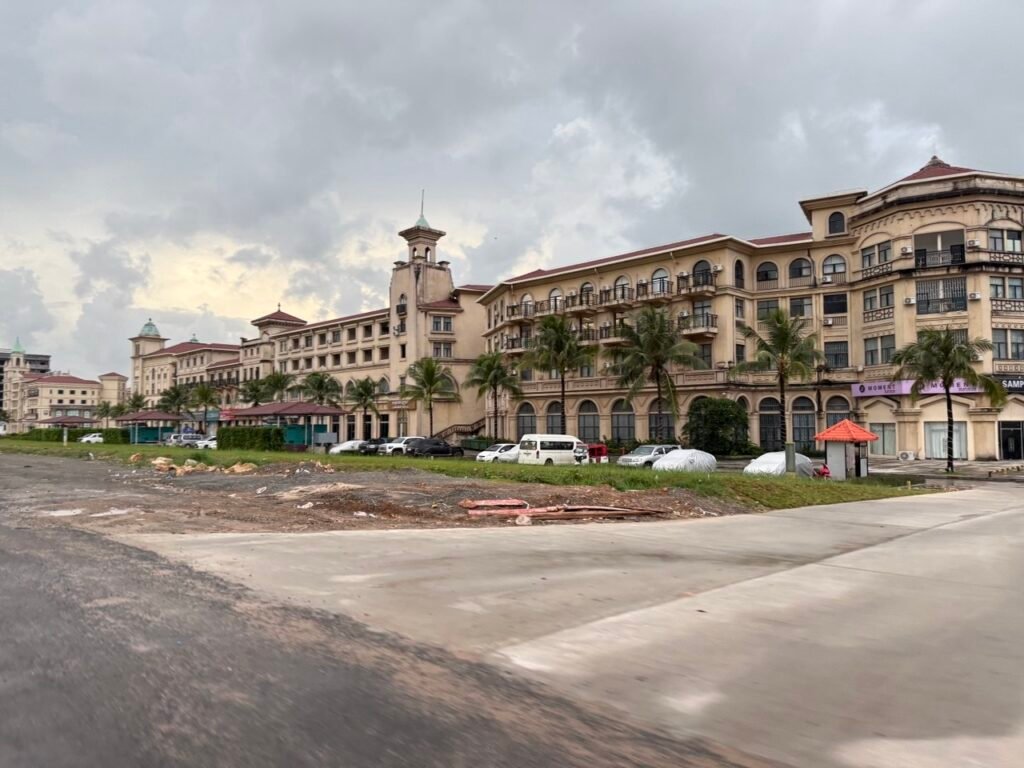
On a scorching afternoon in early September, a 20-year-old named Ratha foraged for cans, scrap metal and anything else he could find laying across the manicured campus of the Long Bay Dara Sakor resort area. Ratha said he was among some of the few remaining in the area after continuous raids emptied the compound — a notorious area that has been linked to allegedly well-protected scam operations.
Dressed in a white T-shirt and shorts with a black bag slung over his shoulder, Ratha is now a scavenger. But before this he was a uniformed guard for ZD Security, one of the firms brought in to manage the masses of workers at several different scam operations at buildings within boundaries of the 45,000-hectare Union Development Group concession.
Ratha was relaxed in the largely abandoned compound, but he told Mekong Independent that he didn’t want to run into authorities as he scoured buildings and fields for scrap metal.
The Cambodian government’s continued crackdown on cybercrime has emptied out a resort property that was notorious for its connections to the scam industry and online gambling. The concession area had been known as a hard-to-breach scam complex years before the shocking allegations of corruption, drug and scam crime in an investigation into Dara Sakor director Deng Pibing by Al Jazeera’s 101 East.
A Facebook page for the Dara Sakor resort area posted on October 19 claiming to oppose all types of scam activity, without specifically alluding to the documentary.
The statement read: “Dara Sakor will continue to strengthen its risk prevention and control systems, fully cooperate with relevant authorities in investigations and law enforcement actions, and work together to safeguard security and order in the zone and surrounding communities as well as the legitimate rights and interests of all parties. We have always believed that only by upholding the rule of law and integrity can the region achieve long-term, healthy, and sustainable development.”
It further linked to a post on the government news outlet Agence Kampuchea Presse, stating that Deng Pibing had left the country in May. The statement said Cambodia’s anti-scam authority was investigating the businessman, and so far there were no reported updates about the investigation.
A reporter visited the concession in September after multiple raids were reported in the resort area this year, as residents and some former security employees described the violence and secretive activity of previous years, and the changing climate amid this year’s nationwide crackdown on cyberscams and online gambling.
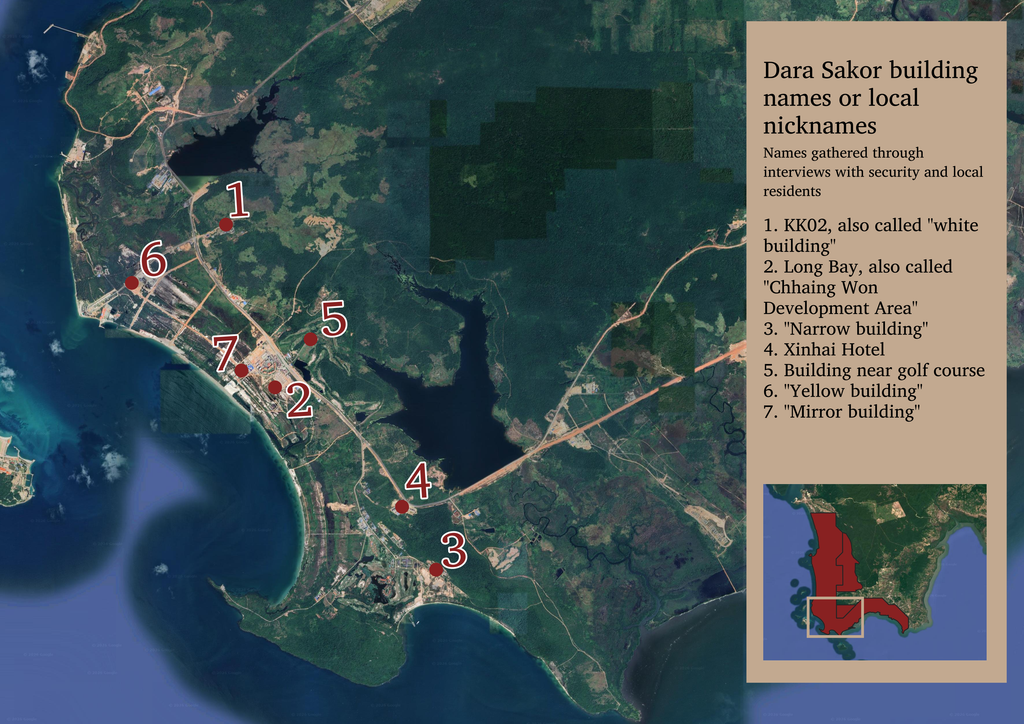
Ratha said that he had been recruited by ZD with about 100 other security guards, and was paid a monthly salary of $270 that was raised to $300 after three months on the job. He said he had worked there for around a year, mostly at a building that he called the “White Building,” at the same location of “Site KK02” on a map of reported compounds by the watchdog website Cyberscam Monitor. A few thousand people worked there at its peak, he said.
“The most difficult thing for us [security guards] was training,” Ratha recalled. “After working hours, we go join the training, including running, kicking, punching, attacking and how to interact with Chinese people. … Some couldn’t tolerate the work and they quit.”
Makara, a 23-year-old who also had worked for ZD, said Cambodian security guards had been recruited for their physical strength, with priority given to people who showed they were tough or had special skills like martial arts. They would need to be prepared to take control of a situation, he said.
“It was a simple rule: When they ignore our words, we will beat them up,” he said. “We were allowed to beat them by breaking arms and legs and torturing them anywhere we’d like, but we were banned from hitting their heads. Our boss warned us not to leak any information or tell anybody [about our work].”
ZD Security, which was formerly called BIC Security, was recently named in an investigation by Amnesty International profiling the links between Cambodian tycoons and companies. Amnesty said in its press release that former workers in Long Bay had accused ZD operatives of illegal confinement, violence, torture and perpetuating forced labor.
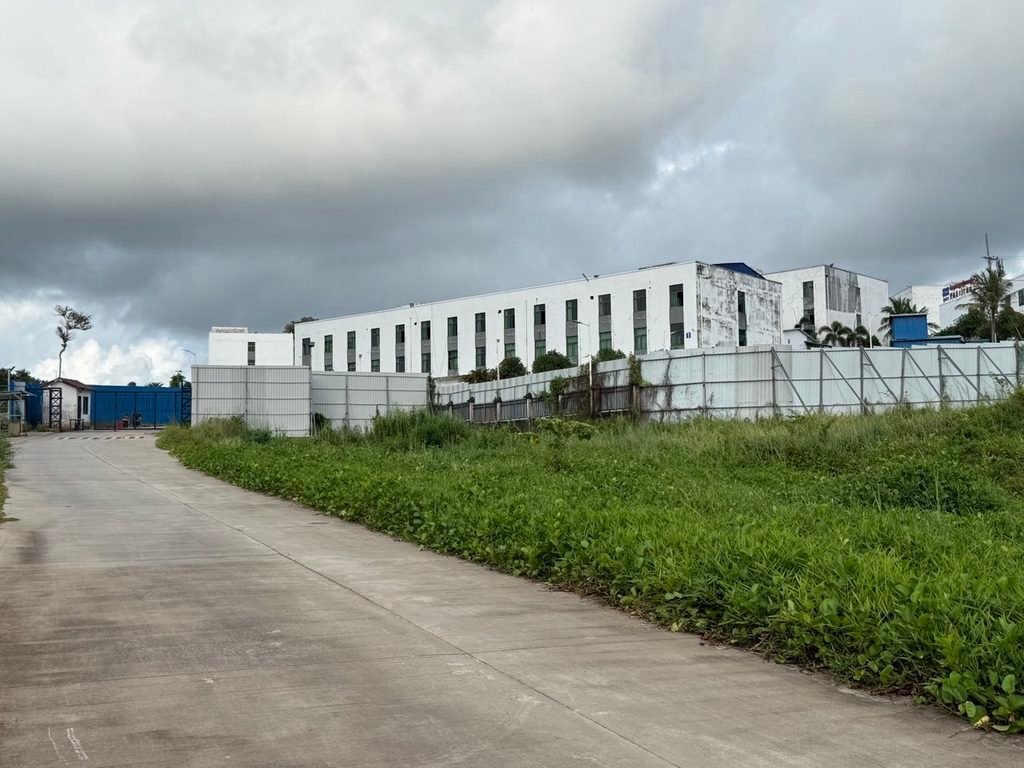
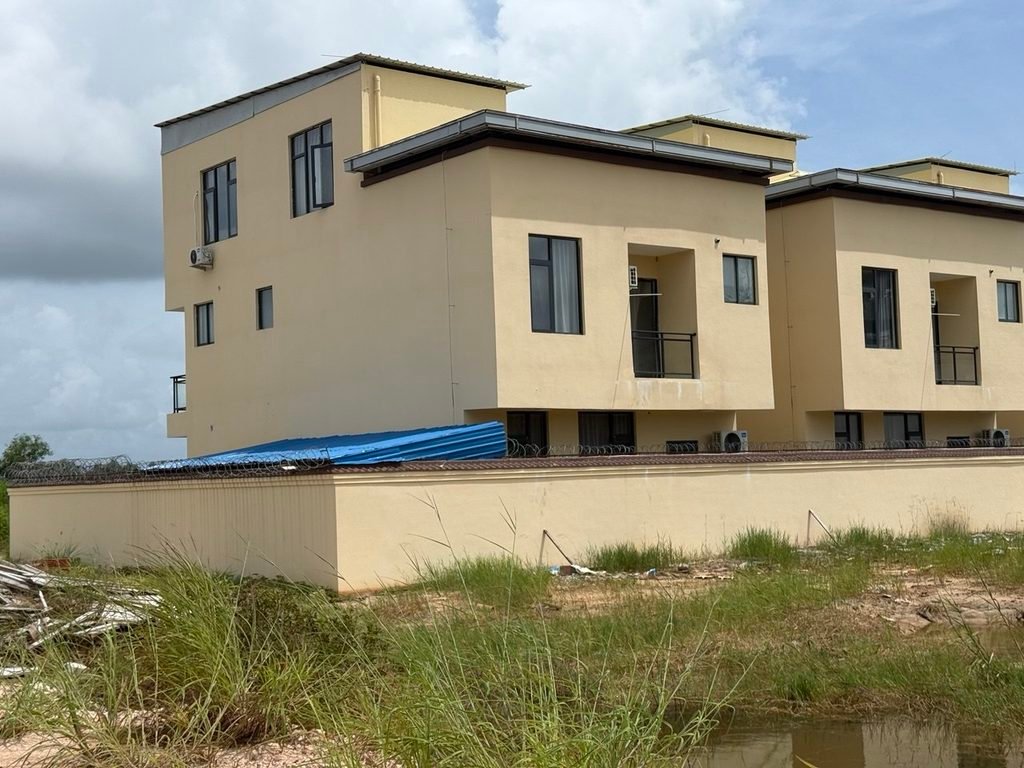
Ratha described the conditions for online workers as “brutal,” saying he had felt bad for the people he was watching. However, Ratha said his bosses told him to prevent people from escaping, as otherwise the companies involved would lose money. As part of his job, he was told not to communicate with online scammers, and warned not to take anything from them including cigarettes. He had to inspect cars entering the building complex and guard cars of people who were identified as VIPs. If workers broke the rules, he and other staff were required to beat them.
There was a lot of violence inside the “White Building” complex outside of his work, he claimed.
“There were many cases of deaths for unknown reasons,” he said. “We have seen [people] being punished and they were missing from their rooms and we never saw them again. We do not know where they were taken.”
Ratha said that security was heavily warned against letting people escape from the premises, saying that the company paid between $4,000 and $50,000 to bring each worker inside the compound — seeming to allude to allegations of human trafficking common in the scam industry. Security also had to enforce rules to scam workers in order to prevent them from escaping, like escorting them to their rooms, preventing them from using personal phones, and keeping them out of the toilet for long periods.
“We did not allow [workers] to walk on the grass,” he said. “It was our red line because [from there] they would attempt to jump over the wall and run away … [but] it was very hard for them to run away from the compound because it is very heavily guarded.”
Ratha claimed that the scam workers were punished by their superiors for work-related infractions, with punishments like being forced to run around a football field, getting hit with a wooden stick or detained in a room by themselves. Most of the punishments were given by foreign managers to foreign workers, he claimed.
“Some people got their arm broken, or their leg, or their head was cut or injured because they were lazy to work, and didn’t earn money [for the company], so it was a waste to keep them so they keep punishing them.”
Ratha said he enjoyed some of the tasks, mostly when workers tried to run away from the buildings. He claimed that security guards would record video of the workers fleeing, as if the compound let them free, but then they would recapture fleeing workers and beat them.
“This is the most delightful thing for me, because we got a bonus and when we could recapture them,” he said. “We could get $100 or $200 [per escapee].”
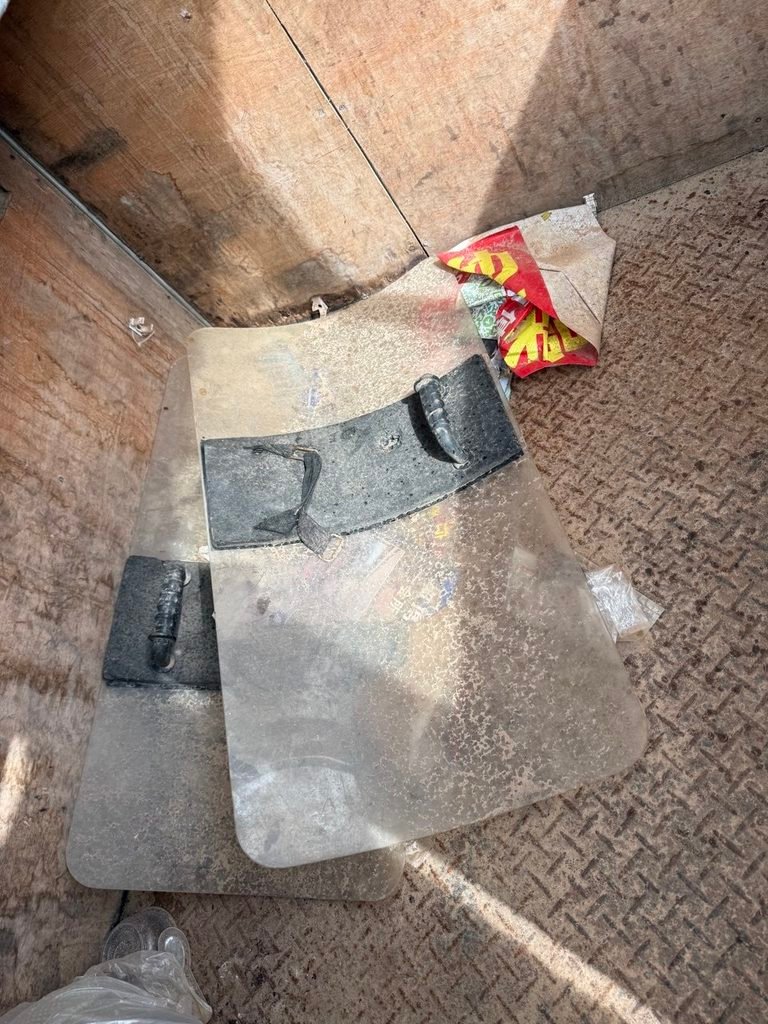
Despite the possibility of bonuses, Makara, the 23-year-old guard, said he felt the most challenging times happened during escapes, when security were expected to crack down on fleeing workers.
Sometime this year, a few months before raids started in Dara Sakor, Makara recalled that 20 people had tried to break out the compound, using knives and metal sticks. Security responded with electric shocks, metal sticks, riot shields and weapons. A reporter couldn’t verify when the escape happened but found reports of a mass escape attempt from January in a rumor channel on Telegram.
“They even jumped over the electric barbed wire … and risked their lives. Many were recaptured, and only a few of them escaped,” he said.
Makara claimed that some people had been recaptured by staff of the Union Development Group company or local authorities, and then handed back to the scam operation they escaped.
“I have seen the most terrifying and disgusting things to see. We can only see and know about it — we cannot report anything to anywhere,” he said.
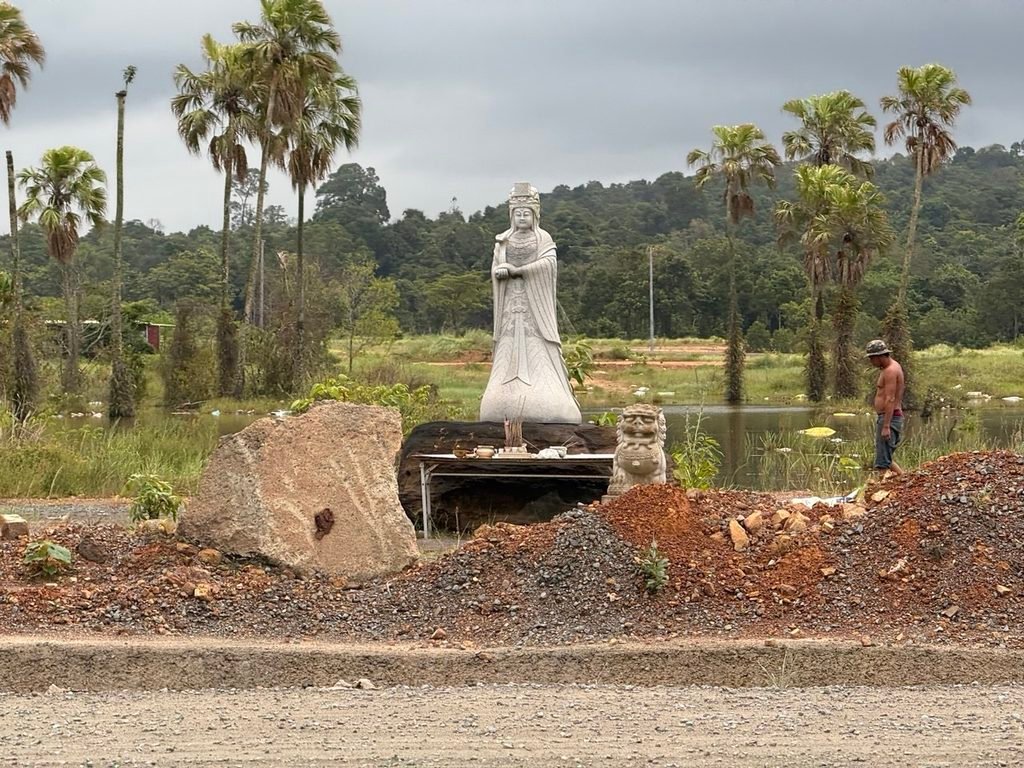
Raids change Long Bay’s shape
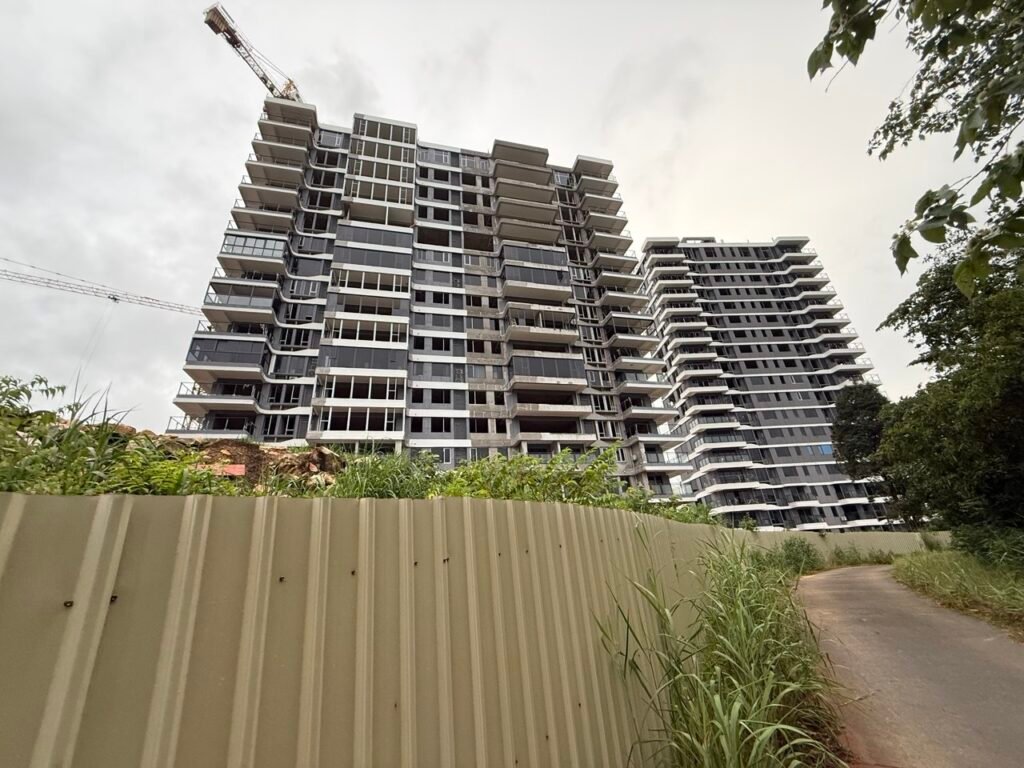
In recent months, Ratha said he had witnessed raids across all types of properties in the Dara Sakor area, including newly constructed buildings and buildings still under construction. Developments have slowed considerably, he said.
“There are countless locations and it is impossible for me to count. … They have inspected almost everywhere [in the property],” he said.
Ratha claimed that some scam operations had tried to hide around the concession in between raids.
“Sometimes when I bump into [remaining scam workers], they are freaked out and spooked, and they scatter all over the place. Some Cambodians help by hiding them and getting them into cars,” he added.
Observers like Sun Bunrong, a 30-year-old PassApp driver, said they’ve seen raids and arrests all over the concession, pointing out a dozen spots where he had heard of arrests or authorities confiscating devices.
“Even some people who had just arrived with their passports, they were arrested. Some Cambodian workers were arrested.”
Yang Channy, Peam Kay village chief in Kiri Sakor district, told Mekong Independent in October that local and provincial authorities had inspected more than 100 locations ranging from large resort complexes to guesthouses, abandoned buildings and temporary construction housing units.
“In more than half of them, they discovered online scam activities,” he said. “We have conducted our operation like a drizzle [steadily]. We keep raiding and we have arrested many people in many cases. Most of them were Chinese, Malaysian and Vietnamese.”
People had tried to escape the raids, and some were successful, he said. Others left before authorities arrived for the raids.
“Some people got injured, some people got broken arm or legs or injured arm or leg when they tried to burst out of the building, and some have been recaptured while others went missing in the forest,” he said.
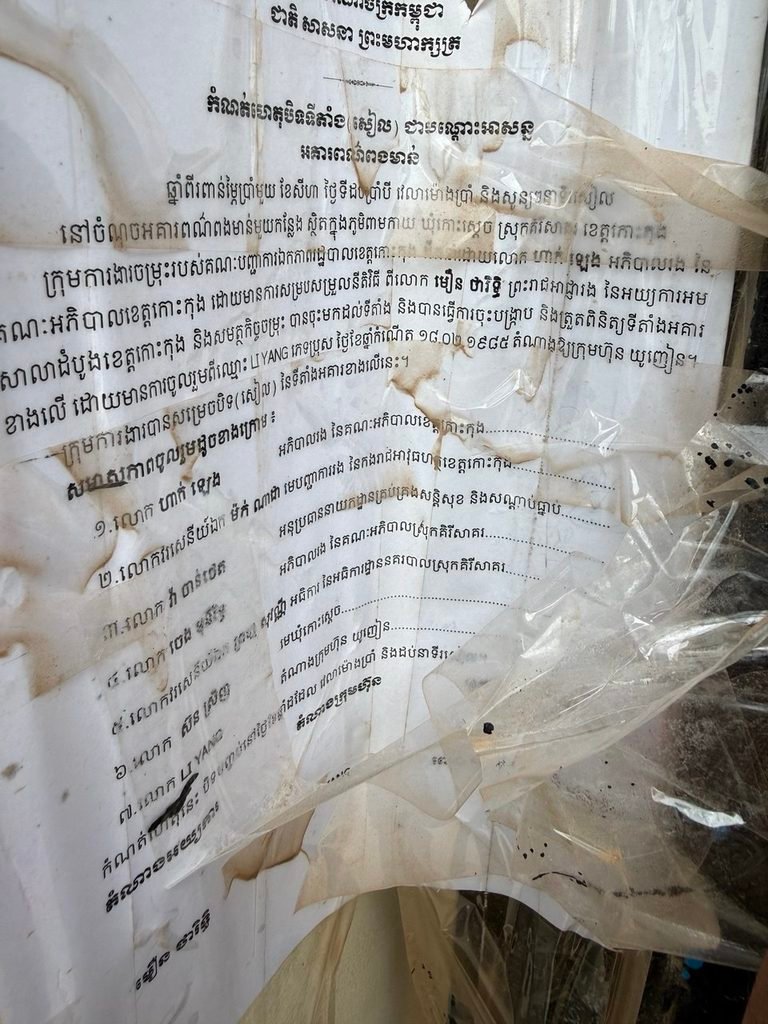
A reporter contacted Kiri Sakor district police chief Prom Sovanny, Koh Sdach commune police chief Chamroeun Chamrong and Koh Sdach commune chief Sorn Srenh. All declined to comment on the raids or current situation in the Dara Sakor area.
Koh Kong provincial administration spokesman Chhin Rattanak said authorities had cracked down on scams across the province, not only Dara Sakor, and said he could not answer further questions. Sun Kheam, Kong Kong deputy provincial police chief and spokesperson, said there were no longer any online scams.
“We have cracked down many cases. We are continuing to work on it. Our Kong Kong province now, there has been none and we have cracked down. We have complied with leader’s order and cleaned up 100%,” Sun Kheam said.
Authorities had rescued victims from Long Bay in the past, he said, but declined to say how many.
Memories of car chases, found bodies
The Peam Kay village chief Yang Channy said he recalls a number of violent incidents around his village in 2024 and 2025, with locals reporting violence, car chases, crashes, shootings, kidnappings, killings and bodies.
“[People] had been tortured or killed, and buried or burned in deep forest. … Sometimes people discovered bodies, and any incident that happened in the compound would not be reported to any outsider or police,” he said.
“There were regular cases like these, sometimes once every month, half month, even every week, when the online activities were in full swing.”
Yang Channy said security guards seemed to function as police in these spaces, keeping people in the compounds or dealing with issues as they arose.
“We also captured one person who had escaped and got lost in the forest and he was starving. … We handed him to authorities, and we do not know whether authorities handed back the person to the company or sent him to his embassy — we do not have authorization,” he said.
Other sources have indicated brutality at Long Bay Dara Sakor throughout the years. Reporters found numerous references to Long Bay Dara Sakor on Chinese language rumor channels on Telegram, ranging from stories of scam workers begging Cambodia’s Interior Ministry to rescue them from their employer, to stories of suspicious deaths, torture, abduction and ransoming of foreign nationals in the compound. Some of the stories on these Telegram channels were reported in local media or police announcements, but many cannot be verified.
Yang Channy added that he dealt with five cases of found bodies, including one that appeared a couple months before raids earlier this year, where two bodies wrapped in plastic were brought to the local health clinic. He said he felt discouraged to ask further questions about the case, again stating he didn’t have the authority.
Sometimes, as in the case of a body found buried, they did not know what to do. “This was shocking and we did not know much [about the person who] suffered, and we do not know his identification so we decided to rebury him there.”
When the Long Bay Dara Sakor area was first developed, Yang Channy said he and other residents believed that the company would have turned the area into a tourism site. But he was shocked by the state of it, including allegations from Al Jazeera that high-ranking officials were knowledgeable and complicit in activities at Dara Sakor.
“When this [documentary release] happened, we were shocked and our hearts sank,” he said. “I was very stunned to see the videos. After the documentary, we have seen it become very quiet [here].”
This article is published as Creative Commons.