
Colombo — An occasional drizzle cheered up Colombo on the evening of 16th September. But at Tea Avenue, a cafe located in the Sri Lankan capital, the mood was jittery.
Sitting across the table was a man who claimed to be a business owner in a Sri Lankan gem and jewelry business with an international clientele. But besides his public facing identity, he claimed to also be an enabler of online scam operations in Sri Lanka.
He offered end-to-end services for scammers: a smooth entry to the island country, setting up a legal business, arranging people to sign the rental agreement, and providing bodyguards and weapons to threaten the stubborn employees. All of it within two months.
“For a 12-hour shift, to provide a bodyguard with a shotgun, we would charge 10,000 LKR (about $30 USD),” he told me. His claims could not be verified, but the tactics — and the emergence of people like him — paralleled trends previously seen in Southeast Asia.
Two years after a major crackdown of the online scam industry at the Golden Triangle Special Economic Zone in August 2024 and in Cambodia this year, researchers say Sri Lanka has become a new destination. Loopholes in the country’s law enforcement have made it a haven for the scammers, and during a visit to Colombo in September, residents were rife with chatter about operations popping up around them. Abdullah and Silva, my cab drivers at Colombo; Richard, the cook at my hotel; and at least 10 other Sri Lankan nationals I spoke to said they knew someone who had rented their places for scammers.
And yet, Sri Lanka police did not arrest any of its citizens in the past three years for renting their property to scammers, according to the Assistant Superintendent of Police F. U. Wootler. At a hostel in Colombo 5, a group of Vietnamese nationals stayed for two weeks about a year ago, spending their days working on computers.
“I was damn sure they were not tourists, nor were they call center workers, as they claimed to be. They would speak in English on the phone, but when we asked them about their work, they would use sign language to indicate that they didn’t know English,” said the manager of the hostel, seeking anonymity. “But they paid double the amount for the stay. I took the risk of letting them stay because I know I can always claim innocence to the police that I did not know what they are up to,” the manager said.
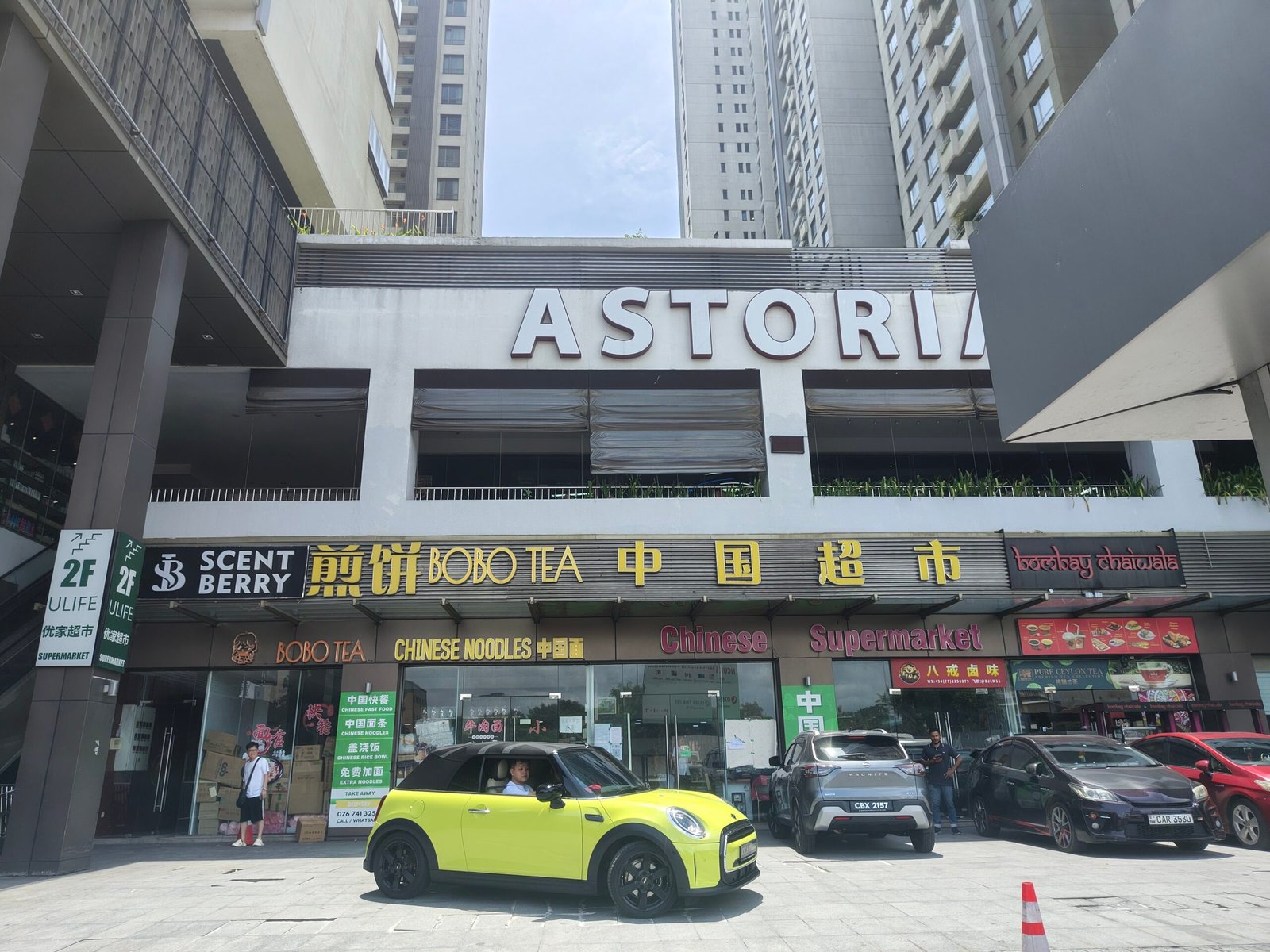
In my ground reporting, I found allegations of online scams in a lavish apartment complex called Astoria Towers, located at Colombo-3. Richard, who lives in the same locality as Astoria Towers, was convinced that a scam was taking place. Durian sellers and Chinese supermarkets lined the road, and most of the people entering and leaving Astoria Towers appeared to be Chinese. A tuk-tuk driver, two food delivery personnel, and an employee at the supermarket next door agreed. However, when I called up the local police, they just brushed it off stating that they cannot conduct a raid without solid evidence and that the matter comes under the jurisdiction of Computer Crime Investigation Division (CCID), a new division of the Sri Lanka Police with 100 officers dealing with online scams, cyber bullying, and other such offenses.
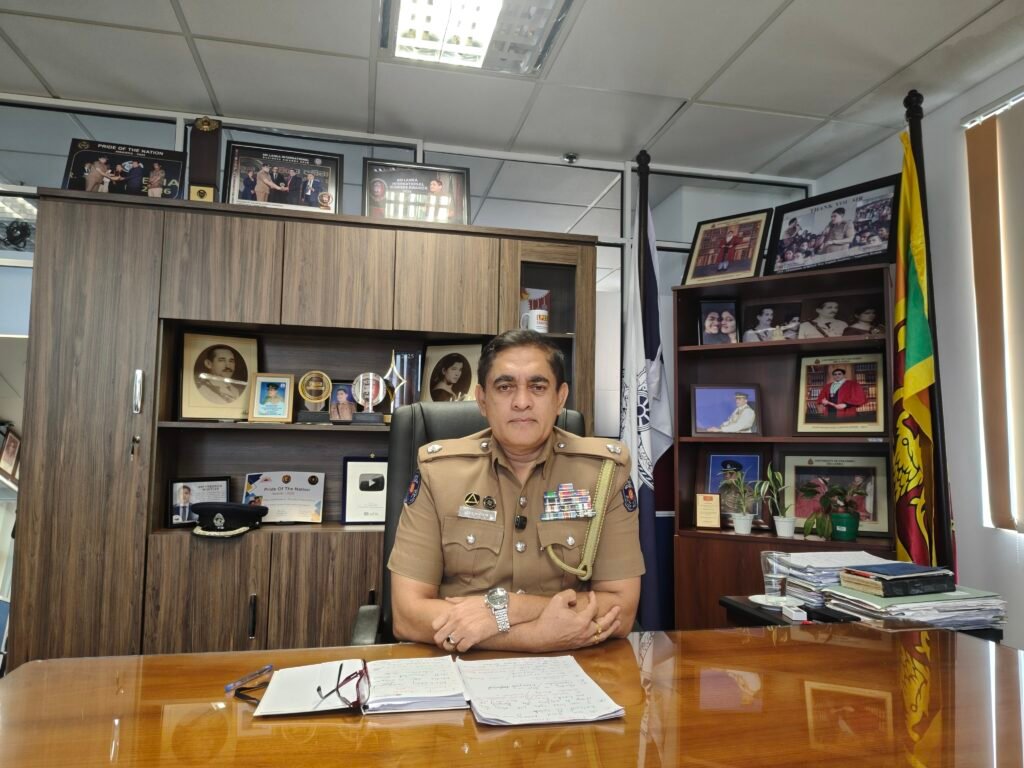
Three weeks after I tipped them off about Astoria Towers, the CCID had not raided the place nor obtained search warrants from the court to conduct raids. On September 29, the CCID’s director Kamal Ariyawansa told me, in an encrypted call, that there were no complaints from the residents about the online scam operations in Sri Lanka.
Southeast Asian connection
There are no figures to estimate the scale of the online scam industry in Sri Lanka. A total of 305,000 scammers in Myanmar, Cambodia and Laos accounted for an estimated $39 billion in stolen funds annually, out of a total of $63.9 billion worldwide, according to a May 2024 report published by the United States Institute of Peace. In 2026, a global anti-fraud operation involving 97 countries and territories led to the interception of $293 million in illicit assets, according to the INTERPOL report.
The U.N. Office of Drugs and Crime issued a report this year saying Sri Lanka was an “increasingly recognized destination” for displaced scam operations from Southeast Asia. Raids of scam operations in 2024 and 2025 resulted in arrests of more than 1,000 people from various countries around the world. This year, more than 1,000 people were arrested in just five months, most of them foreign nationals, the report says. “As elsewhere, many are lured to the country with promises of legitimate jobs.”
Many signs amid scams emerging in Sri Lanka echo their previous rise in countries like Cambodia and Myanmar: alleged inaction from authorities claiming lack of information; local residents going along with a rising criminal industry; and the import of foreign workers at-times subject to coercion.
The UNODC says the perpetrators leading scam operations are primarily foreign nationals who enter Sri Lanka on either business or tourist visas, and often use business fronts involving suspicious IT or customer service jobs.
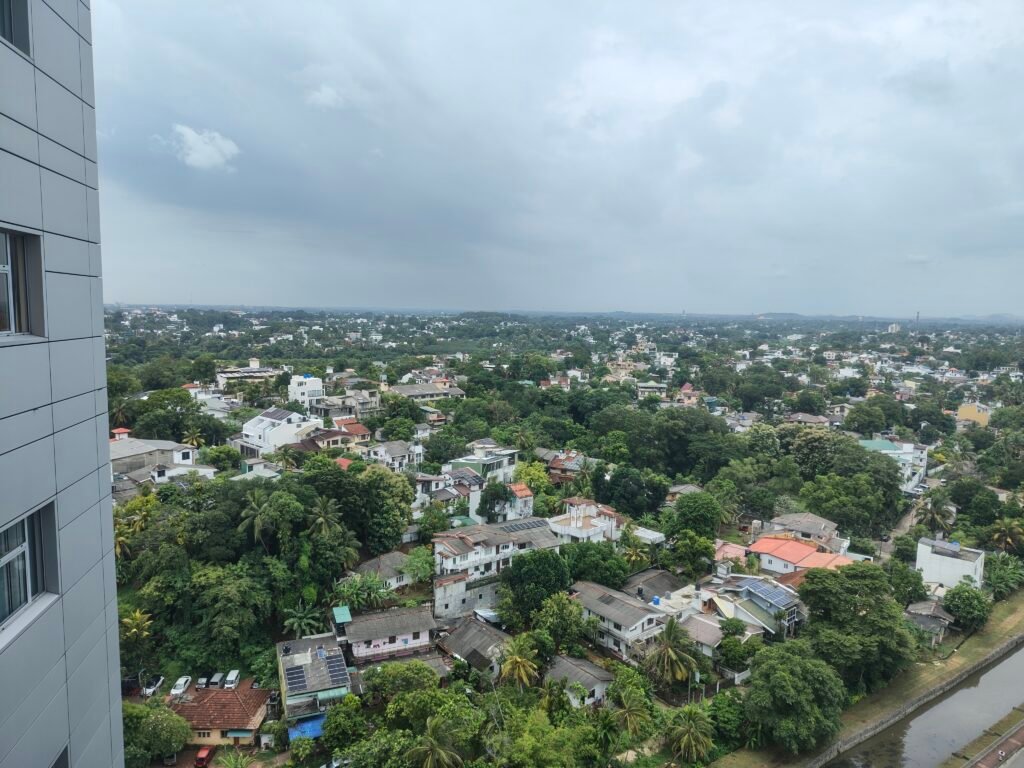
Scam operations in Sri Lanka tend to be smaller in scale, based in luxury houses, guesthouses, hotels and apartment buildings, rather than large compounds. “The criminals involved rent premises at significantly inflated rates in exchange for the silence of landlords,” the report says.
Operations in Southeast Asia, which have faced intensified crackdowns, have recently also dispersed to smaller locations.
A research paper published in May describes the Sri Lankan operations as “not a random collection of individuals but a highly organized structure.”
“Masterminds in Myanmar or Dubai register shell companies in Sri Lanka’s IT sector and use them to bring operators into the country on business visas,” says the report, by the University of Colombo’s Rahul Samantha Hettiarrachchi. It says the country is vulnerable due to a prolonged economic crisis and loopholes in its visa system.
Cracks in the system
A 40 by 40 feet Chinese supermarket in Colombo stocks a variety of Southeast Asian culinary items, such as mooncakes, fish sauces and rice vermicelli, which are sold at an exorbitant amount above the market price. One worker said that as far as he understood, the food supplied scammers. “I deliver food for them but I won’t reveal their identity as we are living on their business,” he said. He had noticed many residents were also reluctant to report scams to police. “That’s because the locals are benefiting.”
“The law-abiding citizens are too scared to complain. Most importantly, these scammers are cheating foreigners, not Sri Lankans,” he suspected.
In May, Sri Lanka police warned homeowners and chief occupants to provide details of their tenants at the nearby police station, under section 76 of the Police Ordinance.
But a real estate agent claimed there were loopholes. “These rules do not matter. We will find a property owned by someone who lives abroad. As you need a Sri Lankan’s name on the agreement, I can sign it for a commission of 1% on the first month’s rent,” the agent said when approached about properties for scam operations.
According to data obtained from police media spokesperson Assistant Superintendent of Police F. U. Wootler, immigration arrests in recent years have included Chinese nationals, Malaysians, Rohingya, Indians, Moroccans, Pakistanis, Bangladeshis, Nigerians and Vietnamese.
Despite suspicions of involvement in scam operations, Sri Lankan police found it difficult to press criminal cases against scammers, Wootler said. As they targeted people in the U.S., Sri Lankan authorities received no complaints they could act on. “The investigation becomes complicated since digital evidence is overseas,” Wootler said.
“However, we abide by the provisions of the Immigrants and Emigrants Act, 1948 [under which] he or she will be subjected to deportation, repatriation, removal and extradition. Most of the above cases resulted in deportation and blacklisting,” Wootler told Mekong Independent.
Having recovered from the 2022 economic crisis, Sri Lanka has been heavily promoting tourism as a way to boost its economy. Since May, nationals of 40 countries have been eligible for tourist visas free of charge under the country’s Electronic Travel Authorization (ETA) scheme that allows foreign nationals to obtain a short-visit visa to Sri Lanka.
Foreign nationals can enter the country on short-term visas and, where eligible, extend their stay or obtain residence visas for specific purposes. These different pathways matter in the context of online scam, as Wootler said, “Some people do exploit tourist visas.”
In September, 158,557 tourists arrived in Sri Lanka, according to the Sri Lanka Tourism Development Authority. That’s up 42% from three years ago. There were large increases from India, China, U.K. and Australia, while Bangladesh emerged as a top-10 source country.
Two months ago, Sri Lanka Customs spokesperson Chandana said the Customs Narcotics Control Unit found a consignment of laptops and communication devices belonging to a group of Cambodians at Bandaranaike International Airport, suspected of being linked to scams. “However, [our] customs law does not provide for the arrest of people for such offences. If the goods are not bona fide passenger baggage, they can be released upon payment of tax plus a penalty,” Chandana wrote to me.
“The immigration act should be strengthened and the whereabouts of tourists should all be in one place. It is just a herculean task to get the details of a tourist from the department of Immigration and Emigration,” said a local police official, seeking anonymity.
Are these cracks in the system giving scam enablers and scammers a free pass to operate with impunity? “We can take them [arrested scammers] out from the court and from the detention centers. I know lawyers who can do that,” claimed the alleged scam fixer. The Department of Immigration and Emigration declined to comment.
He suggested the first line of business was to confiscate foreign workers’ passports: “It is easy to threaten them to work.”
“We should not have locals in the company. It’s a huge advantage if the workers don’t know the [local] language and English because when there is a police enquiry, they wouldn’t respond,” he said. But “the key people in the company. They should not live in the same premises as the workers.”
In some ways, Sri Lanka’s vulnerabilities have made it a new haven for the scam industry — a potential successor to the Golden Triangle Special Economic Zone and other Southeast Asian locations. “People are searching for heaven, not realizing it is right here in Sri Lanka,” said the supermarket worker.
This article is published as Creative Commons.