
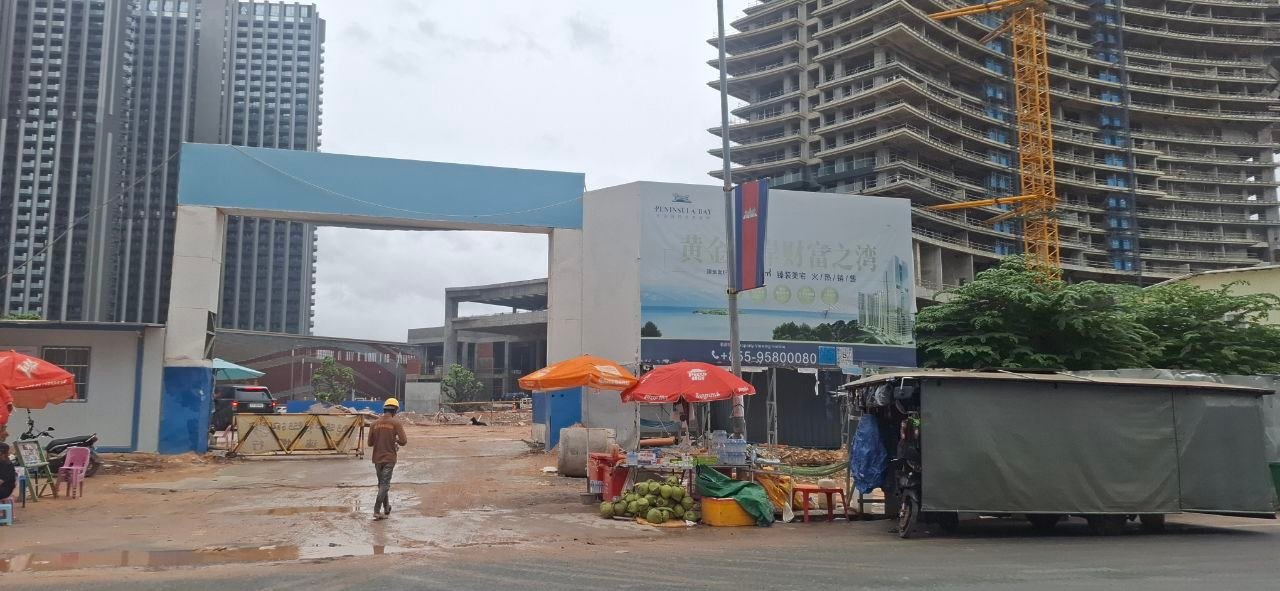
When 59-year-old Ny lost her job in construction in Sihanoukville’s Buon commune early this year in a wave of closures, she scrambled to find another. She succeeded in finding a construction gig near the former Jinbei 4 compound, but only stayed for two weeks.
They never paid her, she said.
“We have to borrow other people’s money to buy food to eat,” said Ny, using only her given name to speak freely without potential work repercussions. She was among a handful of workers who decided not to leave the coastal boomtown, waiting at a former construction housing site to find employment.
So Ny started working as a scavenger, looking for cans, metal and electronics anywhere that she could to try to sell.
“Some people are devastatingly desperate, so they turn to theft, breaking into buildings to steal refrigerators,” she added. “We do not blame anybody for this crisis, and it is just part of the cycle of life.”
The sudden freeze of scam operations and supporting businesses this year has left an uncertain future for Cambodian workers in Sihanoukville, particularly in the construction sector, who staked their careers on the city’s once-rapid growth.
Once a hub for scam companies, where anti-trafficking rescuers and journalists found both detained scam workers and IP addresses linked to successful scams, Chinatown is largely emptied, local officials told Mekong Independent. Though there were periods of raids and apparent disbursement of scam companies in the past, this year was a unique shift, observers say.
Heng Bunly, chief of Buon commune’s Village IV, said provincial authorities as well as his local officers searched and sealed several properties during this year’s online scam raids. When he spoke to a reporter on August 26, he added that they need to search at least 10 more locations within the village.
As a result, a number of construction projects were paused for an unclear amount of time, and workers have been seeking help from local authorities like Heng Bunly, he said.
“When there is no money, they will turn to the village authority for support, but when there is money, they silently work on it,” he said. “Frankly speaking, some buildings have finished, while other buildings have not finished and they have been deserted.”
Now Village VI is more quiet than it was during the Covid-19 pandemic, when there would still be some vendors and restaurants doing business. Rented rooms used to be packed, but now there are no people walking the streets or making businesses because they returned to their hometown, he claimed.
“This is a massive issue,” he said. “Now, there is nothing to say for me and other people [who live here].”
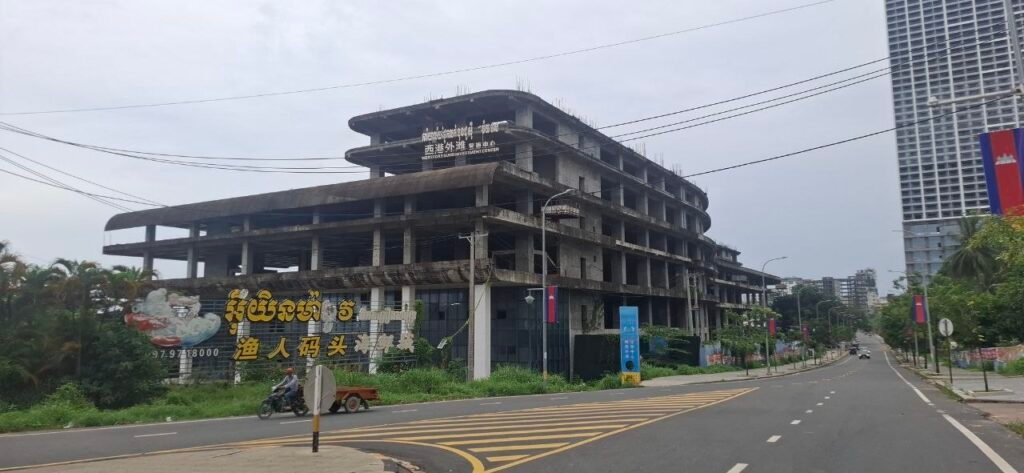
He claimed that he had heard of two protests in the past related construction workers over their payment in the Peninsula Bay and Ou Chheuteal Beach areas within his village.
Kuy Kiri, a council member for Village IV, said that within his village alone, he accompanied central government authorities over 10 days this past month to seal about 20 locations. He noted that this only accounted for one village throughout Sihanoukville.
But not all villages in Buon commune are as impacted by this year’s campaign of raids, one official said.
Sum Sambor, chief of Village I in Buon commune, said authorities came to check a few buildings in his village in the last few months without finding online scams. They also didn’t have many buildings that are “frozen” or that stopped construction before their completion.
“We have few spaces like in Village IV and Village VI who have a huge space [for online businesses],” he said.
Buon commune chief Seng Nim said he was aware of buildings being sealed due to scam investigations within his jurisdiction but was not sure of the number.
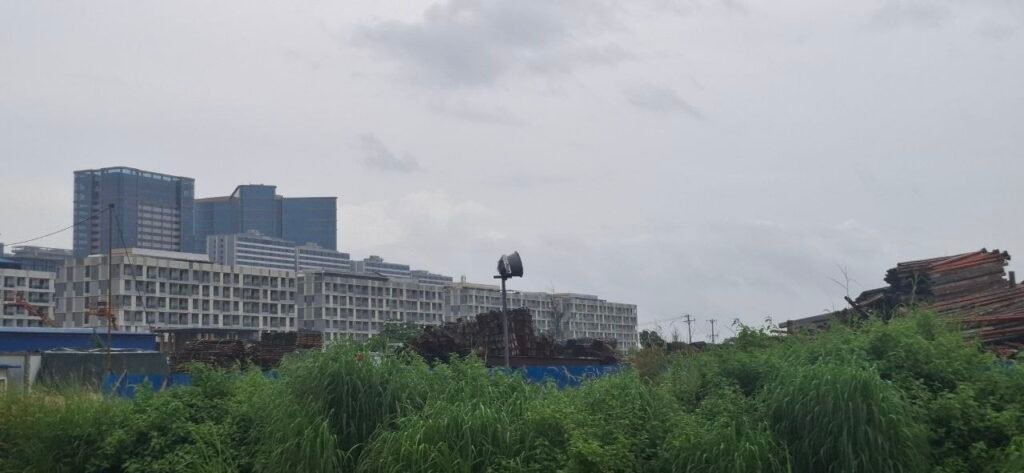
Workers wait for new constructions
While online scam and gambling workers either fled Sihanoukville or got captured in raids, Cambodian workers who migrated to the coastal city for construction gigs say many feel stuck with no further employment.
In the shadow of the massive scam complex called KB Hotel and Casino or Kaibo, construction workers once established small camps of shack housing, where they could stay as they floated between daily-paying construction jobs in Chinatown. Only about a dozen families remained in their shacks of wooden boards and tarps when a reporter visited the muddy campsite in July.
When Sopheap, 33, first moved there to work, she said she had water, electricity and basic supplies at the camp. They received stable pay from construction projects, which were crowded with both Cambodian and foreign workers from China or Bangladesh, and the construction workers supported each other when they needed a loan to repay their banks.
The projects suddenly seemed to run out of money in February, not long after a mass exodus of foreign workers from alleged scam companies nationwide.
“All Chinese have left their construction site since February and many big companies have started to stop their operations,” Sopheap explained, giving only her given name to avoid repercussions due to her unstable work conditions. “Chinese staff [of construction sites] had run into problems, so they left before Khmer New Year and some [Cambodian] workers decided to return to their homeland.”
Sopheap said that she was owed around 2 million riels, or about $500, from a subcontracted boss – so she wasn’t aware which company was responsible for paying the salary she is owed. As a result, she and the other workers are desperate for income, she said.
“Now we have become homeless people,” she said.
When Sopheap and her husband were no longer able to find work, they had to borrow from a private lender to prevent a registered bank from coming after her. But now the private lender was starting to ask for money back, she said, and she did not know if her boss would ever compensate what she’s owed.
“The situation is very difficult and we are unable to cry out,” Sopheap said.
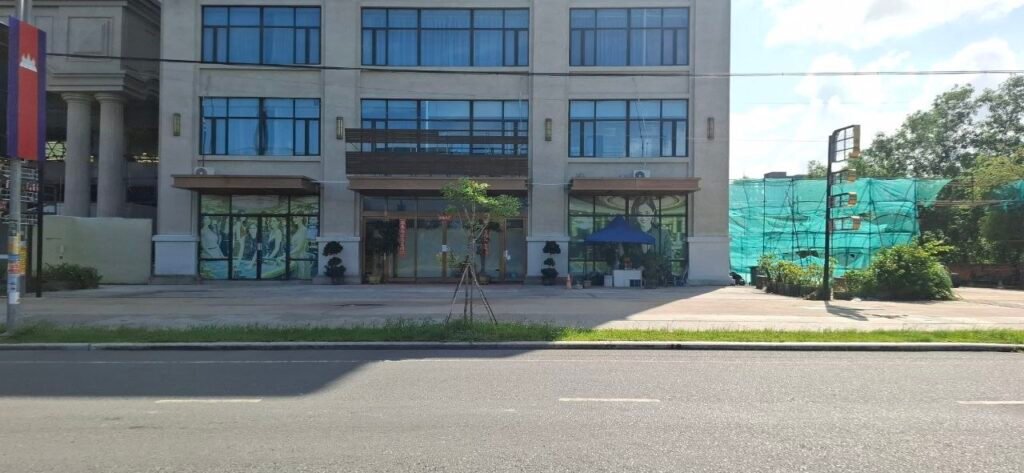
Getting their voices out
The construction workers who have not yet left Sihanoukville say they’ve tried to organize small protests across Sihanoukville to regain their lost salaries, but they’ve received little indication that their voices were heard.
Am Rom, a former head of a construction team last working in Chinatown, told local media he helped organize a protest of a few dozen workers in front of their construction site on August 24.
He said their goal was to ask for help from Sihanoukville City government and the Labor Ministry after the subcontractor above him failed to pay salaries for about three months. The subcontractor’s boss, who got funds directly from an unknown owner of the Chinatown building they were constructing, still owed his team nearly $20,000 for the lapsed salaries, he said.
“Between 28 and 29 workers keep demanding their salaries from me, twice or three times, but I do not have the capability to get the money to pay them,” he said to local media.
Seng Heang, a 46-year-old resident of the construction worker campsite, said that she tried to protest her loss of livelihood two or three times when reporters had met her in July. But at this point, she turned to scavenging to earn an income.
“The authorities do not pay attention to our concerns, and they have ignored our issues,” she said.
Seng Heang said that on a good day she can earn up to 20,000 riels, or about $5, from collecting cans, but many days she earns only $1.25.
“We have to save rain water to survive because we do not have money to buy water,” she said. Seng Heang also owes $600 to the bank, and she feels the debt collector coming for her. “I will not return to my homeland because I owe people money. They want to seize our property.”
Sea changes
Before the crackdown, one security guard who did not want to give his name said he witnessed people spending unbelievable amounts of money up until early this year.
Some of the Chinese online scam workers in his building, in Sihanoukville’s Buon commune, would request his help to park, and they would hand him several dollars each time, or hand him a cold beer. He could earn between 300,000 to 400,000 riels per day in tips – between $75 and $100, almost unheard of for Cambodian parking guards. He knew the workers themselves earned at least $1,000 per month, but many were making much more than that, he said.
“Before, they spent their money like it was paper,” he said. “Now I can earn only 10,000 riels per day,” he said, or about $2.5.
Even the vendors in Sihanoukville’s seaside tourism industry said they came to rely on the big-spending habits from the scam industry. Thy, a vendor who sells grilled seafood from a small beachside stall, sells a bundle of grilled squid on skewers for 10,000 riels, or $2.5 each. With the plethora of Chinese, Thai, Vietnamese and Indonesian workers passing through before the crackdown, he could sell between $75 and $100 of seafood and grilled vegetables daily. Now he’s lucky to earn $25 a day, he said.
Thy attributed his lack of luck to the sudden closure of scam compounds, as workers emptied out and thus stopped coming to his stall for meals and snacks.
He could list off all the buildings he saw close down from Buon commune within this year: KB Casino, Jinshui, the X-shaped building and twin buildings nearby, as well as the White Sand Casino. Others from further out, like the Jinbei casinos linked to the defunct Prince Group, were also emptied and left unguarded.
“When these places were shut down, how can people like me earn our incomes!” he said. “Some people have returned to their homeland because they cannot find any work to do here anymore.”
Additional reporting by Danielle Keeton-Olsen
This article is published as Creative Commons.