
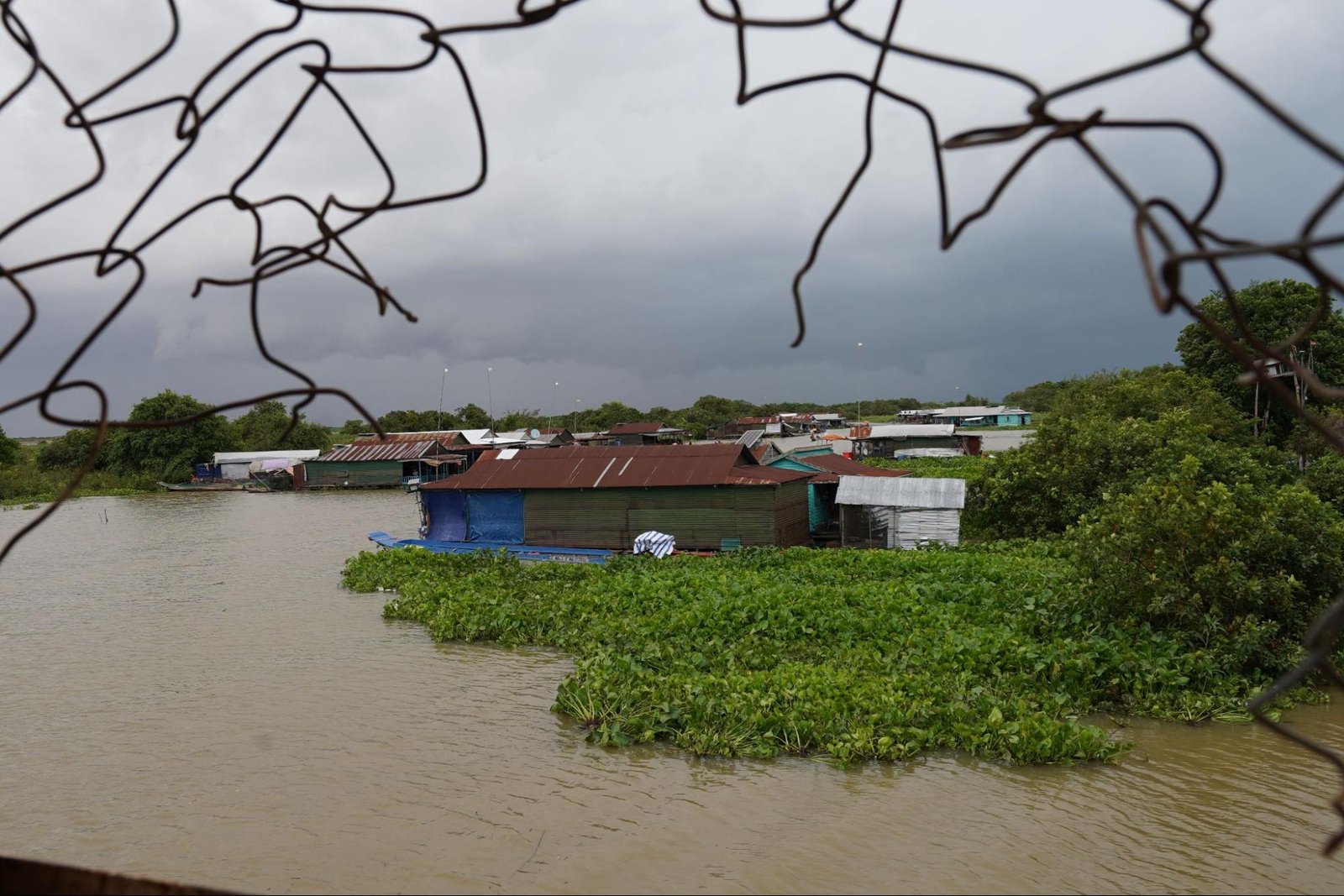
When the wind is strong, Ma An, 73, lights nine sticks of incense.
“I pray. I beat an iron pot. Please, the black tree god, the water god, the land god here, the 120th grandfather. Your children are very afraid.”
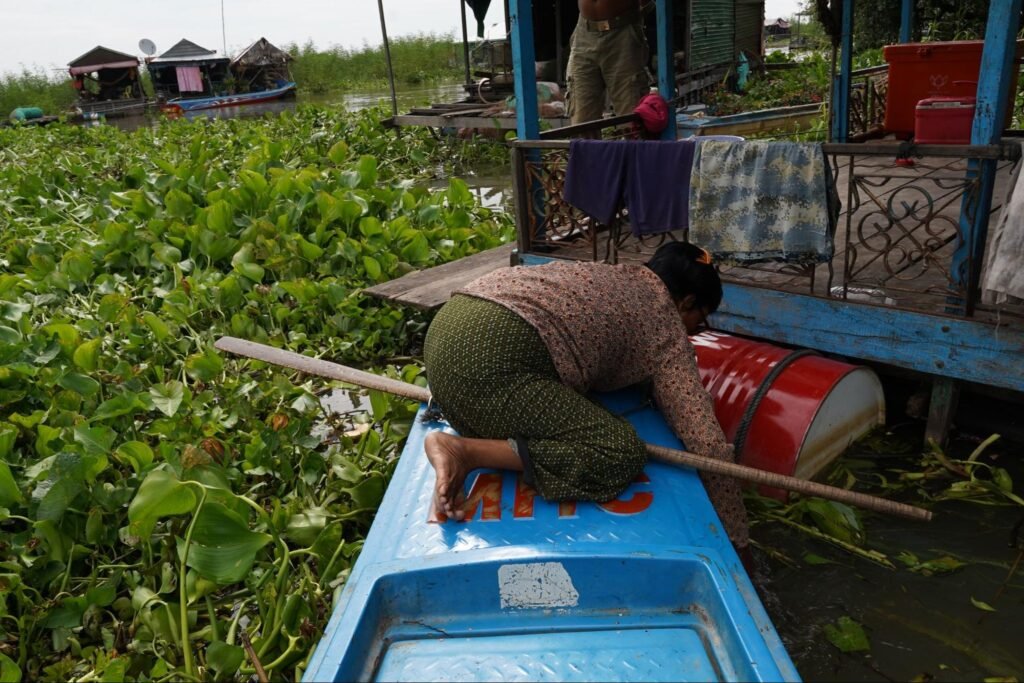
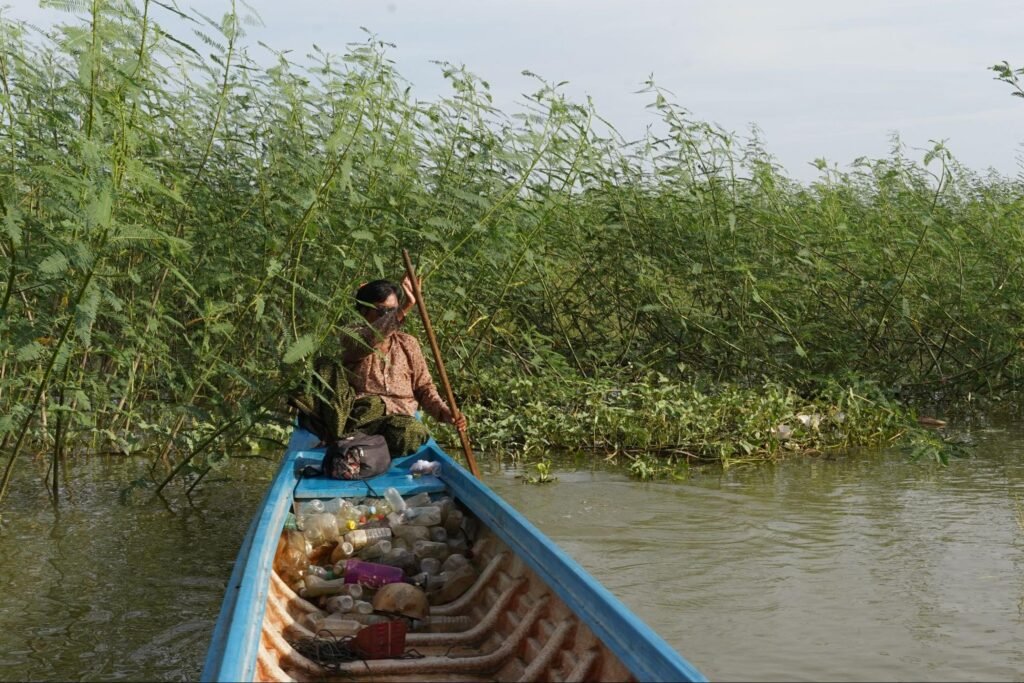
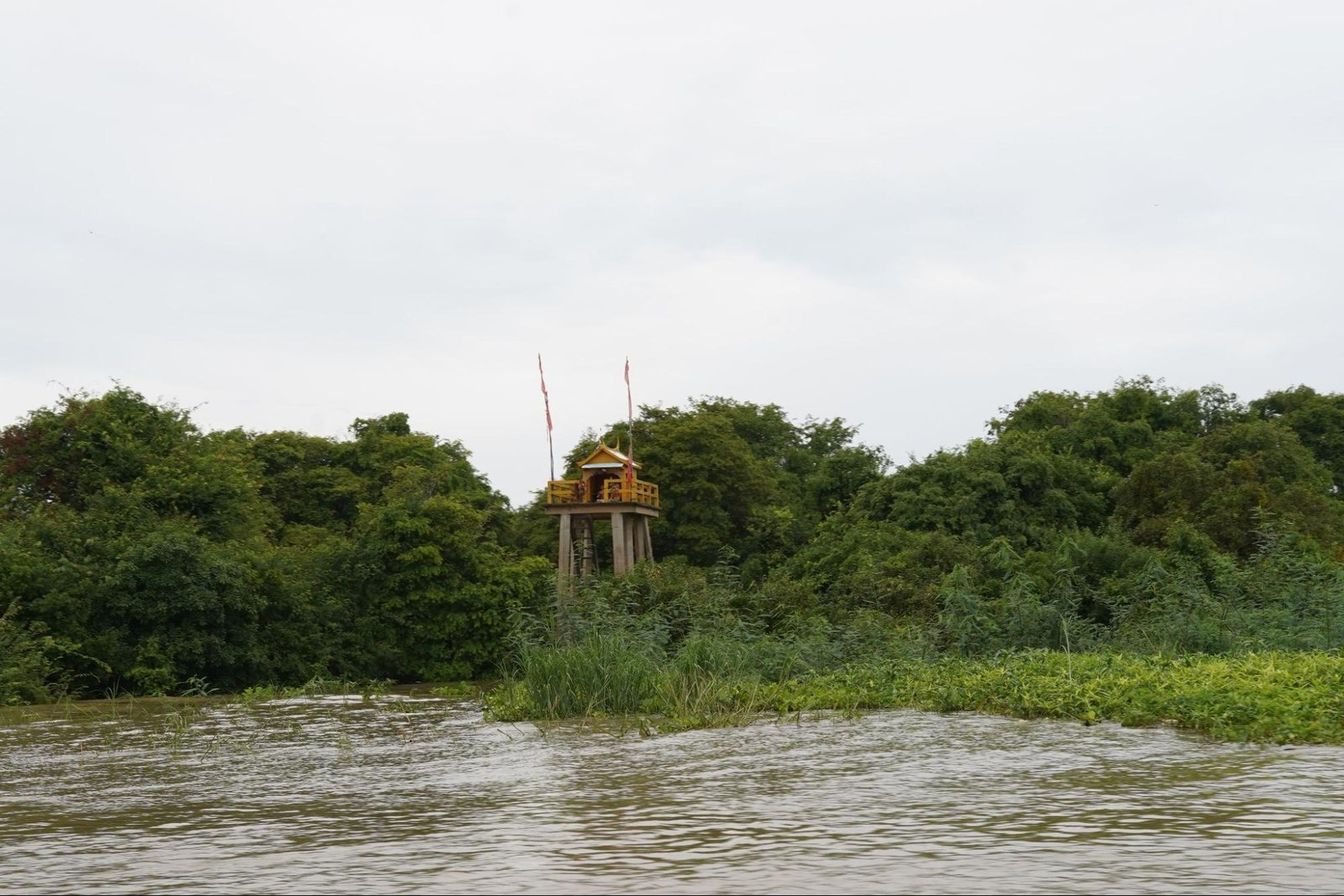
Ma An lives in Pheam Ban village, a remote, little-visited floating village in Kampong Thom province. During the rainy season, it can only be reached by boat.
She has lived there since she was 17. But in recent years, life in her floating house on Tonle Sap lake has become more frightening. Storms arrive more frequently, and out of season, she said.
“This year’s weather is very windy. I am very scared today. My life is also deteriorating.”
The village is being swept up in the extremes and unpredictability of climate change. For Pheam Ban commune, this means destructive storms, fewer fish, and lower, dirtier water. Residents are feeling adrift as their world shifts around them, and are searching for ways to prepare.
The storm
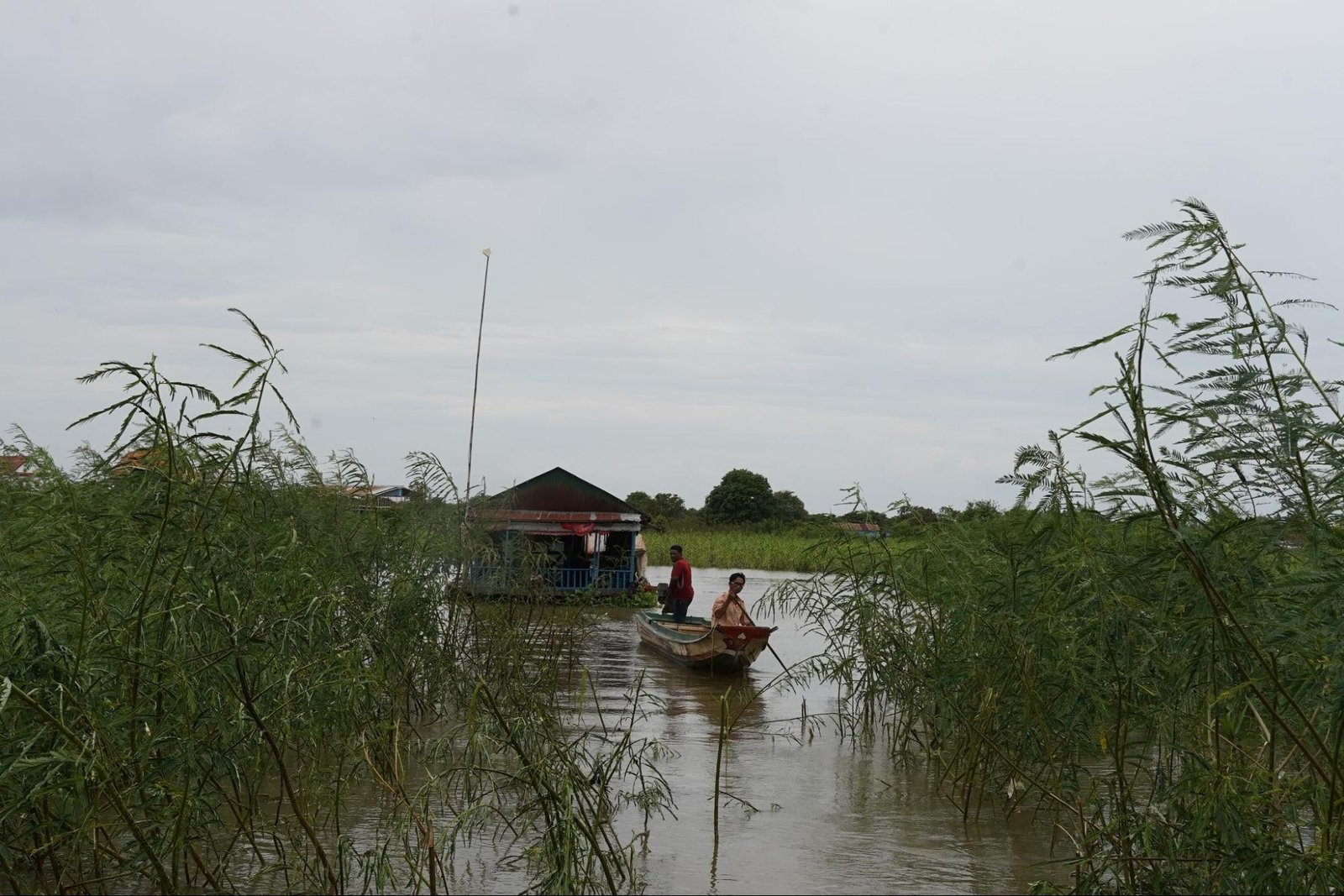
Chhim Surat, 68, has been a volunteer teacher in Pheam Ban village since 1999.
“This July and August, when the big storms were coming, all the village was crying and trying to make sounds, make noise, and shoot fireworks into the sky to chase the big storms away.”
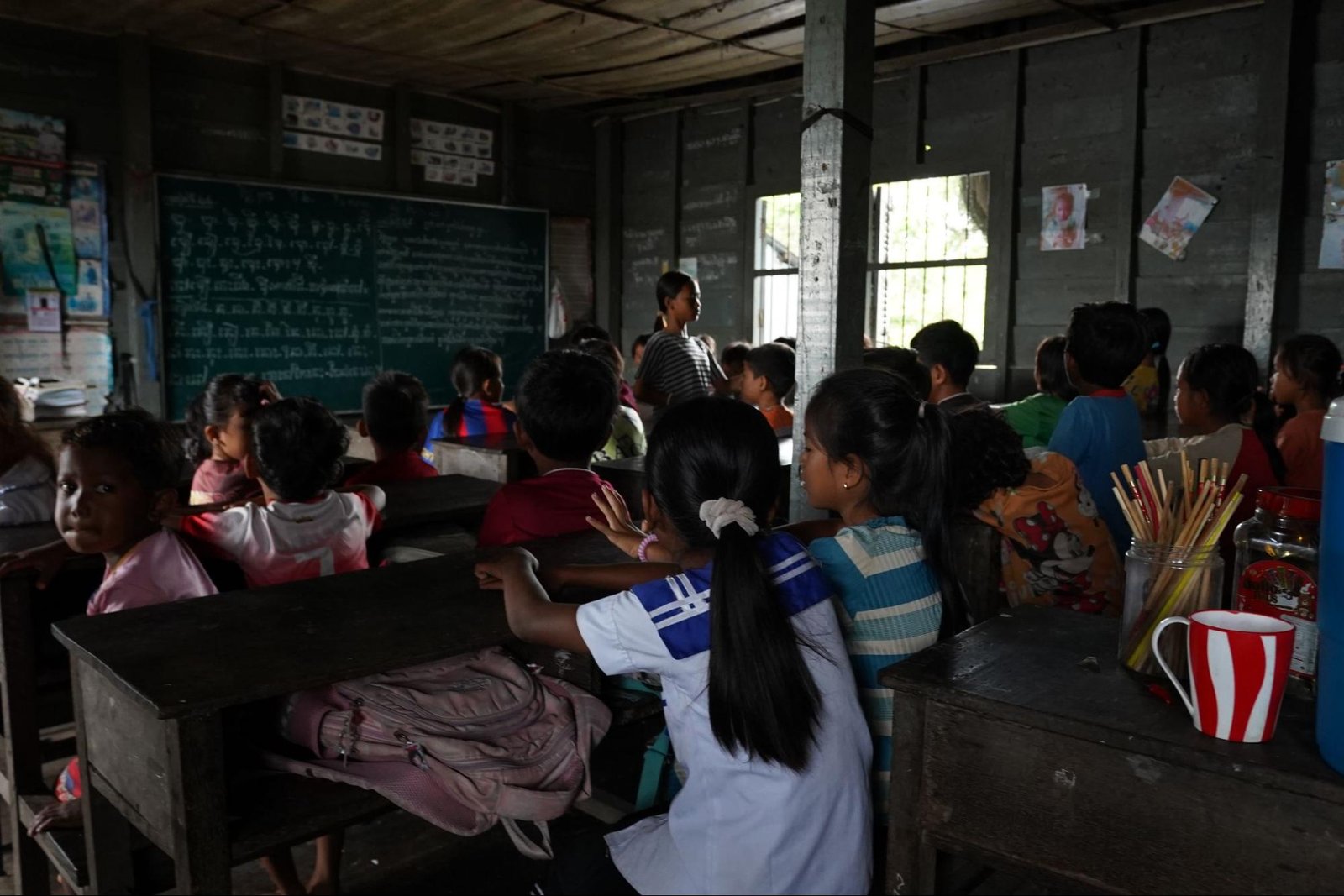
The weather has been extremely volatile; storms strike without warning, and the winds are highly unpredictable, Chhim Surat said. A small boat carrying a mother and daughter tipped over in August when a storm suddenly hit. They were lucky to survive because the water was shallow, she said.
Challenges go beyond the changing climate. Pollution is increasing, and its effects are worse when the water is low.
“The people who live in the floating village find it’s harder and harder to live since there’s too much chemicals,” Chhim Surat said. “It affects the people who use the water to live.”
For her, education is the way to improve conditions.
“I keep staying because I hope that I can educate the next generation so they can at least read and understand the right information,” she said. “I want to educate the next generation to better understand and protect themselves from the effects of climate change.”
According to the Mekong River Commission, the Tonle Sap river’s water level at Prek Kdam, southeast of the main lake, was unusually low until August, and as of mid-September remained roughly 10% below average. Forecasts of a severe El Nino this year — a climate pattern that brings extreme weather across the globe — is raising warnings locally.
Stocking up
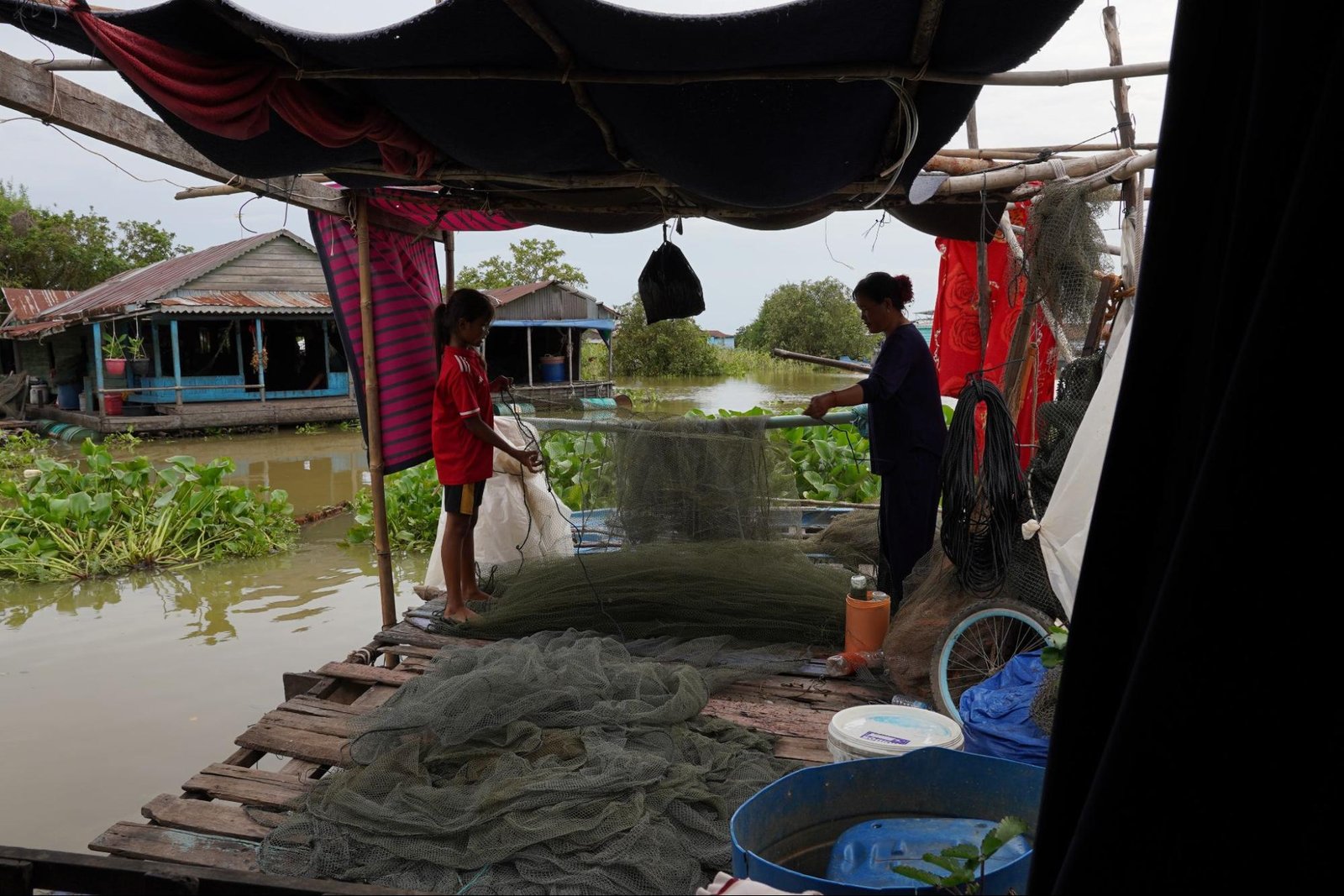
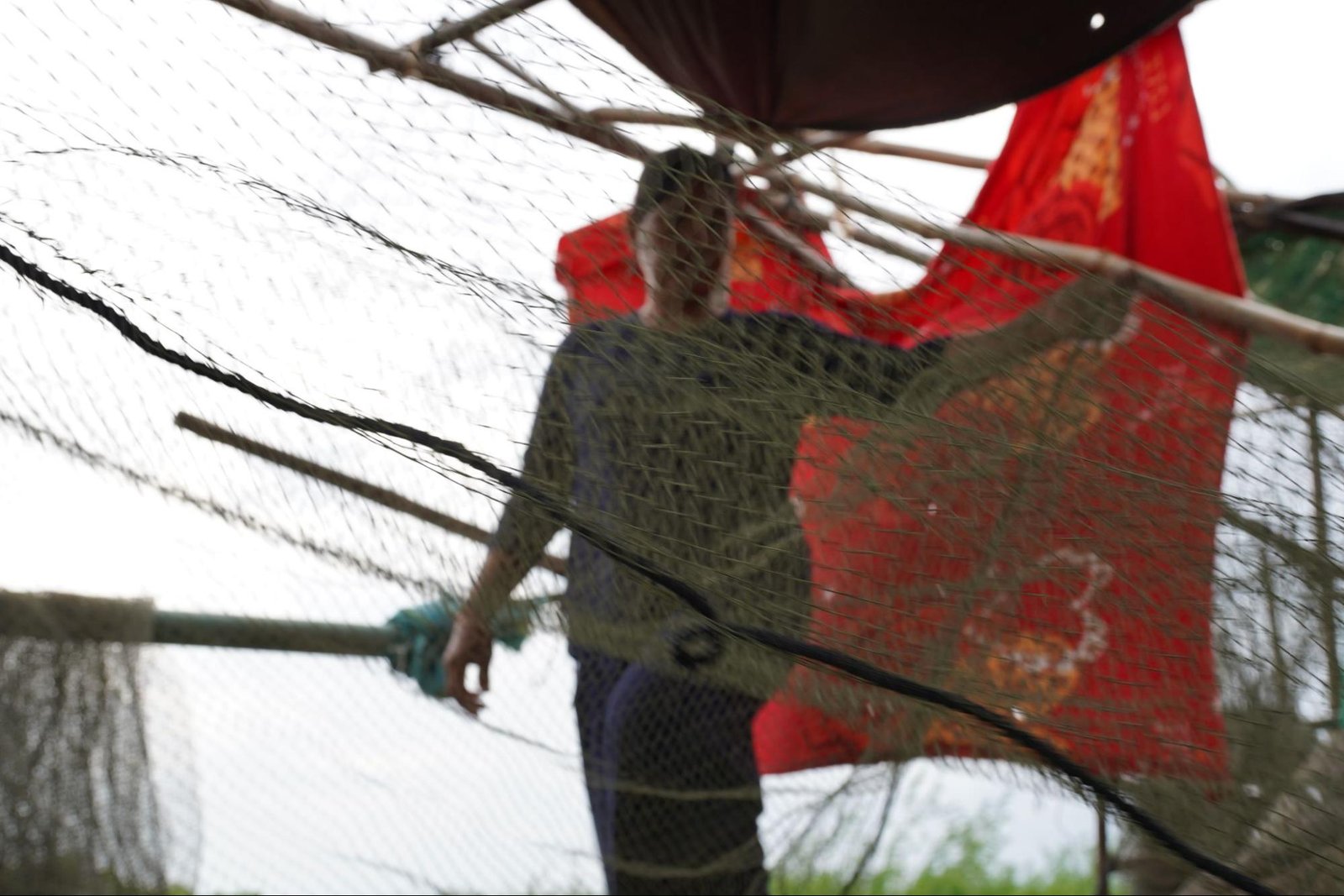
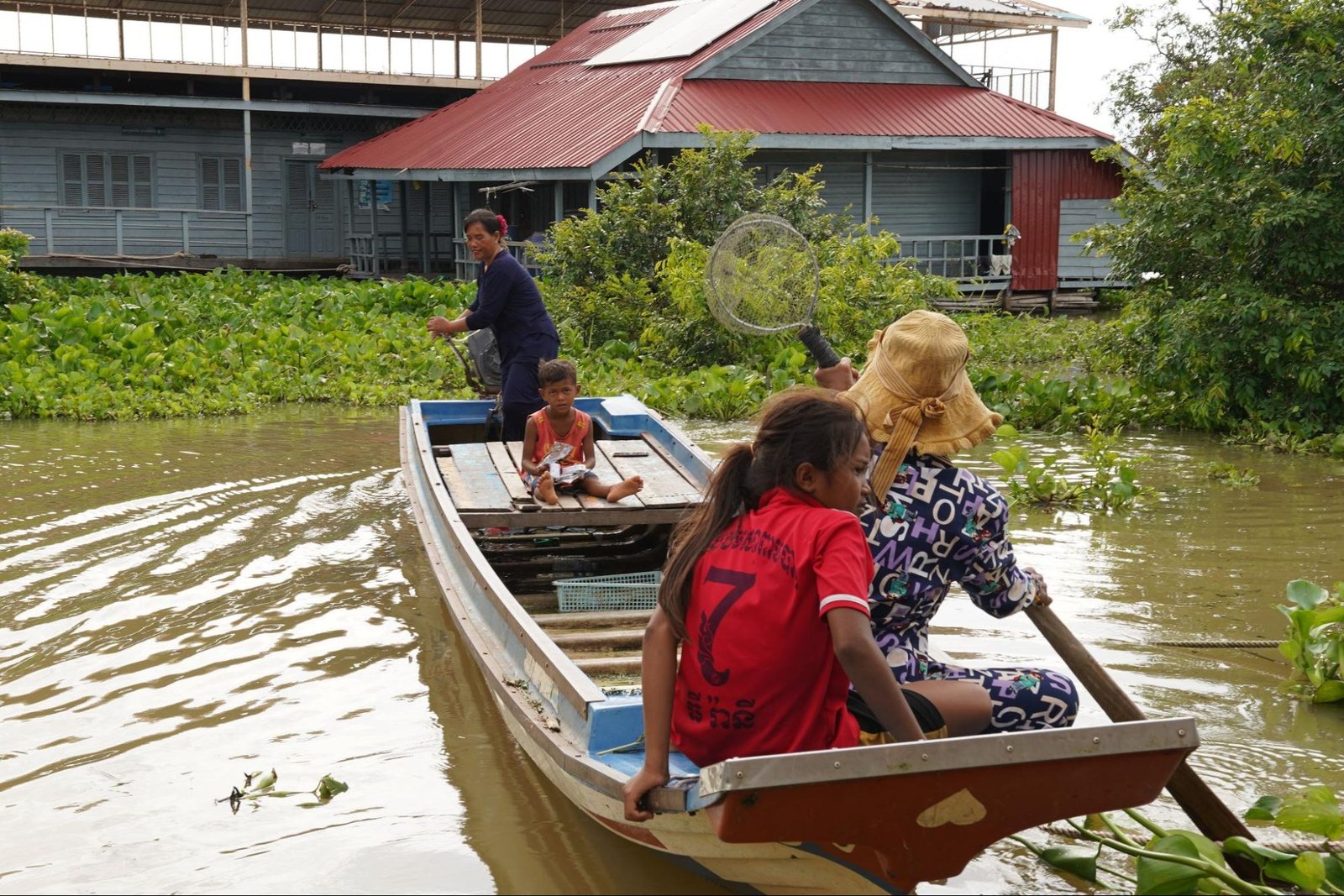
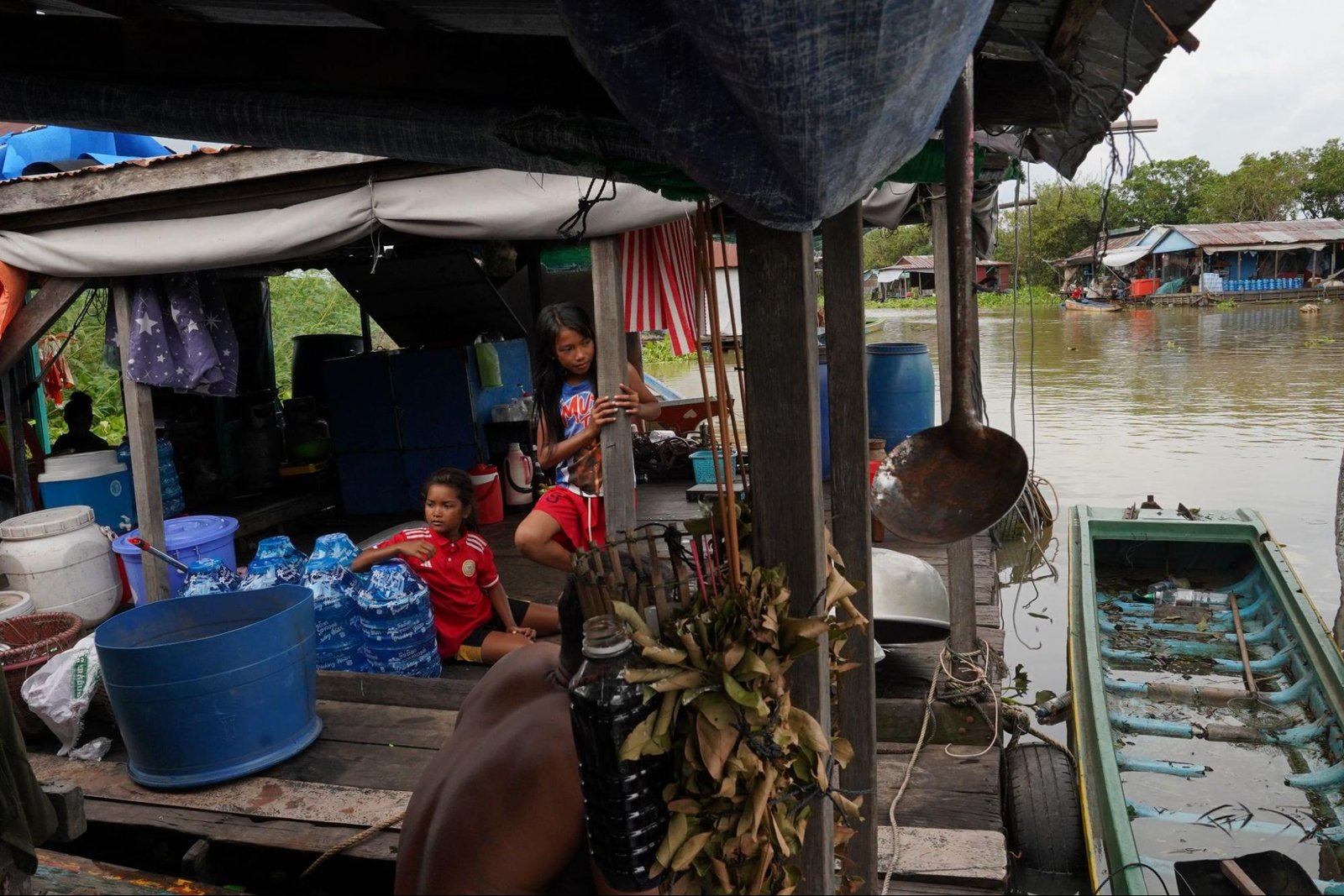
Phon Sarin, 44, is a fisherwoman and head of a local women’s savings group. About 10 women are working together to pool resources and prepare for a lack of fish.
Every year, the Tonle Sap lake expands significantly during the rainy season, flooding forests along its edge, and shrinks again in the dry season. Recently, however, the yearly pattern has been disrupted, with the lake staying low for longer periods. Fish stocks have plummeted.
“It significantly impacts our fishing; when the water rises quickly, we can start fishing sooner, whereas a slow rise leaves us unable to catch anything,” Phon Sarin said.
This year has been difficult fishing again, and fishers are having to adapt.
“During the times that we can’t find fish, we need to gather and store food for later consumption; we stock up in advance because we know there will be a season when it cannot be found, so we must work hard to save enough,” she said.
Phon Sarin started the women’s savings group four years ago. Beyond saving and lending money together, the group undertakes joint projects.
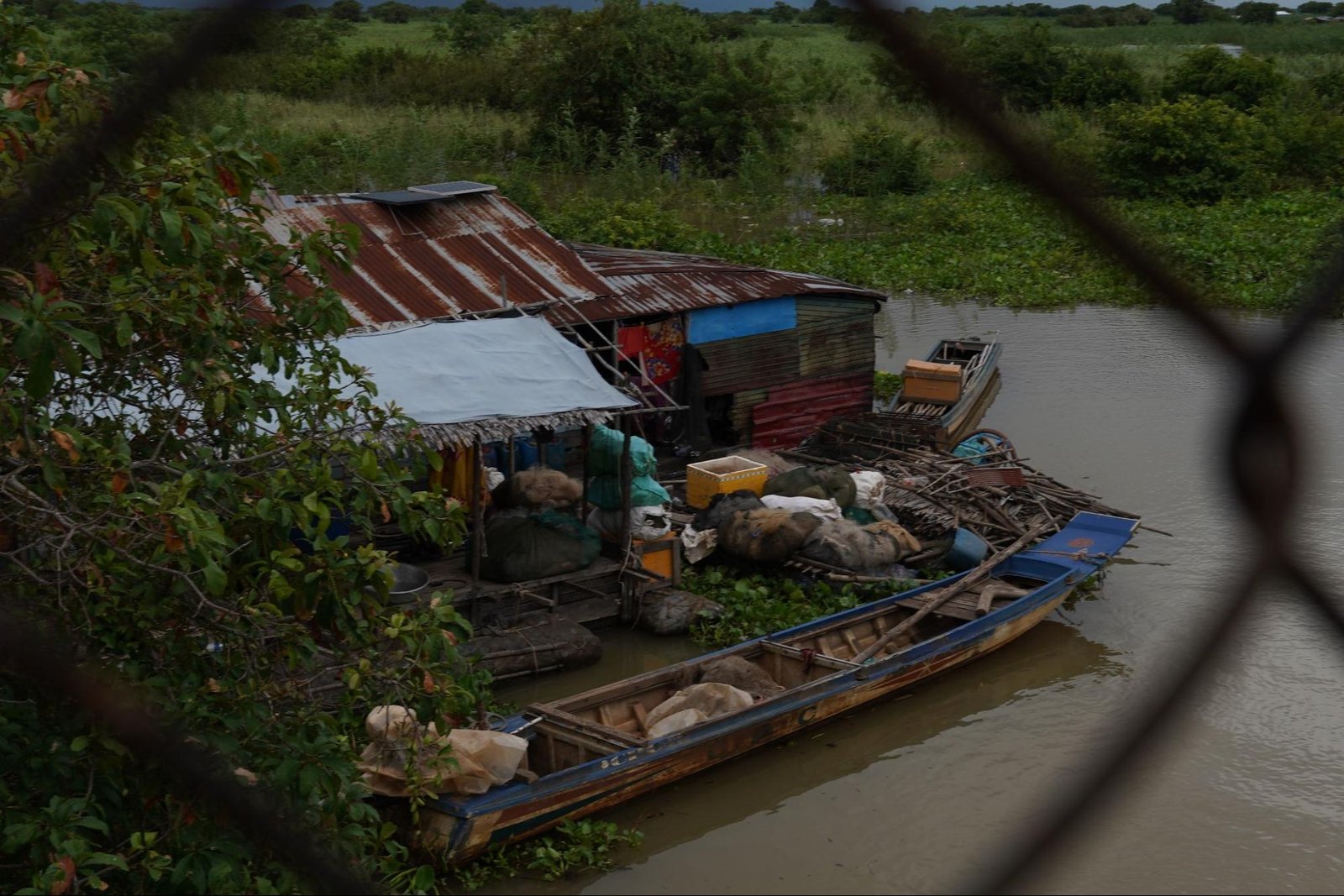
They have planted seedlings to try to restore flooded forests, and work on making and selling fermented-fish prahok together.
Knowledge is key for making preparations. But in the commune there was little awareness about a potential extreme weather event arriving in this year’s El Nino, Phon Sarin said.
Health
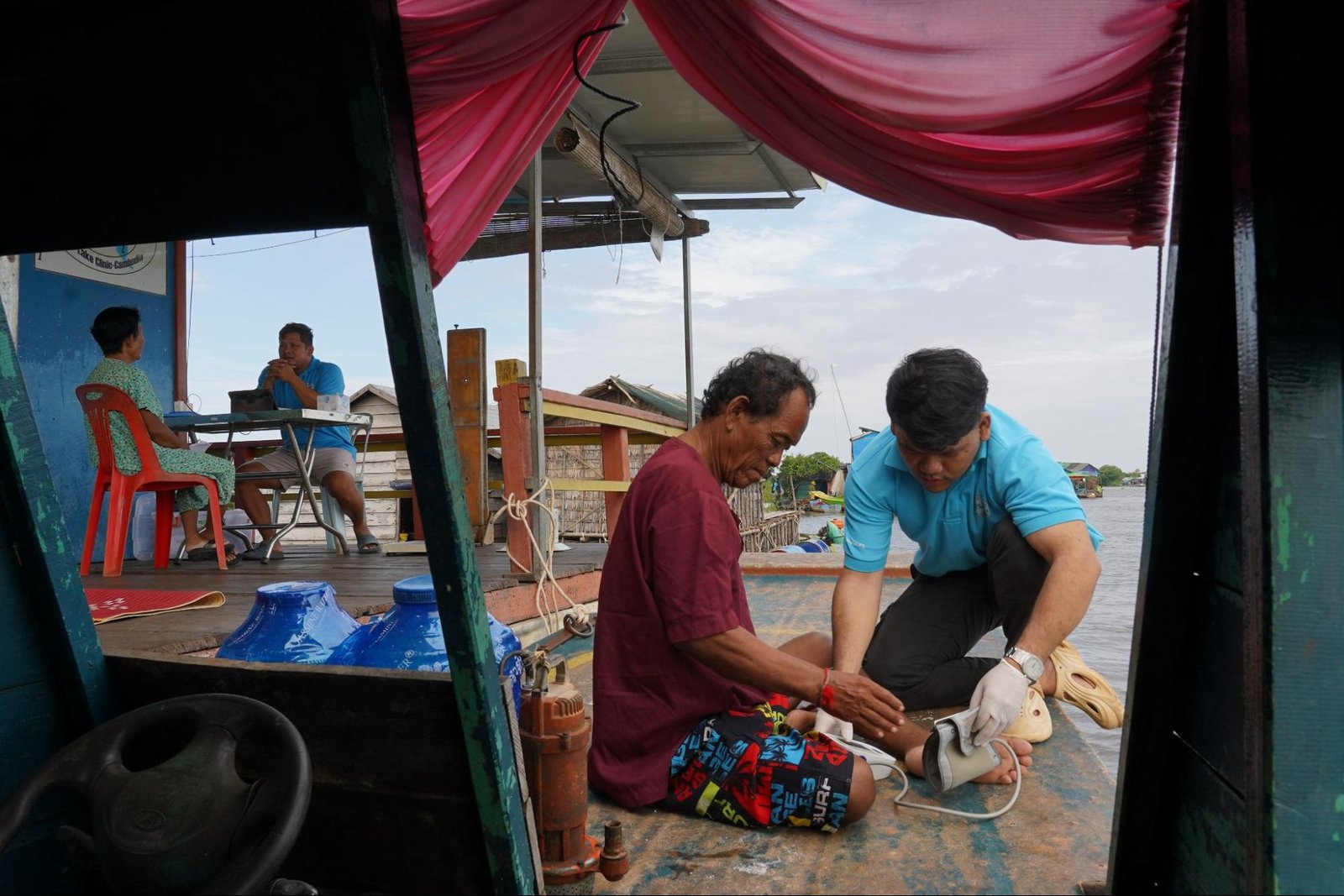
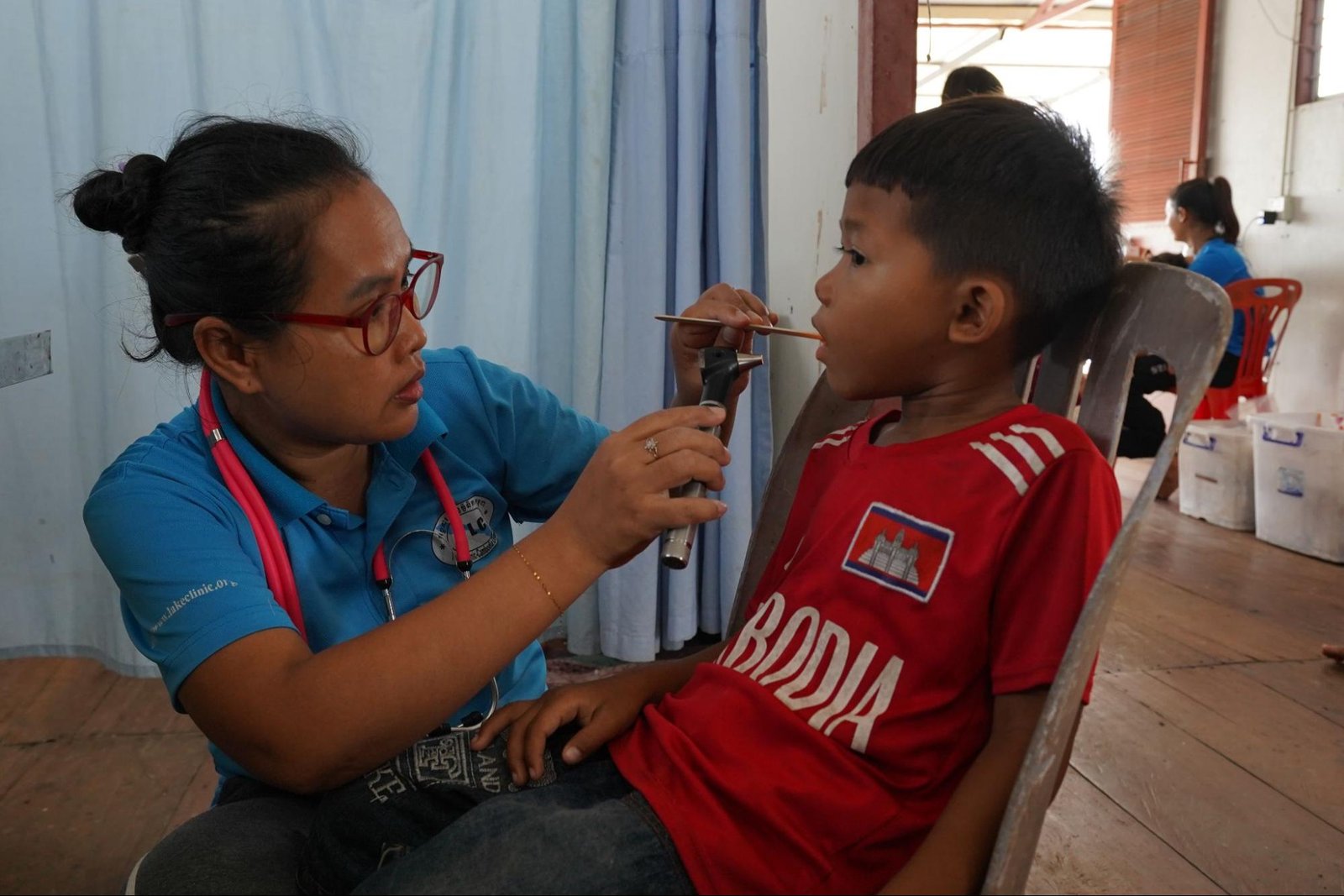
The Lake Clinic, an NGO, has a large boat stationed at Pheam Ban. Staff arrive once a month from Siem Reap on a smaller boat. When the water rises and falls, the floating clinic is moved around the commune.
Doctors stay for three days at a time, treating a wide range of diseases for free in partitions set up on the boat.
Their cases in early September included a series of skin conditions: a baby with a foot infection, an 8-year-old with scarring blisters, and a woman with severe eczema around her eye.
For the clinic, climate change is limiting their access to villages.
“When the water level is really low, we can’t get the big boat there,” said doctor Hun Thourida.
In recent years there have been more months of low water, similar to years that saw drought. Sometimes, the doctors are unable to reach a village for three or four months. People can come to them, but transport can be difficult or expensive.
When the lake is low, health issues increase from the muddy water. Residents continue to drink and use it, even as the water becomes more polluted over time.
“A common misconception we hear from them is the belief that the waters of the Tonle Sap are inherently fresh and purifying — that any toxic substance entering the lake is neutralized,” said outreach coordinator Ky Kolyna.
The clinic works to support the community beyond health care. “What we can do is help them prepare effectively — teaching them how to respond when drought strikes,” she said. “TLC’s ultimate goal is to provide support that secures a better future.”
The dragon

Ma An, the 73-year-old in Pheam Ban village, lost her husband a year ago. Since then, she has begun collecting plastic waste from the lake to sell to recyclers. She is finding living difficult.
“If I had the opportunity, I would have gone on land,” she said. “Whenever I see a dark sky, I feel depressed in my heart.”
Bathing in the low, polluted water has made her itch. The storms keep her awake at night. The weather used to be more predictable, she said.
“The dragon descended only in the months of September, October, and November.” But this year, until September, “I only have the storm and the wind.”
This article’s text is published as Creative Commons. Contact Raksmey to license photos.