
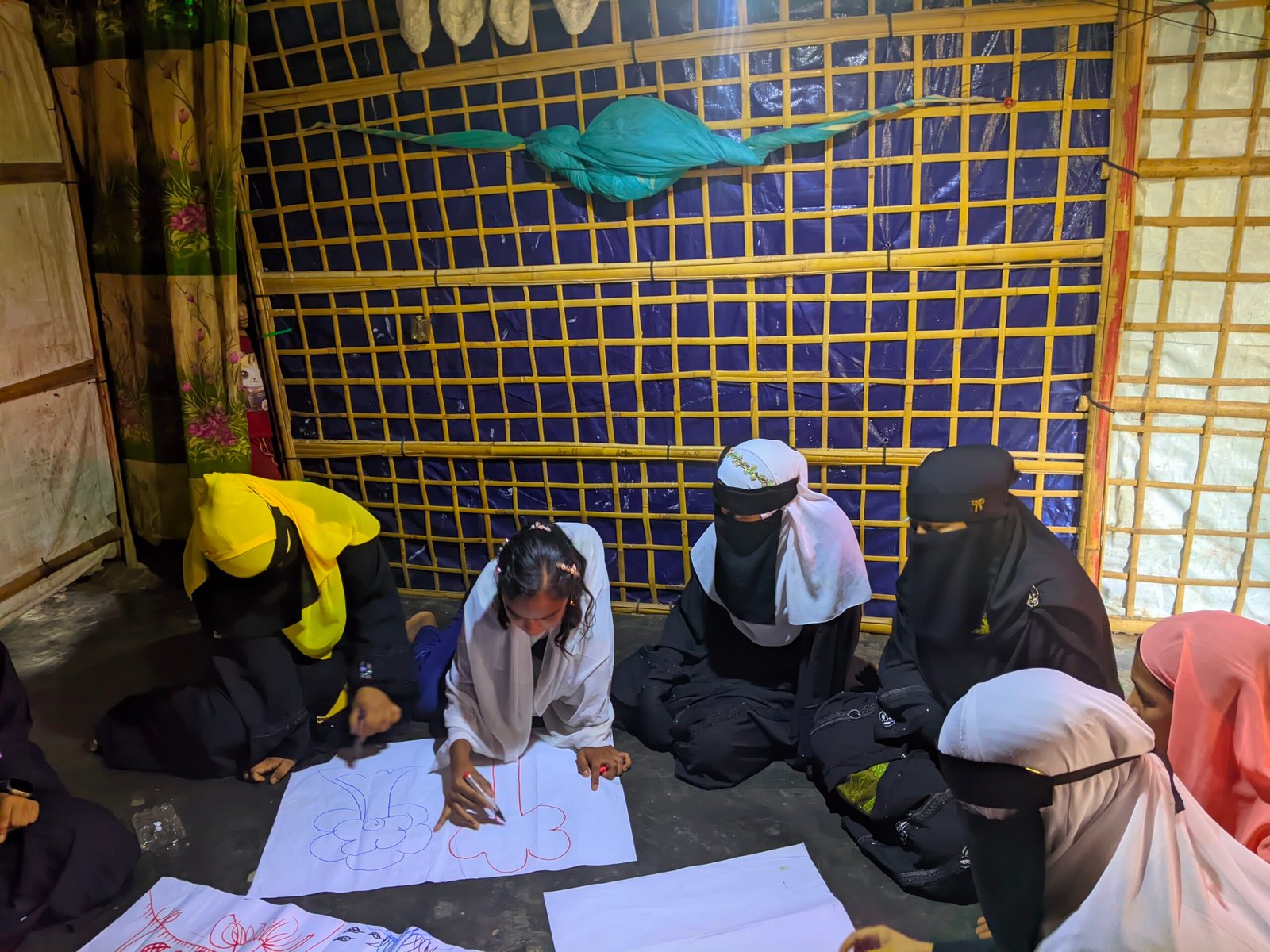
From where Noor Shehera sits in her small home in Camp 6 of Bangladesh’s Cox’s Bazar, the rising voices of her mother and father easily reach her.
For the last few years, her family has had significant financial stress, the 13-year-old said. They can’t afford to give her new clothes or school supplies. Sometimes, there’s not enough food.
Lately, even the cost of her monthly tuition at an informal school in the camp could spark arguments between her parents.
“I could sit with my books for hours, but I could not concentrate on what I was reading,” Noor Shehera said. “All I could think about were the problems at home.”
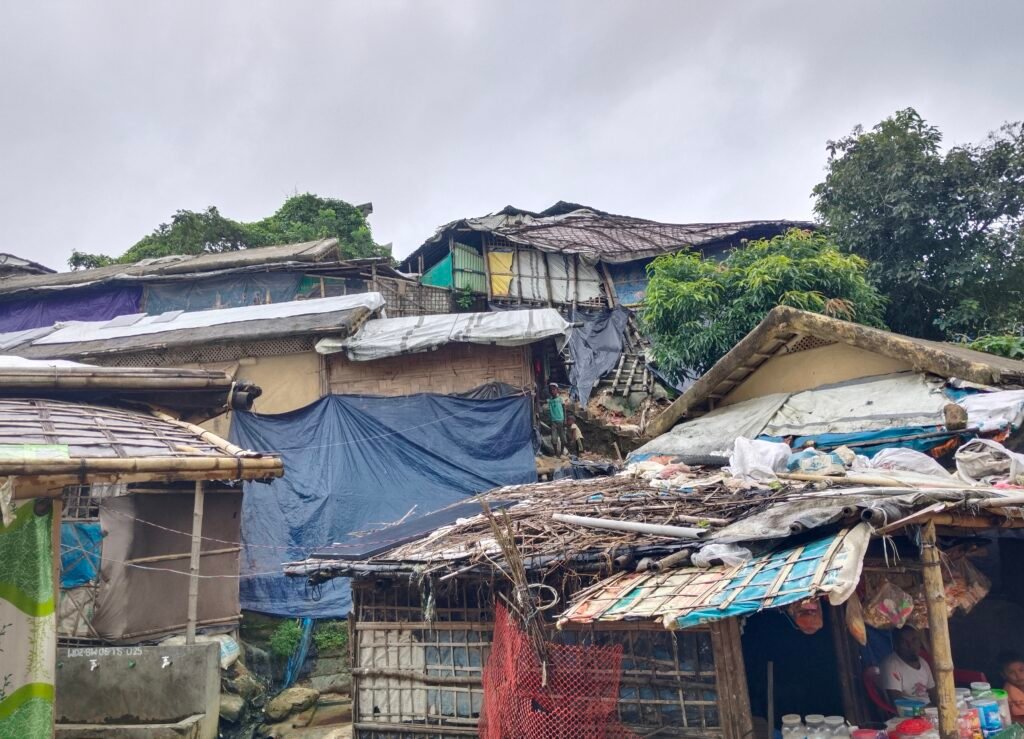
Poverty, family problems, overcrowding, and education have become increasingly important factors influencing the mental health of Rohingya youth.
Over 29% of individuals seeking mental health services at just one of their facilities in 2025 were children under 15 years old, Médecins Sans Frontières, or MSF, said in a report published in August.
This is compared to nearly 10% in 2021.
Driven into Bangladesh by a 2017 genocide in Myanmar, over 1 million Rohingya refugees live in camps with few opportunities and are dependent on humanitarian aid.
Both the volume and severity of mental-health cases have increased significantly compared to five years ago, MSF mental health activity manager Shariful Islam said in a statement published this month.
Amina Begum, Noor Shehera’s 39-year old mother, began to notice changes in her daughter. She became quieter and eventually stopped going to school altogether. She couldn’t sleep very well at night and was easily irritated with other family members.
“Whenever there is a problem in the family, everybody knows about it. My daughter could not escape from the arguments,” Amina Begum said, adding that the whole family was under pressure.
“In the beginning, we thought that she was only annoyed with us. We did not know that she became emotionally ill.”
Families under pressure
Even when her household was peaceful, Noor Shehera worried arguments could erupt again at any time.
“When my parents were arguing, I was scared and thought that something bad was going to happen,” Shehera said. “I would keep listening to what the adults are saying instead of sleeping and studying.”
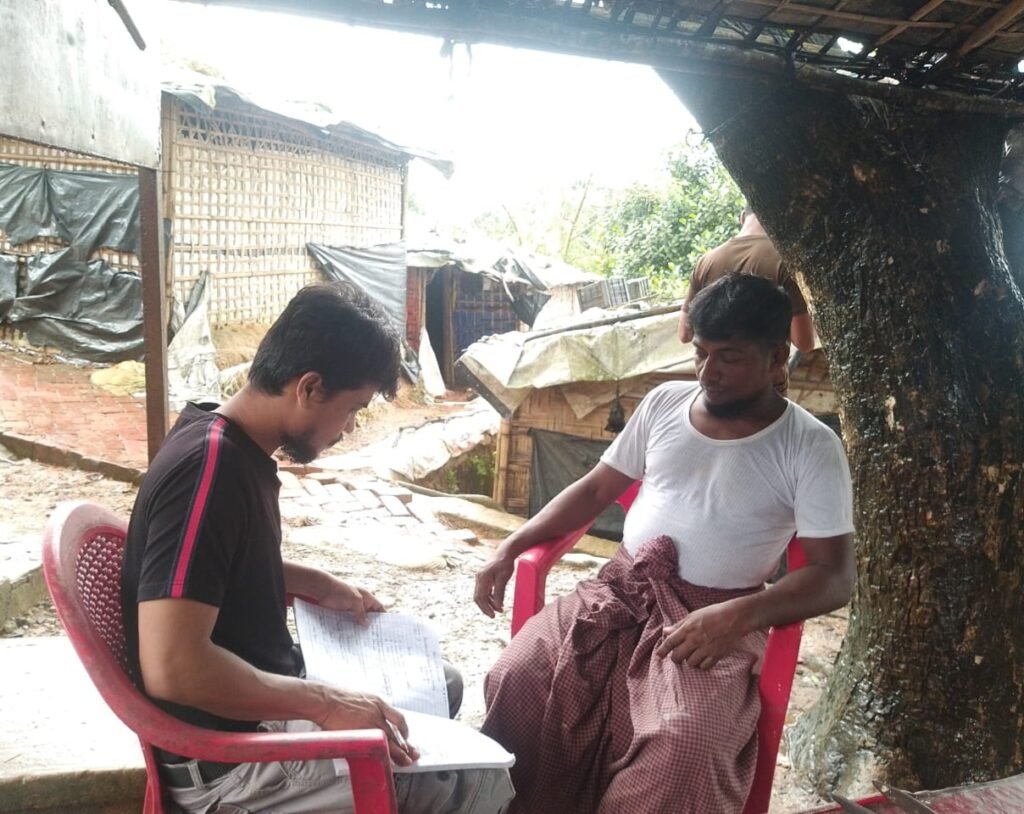
Children and adolescents have become increasingly affected by family finances, disrupted education, and uncertainty regarding their future, said refugee counselor Mohammed Faruk, who works in Camp 14 with the BRAC, previously known as the Bangladesh Rural Advancement Committee.
“Out of every 30 children and adolescents I meet, about 20 of them have serious emotional problems,” he said.
Many refugee children deal with overcrowding, violence, family disputes, and financial stresses, which are directly related to their mental health struggles, said activist Mujibu Rahman, who works in Camp 17 promoting gender equality and education.
“The children are bearing many troubles they should not be at their age.”
In April, 12-year-old Hamid Ullah’s father was kidnapped by an armed group in Camp 5.
The 42-year-old Aziz Ullah, primary breadwinner and caregiver for his family, was badly beaten and left with permanent disabilities.
Unable to walk, he’s not been able to return to work. His mother does household chores, but is unable to work as a woman in the camp, leaving the family with no income.
The family’s circumstances changed dramatically overnight, leaving Hamid Ullah stressed and anxious. He began to ruminate on how his family would get food and other necessities, his father’s health, and the future.
Hamid Ullah found it difficult to sleep and pay attention in classes.
Extreme poverty, as well as insufficient humanitarian aid, lack of educational opportunities, limitation in movement and hopelessness, are part of the growing distress young people are feeling, MSF noted in their report.
It’s also led to other serious trends.
Some 27% of all suicide attempts recorded at MSF’s Kutupalong facility between 2023 and 2025 were from children under 18 years old. Over 80% of suicide attempts involving children were directly attributed to family violence, the report said.
One of the issues is that children can’t express their experiences as a mental health problem, said Saidul Islam, a counselor with Handicap International.
They often express their mental stress as physical symptoms, like headaches, wanting to be left alone, or not wanting to study anymore.
“A child comes to us because of a sleep problem, but when we talk with them, we find family problems, financial problems, school problems, or fear about their future,” he said. “Mostly, the sleep problem is just one aspect of what they are going through.”
Family support
Mental health services in the camps include community-based psychosocial support, counselling, and specialized mental health services, including treatment for schizophrenia and bipolar disorder, according to MSF.
Nearly 24,800 refugees received individual counselling from trained refugee counsellors in 2024, according to a report released in 2025 from UNHCR, the U.N.’s refugee agency. Among them, over 7,700 are newly-identified cases.
Another 10,000 refugees with more serious needs received specialized counselling, while 156 individuals were admitted for specialized mental health care at UNHCR-supported facilities.
When Mohammed Salim began to lose interest in his studies and friends, his family didn’t know that mental stress was to blame.
“We thought that he had become lazy or lost his desire to study,” said his father Abdul Karim. “We didn’t know that he worried constantly and couldn’t control it.”
In actuality, the 15-year-old was stressed about his future and what he would do after school. Lack of accreditation in refugee schools and few job opportunities means students often have nowhere to go after graduation.
“I kept asking myself what I would do in the future. I wanted to get higher education and lead a good life, but I could not see many opportunities around me,” he said.
“I lost interest in doing things that I used to enjoy. I could not concentrate when I was studying and sometimes did not want to talk to my friends.”
Only about two out of 15 parents understand their children’s problems, said MSF counselor Muhammed Anuwar, who works in Camp 15.
“Parents do not always recognise emotional distress, they interpret it as a stage in adolescence or defiant behaviour,” he said.
For Ayesha Begum, learning how to respond to her children’s uncertainty took time. Her son and three daughters often ask her questions about the future, like when their life will get better or when they will have enough food.
Although she doesn’t always know how to answer their questions, she says she tries to acknowledge their concerns.
“When there is no food, no money, when their parents are worried, they hear all this. Even if you do not let them worry about it, they feel something is wrong,” she said.
“If he is always alone, we try to sit beside him and ask him why something is wrong. We may not be able to solve his problems but we can let him speak.”
Seeking help
However, the counselors believe that recognizing the issue early is significant.
“When adults witness any drastic change in the behaviour of their children, they shouldn’t blame their children,” said Kabir Ahamed, a counselor working with MSF. “Rather, they should try to identify the reason behind that change and provide suitable support to their children.”
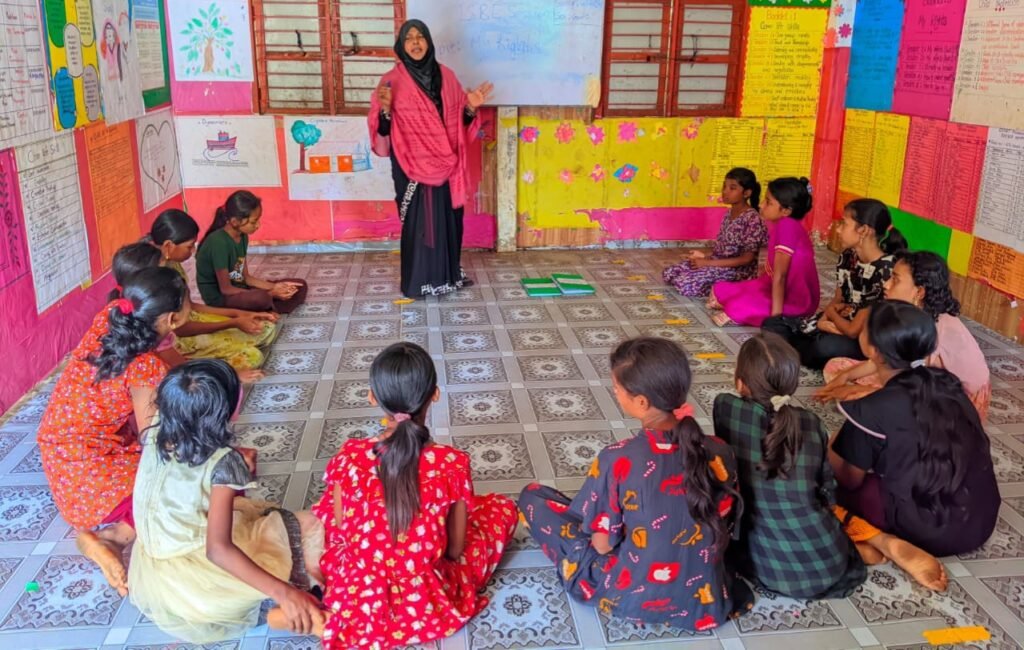
Kabir Ahamed said the organization uses activities like henna application, games, and other creative activities to help children trust the staff.
However, community stigma still makes it challenging for some families to get support.
Noor Shehera’s mother, Amina Begum, said her view of mental health has changed since her daughter began receiving help.
“We were afraid that people would misunderstand [our daughter] and that they would think something was wrong with our family,” Amina said, adding that a counselor at MSF helped them to understand that seeking support was not shameful.
“But now we understand that when a child suddenly changes her behavior in such a way, we have to question what happened to her.”
Noor Shehera is back to attending her classes, which are paid for by her father’s daily labor job.
She said, “At times I get worried, but now I know that I could talk to someone rather than keep everything within me.”
This article is published as Creative Commons.