
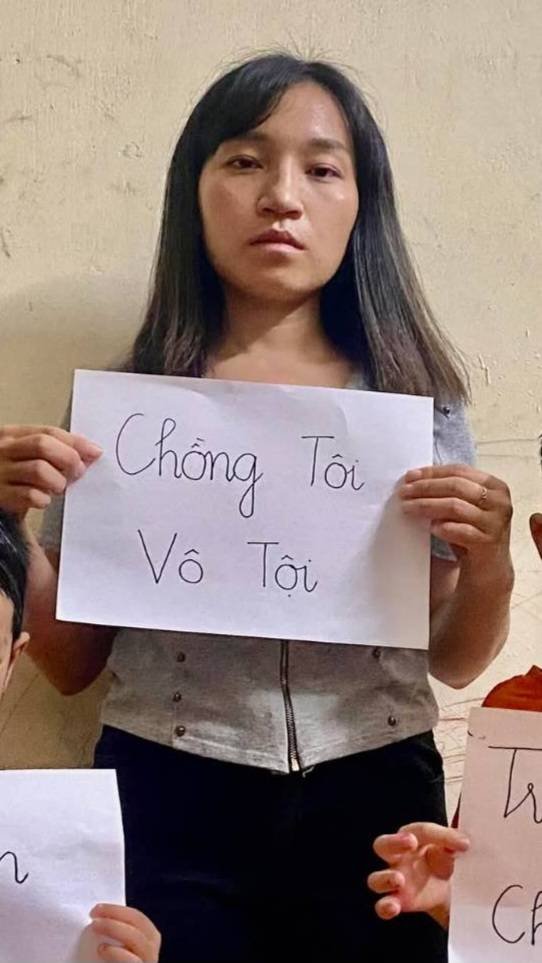
Less than a year since its launch in 2025, the Facebook page Đường Về Nhà (The Road Home), has brought the voices of communities seeking justice closer to the public.
More than 50 real-life stories — each a journey marked by loss and years, even decades, of waiting in search of justice — would have remained unheard if not brought to light.
The group’s posts on state repression and other injustices have now reached more than 104,000 followers, putting it on the Vietnamese government’s radar.
One of the most watched video clips was that of Nguyễn Thị Loan, with more than 4 million views. She is perhaps the most well-known mother in Vietnam, fighting since 2008 for the release of her son Hồ Duy Hải, who was charged with murder and allegedly tortured for a confession. The case has drawn calls for his acquittal from parliament members, diplomatic missions and international rights groups, including Amnesty International.
The police have labeled the Facebook page as “subversive” and “anti-state,” a common accusation against dissidents in Vietnam. Phạm Thanh Nghiên, spokesperson of the page, says those featured in the videos have been summoned to police stations and questioned about who had interviewed them and who has been managing the page.
In Vietnam, ranked 174th out of 180 countries in Reporters Without Borders’ Press Freedom Index and one of the worst jailers of journalists, Facebook emerged as a vital venue for political participation, public debate and social activism. According to a 2019 Pew Research Center survey, 70% of Vietnamese people turned to social media channels, particularly Facebook, for political news.
Increasingly, the platform has complied with government demands, leaving dwindling space for freedom of expression. Yet activists still have little choice but to resort to Facebook for their work on democracy and social justice.
Documenting and counting
Phạm Thanh Nghiên says her page was deactivated twice for vaguely defined violations of community standards. Each time, her voluntary team had to file a monthlong appeal with Meta to reclaim it.
“We have prepared for this [deactivation],” says Phạm Thanh Nghiên, who fought to reclaim her own page deactivated by Meta in the past. “We have a website to back up deleted content.”
“In some cases, the pressure has gone even further — informants have been threatened and explicitly warned to cut ties with the group altogether,” says Nghiên, a former prisoner of conscience who has been in exile in the U.S. since 2023.
A 2025 report published by Legal Initiatives for Vietnam, a nonprofit working to promote democracy in the country, says Facebook was “complicit in restricting fundamental freedoms” in the Southeast Asian nation, its third largest market in the region and seventh biggest worldwide.
The compliance rate for content takedowns and account restrictions, especially those of well-known dissidents, have been overwhelmingly more than 90%. Meta has so far been silent on the chilling number of human rights defenders imprisoned for their Facebook posts. At least 16 independent journalists who are currently behind bars used Facebook as their main platform.
The pressure comes as the Ministry of Public Security has been tightening its grip, with no sign of easing. From the adoption of cybersecurity laws to employing surveillance technology, Vietnam is now following in China’s footsteps. The ministry, the biggest owner of personal data in Vietnam, is now proposing to build a China-style firewall in the country. Vietnamese police now not only fines those who post content that is deemed as regime-unfriendly but also share posts of dissidents.
According to a 2026 Human Rights Watch report, Vietnam held more than 160 political prisoners and detained at least 40 others for criticizing the government. The crackdown has intensified through expanded use of Criminal Code Article 331, or “abusing democratic freedoms to infringe upon the interests of the state.” Authorities deploy the law to silence social media users raising concerns about religious freedom, land rights, Indigenous rights, and government corruption.
Phạm Thanh Nghiên says she has no other choice than to keep up the fight on Facebook.
“It is the only place where I can express my opinion,” she says. Her personal blog, where she shares human rights issues, has been blocked in Vietnam since 2013. When she first set out on activism back in 2007, Facebook wasn’t in Vietnam yet, so it felt isolating. Yet Facebook connected her with fellow activists across the country.
“I have Threads but rarely use it due to language barriers and time constraints — my main job involves writing long articles and reports. Instagram is another option, but if Facebook becomes too restrictive in the future, I’ll need to switch to other platforms.”
Livestreaming against all odds
Long before his imprisonment, Trịnh Bá Phương’s family were frequent Facebook livestreamers. After his family became victims of forced land confiscation in 2008 in Dương Nội, in suburban Hanoi, he — along with his parents and siblings — became prominent activists in Vietnam’s land-rights movement. Land disputes, especially land acquisition for so-called development purposes that benefit state-owned and state-friendly conglomerates, along with systematic undercompensation, have long been a major source of social grievances in Vietnam.
Trịnh Bá Phương regularly livestreamed real-time coercive land seizures, protests of farmers against local authorities, and the numerous incidents of harassment his family faced. His parents were each imprisoned for 30 months for “disturbing public order” in 2015, but this did not deter the family’s activism.
On January 9, 2020, the situation came to a head: A lethal clash between protesters and police in Đồng Tâm village left three officers dead. The night before, Trịnh Bá Phương had posted a stream of images on Facebook, keeping the public in the loop.
Around 5 a.m., he went live with a six-minute video as both uniform and plainclothes police besieged his house. The video ended abruptly as his entrance was destroyed. He was arrested on that day without a warrant. In 2021, he was sentenced to 10 years in prison under Article 117 of the Penal Code on charges of “making, storing, spreading information, materials, and items for the purpose of opposing the Socialist Republic of Vietnam.”
His mother and his brother were imprisoned on the same charge.
In September 2025, in a trial lasting less than three hours, Trịnh Bá Phương was handed an additional 11-year prison sentence for the same charge, on the grounds that he had allegedly written a note reading “down with communism” while in prison. All together, the family faces a combined total of 37 years behind bars.
Now his wife, Đỗ Thị Thu, is active on Facebook. She has posted that her family, as well as representatives of diplomatic missions in Vietnam, were denied entry to the courtroom and forced instead to wait outside in the rain on the day of the trial.
Last December, she said on her Facebook page that the police had banned her from traveling abroad for “national security reasons,” but her request for a written document on that decision was turned down. The police have repeatedly warned her not to post on Facebook.
“For me, these threats are now normal,” says Đỗ Thị Thu, who also uses the platform to promote her homegrown food for sale and connect with other Vietnamese activists.
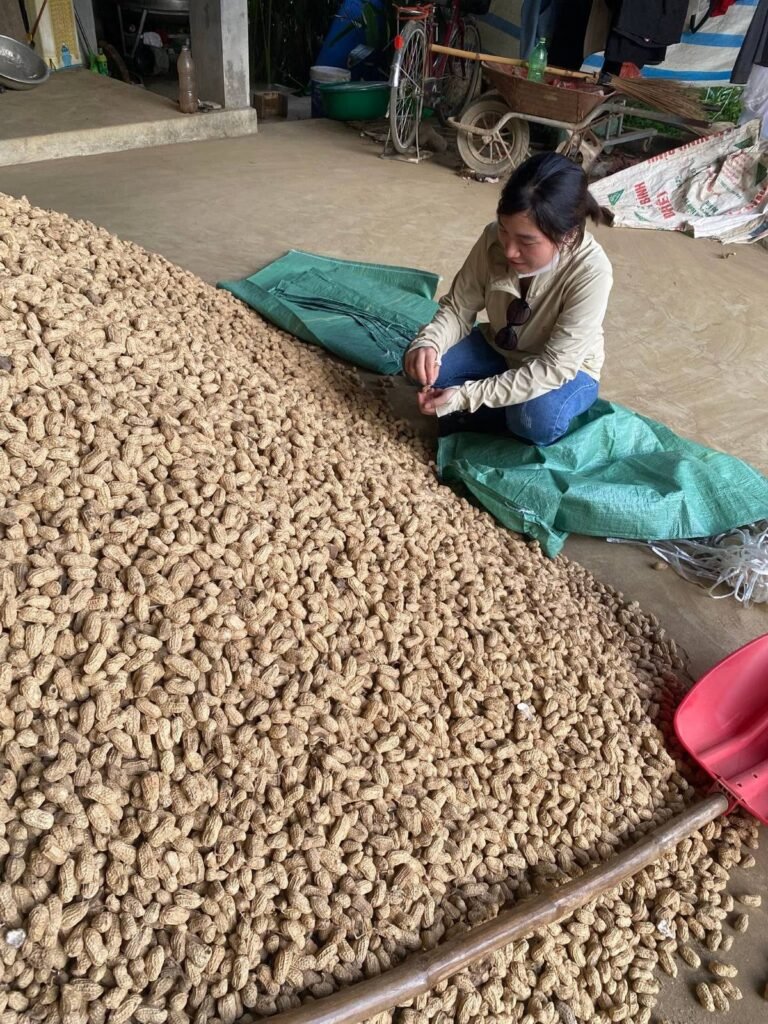
Her homegrown pomelos have become a small rallying point. Through Facebook, she befriends other activists and those who admire the family, who help connect her with customers as far away as Europe. Nguyễn Thuý Hạnh, a former prisoner of conscience on charge of anti-state propaganda, who was released in October 2024, wrote on Facebook:
“As long as this Facebook account of Nguyễn Thúy Hạnh exists, I will also stand against opportunists, those who act as pawns for security forces to insult true fighters, the envious, and the internet bullies. And I will continue to call for people to buy grapefruit from Thêu [Thu’s family], as well as quietly support political prisoners!”
Creatively combating censorship
Not all activists have stayed with Facebook. Cù Huy Hà Vũ, an exiled jurist in the United States, and Nguyễn Quang A, a prominent human rights defender who has been banned from travelling overseas since 2023, have stopped using the platforms after their pages were repeatedly attacked, and then deactivated by Meta.
Before her exile in 2018, Đỗ Nguyễn Mai Khôi — formerly known as the Lady Gaga of Vietnam who rose to stardom in Vietnam in the 2010s — actively used Facebook not only to disseminate her music but also to circulate political messages. These included informing her fans about her independent candidacy for the National Assembly in 2016 and meeting with former U.S. President Barack Obama in the same year in Hanoi, as well as documenting her harassment by local police, including a forced eviction from her own home.
Between 2020 and 2022, she urged Facebook to take measures to protect Vietnamese users from state-backed cybertroopers consisting of police, army personnel, and loyalists. But even as she continues to fight for human rights back home, she no longer believes in the platform.
“They have stopped responding to me since 2023 so I have not followed up with them,” Đỗ Nguyễn Mai Khôi says. “I am frustrated. But I’m still using the platform because that’s the only place when my mom and I follow each other every day. My mom is [70 years] old so she can’t use another platform.”
“I also don’t want to use Facebook in the same way as before,” she adds. “It’s just there to keep your old friends, but not for spreading political messages anymore.”
She continues to post on her YouTube channel, with many of her songs tinged with political rhetoric. Nguyễn Quang A, the prominent human rights defender who is now 80 years old, has also turned to YouTube to share regular explainer videos he films himself on socioeconomic issues. With 99 episodes uploaded, his channel Ý Vụn (Scattered thoughts) has now reached 13,000 followers.
The Road Home’s team is not giving up, however. Last November, in light of legal risks facing the victims they featured, the team made a temporary pause to look for new approaches.
For now, the team has stopped posting interview videos that use participants’ real images and real voices.
According to Vũ Huy Hoàng — an activist in hiding since 2024 and the administrator of the page, the group is experimenting with recording the memories of those who have served sentences, including both criminal and political prisoners.
They are building an online platform where prisoners’ stories are presented as a “memory map,” map including space-visualization drawings of the detention facilities.
They are also experimenting with AI to provide legal support or mask the identities of those giving testimony.
The page has been renamed Tai Vách Mạch Dừng (Walls Have Ears) — with the hope that stories of injustices can continue to be told and heard.
Hướng Thiện is a freelance writer focusing on human rights issues in Southeast Asia.
This article is published as Creative Commons.