
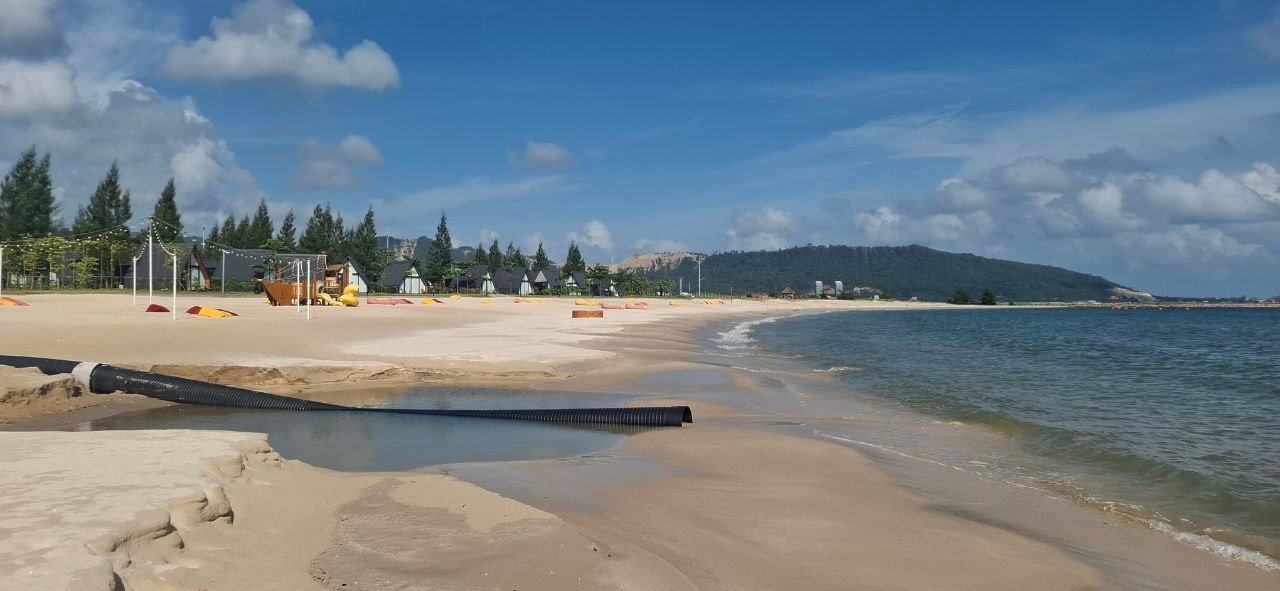
Sihanoukville, Cambodia — When Son Seun could no longer work as a fisherman, he became a security guard. The main development that was hiring, Bay of Lights, supplied a few expensive amusements like restaurants, beach and a swimming pool on what was once the waters he’d navigate to catch dozens of kilograms of fish and squid every day.
His role at Bay of Lights ended early this year when the project’s ultimate boss, Chen Zhi, was arrested and deported to China.
“We started to worry we wouldn’t get paid” that month, Son Seun said. Not long after the deportation, he received the final monthly payment of $260.
The sand dredging, dramatic landscaping and grand promises of the Bay of Lights project outside Cambodia’s coastal metropolis all stopped at the fall of Prince Group, the project’s parent company. What’s left are mountains of sand and unresolved issues with land management and ownership, residents near the massive project say.
Son Seun now sits along a dirt road at Ong village in early July, waiting to see if he can get any day labor.
When asked about the future of his former workplace, he noted that it was disappointing to see it empty when he used to be among 40 guards helping foreign visitors.
“If they could continue business, it could provide jobs for residents,” Son Seun said.
Prince Group had built several skyscrapers across Cambodia’s Phnom Penh and Sihanoukville cities, but Bay of Lights was an unprecedented plan for Preah Sihanouk province: filling sand into an existing bay to create a new city.
The project was enabled by the Cambodian government’s 2019 and 2020 decisions to privatize and grant more than 800 hectares of sea area to Canopy Sands Development, which has been connected to Prince Group— transferring a “property of natural origin” that’s meant to be under public state ownership into state private ownership.
The resulting project promised to be “iconic” but also “sustainable,” according to Yeo Choon Chong, the Asean chief executive for the Singapore government-owned consultancy firm Surbana Jurong, when he was quoted about the project in 2021. Surbana Jurong or SJ Group, owned by Singapore’s Temasek Group, another state enterprise, created the masterplan for the massive plot of sea space, shaped like a child’s drawing of a wave.
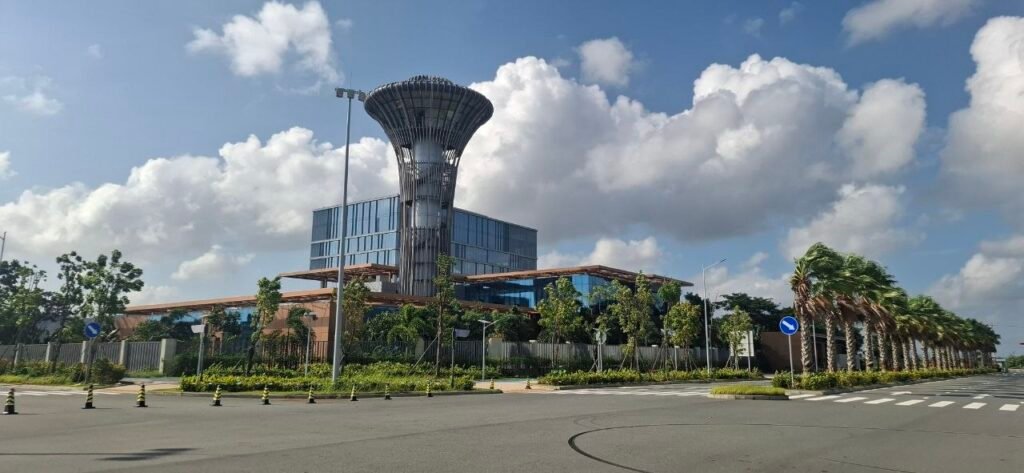
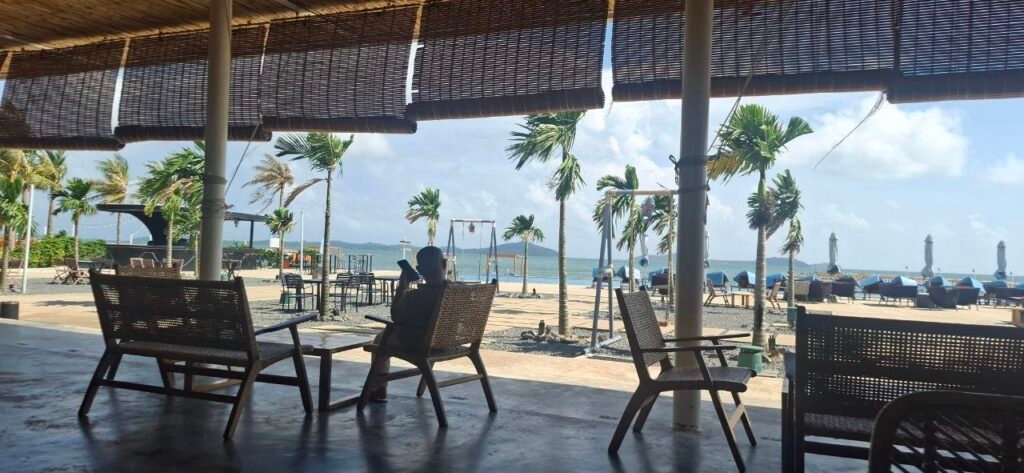
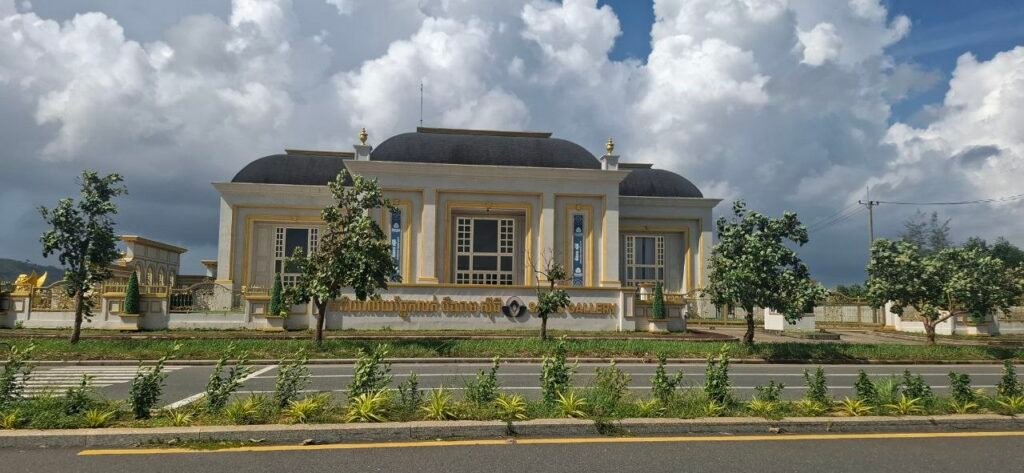
In six years of development, the Canopy Sands Development Group, the Prince subsidiary in Cambodia responsible for the area’s development, filled an area close to 300 hectares full of sand, turning only about 100 hectares into something currently usable: a beachfront with a restaurant, a few scattered pyramid-shaped bungalows on the beach, and a big glassy building that’s apparently LEED certified for being sustainable. Prince Group also gifted 500 square meters of their development to the Cambodian Sailing Federation in 2023, creating a coastal outlet for the athletes. A security guard who worked the parking lot for the seaside restaurant told Mekong Independent in July that the place used to be frequented by foreigners, some tourists and some others, mostly Indonesian and South Asian, seeming to work for the “online” industry, arriving in large groups to enjoy the resort.
The arrest and deportation of Chen Zhi, chairman and face of Prince Group, put the Bay of Lights project on pause. Since then, security guards like Son Seun were let go from their jobs, and the sand-carrying boats floated off towards other projects.
Several gates into the Bay of Lights project, including construction entrances and the office building at the main entrance, were closed off. But windsurfers continue to sail through the bay in early July, and the beachside restaurant remains open to a handful of guests on a Friday afternoon. Most people leaned quietly in chairs, snacking and drinking $4 coffees or fruit drinks, as generic hip hop-like music played listlessly in the background.
There have not been any public studies of the impacts of the Bay of Lights projects, but other researchers have warned of the concerns of undertaking massive land reclamation projects.
Kim Chan, chief of Ream commune, told Mekong Independent over the phone that he had tried to get details about the Bay of Lights project in the past, but they never would give him clarity.
“We do not know whether they want to leave the ground to become more sunk,” he said. “Before I often asked them, they told me that they cannot construct quickly after filling it [with sand] and sometimes they keep it for subsidence.”
Though he was concerned how the abandoned sand would affect the environment, Kim Chan said only the provincial authorities had any jurisdiction over the project.
“We are commune authorities, we can only look at it with our eyes,” he said. Deputy provincial governor Long Dimanche did not respond to a request for comment.
As far as Kim Chan has seen, the sand-filling stopped several years ago.
He said the roads inside the project area were nicely paved for tourists, but so far the project had been empty — he believed because of an economic downturn.
But many residents of villages around the development had moved around, due to the lack of work and evictions in the area.
“We have seen fewer and fewer people who are still there, and sometimes the houses are broken, they move to live outside,” he observed.
Cambodia in 2017 banned sand exports to all other countries except Vietnam, in response to the negative reactions both from prominent environmental group Mother Nature Cambodia, river and seaside residents, and the general population. But domestic sand mining continued to thrive, which included that sand dredging that filled the Canopy Sands projects. Residents and fishers were uncertain where dredged sand came from, but they believed it to be the Sre Ambel estuary in Koh Kong province.
But the reclamation itself can be dangerous. In previous studies about land reclamations in Philippines’ Manila Bay, Kelvin Rodolfo, a geologist and professor emeritus at the University of Illinois in Chicago, warned of the devastation that large-scale land reclamation can cause in reference to sand-filling projects in the Philippines.
Manila Bay’s land reclamation project, which at 318 hectares is slightly larger than the current state of Bay of Lights but less than half the size of the proposed 834 hectares, would risk great danger of subsidence in the face of natural disasters, he said.
Though Cambodia has little risk from earthquakes unlike the Philippine, Kelvin Rodolfo warned in 2023 that hasty sand projects can suffer from other natural disasters, including storm surges and land subsidence.
“My last resort is to tell anyone who wants to buy property on reclaimed land: Make sure you can get damage insurance. If you cannot, be forewarned. Don’t be a fool,” he said to Philippines’ media.
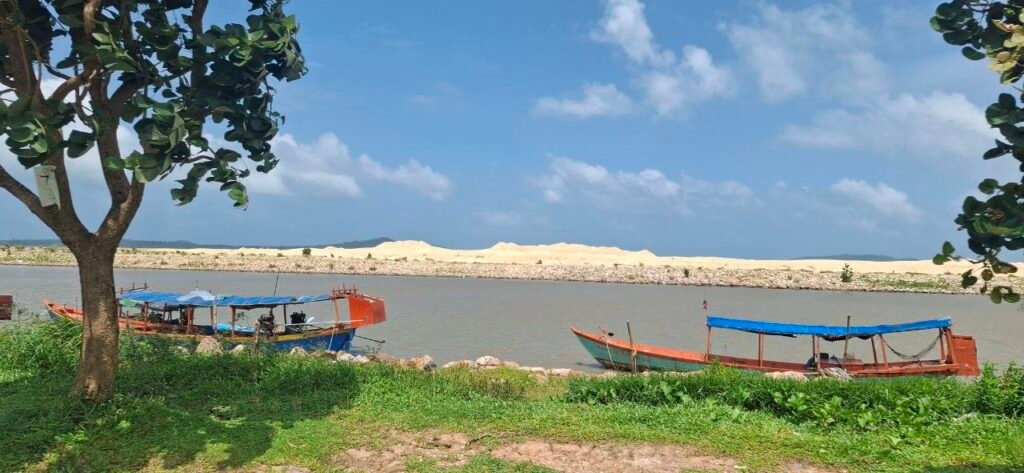
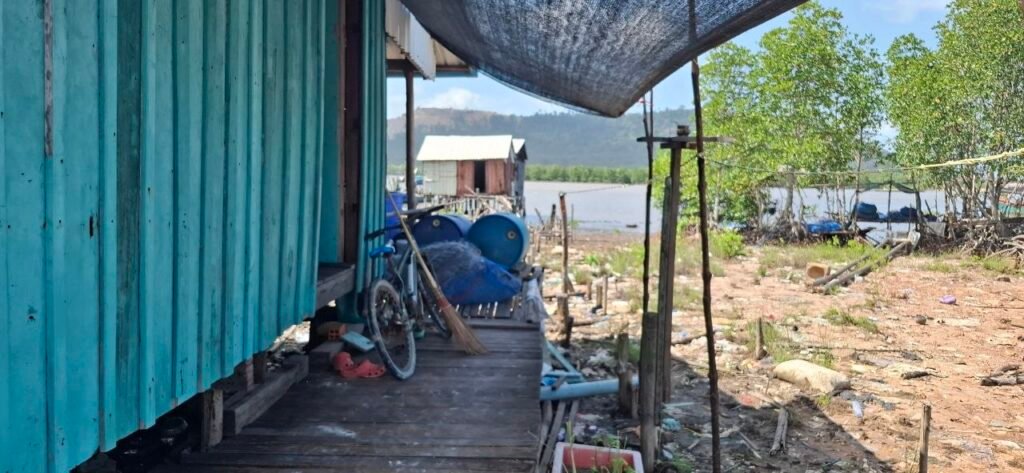
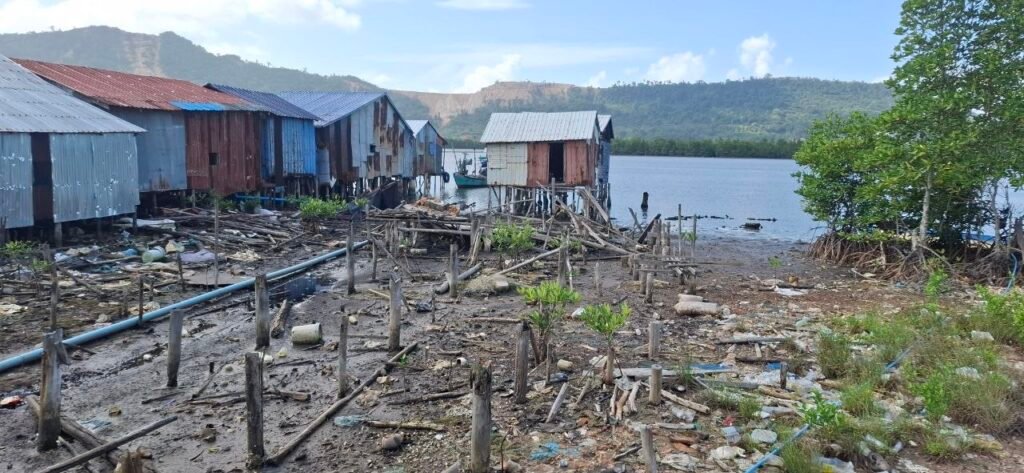
For residents, the sand mining literally created a barrier between them and the sea fishing that earns them their living.
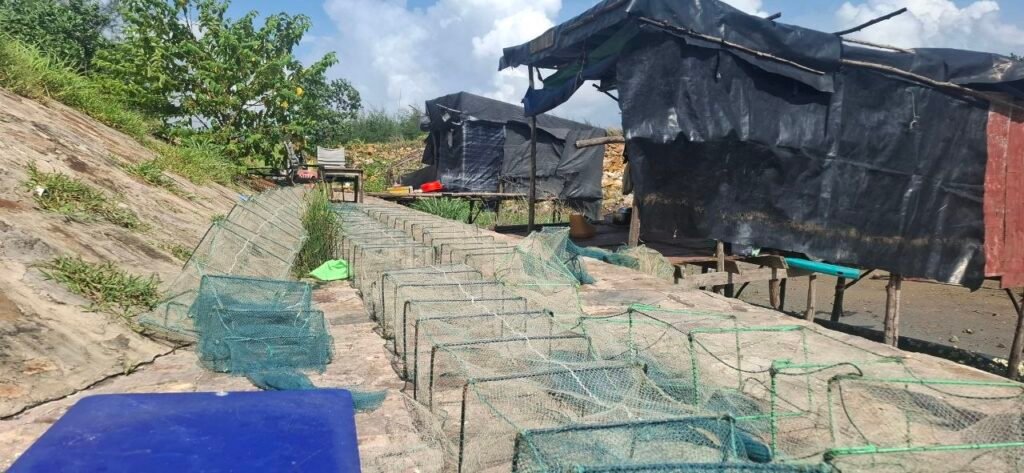
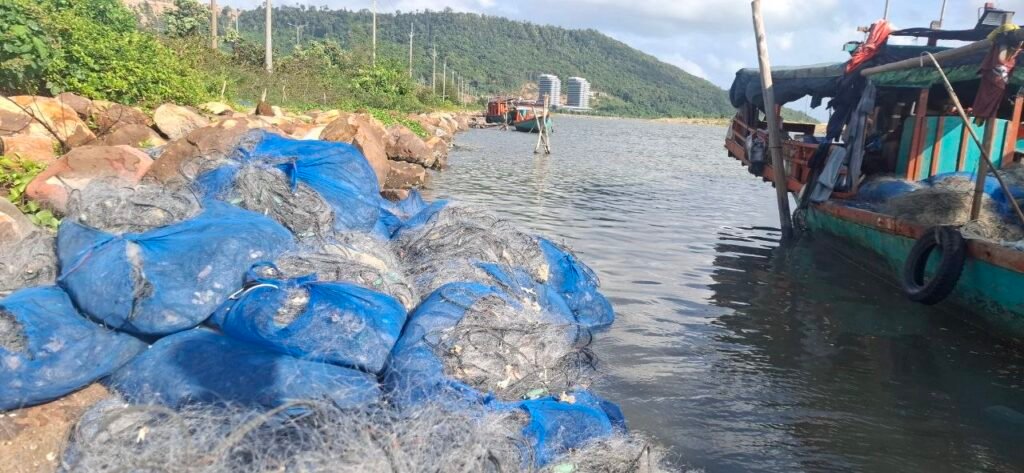
Kao Sophy, an Ong village resident in her 40s, said she and her husband work as fishers, so they stay on a boat for two days to earn roughly 400,000 or 500,000 riels per catch, roughly $100 to $125. But the catch has declined, in part because of the number of fishers competing for seafood and fish, and in part because of the sand-filling. She needed to pay extra for petrol, as well as navigate an extended route from her hut to the sea.
“It impacts our navigation in and out” from their lakeside homes to the sea, she said. There used to be guards blocking them from navigating out to sea, requiring them to navigate their boats further, which some fishers said cost significantly more petrol — they only need $10 of fuel in the past compared to roughly $40 when they need to navigate around. “It was frustrating until they arrested the Chinese man, after then it was open,” she said, referring to Prince Group tycoon Chen Zhi.
Now, Kao Sophy said, rumors about what would happen to the area were flying — with residents hearing that maybe some foreign country wanted to buy the filled-in sand that was no longer being developed.
For Kao Sophy, the bigger concern is land titles. Some people had already received hard titles or titles registered with the national government, securing their ownership. Others in Ong village got titles, but she wasn’t sure if she would be receiving one.
She has lived in the spot for close to three decades but lost part of her house about one year ago. Kao Sophy said she would try to be resilient.
“Before when they cut the houses down they didn’t allow us to rebuild, but we quietly rebuilt and it seems ok,” she said.
But she never understood who a large development like Bay of Lights was even for.
“Maybe they want to take it all for nothing.”
This article is published as Creative Commons.