
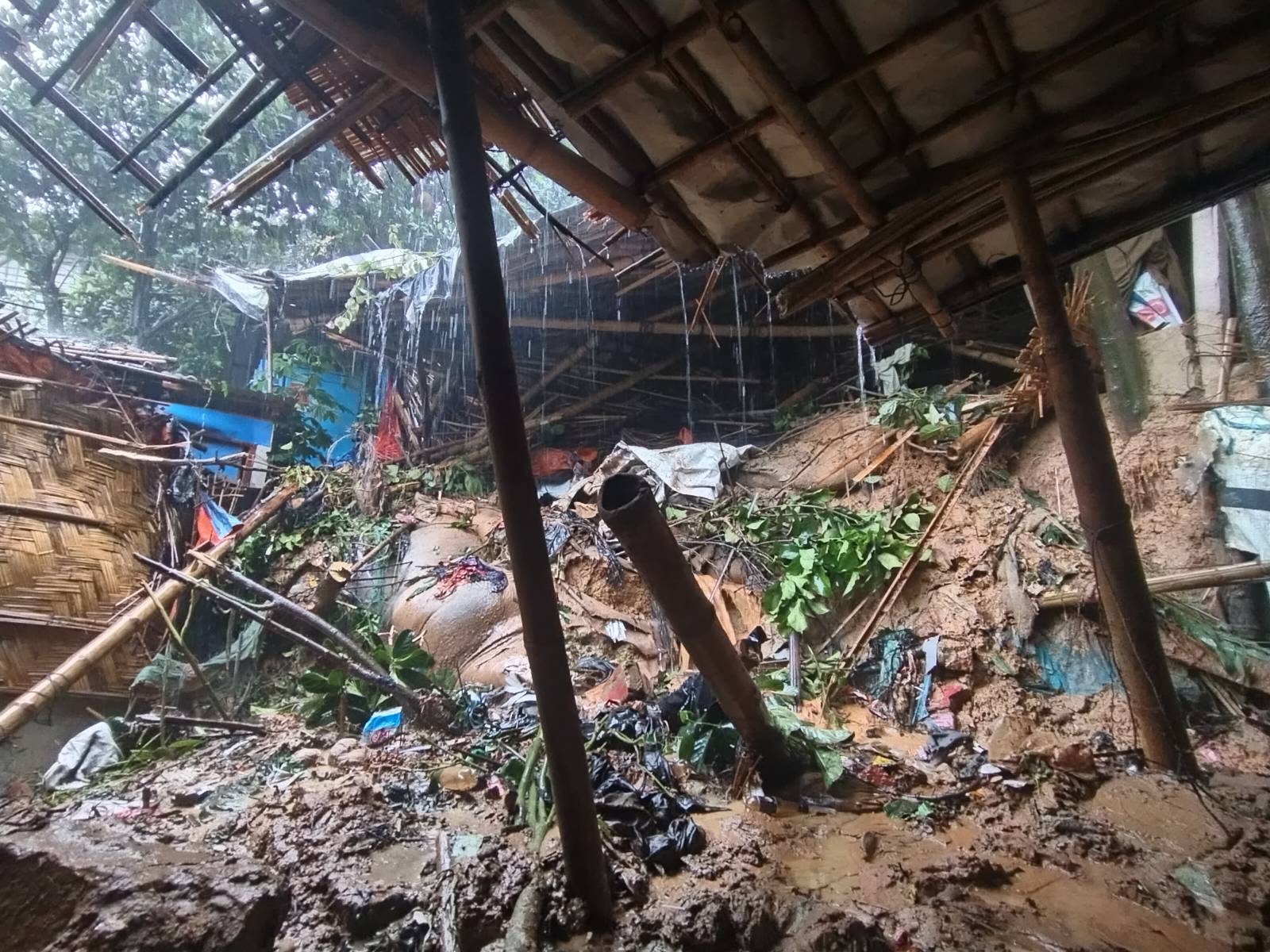
After two days of relentless monsoon rain, Rohingya refugee camps in Cox’s Bazar have once again been devastated by deadly landslides and flooding, leaving families mourning loved ones while hundreds of shelters have been destroyed.
The camps, home to more than 1.3 million Rohingya Refugees, are built across steep hillsides and low-lying valleys using bamboo and tarpaulin shelters. Every monsoon season, these settlements become highly vulnerable to landslides, flash floods and collapsing shelters, placing thousands of families at risk.
The continuous downpour caused multiple landslides across the camps early Monday, killing at least eight Rohingya Refugees, including one child who drowned.
Refugee Relief and Repatriation commissioner Mohammed Mizanur Rahman spoke of the deaths and damage in a speech on Monday, expressing regret for the lives lost. “Efforts are ongoing to relocate people from risk-prone areas to prevent further accidents,” he said.
Amid the wreckage was a 12-year-old girl, the eldest of five siblings, who had lost both her parents. Her father, Kamal Hossain, 44, had been on night duty to patrol Block D-6 of Camp 15 and came home at 12:30 a.m.
He had been asleep for an hour when a landslide struck the shelter. Kamal Hossain was completely buried, while the girl’s mother, Humaira Begum, 35, was half buried and shouted for help.
Neighbor Rahmot Ullah said he had heard her voice but was unable to reach her in the darkness and intense rainfall. The mother later died beneath the debris.
The 12-year-old’s grandfather, Jamil, said two small boys aged 2 and 3 had been sleeping with the parents. They had been rescued alive, but the 3-year-old died in hospital, he said.
The three oldest siblings had been asleep in the living room and were rescued by the fire service and community.
In Camp 11’s Block C-2, a shelter was buried in a landslide, killing four family members. Only a 14-year-old boy survived after he was able to crawl out. The deceased family members were his mother, Omme Habiba, 27, and three children aged 13, 5 and 3.
Hafiz Ullah, a volunteer for the International Organization for Migration, said the victims had died before volunteers were able to dig out their bodies.
In another incident, father Abdu Roshid said his 8-year-old son had died in hospital after being buried under mud in Kutupalong Rohingya Camp 7’s Block D-7.
He said he had received no warning before the landslide.
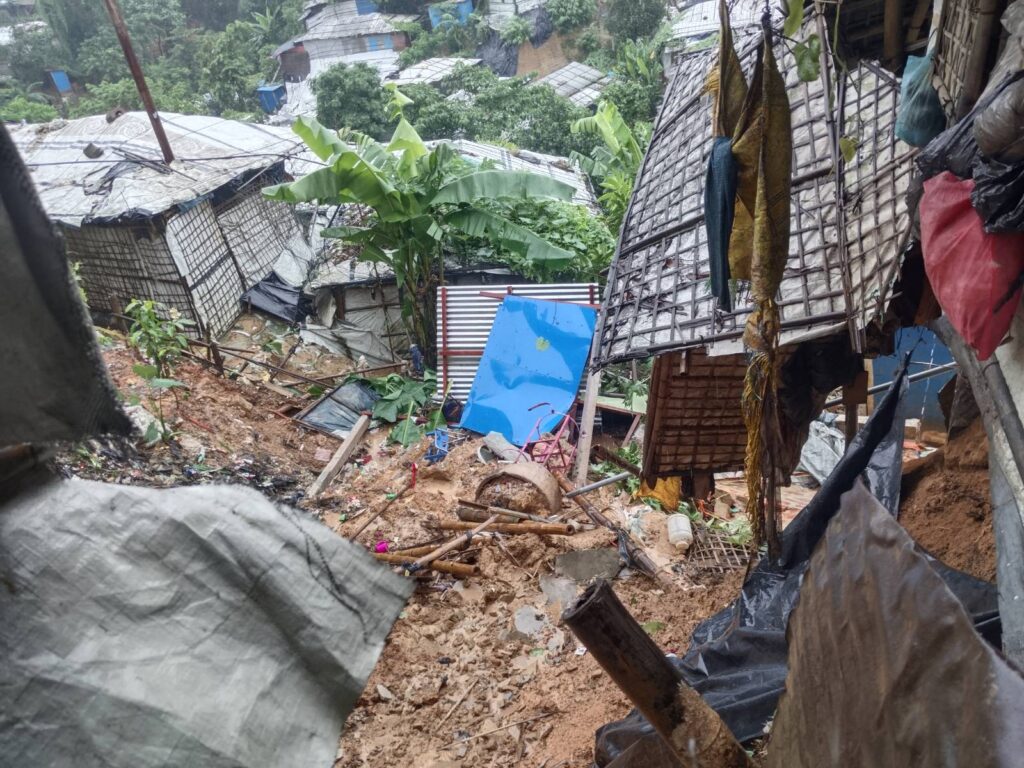
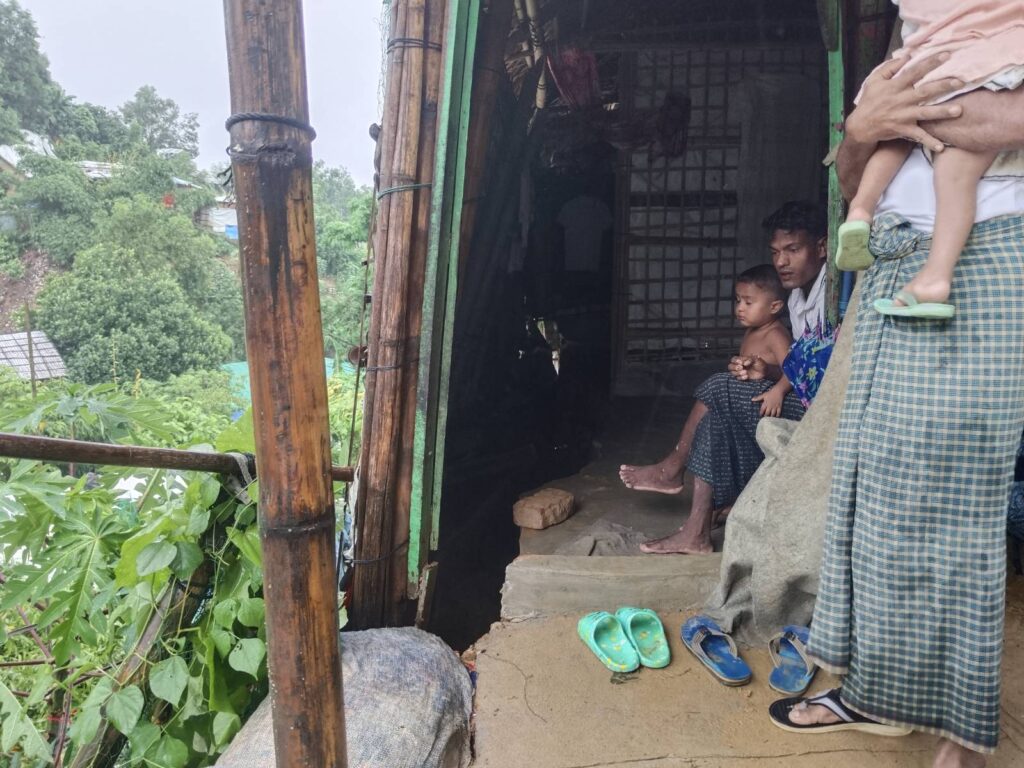
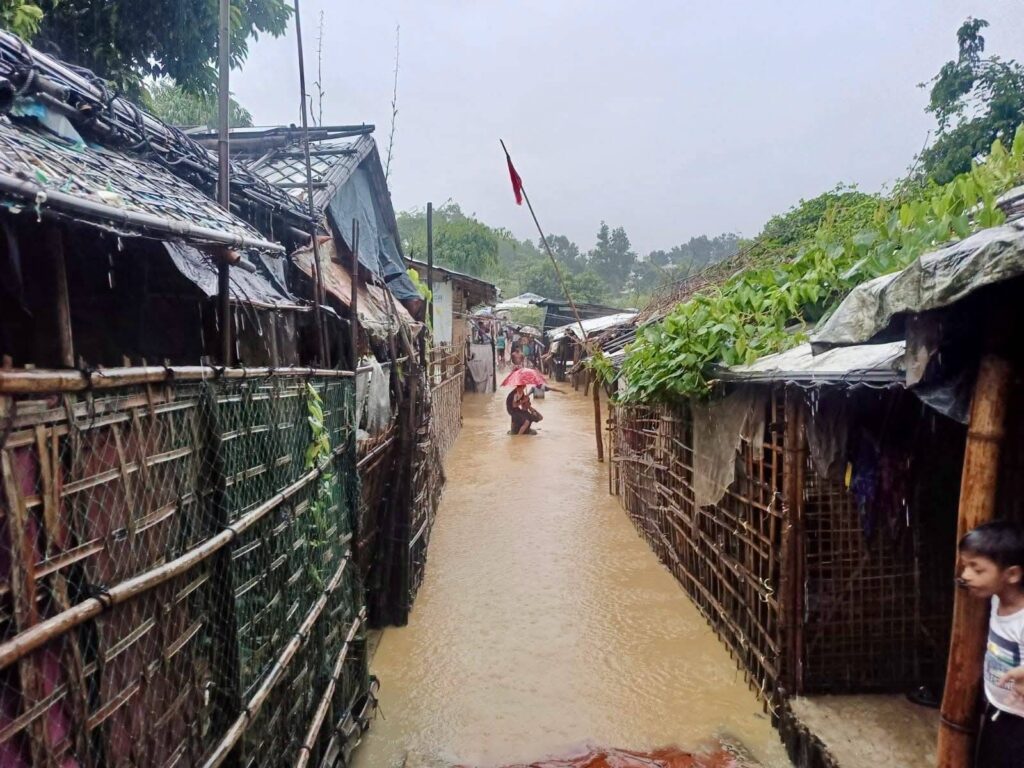
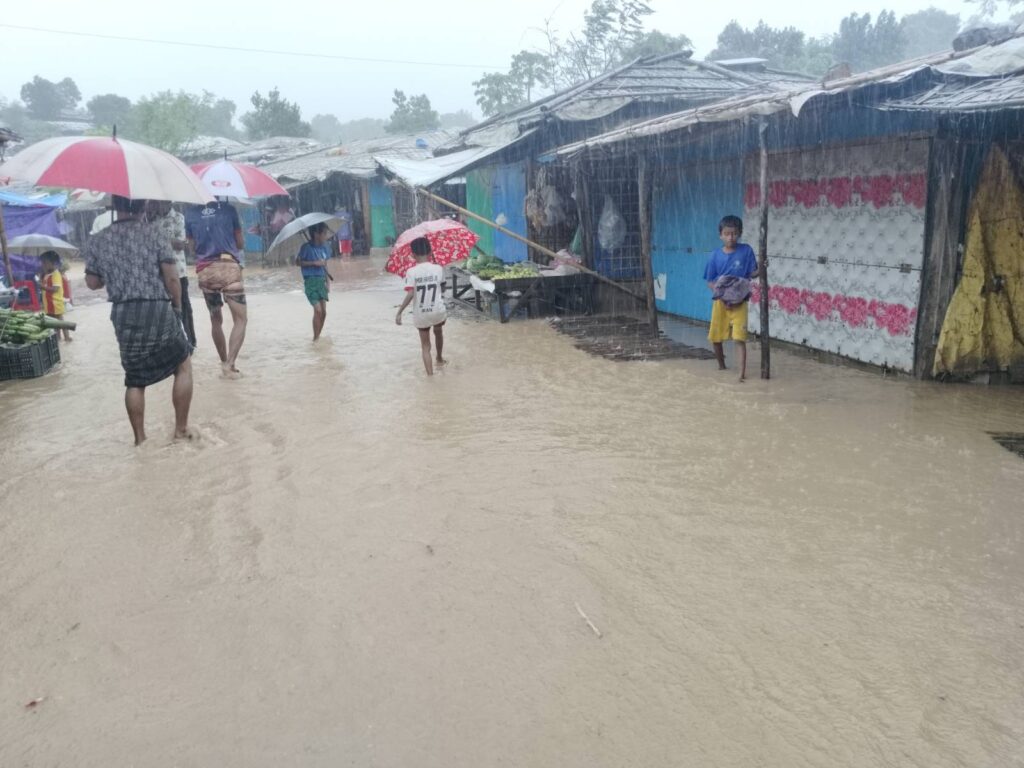
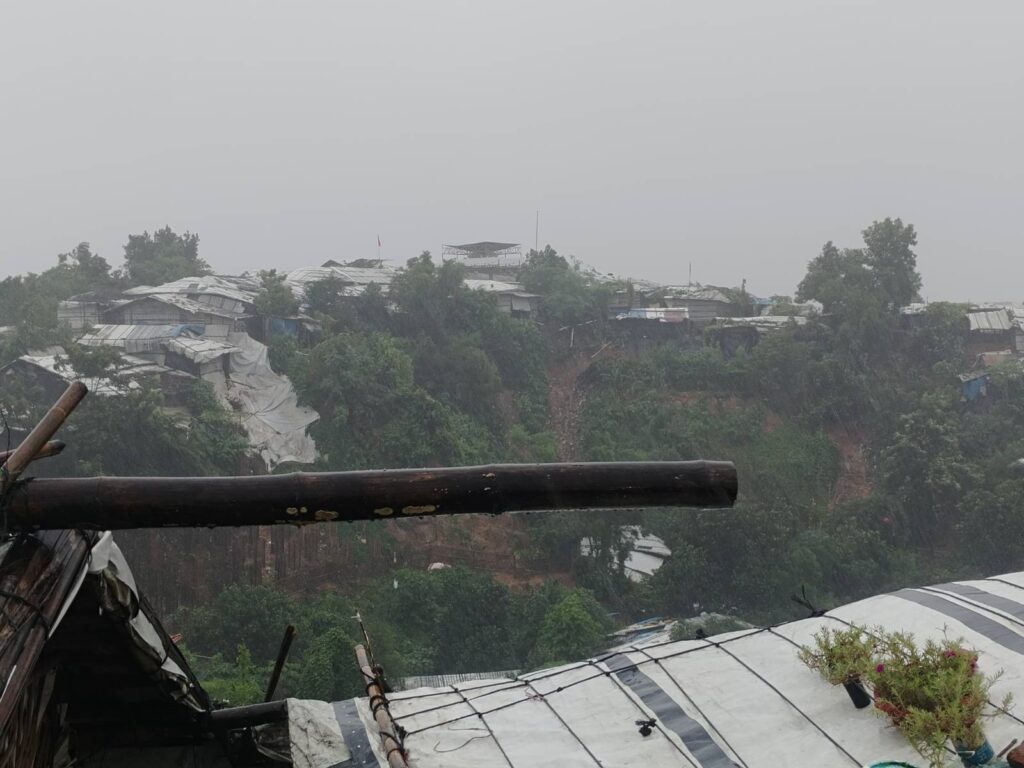
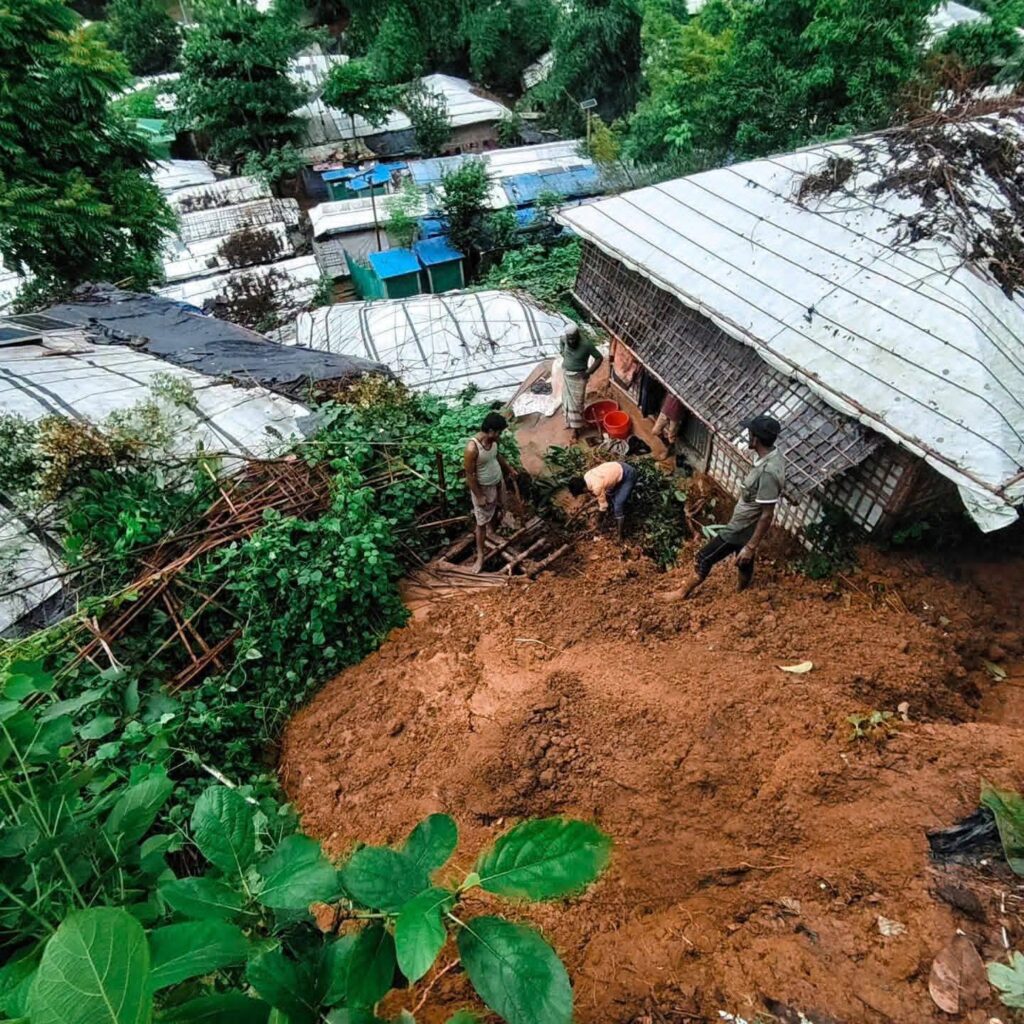
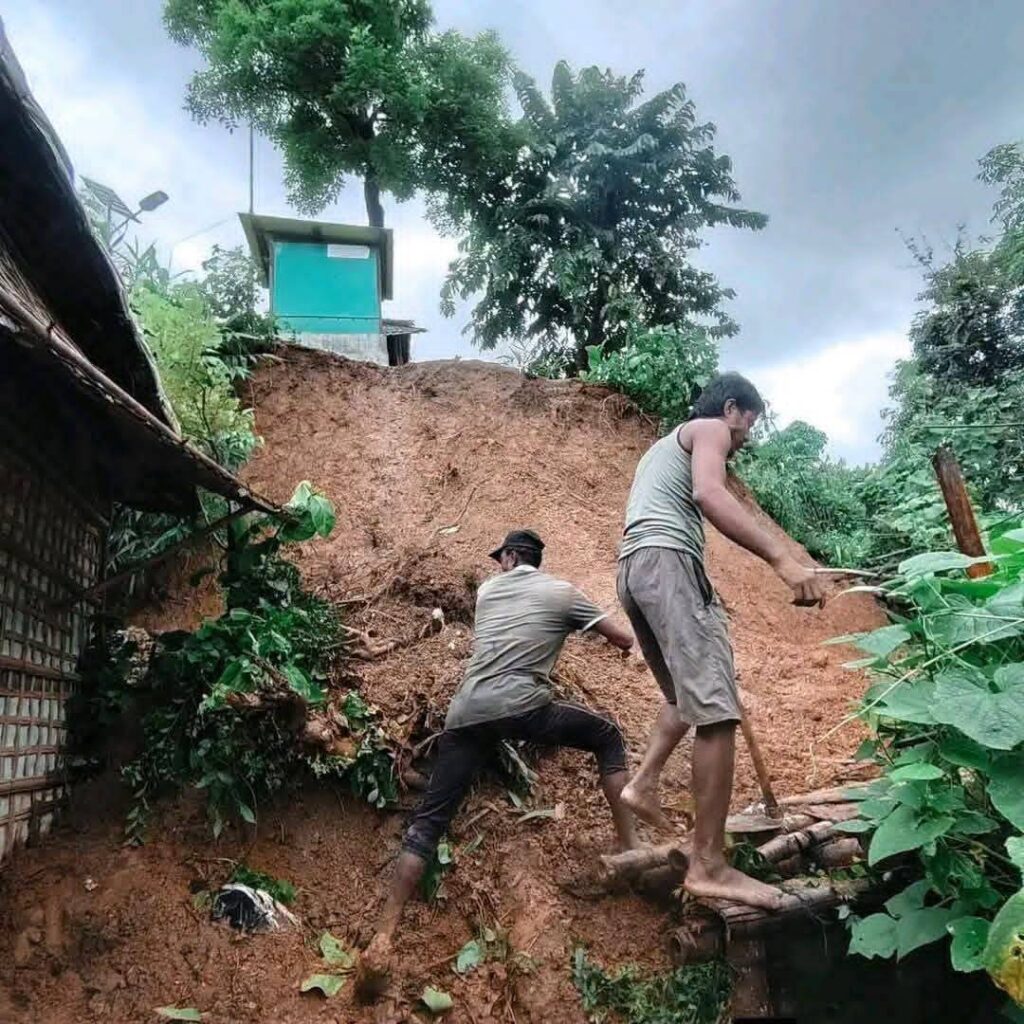
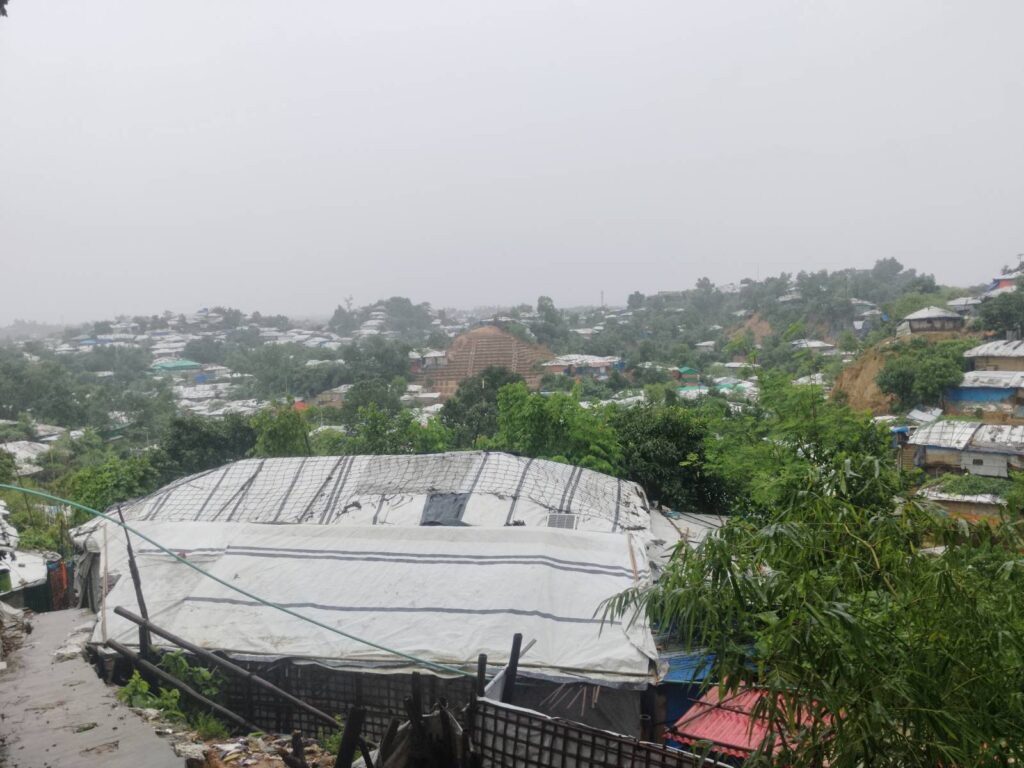
Beyond the casualties, hundreds of Rohingya families were left homeless and displaced after landslides and floodwaters damaged or destroyed their shelters across several camps.
In Camp 14, Mohammed Younus said his family of seven had been caught in a landslide.
“After hearing the kitchen cracking we managed to run outside with the children,” he said.
Abubokkor Sidik said his family of 10 in Camp 7 had lost everything.
Maji Shofi Ullah, head of Camp 9, said 50 shelters had been partially damaged by landslides and flooding in the blocks in his camp. Residents had been relocated to a communal facility, he said.
More than 250 millimetres of rainfall was recorded in Cox’s Bazar in 24 hours, according to a Facebook statement by meteorologist Md. Abdul Hannan of Cox’s Bazar. Heavy rain could continue for another day, he said.
Fire service officer Panna Akter said around midday on Monday that the incidents had occurred within a few hours of each other, and rescue operations continued through the night.
“We are asking the world to act before more tragedies happen,” community leader Abdul Karim said. “Every year we wait for disaster response after people are already injured or dead. This time, prevention is urgently needed to not lose more lives. We seek a safe place until our return to our home in Arakan, Myanmar.”
This article is published as Creative Commons.