
This article was originally published on Mongabay as Creative Commons.
KOH LIBONG, Thailand — Growing up on the island of Koh Libong, Tipusa Sangsawang remembers fondly how vast numbers of dugongs used to feed on local seagrass meadows teaming with fish, crabs and mollusks.
“Out there, it was like a football field,” Tipusa says, as she watches waves lap across a seemingly barren sandflat that fringes this stretch of shoreline. “It used to be green all around this area. Now, it’s only sand.”
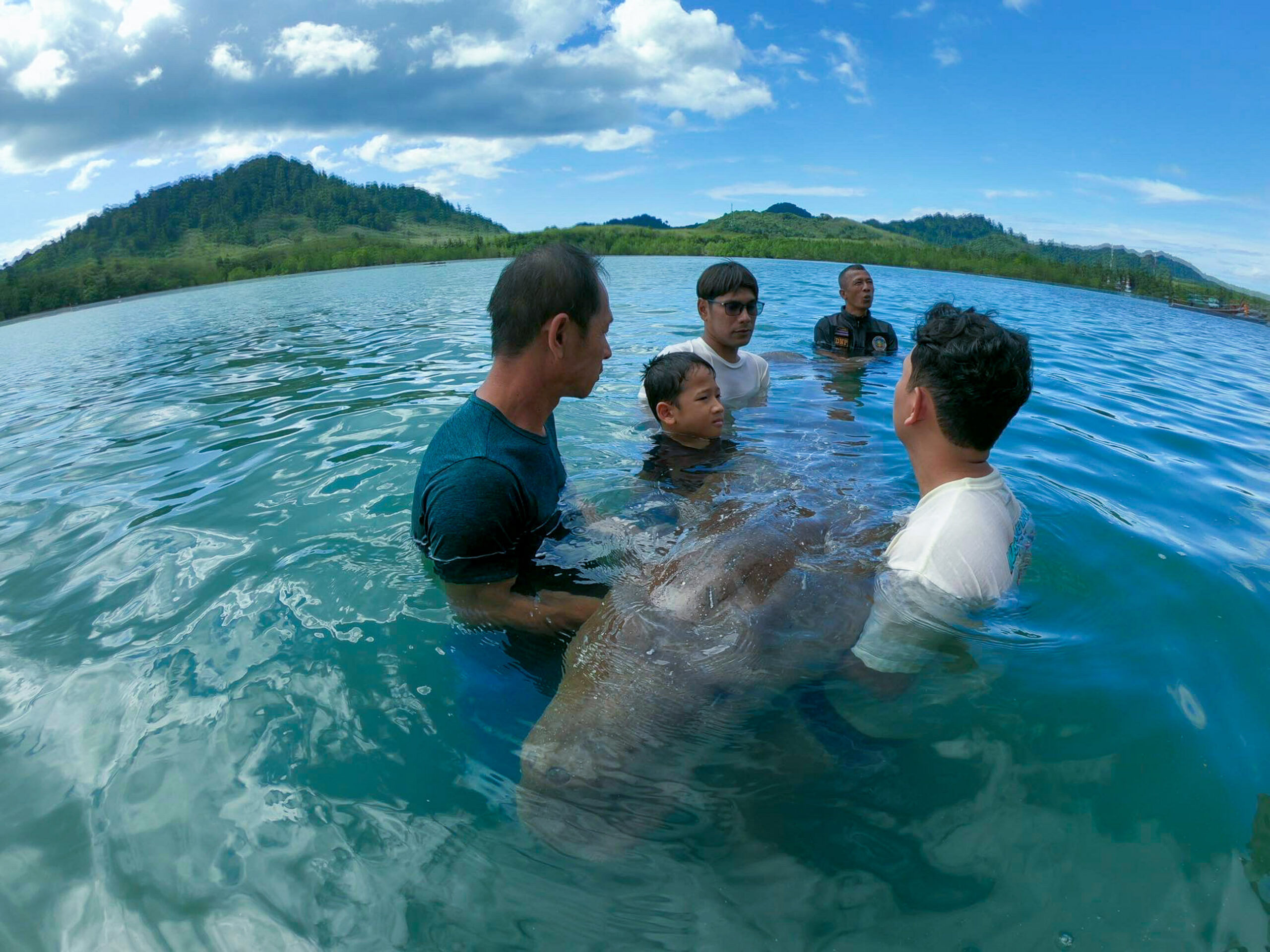
Fascinated by dugongs (Dugong dugon) since childhood, Tipusa remembers forming a special bond with one particular individual. Marium was an infant dugong brought into the care of marine officials in mid-2019 after fishers discovered her stranded ashore in Krabi province. With no mother or herd, she was moved to a semiwild enclosure farther south in Trang province, near Koh Libong, where authorities hoped to rehabilitate her.
Tipusa was a member of the recovery team. She devoted all her time to Marium, swimming alongside her and monitoring her progress daily. The chubby and charismatic youngster quickly became a national sweetheart through social media. “She was like an angel who came to us with a message from the ocean,” Tipusa says.
Despite the team’s efforts, Marium died 114 days after her initial rescue, having contracted a blood infection that autopsies indicated was likely linked to plastic ingestion. Her death sparked a rise in public awareness of marine plastic pollution in Thailand.
The loss also strengthened Tipusa’s resolve to protect ocean life. “I told Marium she would be the last one to suffer like this,” she says. “The day she died, I promised her I’d look after her family.”

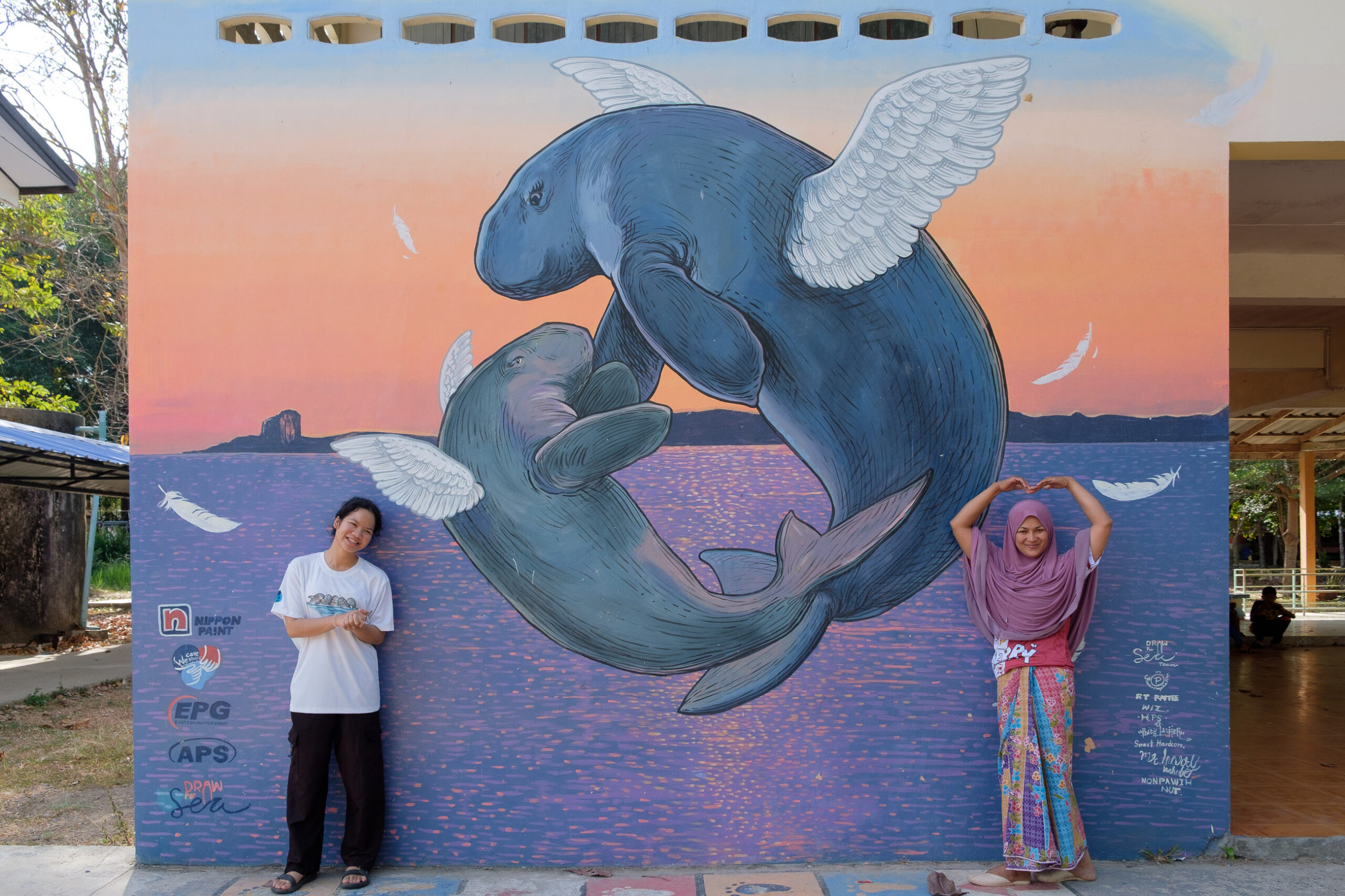
Now the coordinator of Dugong Guardians, a volunteer network spanning the eight villages that comprise Koh Libong subdistrict, Tipusa leads community-based efforts to safeguard the local dugong population and manage their marine habitats.
Launched in 2011, the initiative unites the island community, most of whom rely on income from fishing, gleaning and tourism, with scientists and government agencies to manage local marine resources. Dugong numbers began to steadily rise as dugong-friendly boat and fishing practices were introduced, and locals learnt how to monitor the health of coastal ecosystems.
Until recently, Koh Libong’s waters were home to Southeast Asia’s largest population of the marine mammals. An estimated 194 dugongs lived there in 2023, accounting for roughly 80% of Thailand’s Andaman coast population at the time — a situation researchers credit to the sustained efforts of the Dugong Guardians network, as well as the area’s exceptional diversity of high-quality coastal habitats.
In recent years, however, locals and scientists alike have recorded concerning declines in coastal ecosystems across many parts of the Andaman coast, including at Koh Libong.
Once-flourishing seagrass beds have died off, leaving the herbivores they once sustained with little sustenance. Dugong numbers have plummeted across the region, with Koh Libong’s famous herds depleted beyond recognition.
“I can’t believe it’s happened to Koh Libong,” Tipusa says. “We used to have so many marine resources, but now I feel a deep sadness and insecurity. I don’t know what tomorrow will bring.”

Seagrass collapses, dugongs disappear
Before the die-off, Koh Libong’s extensive seagrass meadows were the largest and most ecologically significant in Thailand. They were part of a mosaic of internationally significant coastal habitats that spans the area and is protected nationally as Hat Chao Mai Marine National Park and Koh Libong Wildlife Non-Hunting Area.
Researchers had identified at least 10 of Thailand’s 13 species of seagrass around the island. Insights had also been made into valuable species associated with seagrass, such as sea cucumbers and marine snails, as well as vital processes like marine carbon storage. “Everything is here,” Tipusa says. “Mangroves, seagrass, dugong. Everyone comes here to study it.”
Older fishers at Koh Libong told Mongabay seagrass growth was once so profuse they recall wading through it thigh deep. Just two hours of gleaning could yield roughly 10 kilograms (22 pounds) of conch snails and other mollusks that sheltered in the dense swards.
Besides providing vital shallow-water habitats for marine life, seagrasses also filter out pollutants, cycle nutrients, sequester carbon, and underpin marine food webs.
However, between 2020 and 2024, seagrass cover in the protected waters around Koh Libong shrank by up to 50%, according to data from the Department of Marine and Coastal Resources (DMCR), the Thai government agency responsible for marine health. In just five years, flourishing underwater meadows had dwindled into barren stretches of sand, not only around Koh Libong, but also across other parts of the Andaman coast: in Trang, Krabi and Phuket provinces.
Scientists say the cause of the decline isn’t down to one single pressure, but rather a complex mix of localized human- and climate-driven factors that gathered pace in recent years. These range from heat stress from recent marine heat waves, to tidal anomalies, to unsustainable coastal practices, such as river-mouth dredging and agricultural runoff, all of which likely combined to drive the decline.
With their only source of food fast disappearing, unprecedented numbers of emaciated dugongs began to wash up along Thailand’s Andaman coast. In 2023 and 2024, the DMCR recorded an average of 42 fatalities a year, more than double the losses in previous years.
Although the full impact on the overall dugong population is unclear, government surveys estimated 273 individuals lived in Thai waters in 2022, roughly 90% of them on the Andaman coast.
Autopsies indicated many deaths were due to starvation. Marine officials and communities attempted to provide supplementary nutrition using leafy greens as a stop-gap measure, but this did little to slow the decline. Fatalities due to boat strikes and fishing bycatch were also up as animals left depleted foraging grounds in search of food in unfamiliar, riskier waters. Koh Libong’s dugong population dwindled perilously low, with experts estimating in early 2025 as few as 10 individuals might remain.

Toll on the community
The ecological devastation has taken a toll on the island community. Most of Koh Libong’s roughly 3,000 residents depend on healthy nearshore ecosystems for their well-being and livelihoods.
Torfar Jongarap, a 26-year-old fisher and resident of Koh Libong, says he and his father once earned enough from nearshore habitats to meet their family’s basic needs. They could walk from the shore to catch fish, crabs and shellfish; there was no need for boats and costly fuel. Over the past five years, however, it’s become impossible to harvest enough from these areas.
“The food chain is degraded,” Torfar says. “Before, everyone could go looking for food near to the shore. But now we all need boats.”
Compelled to travel farther out to sea to chase catches that are less predictable and dispersed over a much wider area, fishers tell Mongabay their working hours are longer and fuel costs have roughly tripled.
For Torfar, the rise in expenditure means he has to sell everything he catches to stay in profit. Still, his already thin margins are slimming, forcing his household to become more economical. “We have to prioritize what to buy first,” he says.
Despite the economic burden, Torfar says he and the rest of the fishing community in Koh Libong remain committed to protecting dugongs. They’re always willing to abandon a day’s fishing to assist stranded animals, he says. “I grew up with this instinct to protect them. It’s normal for us,” Torfar says. “We used to see dugongs every day, but for two years now, we rarely see any.”
The seagrass collapse and dugong decline also risk impacting the island’s busy tourism industry. Trang province is considered Thailand’s “capital of dugong,” with Koh Libong its flagship destination. Villagers offer boat trips to securely zoned dugong-watching locations, and operate homestays and local transport services geared toward tourists.
Tipusa says she worries unreliable sightings will draw fewer visitors, and therefore reduce household incomes. “People don’t come here for white sandy beaches, they only come for the dugong,” she says.

Memory of abundance fades
Another concern is young people losing their connection to the sea as they grow up without the abundance of marine resources older islanders once experienced. This is where the Dugong Guardians network is more important than ever, Tipusa says, serving as a bridge to keep intergenerational knowledge alive.
Workshops organized under the initiative enable schoolchildren, teenagers and residents to learn from village elders and visiting experts. Participants learn about marine ecology, dugong rescue skills, and how to use tools like drones, GPS and transects to monitor marine mammals and coastal habitats. They also gain skills in collecting and analyzing long-term, scientifically robust data.
“I can see there will be more of a need for these types of skills in the future,” says Phatyavee “Duyong” Sangsawang, Tipusa’s 17-year-old daughter, who participates in the workshops. Bearing witness to the environmental collapse on her doorstep has shaped her view of the future. “Maybe I’ll study to be a marine vet specialized in treating wild marine animals,” she says.
Jaruwan Mayakun, as associate professor of marine science at Prince of Songkhla University in the city of Hat Yai, an institution that provides funding and technical expertise for these workshops, says building citizen science capacity at key locations like Koh Libong ultimately strengthens the impact of conservation.
The Dugong Guardians’ approach of including all age groups in conservation is particularly effective, Jaruwan says. “Everyone grows together. It’s taking something positive from a sad situation.”
Frustration amid lack of solutions
While volunteers continue to assist marine officials with tracking dugongs and seagrass, and workshops keep interest in conservation ticking over, Tipusa says she’s restless to do more.
However, experts are yet to suggest clear solutions, because the root causes of the seagrass decline are so complex. “The primary challenge is the compounding nature of the threats,” says Kongkiat Kittiwattanawong, a marine researcher at the DMCR.
In response to the crisis, the government is implementing an Andaman-wide integrated strategy. Launched in January 2025, the plan focuses on identifying the extent of seagrass loss and location of surviving dugongs; managing immediate threats from boats and coastal disturbances; strengthening marine mammal rescue capacity; and studying seagrass restoration.
For Tipusa, however, the pace of progress is frustratingly slow and too often held back by bureaucracy. “There’s a lot of talking, a lot of meetings,” she says, but few concrete decisions are made.
Recently taking matters into their own hands, the Dugong Guardians network secured support from the IUCN, the global wildlife conservation authority, to trial the use of protective cages around surviving patches of seagrass at five sites, to shelter them from grazing pressure. So far, the results have been modest, with seagrass cover expanding at some sites but dropping at others. However, the community’s data are helping the government formulate its restoration approach, according to Kongkiat from the DMCR.
Tipusa and her fellow volunteers are also collaborating with researchers from Prince of Songkhla University to establish an islandwide baseline of marine biodiversity and implement a three-year trial of seagrass transplantation techniques to restore several species, including Halophila ovalis, the seagrass variant preferred by dugongs.

Signs of hope
With new projects on the horizon, Tipusa says she feels cautiously optimistic. She’s also encouraged by signs dugongs are beginning to return to the island’s waters.
Government aerial surveys in early 2026 estimated the local dugong population at 33 individuals, Kongkiat says, and observations made in April included several mother-calf pairs.
Tipusa herself recently watched 16 dugongs grazing not far from her home during a routine drone survey. “I was so relieved and happy to see them, I was shaking!”
While it was a moment of quiet celebration, Tipusa’s joy quickly turned to anxiety as she noticed a boat traveling at speed through the area. She immediately reported the incident to officials at the Department of National Parks, Wildlife and Plant Conservation (DNP), which manages the marine protected area and is responsible for conservation zoning.
Tipusa says she doesn’t blame the boat captain: “They might not have seen the dugong or known the rules,” she says. However, it indicates a need for better outreach and enforcement on the part of the DNP and DMCR to mitigate the risk of fatal collisions as dugongs return to the area.
The survival of dugongs and recovery of seagrass in Thai waters will ultimately depend on this type of rapid, coordinated action between decision-makers and local communities.
At Koh Libong, amid the mounting threats and scramble for solutions, the island community’s enduring bond with dugongs remains a constant.
Tipusa might have made a promise to a young dugong many years ago, but she now extends it to the island’s children. The legacy of Marium the dugong must live on through them, she says.
“The energy I received through Marium, I now feel it in the children,” she says. “That keeps me going.”
Citations:
Khumraksa, P., Ninwat, S., Kaewmong, P., Kittiwattanawong, K., Homkong P., & Lekcharoen, P. (2025). Epidemiological situation of dugong stranding in the Andaman Sea of Thailand, 2019–2024. Veterinary Integrative Sciences, 24(2), 1-23. doi: 10.12982/VIS.2026.057.
Stankovic, M., Ambo-Rappe, R., Carly, F., Dangan-Galon, F., Fortes, M. D., Hossain, M. S., … Prathep, A. (2021). Quantification of blue carbon in seagrass ecosystems of Southeast Asia and their potential for climate change mitigation. Science of The Total Environment, 783, 146858. doi:10.1016/j.scitotenv.2021.146858.
Floren, A. S., Hayashizaki, K., Putchakarn, S., Tuntiprapas, P., & Prathep, A. (2021). A review of factors influencing the seagrass-sea cucumber association in tropical seagrass meadows. Frontiers in Marine Science, 8. doi:10.3389/fmars.2021.696134.
Kobkeatthawin, T., Sirivithayapakorn, S., Nitiratsuwan, T., Muenhor, D., Loh, P., & Pradit, S. (2021). Accumulation of trace metal in sediment and soft tissue of Strombus canarium in a tropical remote island of Thailand. Journal of Marine Science and Engineering, 9(9), 991. doi:10.3390/jmse9090991.
Stankovic, M., Tantipisanuh, N., & Prathep, A. (2018). Carbon storage in seagrass ecosystems along the Andaman coast of Thailand. Botanica Marina, 61(5), 429-440. doi:10.1515/bot-2017-0101.
Kaewmong, P., Kittiwattanawong, K., Brown, J., Khumraks, P., Rattanapan, K., Wirachwong, P., … Promporn, P. (2026) The plight of dugongs in Thailand: A race against extinction. Veterinary Integrative Sciences. 24(2): doi:10.12982/VIS.2026.054