
Additional reporting by Rasita Cherdchom and Nathaphob Sungkate
This story was originally published on HaRDStories as Creative Commons.
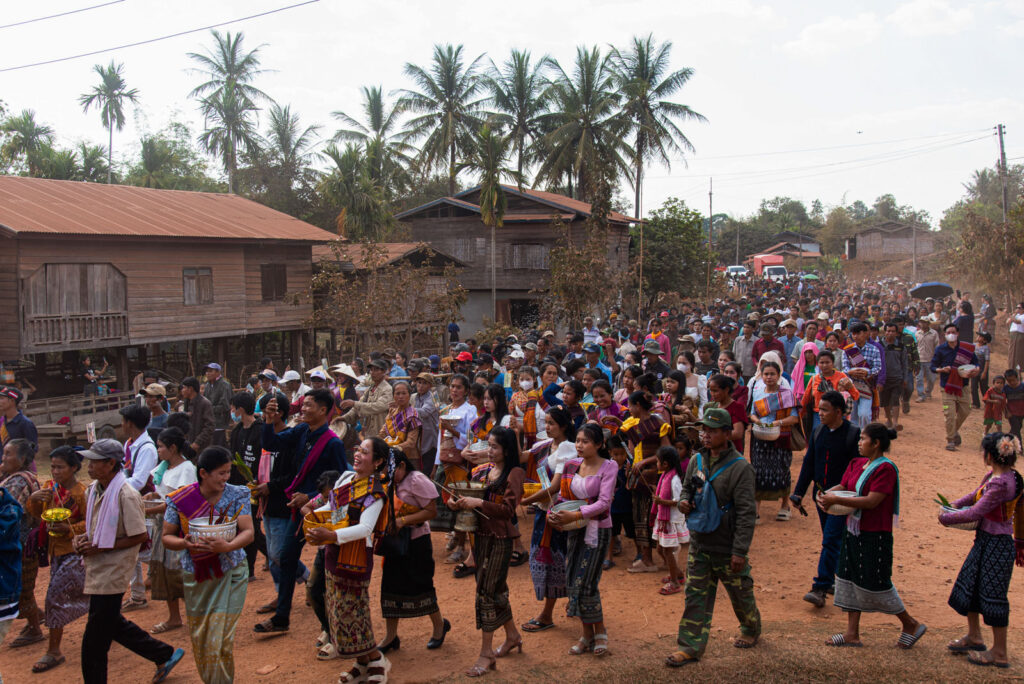
Every year since 2019, Kui communities from Thailand, Laos, Cambodia, and Vietnam have gathered on the third waxing moon of the third lunar month for World Kui Day. More than 1,000 people attended this year’s festival in mid-January in Savannakhet, Laos. But for the first time, none came from Cambodia.
The absence had nothing to do with logistics or funding. Armed clashes along the Thailand-Cambodia border in mid-2025, and again in December, had made the journey impossible – and even after a ceasefire was signed on 27 December, the damage to relationships, livelihoods, and a decade of careful cultural revival work among Kui communities on both sides of the border had only begun to surface.
“This year’s World Kui Day had no Kui from Cambodia participating,” said Surawit Siripanichsakul, 50, vice-president of the Kui Ethnic Association and a board member of the Indigenous Peoples’ Council of Thailand, who helped organise the festival from the Thai side. The land border has been closed since June 2025. But Surawit said the absence reflected something deeper than an impassable checkpoint. Since the conflict began, communication between Thai and Cambodian Kui had grown guarded and infrequent, people from both sides fearful that cross-border contact could be misconstrued as a security threat.
A people divided by borders they never drew
The Kui have lived across Southeast Asia for centuries, long before the borders that now divide Thailand, Laos, Cambodia, and Vietnam existed. In Thailand, an estimated 422,000 Kui live in the country’s northeastern border provinces of Surin, Sisaket, Buriram and Ubon Ratchathani, with further communities across the border in Laos, Cambodia, and Vietnam. The formation of modern nation-states divided them politically, but shared language, oral tradition, and the annual festival had kept them culturally connected across those boundaries.
“Kui people in both countries share language and culture,” Surawit said. “We have the same ancestral roots.”
That connection had been carefully rebuilt over the past decade. Since 2017, Kui representatives from all four countries have begun meeting regularly, developing academic work, and strengthening cultural ties. The World Kui Day festival, first held in Thailand in 2019, became the centrepiece of that effort. In 2020 it was hosted in Cambodia’s Preah Vihear province. This year’s edition, held under the traditional name Bun Ka Bong Yai at Ban Phon Ngam in Savannakhet, Laos, was meant to continue that momentum. Instead, it became a marker of how much had changed.
‘Income disappeared, but debts remained’
The cultural fracture sits atop a more immediate crisis. Across the border provinces of Surin, Sisaket, Buriram, and Ubon Ratchathani, two rounds of fighting in 2025 forced Kui farming communities to evacuate their land – sometimes for days, sometimes for weeks. Most have since returned. But they came back to fields some cannot fully farm, debts that did not pause while they were gone, and in some areas, unexploded shells still buried in the soil.
“Most Kui brothers and sisters do agriculture, rice farming, cassava, rubber, raising cattle and buffalo,” Surawit said. “When the conflict started, everything stopped. Income disappeared, but debts remained.”
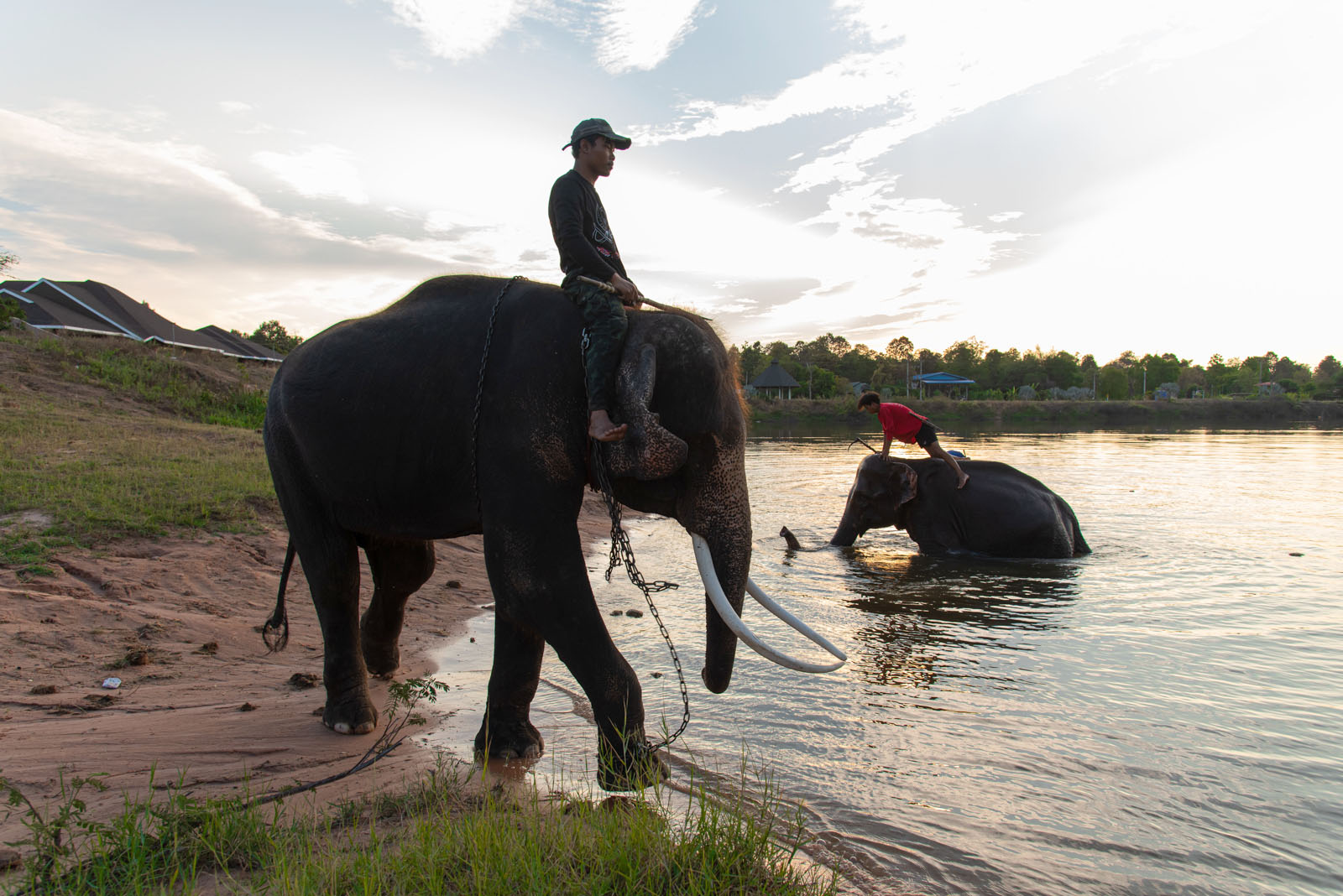
For Kui elephant keepers in Surin, the collapse of border tourism added a particular burden, with no visitors and daily feed costs running up to 400 baht per animal, the conflict left some families struggling to keep their elephants fed.
Debt collectors, Surawit noted, followed some families into evacuation centres.
Suphason Chainon, 57, a Kui village headman from Sangkha district in Surin province, evacuated between 7 and 20 December. He said Sangkha district alone saw more than 40 artillery shells fall in the area, most of which did not explode but remained buried in farmland. In neighbouring Kap Choeng and Prasat districts, he said, the damage was worse, and some community leaders lost their lives.
“I can’t deny I’m quite worried,” Suphason said. “In Surin itself, to be honest, a large number fell. Some exploded, some were buried in the ground, making many villagers afraid to go to work.”
The unexploded ordnance problem has compounded the recovery. Surawit described families returning to find artillery shells in their own gardens, waiting for EOD units to clear land that in the meantime could not be farmed.
“Some families found two or three unexploded shells in their own gardens, so they became fearful and couldn’t live normally,” he said. “But if they don’t go back to work, they have no income, so they must take the risk.”
Phadcha Boonkham, a Kui woman from Khun Han district in Sisaket province, around 30 to 40 kilometres from the border, described nights of relentless shelling even where no direct attack occurred.
“The house roof shook. Loud sounds from morning. Some nights the shooting was very frequent. We didn’t know which round would land on our house.”
Thawatchai Chaipiboon, another displaced Kui villager, described the impossibility of waiting it out. “Border people have debts and obligations to manage. This war is long-lasting for border people. It will take a long time before border people can get back on their feet.”
What a ceasefire cannot fix
Beyond the economic damage, Surawit worries about what the conflict has done to a project years in the making. Kui scholars from all four countries had been collaborating on an international Kui dictionary, a living document intended to preserve and standardise the language across borders, due to be completed next year. The conflict disrupted communication between the teams and put the timeline at risk.
The dictionary is not a bureaucratic exercise. For a people spread across four countries with no state of their own, language is the thread that holds the community together. “Our brothers and sisters, wherever they are, all have the same roots,” Surawit said. “Before the border problems, we had good interactions all along.”
Most families have since returned home. The dictionary work, slowly, may resume. But some things are harder to pick back up. “The way of life of Kui people living along the border, originally we never had conflict with each other,” Surawit said. “But conflict between states is beyond what we can control.”
This story is part of a collaborative reporting project between HaRDstories and the Indigenous Media Network (IMN), supported by the Canada Fund for Local Initiatives.