
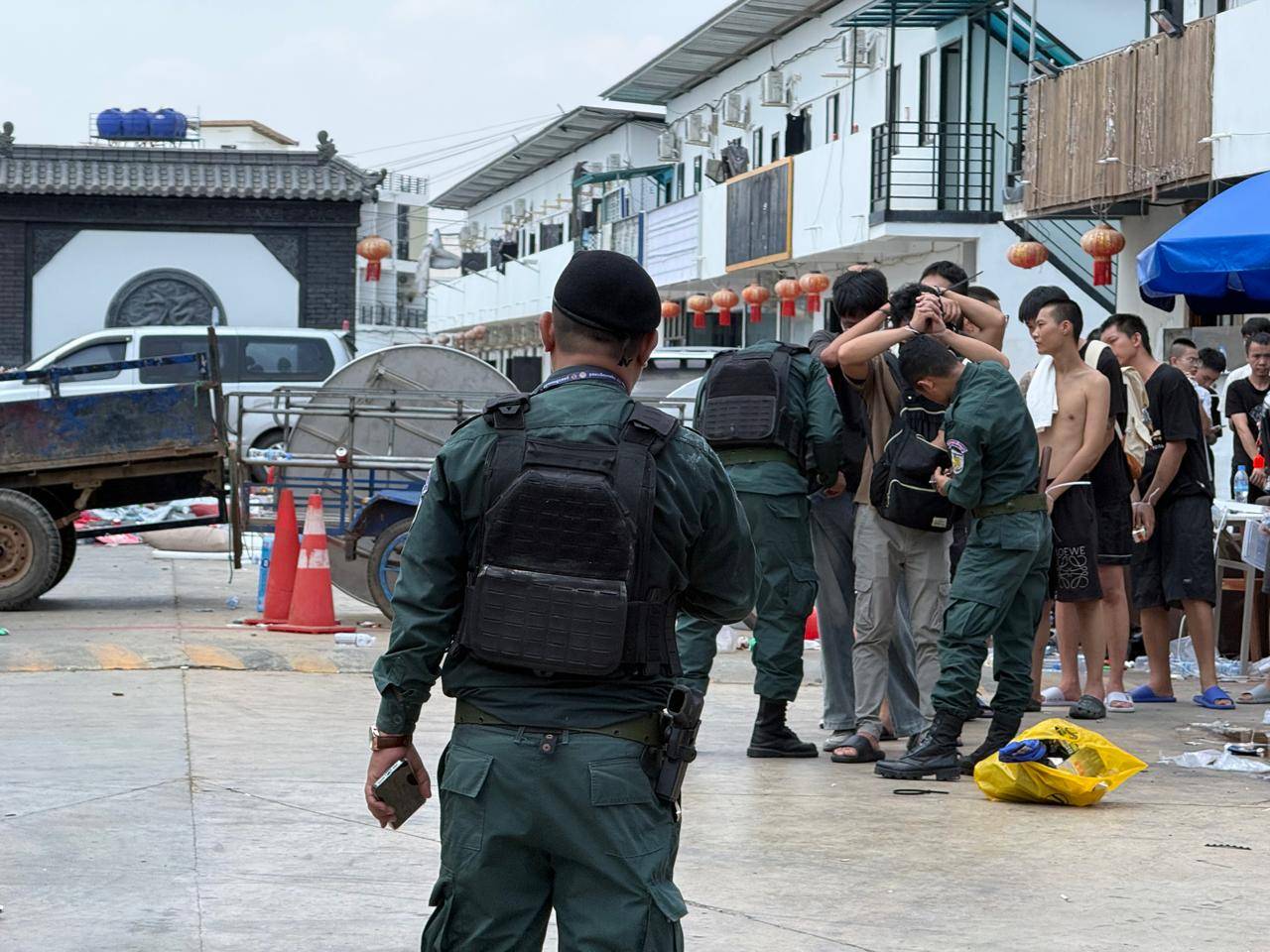
Authorities fired shots into the sky and sent foreign workers running during crackdowns on online scams in Poipet last month, leaving some locals shaken by the violence they witnessed.
A reporter witnessed part of a chaotic raid at Orchid Hotel & Rich Casino in a residential development near the Sanco Special Economic Zone, which sent kids from a nearby school running alongside fleeing workers.
The raid began on April 29. The following afternoon, a reporter saw armed forces escorting foreign workers who had their hands tied onto buses, as a crowd gathered to watch from the gate’s entrance. Some sections of the concrete gate had been broken through — one car crashed into the gate and was abandoned there. A reporter observed law enforcement officials taking black plastic bags, suitcases, Chinese cigarette brands and fans out of the compound.
The Commercial Gambling Management Commission of Cambodia said on May 4 that it had revoked the casino license of Orchid Hotel & Rich Casino in relation to the raid, when “some suspects started to open fire on the competent authorities.”
Authorities searched 19 buildings and detained more than 1,000 foreign nationals, it said.
The casino was operated by a company called JBMA Development, the gambling regulator added. JBMA is currently directed by a person called Tan Yi Cheng from the Philippines, according to the Commerce Ministry’s business registry. The five former directors of the company, which was founded in 2014, are from Cambodia, Japan and Thailand.
The casino area has also been referred to as “Baolong 3” by Cyber Scam Monitor and other groups. It includes almost 20 buildings, some of them directly adjacent to a neighborhood school.
The National Police posted on Facebook on Saturday that it had completed its “latest and most complex” online scam raids by finishing the crackdown in Poipet at the location near Sanco Special Economic Zone.
Lt. Gen. Sam Vannvirak, deputy commissioner-general of the National Police who led the operation, said the crackdown “was a great success,” according to the post.
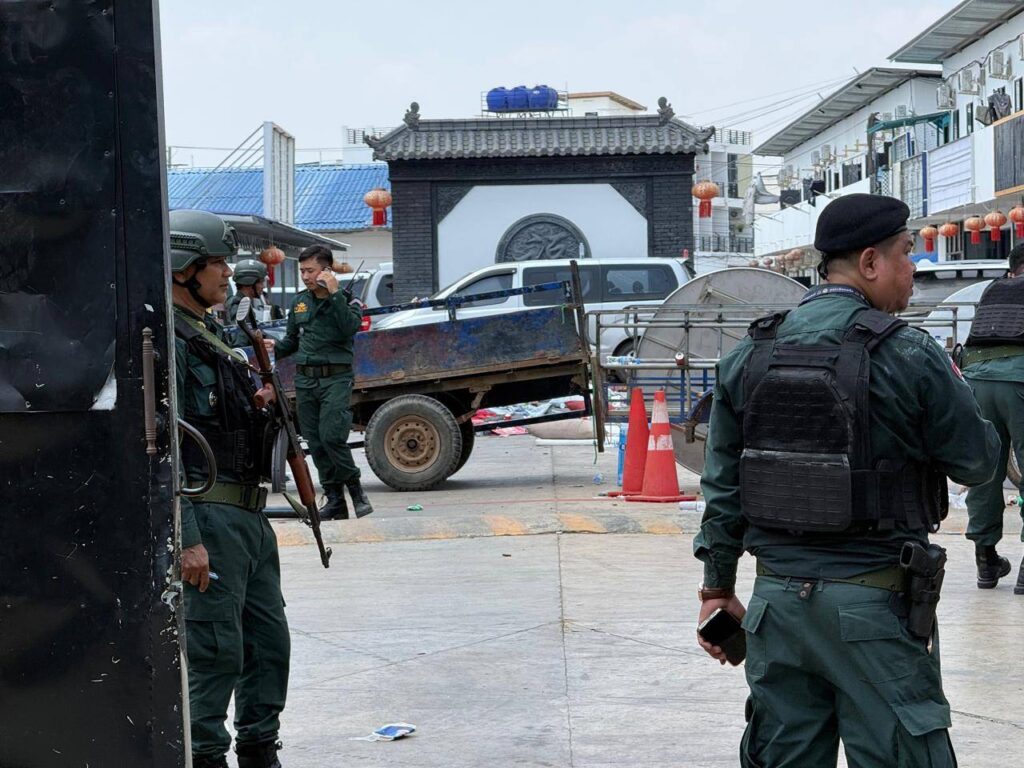
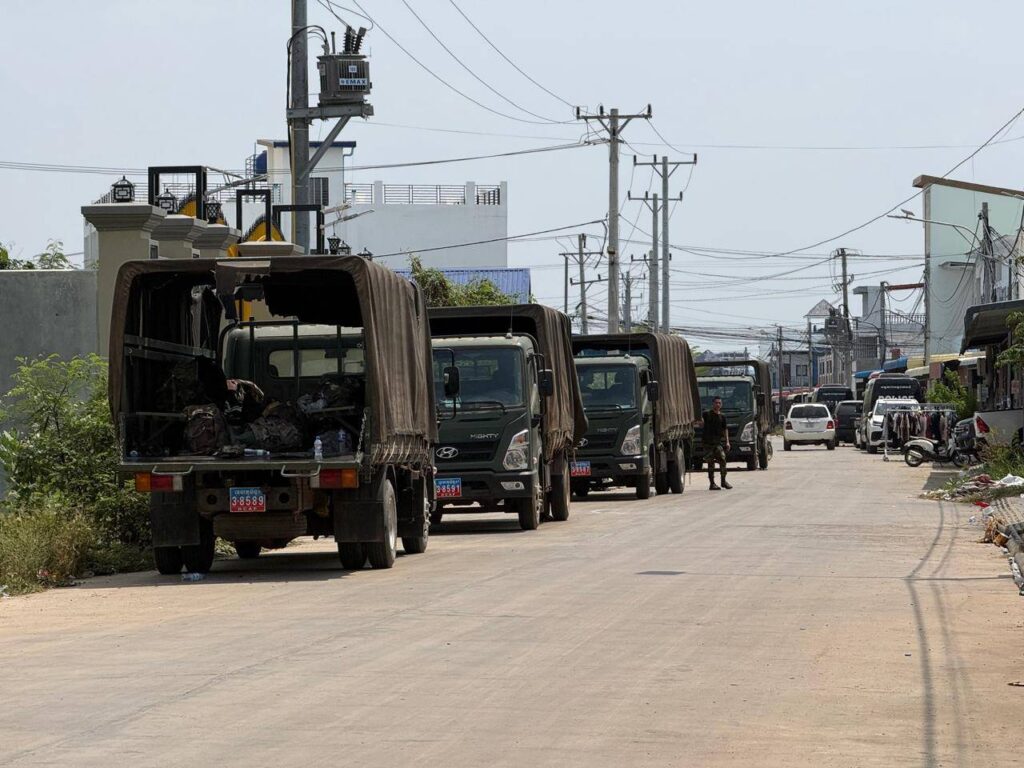
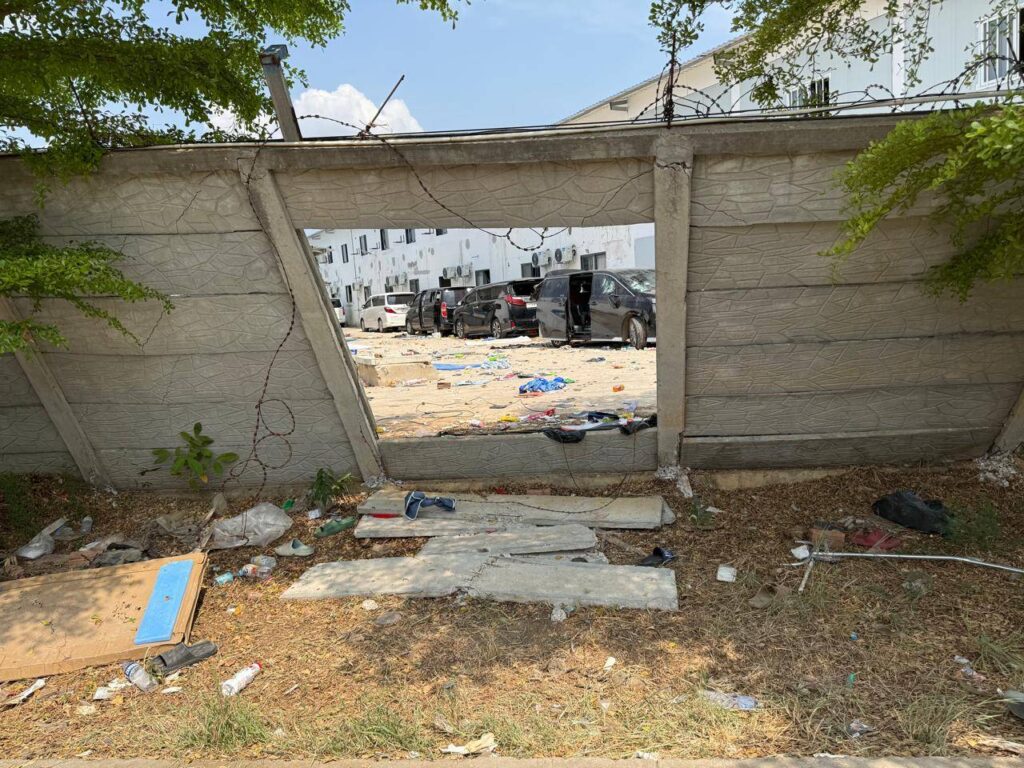
A spring roll vendor named Chreach said she woke up from a nap to see “swarms of people running,” which reminded her of her experience being chased by Thai police as a migrant worker.
She felt pity for them, she said, as the authorities were firing at them and they were getting many injuries from running and falling through the fields.
“I do not understand their language, but if I could communicate with them, I would help many of them,” she said. “I bought them some water and they fought over the drinking water while the police continued to open fire.”
Srey Aun, a woman in her 20s who lives near the compound, said police and military police had shown up outside her house with assault rifles to stop foreign workers inside the compound from fleeing the raid. She witnessed people running through the fields to escape police capture, with some abandoning an injured man whom they had been pushing on a rolling stretcher as authorities arrived. There were many phones on the ground after the raid, as foreigners dropped them while they were running, she said.
Authorities later claimed that the foreigners who had been injured in the raids did it to themselves, but Srey Aun didn’t know what to believe.
“We also saw villagers assaulting [escaped workers], and after they caught them, they beat them up until they were swollen and bruised, and they tied them up. … They dragged them while they were crying for help.”
Srey Aun said she was troubled by what she saw. “This is destroying Cambodia’s reputation.”
Yoeun, an elderly woman who lived near Sanco Special Economic Zone, said she had heard law enforcement firing rifles, and she witnessed them tying up workers and bringing them back inside.
She said she believed those targeted in the crackdown were “workers like us.”
She had been a migrant worker in Thailand in the past, and she would get chased by police there sometimes as a form of harassment. She said the April 30 raids reminded her of that experience, but she felt the Cambodian law enforcement had responded harsher than the Thai police treated her.
“Why don’t they catch [scam workers] in the normal way?”
“I suffered a lot to see this. … Some people got cut by the barbed wire, some crashed into the barbed wire. Our eyes are tearing up,” she said.
Cambodia’s ongoing raids on scam centers is part of a crackdown on a massive industry that has been accused of involvement in human trafficking, forced labor and violence against workers as they perpetrated online scams against victims around the world. The industry grew in Cambodia over several years, with compounds built all over the country.
The raid sent dozens of workers from Baolong 3 running into a classroom of the nearby Kilometer 2 Primary School in Poipet’s Phsar Kandal village, one teacher told Mekong Independent.
The teacher, who declined to give her name, said she had herded the children from grades 4 and 6 into the classrooms to avoid any run-ins or incidents from the running foreigners.
“I asked them to calm down and encouraged them to stop crying, and [I kept] asking them to lie down and not to be frightened,” she said, saying that children were crying and shaking out of fear of the noise.
When fleeing workers came into a different classroom building, she started shepherding children out of the school in groups of five, while the workers remained in the building, waiting. Police came to the school and kept them in the room under guard.
Prior to this incident, the teacher said she had a good relationship with the foreign workers who worked next door.
“When they had bread or snacks, they dropped them off for the students, and they were very nice. … They were very friendly, waving their hands [to us] and laughing with each other.”
When the children were safe, she said she went to help some of the workers as well. “I went inside to bandage their fractured hands and helped bind their wounds and placed some medicine on them.”
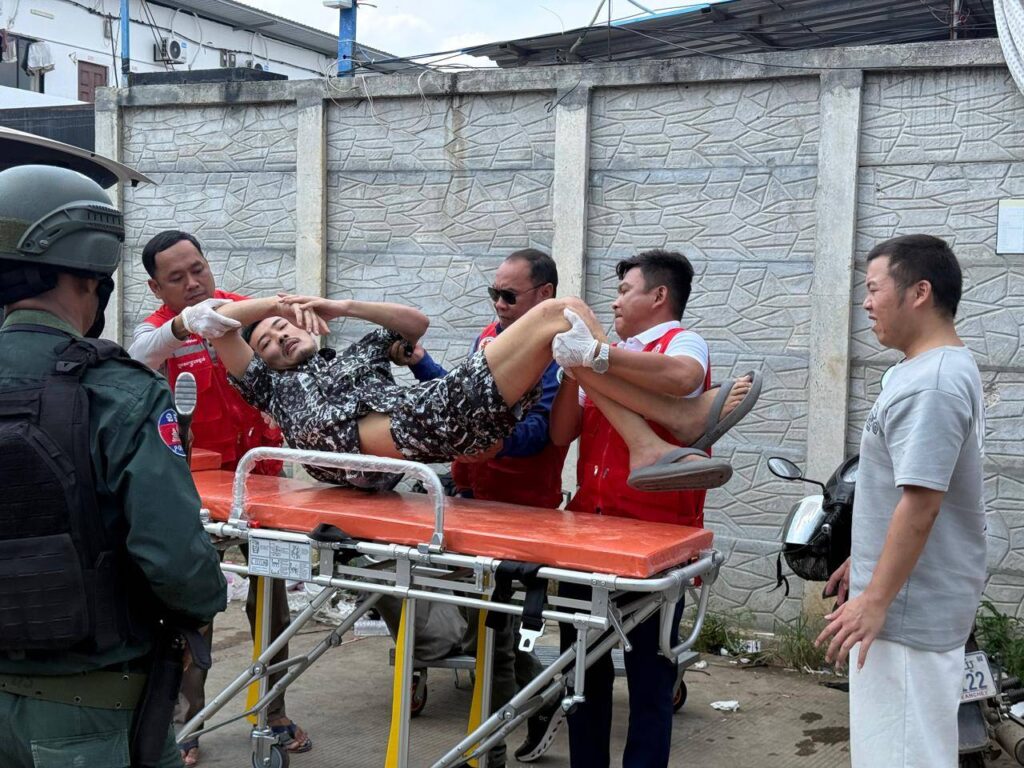

An ambulance driver in Poipet said that he didn’t know how many people had been injured, but he had carried six people to hospitals on April 30 during the raids.
“Most of them got injured, some of them got injured in their hands and legs because they jumped [from multi-storey buildings] and some broke their legs,” he said.
The driver, who declined to be named, had to take some of the patients to the Mongkol Borei District Referral Hospital, about an hour away outside Banteay Meanchey province’s Sisophon city.
Ork Dina, director of the Poipet City Referral Hospital, explained that they had sent patients to different hospitals based on the severity of their issue. “Patients that need to do surgery, we have to send them to the Mongkol Borei Hospital. We only take minor injury patients,” he said, adding that he could not comment on the injuries he had witnessed during the raid.
The ambulance driver said he had seen several serious injuries.
“We sent two people in critical condition to the provincial [hospital], and it is likely that one of them got shot in the foot on [April] 29. I heard he got hit in the foot and a bullet stuck in there,” he said, adding he didn’t know the injury of the second person he sent to the provincial referral hospital.
Banteay Meanchey deputy provincial police chief Ram Vireak declined to comment on Monday.
Chuon Sovann, the senior official who was appointed on April 21 by Prime Minister Hun Manet to oversee online scam raids in Banteay Meanchey and Oddar Meanchey provinces, also declined to comment.
The compound is inside a residential area called Chhour Vichet Sanco Park, according to the gambling regulator and signs in the area in Poipet. Sanco Cambo Investment Group, another company directed by Chhour Vichet, denied its association to the scam operations in a post on government news site Fresh News. However, the Kouprey newsletter said an analysis of company maps posted online suggested a business link between the Sanco SEZ and nearby Chhour Vichet Sanco Park.
A raid across town
A week before the Baolong 3 raid, Poipet police arrested more than 400 foreigners in a raid on a building in the city’s Kbal Spean 1 village. Videos from the raid showed people dropping items from multistory buildings and people running to the sound of gunfire in the background.
A construction worker in his 20s said he had been detained in the building during the raid, where he was helping finish the construction.
“The building is not finished, and we do not know why and how police came to raid the building,” he said. “They [foreign workers] were just housed here for about 20 days, we have not finished the ceiling and finished the floor yet.”
The worker thought the later raid at Sanco seemed more intense, but he had heard at least 10 gunshots during the raid at this building, and he said he felt scared.
“We saw police open fire into the sky. … I was inside on the top floor and I was so scared when police arrived,” he said. “The police asked us to come down [from the building]. They did not allow us to go [outside to] piss.”
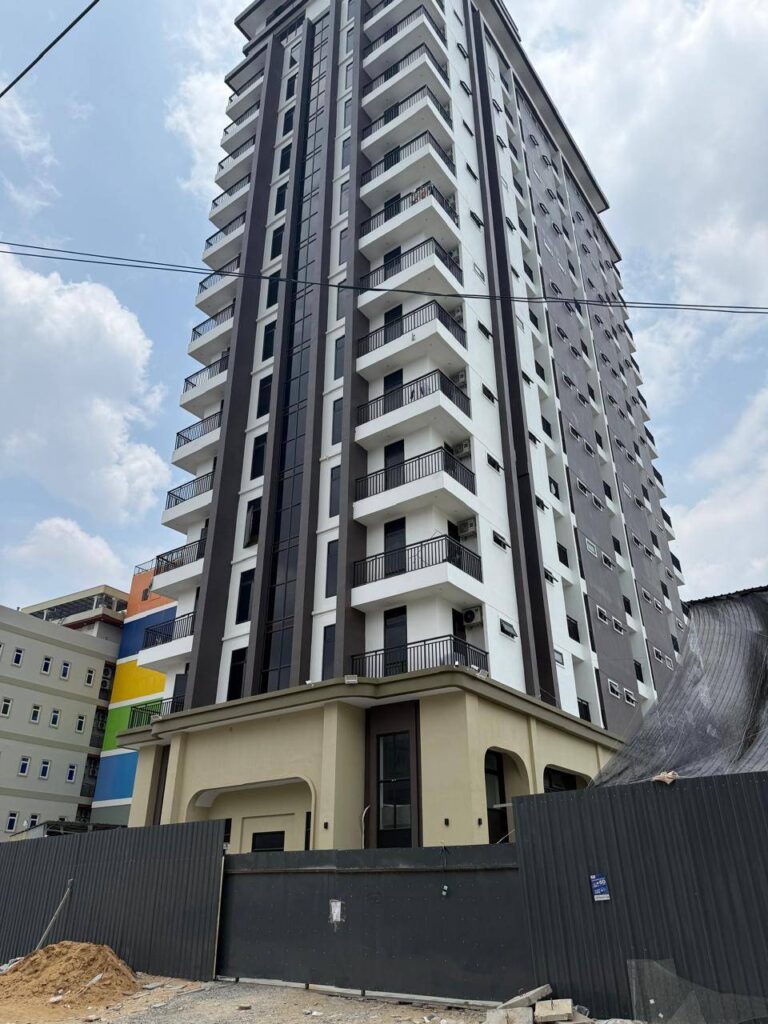
One man who declined to give his name said that he wanted to apply for a job in security at this building, but he had heard that police raided it the night before he planned to go ask for work.
He added that it has been hard to get a job in Poipet because the city was changing, with restaurants and guesthouses closing randomly. He contemplated returning to Thailand to look for a better job due to the lack of options, but that was both risky and expensive.
“It is difficult now to find a job even as a construction worker, and I might return to be a farmer,” he said. “We cannot move to work in Thailand because it is very strict and we face being arrested and paying a lot of money.”
Vicheat, a Passapp driver, said he was worried how businesses would be impacted by the raids, because the “Chinese” he said were the source of income for a lot of Cambodians in service sectors like him.
“In our Poipet, we have to rely on this, and now they [authorities] come after the scammer, we will not have money to support our living.”
This article is published as Creative Commons.