
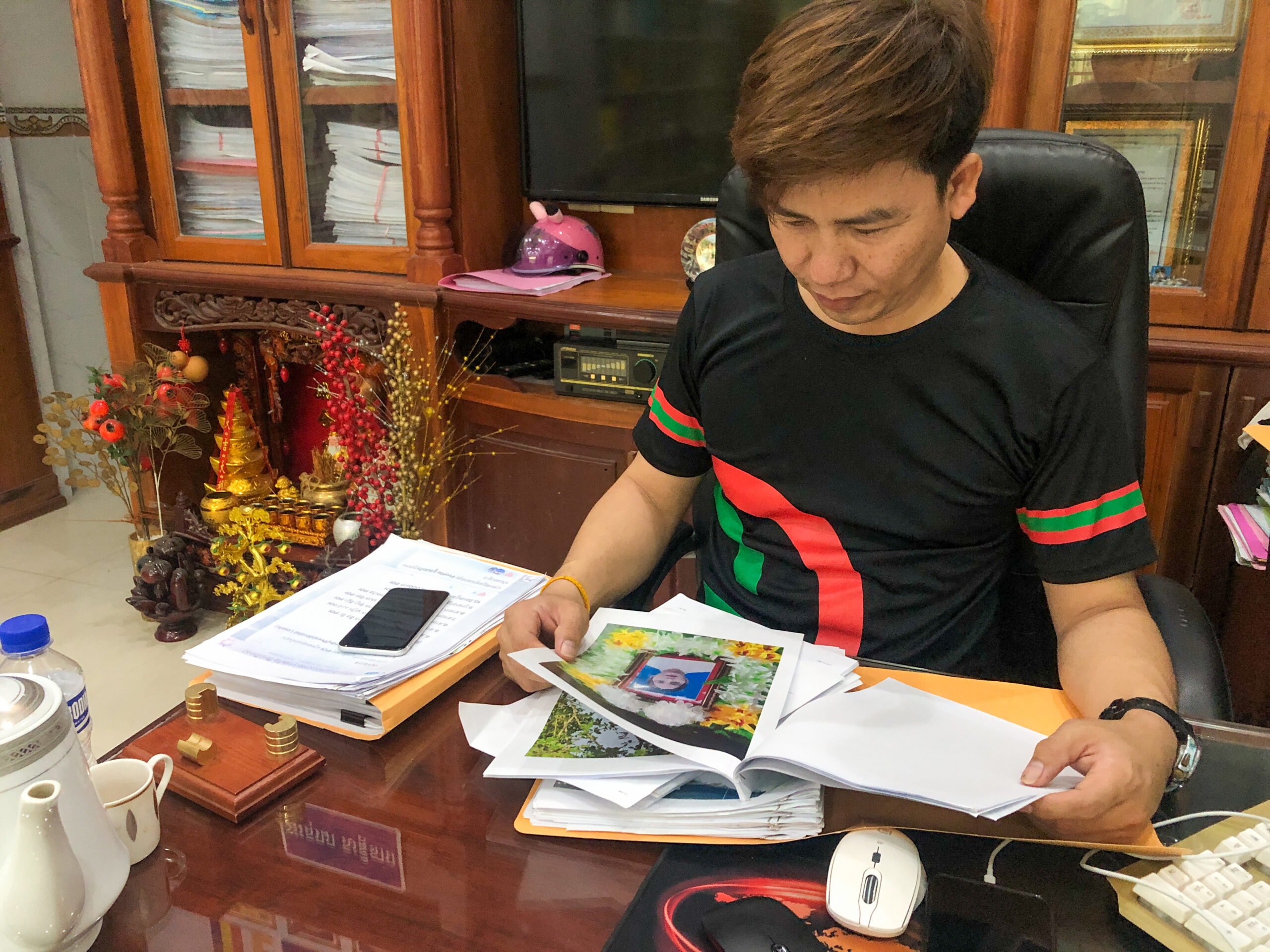
Shortly after returning from work in South Korea, Seng Han decided to invest his earnings. He chose to put his income into an investment scheme in a company called Piphup Deimeas, which promised a return of 3 percent every month.
“When we first invested, we got our money back easily, but after three months, they stopped paying interest,” he said. He borrowed $40,000 to invest in August 2022, and another $40,000 from a different bank after that.
Now he is filing his complaint to the court, trying to fight for the tens of thousands of dollars he lost.
Others say they’ve suffered worse losses: the death of their family members.
Seng Han is among nearly 1,100 families who have filed a lawsuit against Piphup Deimeas, with six of the business’s leaders charged with fraud with aggravating circumstances. The lawsuit was filed on July 4, 2023, and the first two hearings were held in December and January. Families accuse the company of defrauding them of their money by failing to pay back promised interest return rates on real estate investment projects.
The families say they lost thousands or even tens of thousands of dollars to Piphup Deimeas, plunging some into desperation. Two families spoke of family members dying by suicide following the financial loss, and aggrieved families told of a similar case of suicide in a third family. They have documented another 33 cases where family members died amid stress, mental illness, difficulty paying for medical care or other circumstances.
Suicide follows debt pressures
Nov Ol died by suicide. His brother-in-law, Sok Lonh, said Nov Ol was $15,000 in debt after investing in Piphup Deimeas. He became depressed and drank heavily when he realized that the money he had borrowed to give to Piphup Deimeas was lost.
“He drank a lot, he thought a lot. So he thought too much and committed suicide,” Sok Lonh said.
Nov Ol’s daughter Path Sreyleak said her father, a farmer, had still been young at 42 years old. She had never expected that her father would die by suicide. Piphup Deimeas had made two $450 monthly payments to her family, and never paid again.
“I was shocked,” she said. “I am angry at the company, but I don’t know what to do. Now my family has to pay back the bank.”
She said sometimes her family could not pay the bank on time, so her family worked even when they were sick.
Mekong Independent reviewed documents showing Nov Ol had sent $15,000 to Piphup Deimeas on January 4, 2023, and a death notice showing his death on March 24, 2024, in Kampong Chhnang.
The complaint that Path Sreyleak submitted to the court explains how the scam worked. Piphup Deimeas would ask civilians to buy a piece of land — in Path Sreyleak’s case, her family’s purchase was a 5-by-20-meter plot in Kampong Speu province, and they bought it for $15,000. A third party would rent that land for 24 months, paying $450 per month, and then after that 24 months, Piphup Deimeas would buy back the land for $15,000, leaving the family to keep the rent income of $10,800.
Seng Han, who submitted documents as evidence of the fraud to court on February 5, said that the reason he and other citizens were so easily scammed was because the company’s employees drove fancy cars and were good at persuasion. They showed off their plans to build houses, buildings, shopping malls, condos, and enterprises, especially projects where the company would give them money back.
The fraudulent investment jeopardized Han and his wife’s other enterprise, selling cosmetics online. “The business I used to sell used to fill the house [with inventory], but now it has gone bankrupt because of fraud. … [Piphup Deimeas’s] team was very good at persuading people.”
He said that in the past, the company had claimed that 8,000 people invested in the project. Currently, there were 1,000 families who have joined him in the lawsuit, he said.
Seng Han attributed 36 deaths among the complainants’ families to the ongoing fraud case of Piphup Deimeas. He collected documents of the 36 people who had died since July 2023, which included 23 people who died due to illness and lack of money for treatment, and three people who died by suicide. Seng Hen said that those who committed suicide seemed to do so out of social pressure: They were often questioned by employees of various companies and derided by their neighbors. He said that another 10 people had died from what he believes to be the stress of social pressure and mental health issues related to this case.
“Mental illness occurred to them because they were upset about being cheated by the company, and they were ridiculed by their neighbors. And some people were so upset that they drank alcohol frequently [and] some decided to hang themselves.”
Seng Han is worried that other people who are sick may die because they do not have money to pay for treatment if the court or the government does not take any action to make the company pay the money to the people.
Persuasion and lies
Seng Han also alleged that investors had been advised to hide their involvement in the scheme from those who would raise questions: their families and microfinance officers.
Nob Nan died by suicide aged 61 in March 2024 under the stress of $9,000 of debt, said her son, Eath Phally. He was working in Thailand at the time. Since returning, he and his two siblings have taken on the debt and sold his mother’s land in Kampot.
”My mother got depressed and thought only about the short-term,” he said.
Eath Phally’s sister, Eath Srey, 40, who lived next to Nob Nan, said her mom had not told her that she wanted to join the investment.
“My mother told me that she borrowed from the bank to buy a car because she wanted to sell vegetables. I wouldn’t have let her borrow to join the investment if I had known,” Eath Srey said.
She added that she had already sold her mother’s land for over $10,000 so she could repay the bank.
“I am upset that my mother committed suicide, and my relatives blame me that I should have looked after my mother more closely.”
Nov Mom, 59, said she blames Piphup Deimeas for cheating her family out of money and causing her husband, Chhay Khaw, distress.
“He was never sick before, but since he did not get the money [from Piphup Deimeas], he had been thinking too much,” she said. Chhay Khaw died of illness in October 2024 in Kampot province, after he couldn’t pay for more advanced medical treatment at a hospital in Phnom Penh.
Her family and nearly 100 other families in Kampong Chen village, Teuk Chhou district, Kampot province, invested in the company after persuasion from company officers and among family members, she said.
Her husband’s relatives initially recommended that she invest in the company, and then her family borrowed $20,000 from LOLC Bank, including $16,000 for investment in 2022. Her family had to pay the bank more than $300 a month, and because she could not afford it, the bank added an additional $5,000 in interest.
“My family is facing great difficulties, especially losing money. There is no money to build a house. My husband is dead,” she said.
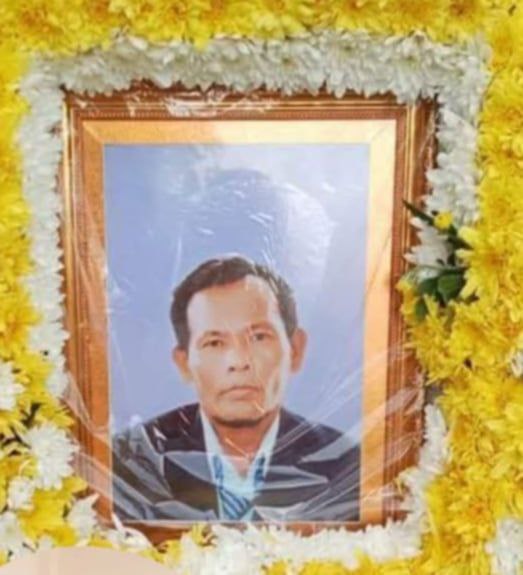
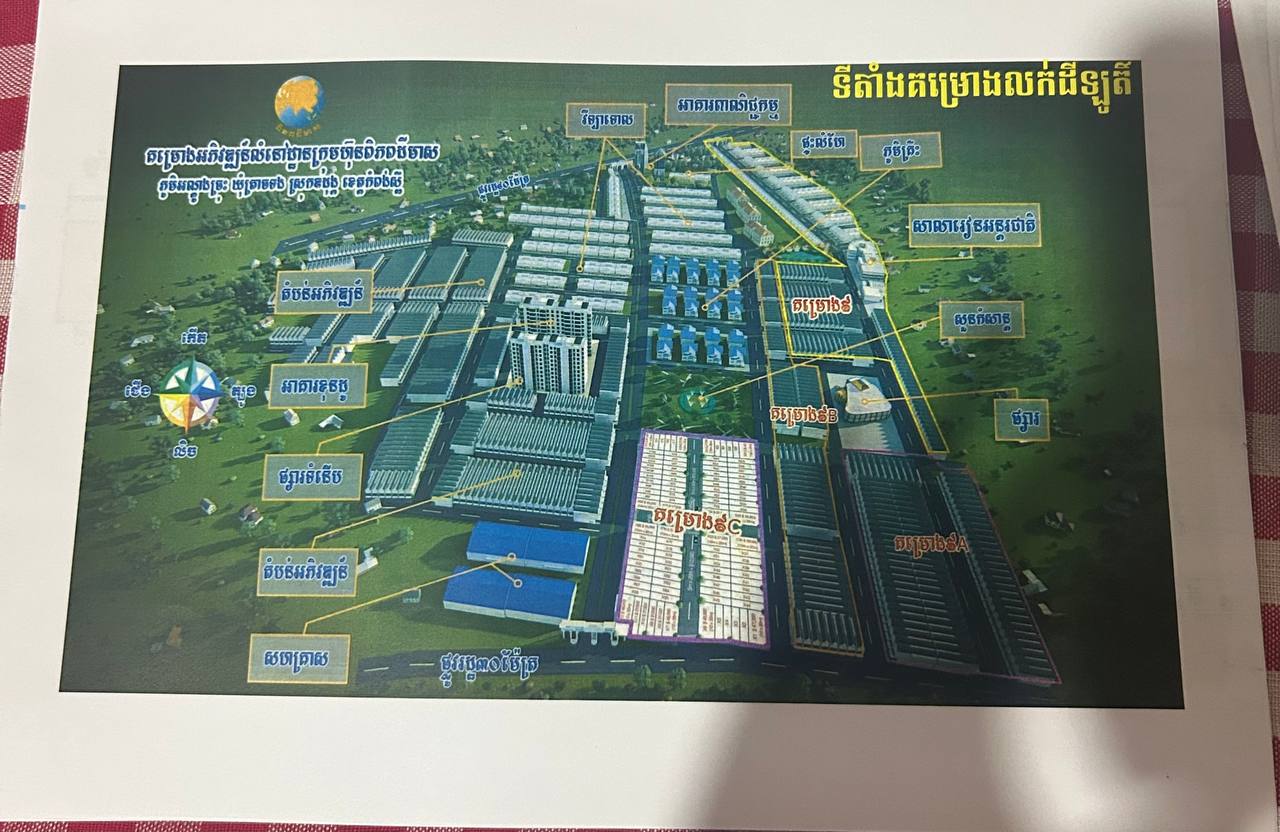
According to documents reviewed by Mekong Independent, Mom’s husband Chhay Khaw expected Piphup Deimeas to repay the $16,000 he invested plus 3 percent monthly interest generated through the construction of a borey for sale in Oudong district, Kampong Speu province. In the end the company only paid back $4,320.
The credit officer at LOLC bank who worked with Chhay Khaw, who gave his name only as Sola, told Mekong Independent that he didn’t know Chhay Khaw had requested a loan to join an investment. The family had requested the loan for construction on their house, he said.
“We won’t add more interest,” the credit officer said. “We will work with them to pay us back gradually.”
LOLC chief executive Sok Voeun could not be reached for comment.
In late January, more than 1,000 residents gathered at the Phnom Penh Municipal Court asking it to expedite the process for the company to pay the residents. She says the residents will gather again when the court issues its verdict in the case.
Hy Kimhong, the chair of Piphup Deimeas, was appointed as a tycoon in August 2019 and later became a prominent tycoon or Neak Oknha in October 2022.
However, Hy Kimhong was arrested in August 2023 as complaints from investors mounted. According to the Phnom Penh Municipal Court, Hy Kimhong and five other individuals were charged with aggravated fraud. The others were Cheng Sanghak, Met Puthero, Eav Savoeun, Huot Somon and Horn Sreymom.
The Cambodia Microfinance Association told CamboJA News a month later that it was concerned about Piphup Deimeas’s victims, but microfinance institutions had not lent money for the purpose of land investment schemes.
Hy Kimhong was released on bail in November 2023, and his tycoon title was revoked in April 2024.
Mekong Independent has not yet been able to reach Hy Kimhong for comment, and a woman who answered the phone number registered to his company with the Ministry of Commerce claimed not to be associated with Hy Kimhong.
Am Sam Ath, operations director at Licadho, said that cases of people being cheated by companies have been happening for many years, and the victims have not yet received a solution, despite complaints to ministries and the court.
He said that their families have experienced economic hardship and serious psychological distress.
“I see that these cases have seriously affected their mental health, so when they have mental illness, it makes them sick and even causes death.”
He believes that the government and the courts should look into these cases to ensure that they get their money back.
“Therefore, in this case, the government and relevant authorities, especially the courts that have received the complaints, should quickly resolve them so that they do not experience further economic hardship and psychological distress, and it also affects society as a whole.”
This article is published as Creative Commons.