
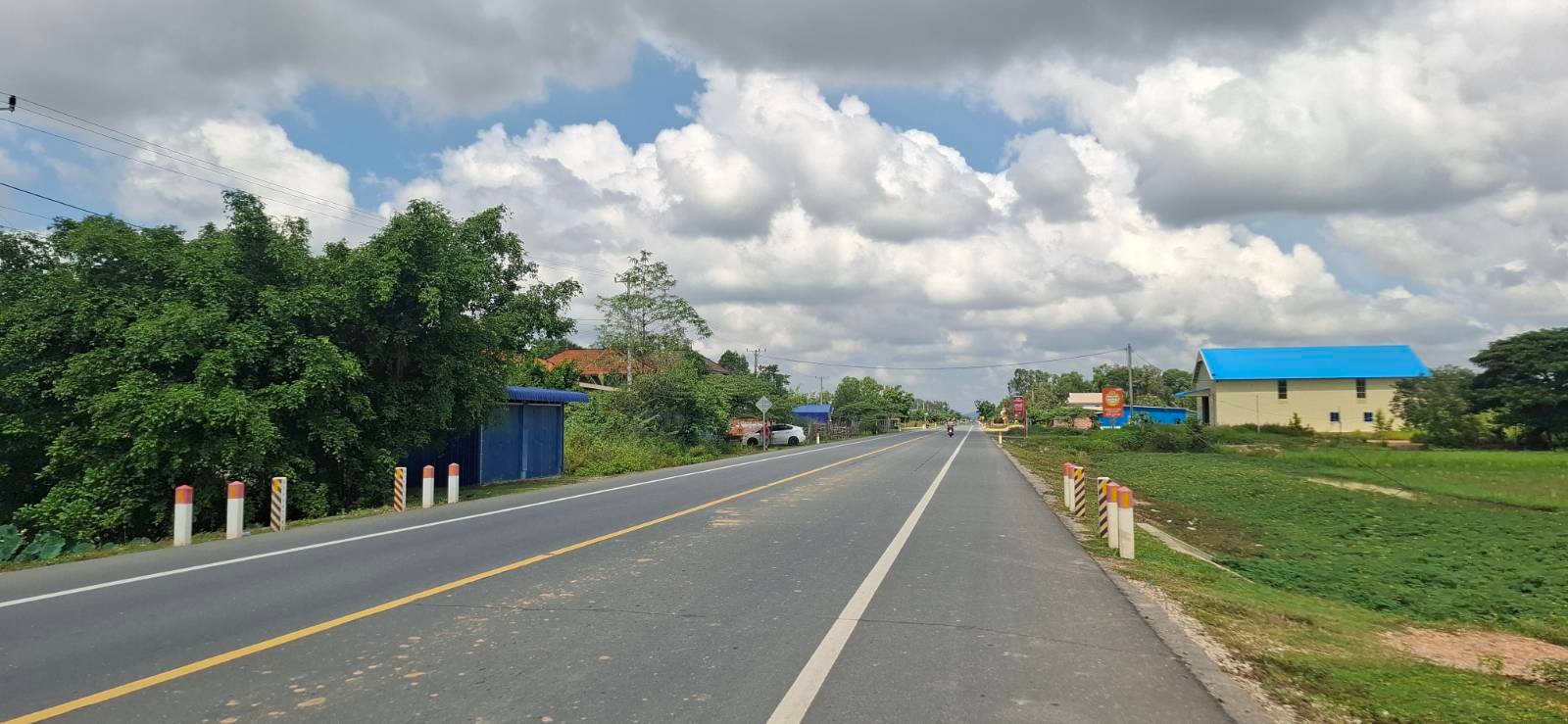
Prey Veng province — On most days, cars and motorbikes cross unremarkably through Por village down its main road, past lotus fields, small shops and houses. Occasionally, there is a crash on the paved road. But one day in September, Cambodian civilians said they saw something they’d never witnessed before in the village: an abduction, seemingly of foreigners.
Two pro-democracy activists, Nguyen Duc Thuan of Norway and Tran Hiep of Australia, were reported missing for a week in Cambodia on September 25. Three days later, Vietnam’s Ministry of Public Security announced it had arrested the pair and a third person, Thai Cong Truong Son, for illegal entry, forged documents and intention to “carry out terrorist and sabotage activities.”
Nguyen Duc Thuan and Tran Hiep were identified as members of Viet Tan, an organization that promotes democracy and human rights in Vietnam, and reportedly came to Cambodia for a five-day trip to meet with other human rights defenders and activists. Vietnam’s Public Security Ministry classifies this organization as a terrorist group.
The foreigners’ families and international watchdogs are declaring the case as an act of transnational repression, saying that the pair had no intention of crossing into Vietnam. They say there is a growing body of evidence that they were abducted and taken across borders.
Tran Hiep’s wife, Australian citizen Chloe Dang, 36, of Melbourne, said she believed her husband had been abducted in Cambodia, based on the information she has learned about her husband’s case. She said her husband had no intention of going to Vietnam in the first place, and she planned to meet him on September 19 in Bangkok. But he never made it to the flight.
A month later, Tran Hiep communicated a similar statement in his message to her, passed on by Australian consular officials during their first visit: “Hi, how are you all going? I want you to know that I never entered Vietnam on my own. I never crossed the border. I am struggling mentally — traumatized and terrified by the situation.”
Though it was originally reported by Viet Tan that Tran Hiep and Nguyen Duc Thuan were traveling on September 18 to the Koh Andaet area in Takeo province, the U.N. Office of the High Commissioner of Human Rights posted late last month that they had inquired about the alleged abduction case in Prey Veng province’s Preah Sdach district.
An Australian Senate committee hearing around the same time was told the testimonies of five alleged witnesses to an abduction in Cambodia had been submitted to the Australian government. Tran Hiep’s wife Chloe Dang said she was also aware of alleged witness testimonies collected by an NGO.
A suspicious confrontation in Prey Veng
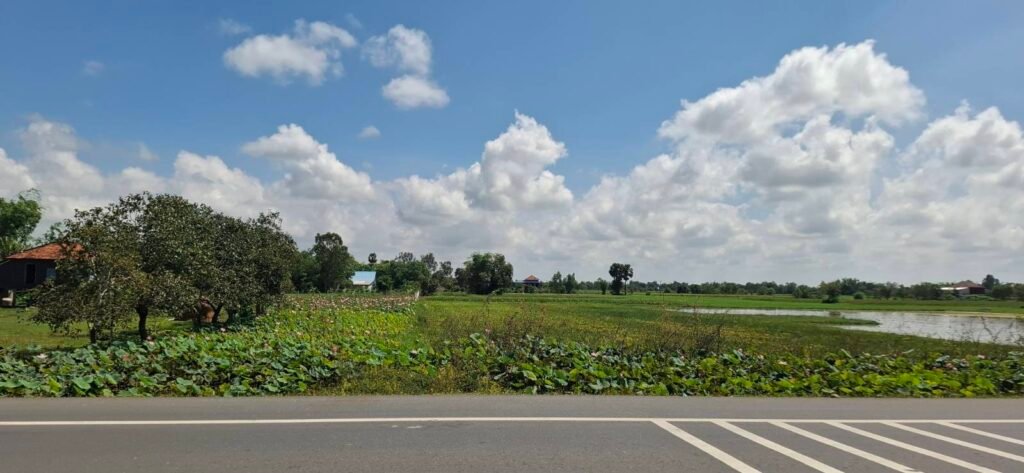
Reporters visited Prey Veng province on October 31 and found reports of an abduction in September in Por village, a sparse village of family homes and lotus fields on a rural road intersecting National Road 1. The people said they didn’t know exactly what they had witnessed, but knew it was brief, and involved apparent foreigners and violence.
Several residents said they had heard about an abduction at the site in September. Two people pointed to a building where the confrontation reportedly happened. Mekong Independent anonymized respondents because of the sensitivity of the topic.
In one roadside shop, a man in his 30s said his brother was outside on that September day and witnessed the abduction directly. He saw the end of the confrontation himself. According to him, there were two vans, “like the [Hyundai] Starex car,” as well as some motorbikes. His brother told him they had been stopped and waiting until they pulled in front of another passing car to stop it.
“They attacked the people inside the car and dragged them into another car and drove off,” he said. “It was a while before the remaining car left.”
The witness said the abductors punched the men several times, and that the brothers noticed the victims appeared to be foreigners.
“No one dared to go close,” he said.
He said the motorbikes drove south along the road, which leads to the Banteay Chakrei International Border Checkpoint with Vietnam, while the vans drove north to National Road 1, the man recalled.
He said police came a day later, saying that they were investigating a case in which “[people] were taken and dumped somewhere.”
In another household near the incident, one woman said she heard something was happening from children who came into her small shop saying people were fighting outside. She went out to go look, she said.
“At that time I carried one of the children and I saw the action, I saw two cars, and then people were being pushed into the car,” she said.
She didn’t know what the situation could be about, but she noticed they were foreigners and made an assumption.
“I believe the Chinese lost a lot gambling and didn’t pay their debts, that’s why they kidnapped them and beat them,” she said on October 31. She’d never seen an abduction like that before in this area, she said.
The family explained that there was a CCTV camera attached to one property near the site of the incident, so Chey Kampok commune police came the next day to ask to review the security footage. Police and neighbors only found out later that the security camera was not facing the road, so it hadn’t captured any of the activity.
Most relevant local officials largely did not report any knowledge about an abduction. Preah Sdach district police chief Chey Sengheang declined to comment, while Chey Kampok commune’s police chief Ven Saorin couldn’t be reached for comment. The Chey Kampok commune chief, Lim Ngeab, said he hadn’t heard anything.
But one local official contacted by Mekong Independent said that they’d heard reports of an abduction along the road, but the action happened quickly.
“It was not clear, people got out of the car[s] and got into the car and left. Passengers did not [appear to] fight back.”
When asked if they knew about a case of activists who disappeared around the same time, the official said they didn’t know about it. But they noted that people pay attention to what happens on the road because traffic accidents frequently occur, and people died in them before.
Interior Ministry spokesperson Touch Sokhak did not respond to questions sent by Mekong Independent.
A case on the international stage
The disappearance, and later conflicting allegations about abduction and terrorism, of Nguyen Duc Thuan and Tran Hiep gained international attention, with Australian, Cambodian and Norwegian news outlets picking up the case.
Cambodia’s Ministry of Interior later responded to the case in a statement on October 7, in which the ministry “declares that competent authorities of the Kingdom of Cambodia did not arrest and hand over the aforementioned individuals to the Vietnamese authorities.” Instead the statement acknowledged that it had received a request for intervention from Australia on September 22, and immigration records showed that neither the Australian or Norwegian citizen had departed Cambodia as of their records.
The statement then deferred to reports on September 28 from Vietnam’s Ministry of Public Security of their arrest, alleging illegal entry and their detention at the Mỹ Quý Tây border checkpoint.
Australian authorities have stated that they gained consular access to Tran Hiep, in which he said he never entered Vietnam on his own. It was not clear from Norwegian reports if the government gained consular access yet, but the government told Norwegian media they only confirmed where Nguyen Duc Thuan was held in custody on October 7, more than two weeks after he was reportedly arrested by Vietnamese authorities.
Elden Advokatfirma, the Norwegian law firm retained by Nguyen Duc Thuan’s family, said it had reported the case to Norwegian police as an enforced disappearance in order to open an investigation in both Vietnam and Cambodia. Lead attorney Maria Hessen Jacobsen called it a “textbook case of enforced disappearance” under the Norwegian Penal Code and the U.N. Convention that the state’s law implements.
“This is precisely the silence the law was written to punish,” Hessen Jacobsen said in the statement.
Lawyers representing the families in Australia and Norway also engaged the international counsel Doughty Street Chambers to raise the case in the U.N. and European institutions, per an announcement on October 22. The firm said it identifies this as a case of transnational repression.
Mekong Independent reached out to both the Australian and Norwegian foreign ministries, but Norway did not respond by time of publication. In response to questions, Australia’s DFAT said it has previously and will continue raising the case with the Vietnamese government, and that “the Australian Government’s first priority is the safety and security of Australians.”
The case garnered special attention in Australia, as Chloe Dang, wife of Tran Hiep, decided to share her story with legislators and media. She felt the case only got attention after Viet Tan first posted about their two missing members on September 25.
“I’ve shared to a lot of media and NGOs also, anyone who can listen to my story, and what happened to my husband,” she said. “However, from my government’s side, I wish they can do more,” she said, emphasizing that “he got kidnapped.”
In a Senate committee meeting on October 28, officials from Australia’s Department of Foreign Affairs and Trade shared the steps that they had taken thus far in the case, including sending requests for assistance to Cambodia and neighboring countries before Vietnam’s acknowledgement of the case, and raising the case multiple times with Vietnamese authorities after.
Australia’s Senator David Pocock asked DFAT when they may begin to classify this case as an abduction. Penny Wong, Minister of Foreign Affairs for the Australian government, said in the meeting that the ministry will decide what to say based on what they deem the best interests of the person, rather than on “political” matters or “publicity.”
“We are going to be cautious about some of what we say here because we are focused on the best interests of the Australian,” she said, before repeating a statement they have made so far about the case.
“We take any allegation that an Australian may have been deprived of their liberty and moved across an international border against their will very seriously. We continue to seek clarity about the circumstances in which Mr. Tran came to be in Vietnam.”
Later in the meeting Senator David Shoebridge said that he was aware of five testimonies that allegedly witnessed an abduction in Cambodia, which had been submitted to the Australian government. Fiona Webster, acting deputy secretary for DFAT’s international security, legal and consular group, said they were aware but had not yet reviewed them.
Chloe Dang told Mekong Independent that when she first lost contact with her husband on September 18, she waited one week before going public with the case to see if any information would emerge.
She believed her husband’s report, and in addition she told a reporter that she was made aware of the reports from witnesses in Cambodia — which she understood were gathered by an NGO — who said they saw an abduction in the late morning or before lunchtime, involving cars and people in black hoods. She said that some of the details, like the time of the arrest, match what she experienced on the date of the disappearance.
“If he did something wrong I can’t speak up that much, but he’s an Australian citizen being a human rights activist and helping people,” she said. She was growing worried about his health too, after he reported he was traumatized, saying that his blood pressure is unstable.
“I’m really concerned about how long he can last in there,” she said.
When asked what she wanted the Australian government to do, Chloe Dang said she just asked for a more expedient investigation. Though they have told her to be patient to allow for negotiations among governments, she said she was struggling to withstand the wait. “I don’t think anyone in my position can sit there and wait.”
She also noted the patterns of transnational repression from the Vietnamese government, saying that her husband’s case should be counted as such.
“It’s unacceptable that the kidnapping happened in daylight, and I don’t want this to happen to other people,” she said.