
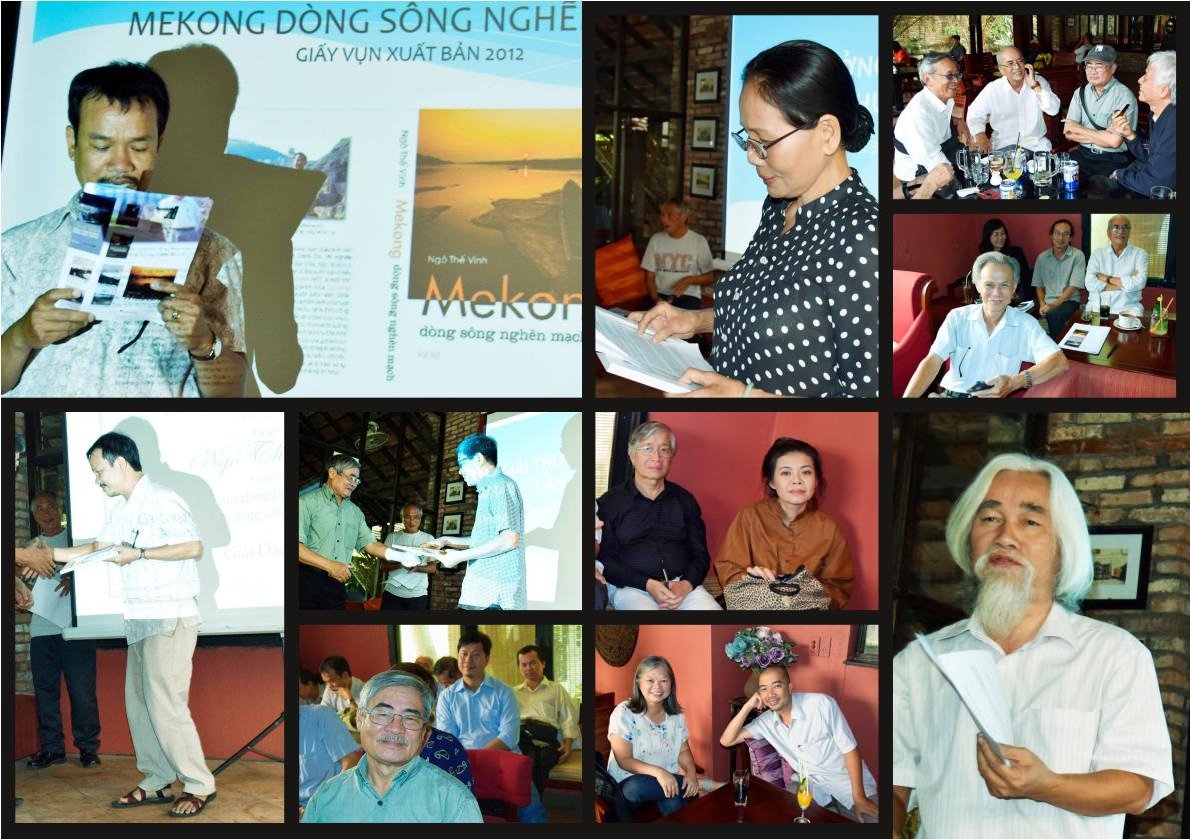
At the 10th Viet Literature Prize in 2024, which was open to Vietnamese-language writers around the world, a collection of poems by a young poet won the unanimous backing of the five-member jury: literary critic Lý Đợi, writer and Facebooker Thái Hạo, poet Ý Nhi, poet and painter Giáng Vân, and novelist Nguyễn Đức Tùng. The collection was named winner in the poetry category.
Yet unlike the winners in the other categories of that edition (prose, criticism, translation and the chairman’s special award), neither the poet nor the winning collection was revealed.
On the prize’s official website, the organizers said they would announce the winner’s name “at an appropriate time.”
Two years on, the author and the poems remain a mystery to the public.
The secrecy is not without reason. The organizers learned hard lessons early on. The caution dates back to 2018, when a young winner was harassed by police after accepting the prize. In 2022, another young winner was dissuaded by police from attending the award ceremony in Hồ Chí Minh City. On his way to the airport, he was reportedly beaten by strangers in front of police officers, for no apparent reason, and missed his flight and the ceremony. Since then, the organizers have decided to withhold the names of young winners who are living inside Vietnam to keep them safe.
“To avoid disadvantaging talented writers, and to avoid leaving gaps in the prize’s record, the award-winning authors whose names are being temporarily withheld will be announced by Văn Việt at an ‘appropriate time,’” says Nguyễn Viện, a writer based in Hồ Chí Minh City and a member of the jury of the poetry category.
The prize was officially launched in 2016 by the Independent Writers Club, or Văn Việt for short, a collective established in 2014 by 61 intellectuals led by the eminent writer Nguyên Ngọc, a former colonel and former deputy of the National Assembly. It has never received recognition from the Vietnamese government.
Despite the constitutionally guaranteed freedom of association, Vietnam does not allow fully independent nongovernment organization. While the motto “Independence — Freedom — Happiness” has headed Vietnam’s official documents since 1945, the government grows wary of “independence” when anyone outside the state claims it. A legally recognized collective must be affiliated with a state agency and, once approved, needs permission for every single project. Yet Nguyên Ngọc and his colleagues have refused to compromise their autonomy, undeterred by shrinking civil liberties. They have founded the collective without registration, published banned books on their own website, brought politically sensitive news stories to public attention, raised their own funds, held annual awards and connected with Vietnamese-language writers and enthusiasts overseas. Staying unauthorized, however, does not mean enjoying unfettered freedom. Despite risks, the group continues its work true to their slogan, “for a free and humane Vietnamese literature,” to prevent literary talents from fading into oblivion.
The ‘problematic’ collective
The founding members of the group have been known as prominent dissidents both within and outside the Party. Nguyên Ngọc, a 94-year-old writer, left the party in 2018 in solidarity with his friend, Chu Hảo, an intellectual and former deputy minister of science and technology, who was disciplined due to having published what the party deemed as inappropriate books. Nguyên Ngọc also used to be the vice president of the Hanoi Writers Association, a de-facto state-led organization, yet left in 2015 as he observed discrimination against members who wanted to join the group of independent writers.
This group of intellectuals played a leading role in organizing protests in the past against China’s aggressiveness in the South China Sea, circulated petitions on numerous state policies, and called for justice for unjustly arrested intellectuals. They have also sought to create a transnational literary movement. Some sections of their website are dedicated to literary works published during the Republic of Vietnam (1955–1975) as well as diaspora literature, part of an effort to foster reconciliation among Vietnamese people across the world, something the government has failed to deliver on despite its rhetoric.
For Nguyễn Đức Tùng, a jury member and a winner of the 2017 edition, writing and researching Vietnamese literature is like “reuniting with the Vietnamese language,” the mother tongue he tried to unlearn after arriving in Canada as a boat person in the 1980s, when he had to adopt English as his main language.
While group has never received any written notice from the authorities ordering it to disband, harassment is common: naming and shaming by both state media and cybertroopers, security agents “inviting” members for coffee, police tailing public gatherings of members, harassment against relatives of writers published on the website, firewalling of the website inside Vietnam, and more. A 2023 article on the outlet of Đồng Nai police called it a “self-styled professional body that was “founded unlawfully.”
Many members have left for various reasons, but all out of pressure, says Ngô Thị Kim Cúc, in charge of the prose section on the website and also a jury member.
“One director was pressured to withdraw because, if they did not remove their name, they would not receive state funding to make films,” she says. “Some withdrew for the sake of their own work, others for the sake of their children’s jobs. However, withdrawing their names usually did not change the relationship: many of them continued to contribute writing or still took part as usual in Văn Việt’s activities.”
Like most activists on the government watch list, Nguyễn Quang A, the main sponsor of the event since its first edition, has periodically been “invited for coffee” by the police. Nguyễn Quang A says that in a recent meeting this summer, the police warned him that he must take responsibility if any of the winning works were found to be problematic.
But he appears unfazed. A seasoned democracy activist, tech entrepreneur and translator of numerous treatises, he is well aware of the risks involved. He left the party in 1993.
The Institute for Development Studies, which he founded, voluntarily disbanded in 2009 in defiance of Decision 97 issued by the then prime minister: “If there are dissenting opinions regarding the Party’s and the State’s orientations, guidelines, or policies, such opinions must be submitted to the competent Party or State authorities and must not be made public under the name of, or associated with the name of, a science and technology organization.”
“Whatever is our right, we should exercise it,” says Nguyễn Quang A. “The majority of real civil society actors are unregistered.”
Unwanted ceremonies
The award ceremony is always held on March 3, on the occasion of World Writers’ Day and the anniversary of the declaration establishing the Independent Writers Group of Vietnam. The award is judged mainly on creativity and innovation. Winning entries are selected from works published on the club’s website or nominated by individuals who have collaborated with the club.
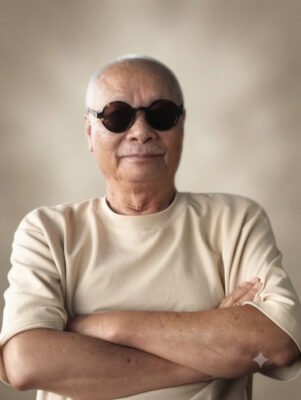
“In a country that calls itself socialist or communist, a writer is synonymous with a soldier on the cultural front,” says Nguyễn Viện, the writer and poetry juror. “Their writing is, to a greater or lesser degree, shaped by the policies and line of the Party and the state. All books and periodicals are published under a strict system of censorship. As a result, their work always stays within set bounds, in both form and content. Faced with this stagnation and formulaic writing, Văn Việt has promoted independent thinking and a free consciousness, in order to give works of genuine innovation and creativity a chance to reach the public.”
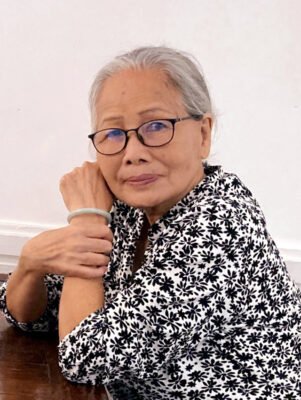
Hoàng Thị Ý Nhi, editor of the Văn Việt website and one of the jury members, says the club has been able to “adapt” to the ongoing challenges and avoid unnecessary trouble.
“Security officers turning up to stop us from getting to the award venue, or from meeting friends for coffee, happens fairly often. They are very young men, and their manner is relatively polite. We understand that this is the task they’ve been given and that they have to carry it out efficiently.”
The 2017 ceremony now seems a distant memory. According to many, it was the best organized, with every required formality going off smoothly. The winners delivered their acceptance speeches candidly and with composure. It was a ceremony without any interference.
The first ceremony was supposed to be held at a café, but the owner backed out at the last minute, citing “unspoken pressure.” The group scrambled and carried the event to the home of Ý Nhi, one of the jury members. Then the power failed, and the ceremony went on in the heat. In later years, her house remained the fallback whenever something went wrong at the last minute.
For recent editions, the ceremonies have had to be held virtually. Adhering to an “independence, not opposition, dialogue and not dissent” approach, the group says on its website that they invited members of the official Writers’ Association to their award ceremonies but received no response.
“Whatever is our right, we should exercise it.”
Nguyễn Quang A
Yet harassment is not the only worry of organizers and jury members for future editions of the prize.
“Whether the government permits it or not, Văn Việt will still evaluate and award prizes every year,” says Nguyễn Viện. “What I’m concerned about is that we may lack the participation of young writers. Participating on the Văn Việt forum is a test of each person’s courage. Especially for younger groups of authors, they are more likely to face pressures from the authorities.”
The prize consists of a cash award ranging from $500 to $2,000 and a certificate signed by club president Nguyên Ngọc.
“Some [winners] withdrew their names very early on. Others gladly accepted but later notified us of their refusal,” says editor Hoàng Thị Ý Nhi. “In some cases, everything had already been finalized (the selected poems had been posted, along with the jury’s comments and the laureate’s acceptance speech) before they wrote asking us to take the posts down. We understand and respect their decisions. Fortunately for us, the overwhelming majority of those selected agreed to accept the award. Because of this difficult choice, they have faced a great many hardships in their lives.”
Many winners of the award have donated to social causes. The winner of the first edition for his collection of personal essays, music composer and independent writer Nguyễn Tuấn Khanh, dedicated the award to a 15-year-old who was sentenced to 30 months in prison for blocking and injuring a police officer forcibly confiscating his family’s land.
“I dedicate this award to Nguyễn Mai Trung Tuấn as a call for society to pay greater attention to the irregularities of Vietnam’s judiciary, of which Tuấn’s case is one example,” Nguyễn Tuấn Khanh wrote in his letter to Văn Việt accepting the award. “It shows how the power and treachery of a small group of people can tear apart the country’s decent face and destroy the traditional morality of the Vietnamese people in the eyes of the world.”
Producing real literature in times of red writing
Nguyễn Viện says most of his major works have been published overseas to steer clear of top-down censorship. Văn Việt is neither the first nor the only forum inside the country and yet outside the government’s control that the writer has been part of.
“Nearly all my books, about 20 titles so far, have come out in the U.S.,” he says. “The reason is simple: They can’t be printed in Vietnam, so I get them printed in America. I couldn’t bear to let all that writing go to waste.”
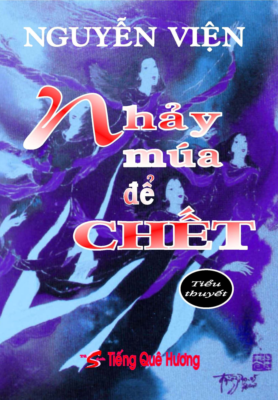
His winning novel, Dancing to Die, is an example. It was published by a Vietnamese diaspora publishing house before the entire version was put on the website of Văn Việt.
The winner of the 2020 edition was in the same boat. In 2010, Phạm Thanh Nghiên was sentenced to four years in jail and three years under house arrest on charges of anti-state propaganda, primarily for her protests against China’s illegal sovereignty claims over the Paracel and Spratly Islands, as well as her blogging on human rights. Her winning memoir, Slices of Life Behind Bars, was completed shortly after her release from prison and published in the U.S. as a bilingual book to escape censorship in Vietnam. Unbeknownst to her, it was also published underground by her close friend Phạm Đoan Trang, who wanted to give her a surprise gift.
According to Phạm Thanh Nghiên, hers is the second memoir of a prisoner of conscience published inside Vietnam while the author was still in the country. The first was a memoir by Thích Thiện Minh, a fighter for religious freedom in Vietnam who was imprisoned for 26 years.
Over the years, Văn Việt has grown beyond serving as a platform for sharing literary works. It has become a forum where questions of justice — often overlooked or deliberately omitted by mainstream media and literature — are finally given voice. Many pieces by people from marginalized groups who were not professional writers have found a home on the website: a poem by a death-row inmate who was unjustly imprisoned for 20 years, letters from prison by a land-rights activist, and the final statement of a prominent journalist at her show trial.
Sorrowful nights
Where has the truth gone now?
I have searched in vain.
My body is all frail
yet my wrists are in chain.
What can I do with this cruel, tangled wrong
an injustice that won’t explain itself?
In the dead of night, my heart breaks
as I write,
sending these words out like a lantern
Please, friends, hear me and help me.
Speak up for justice.
Part the clouds and lift the sky’s own judgment,
so righteousness can be made to answer.
Help me soon—
so I can be cleared of every stain of blame.
Thirteen long years have carved my life with pain.
Tell me—where is justice?
My life is branded with guilt
in a midnight cell,
alone—one room, one iron cuff, one cage of silence.
My body hurts;
my spirit aches more.
Tears blur my eyes—tears for the suffering of my
child.
A life turned solitary by wrongful verdicts.
I am alive with innocence—
I try to keep my heart clean.
When the moon returns, it casts
the shadow of an entire life behind bars.
Soon, I will leave this world
And then, perhaps
this world will finally stop hurting.
I carry my sorrow like a prayer,
crying into the heavens: I did no wrong.
The hatred I’ve carried all my life
has not yet found its answer.
A soul condemned by error—
truth and falsehood will not simply fade away.
I wander, I call, I plead—
how can no one hear?
Break the walls of lies.7
Open a path through everything
that blocks my name—
so that one day, I can be proven innocent.
In 2023, despite calls for justice from rights groups at home and abroad and from the broader Vietnamese public, the government went ahead with the execution of Lê Văn Mạnh from Thanh Hóa province. It notified his family only four days after the execution, denying them a final opportunity to see him. A few days before his execution, he managed to send out a poem from prison and expressed his gratitude to those who had supported him.
“We are gradually expanding the website in the hope that Văn Việt will take on the look and stature of a cultural forum,” says Hoàng Thị Ý Nhi. “That will be the reason we gain more contributors and more readers, and it will lead to better prize seasons ahead.”
In 2025, the Best Prose prize went to Ái Điểu for her collection of short stories The Scent of the Mortal Realm, which was published solely on Facebook before being republished on the Văn Việt website.
Yet nobody in the jury nor the organizers knows who the author is. Văn Việt respects her right to be hidden. But her anonymity sparks heated online debate as to whether the prize was actually given to AI.
“In this case of the hidden identity, some have remarked that the jury was ‘irresponsible’ for giving the prize to someone who cannot be held accountable,” says Nguyễn Viện. “But I actually think it’s a good thing, because it shows the jury was completely objective and favored no author. Not for achievements, personal background, fame, or obscurity.”
In an exclusive interview after winning the Văn Việt prize with “New Century Magazine,” an exile outlet in Vietnamese language, Ái Điểu, who was discovered to be a non-professional writer based in An Giang province, says: “I hide my identity so that I can write freely about the pain of the wretched lives around me. … I live in my home country, where freedom of expression is not respected. I have to remain anonymous to avoid being fined, banned from writing, or having my livelihood adversely affected.”
When will be the ‘appropriate time’?
A wave of online public denunciations has emerged against works that depart from established party conventions, including the highly acclaimed The Sorrow of War, an international bestseller translated into more than 15 languages. The book, which follows a North Vietnamese veteran haunted by memory and trauma, much like its author Bảo Ninh, cuts against the official image of victory and was banned in Vietnam for more than a decade. The Ministry of Education and Training banned schools from teaching the novel shortly after a denunciation campaign.
Restrictions continue to tighten through a series of laws and decrees. Resolution 80-NQ/TW, issued by the Politburo in January, designates November 24 as “Vietnam Culture Day,” with the stated policy that workers get the day off with full pay. The resolution sets a goal of placing Vietnam among the world’s top 30 in soft power by 2045. But it also stresses “building a cultural posture integrated with national defense and security, firmly safeguarding the Party’s ideological foundation.”
Issued last December, Decree 350/2025/NĐ-CP, which aims to encourage the development of literature, places literature under unified state management by the government nationwide. The Ministry of Culture, Sports and Tourism is thereby tasked with helping the government carry this out.
Article 9 of the decree to encourage the development of literature lists the themes eligible for state support in writing, creating and translating literary works. They are divided into a number of categories. The first includes:
- History and the nation’s traditional cultural heritage.
- The Communist Party of Vietnam.
- The revolution.
- Seas, islands and borders.
- Defending the Fatherland’s sovereignty and territorial integrity.
- Safeguarding national security and social order and safety for peaceful lives.
- Combating “peaceful evolution” and refuting the distorted claims of hostile forces that oppose the cause of building and defending the Fatherland. “Peaceful evolution” refers to the view that imperialist forces (notably the U.S)and other hostile forces (including those calling for democracy) work to undermine socialist countries by spreading Western political ideas and lifestyles.
- Technology and digital transformation.
- Climate change and the environment.
Topics in the second category include the “new people” taking part in the country’s economic, cultural and social development, as well as emulation movements and the study of President Hồ Chí Minh’s thought, moral example and style. “New people” is a term referring to citizens trained in socialist thought.
Decree 126 on organizing, operating and managing associations further restricts registration of not-for-profit entities to only those with good “political and moral qualities.”Directive 24 of the Politburo in 2024 also calls for close monitoring of entities that receive foreign funding.
The group appears to have anticipated this obstacle early on. All contributors and collaborators are unpaid, and only domestic donations are accepted.
“In the first few years, friends and colleagues overseas sent in small contributions, according to their goodwill and circumstances,” says Hoàng Thị Ý Nhi. “However, to avoid unnecessary misunderstandings, we soon stopped accepting these contributions.”
Even so, Văn Việt has been accused of plotting a “Jasmine Revolution” and urging writers to take to the streets, as in the Arab Spring uprisings.
For its members, writing freely is non-negotiable. As Nguyễn Viện wrote in his winning novel Dancing to Die: “The longing for liberation, and the journey toward it, belong only to those who are already free. But freedom, in turn, belongs only to those capable of liberating themselves.”
“I am a free writer and will always be free,” he says. “To the young people who feel the pull of writing: do not be afraid.”
“Write whatever you want, and write whatever you can. Only when we break our chains will we become free. And only in freedom can dignity and true creativity come into being.”
Exiled writer Phạm Thanh Nghiên agrees.
“Keep in mind that when you write, that whatever happens what you’re doing is right and good, there’s nothing wrong. With that kind of mindset, you’ll feel steadier if one day you have to face things that don’t go as expected.”
Do you want to go to heaven?
Then don’t listen to anyone’s promises.
Proooooooooomiiiiiiiiiiiiiiiiiises,
random, careless, full of nonsense.
Whoever deceives you or threatens you is a bunch of live grenades.
You’ll blow up before you reach glory.
No one but yourself can bring you to heaven.
So you need to breathe well
and not let yourself run a fever.
But to breathe well, nothing beats freedom, and looking after your own supply of clean air
in a life as transparent as a brick,
carefree like going for a swim, like going out to play,
aimless, drifting,
afraid of losing nothing.
That means you have to be stubborn,
though not necessarily sensational.
Greed, anger and delusion are just your own pen and stable.
If you can walk out of that rot, you already have half a heaven,
romantic as clouds, as trees, thriving, dizzy with bliss.
And when you give away the rest of yourself, all of heaven is within you.
There’s a secret I can tell without making anyone sick:
heaven is only emptiness,
not a place for waiting, hoping, and watching the road.
— A poem by Nguyễn Viện
This article is published as Creative Commons.