
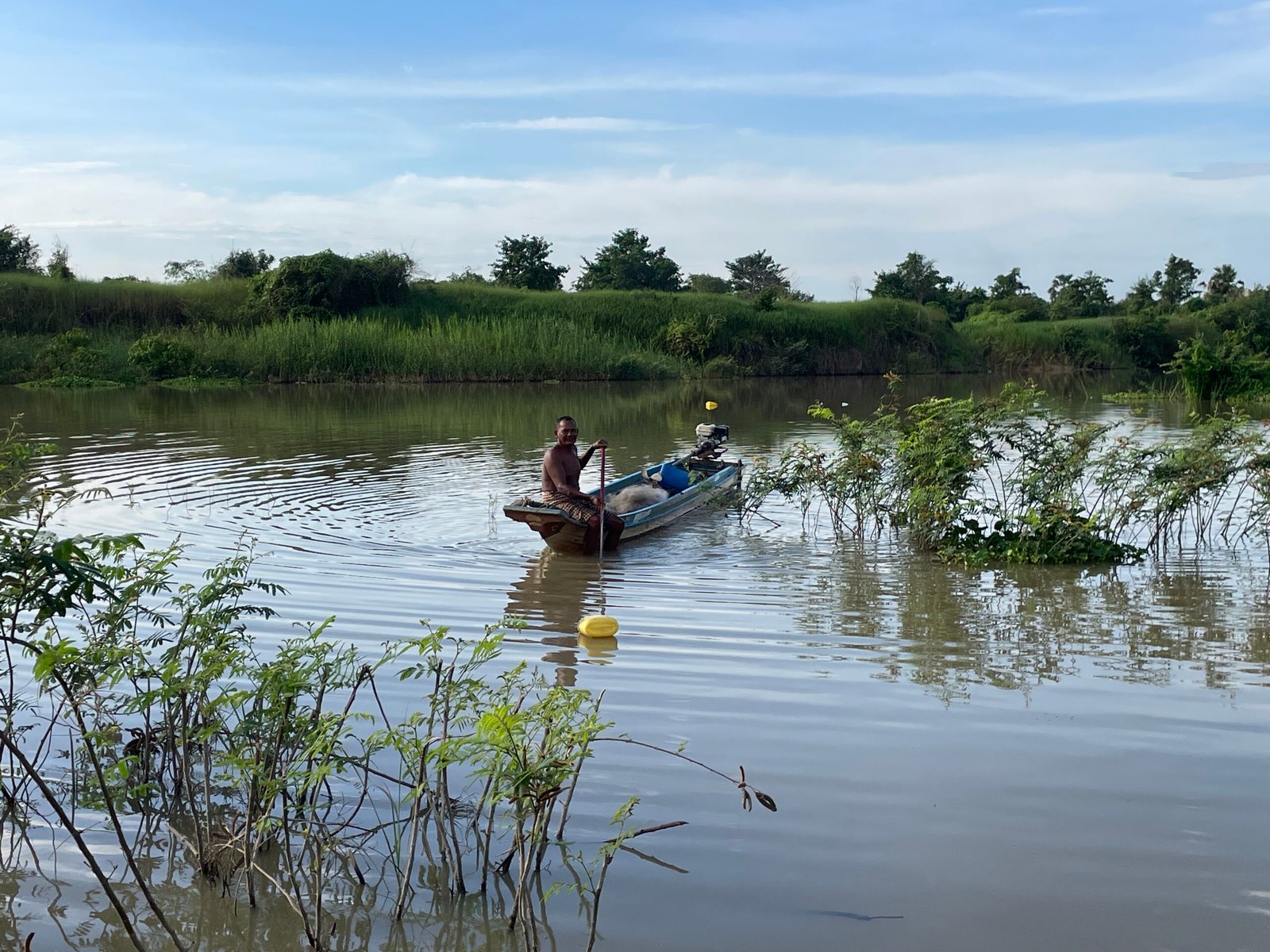
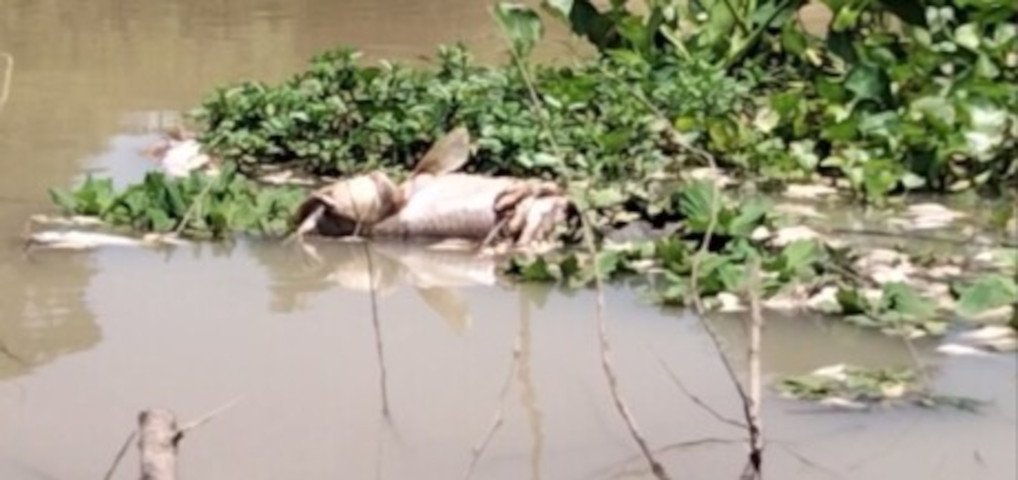
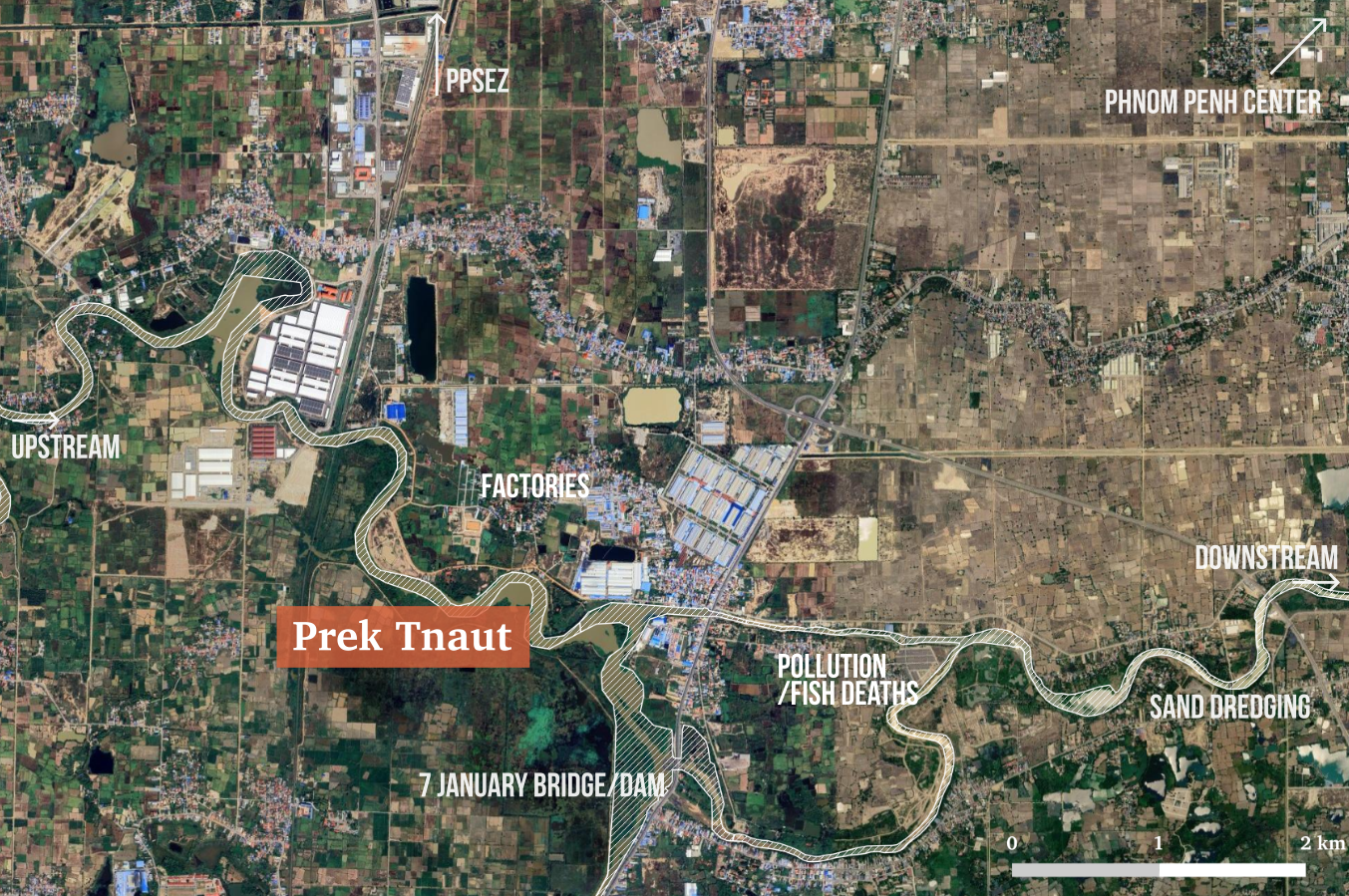
In March this year, poisoned fish floated densely on the Prek Tnaut river’s surface — stretching from the 7 Makara and Teuk Thla dams all the way to Sak Sampov commune.
Some residents initially took the fish to make prahok fermented fish paste, but the meat was mushy and reeked of chemicals, making it inedible.
Incidents of fish poisoning in the Prek Tnaut River — specifically in areas south of Phnom Penh — have created hardships for local fishermen who rely on the river for their livelihoods.
Some have already given up fishing, while others who continue to fish are forced to seek supplementary employment, as they can no longer rely solely on fishing amid a year-after-year decline in catches.
Though the poisoning incident in March, particularly near Kong Noy and Sak Sampov communes, gained some attention at the time, the actual extent of the affected area is far greater than what has been reported.
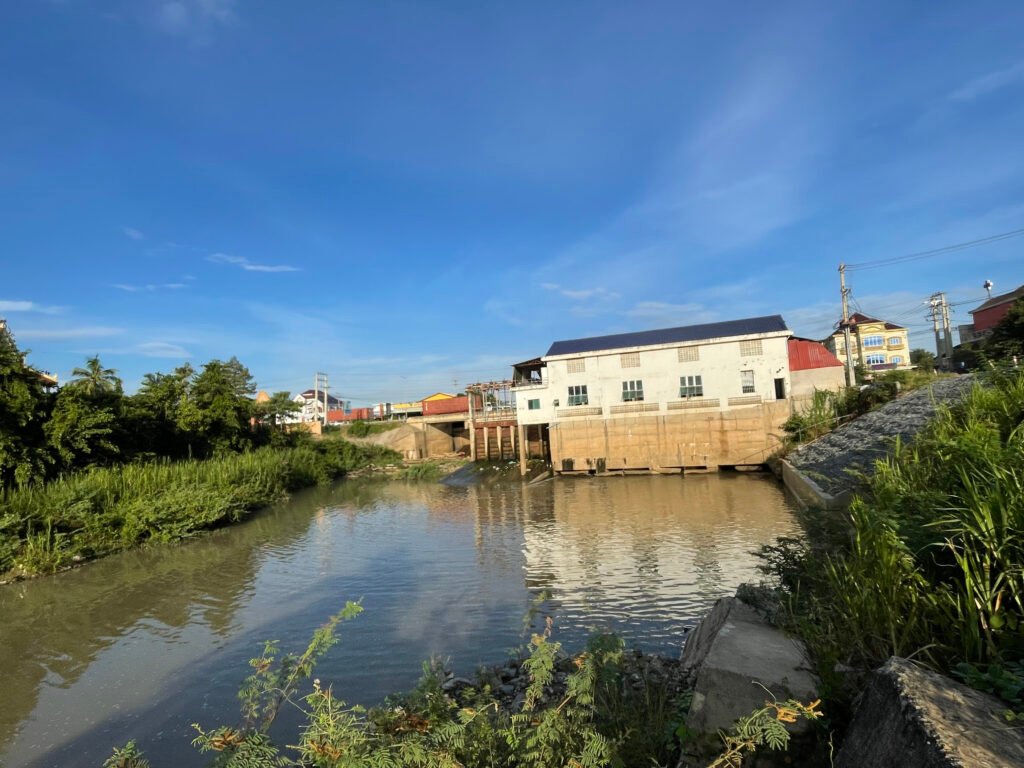
Residents interviewed by Mekong Independent stated that the fish poisoning incident was not limited to the two aforementioned communes; poisoned fish were observed as far upstream as the 7 January Dam, where authorities release water from upstream areas. They noted that such poisoning incidents occur frequently, attributing them to the discharge of toxic substances or wastewater from factories.
Cycles of poisoning
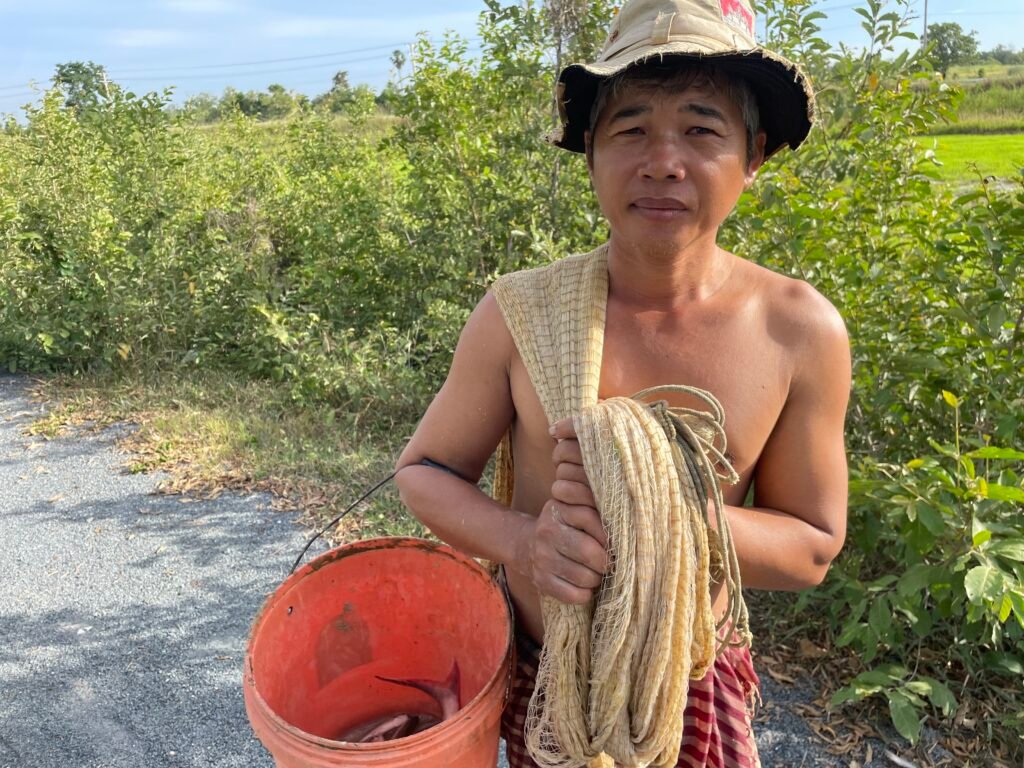
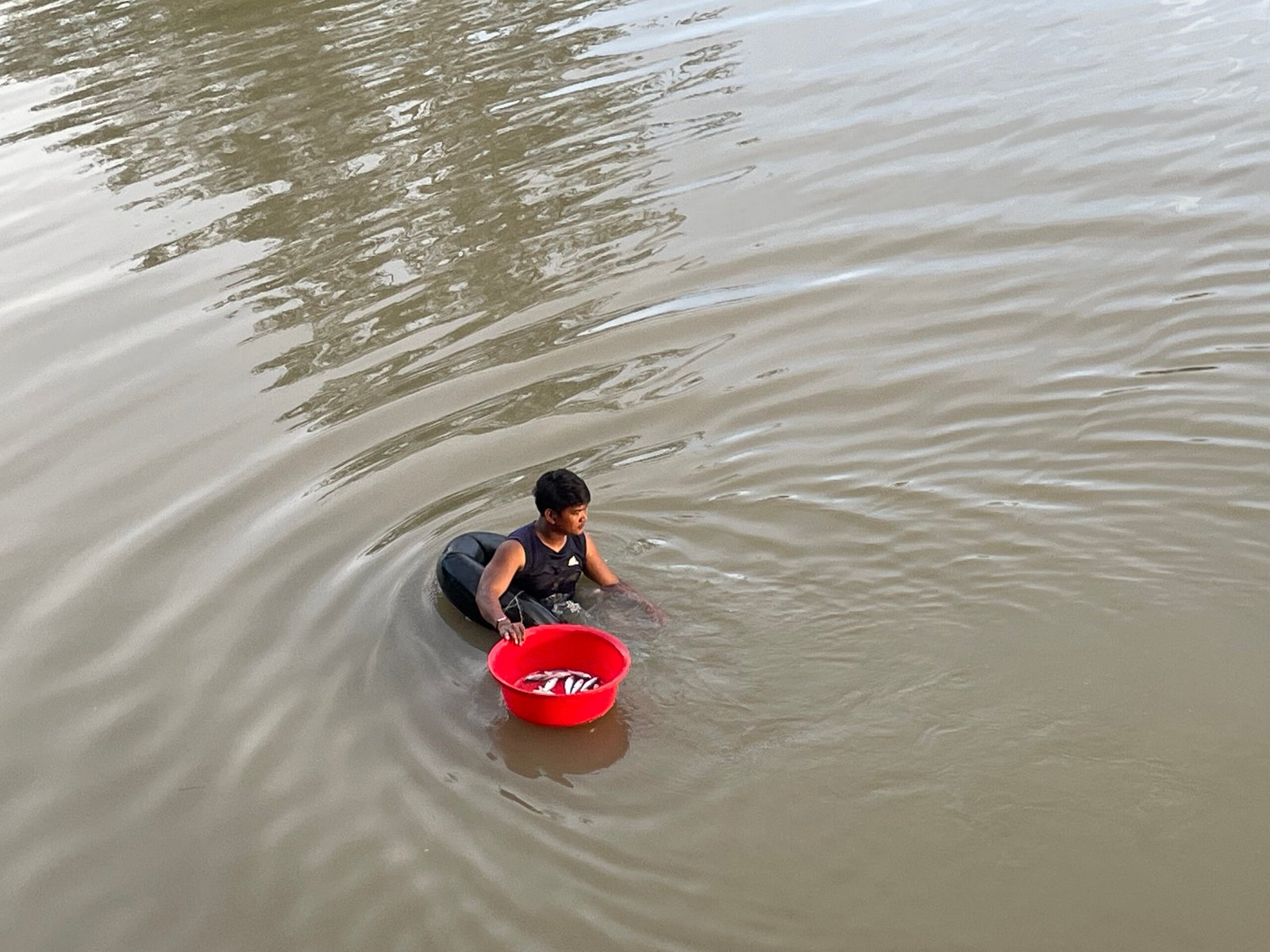
Nguon Sokhoeun, a 50-year-old resident of Sak Sampov village, Sak Sampov commune, Dangkao district, Phnom Penh, hauled his cast net out of the stream along with containers of various sizes for his catch. He remarked that fish poisoning incidents frequently occur when water is released from upstream dams, bringing with it factory waste. This causes the stream water to turn a murky black and releases an odor that drifts into the village.
“Water is released from the dam multiple times a year — sometimes twice, three times, or even more frequently. When a surge of water comes through, it turns pitch black and foul-smelling; the stench wafts all the way here — you can smell it right where you stand, and the odor carries all the way to our homes and the village.”
Nguon Sokhoeun still wants to fish in the Prek Tnaut River, even though the catch is inconsistent; on some days, he catches enough to eat with a little left over to sell for 10,000 or 20,000 riel, while on other days, he catches almost nothing at all.
“If the fish are plentiful, I might catch 5 or 6 kilograms a day — sometimes even more. That is, provided the water isn’t too foul. On top of the pollution, the river dredging has dug out deep pits, making the riverbed much deeper and the banks dangerously steep. The spots where I used to cast my nets have all been dredged out.”
Chin Mao, 36, a fisherman from Kong Noy commune who has fished in the Prek Tnaut River since childhood, regularly sets his gear there. He notes that in previous years, he would typically start catching fish as early as the beginning of August, but this year, the catch seems increasingly scarce.
The pollution is typically more concentrated when water levels are low during the dry season of roughly November through April, residents say.
Sources of pollution
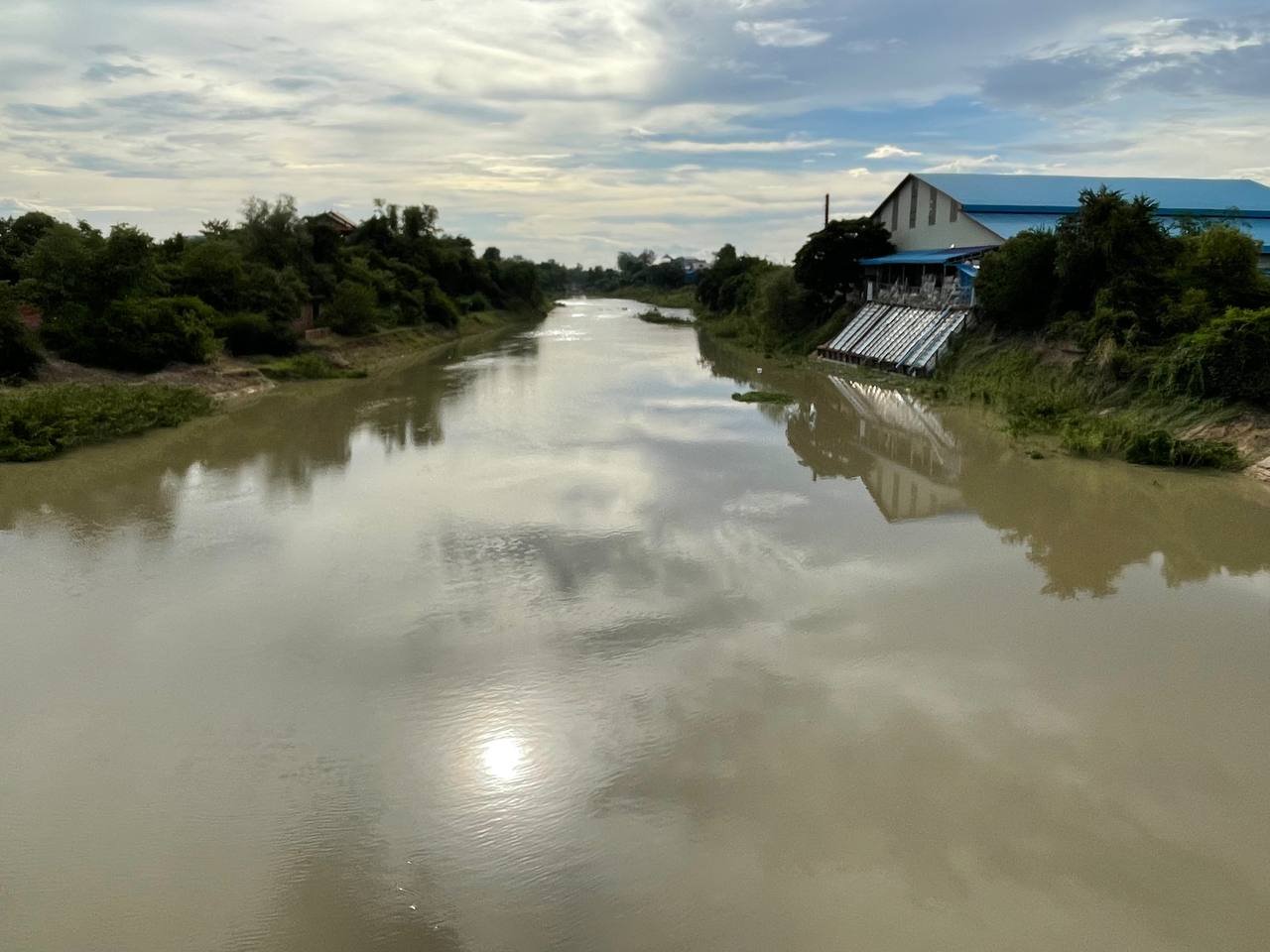
The Prek Tnaut river originates in the eastern reaches of the Krâvanh (or Cardamom) and Damrei mountain ranges. It flows eastward from the mountains of Kampong Speu province, crosses the elevated plains (at an altitude of approximately 20 meters), and empties into the Tonle Bassac river south of Phnom Penh.
With a total length of about 232 kilometers and a catchment area exceeding 5,000 square kilometers, the river spans three administrative areas: Kampong Speu province, Kandal province, and Phnom Penh.
Incidents of fish poisoning occurred in 2022 and 2023 along the upstream section of the Prek Tnaut River in Kampong Speu province. Authorities attributed these incidents to toxic water discharge from mango processing plants located along the river.
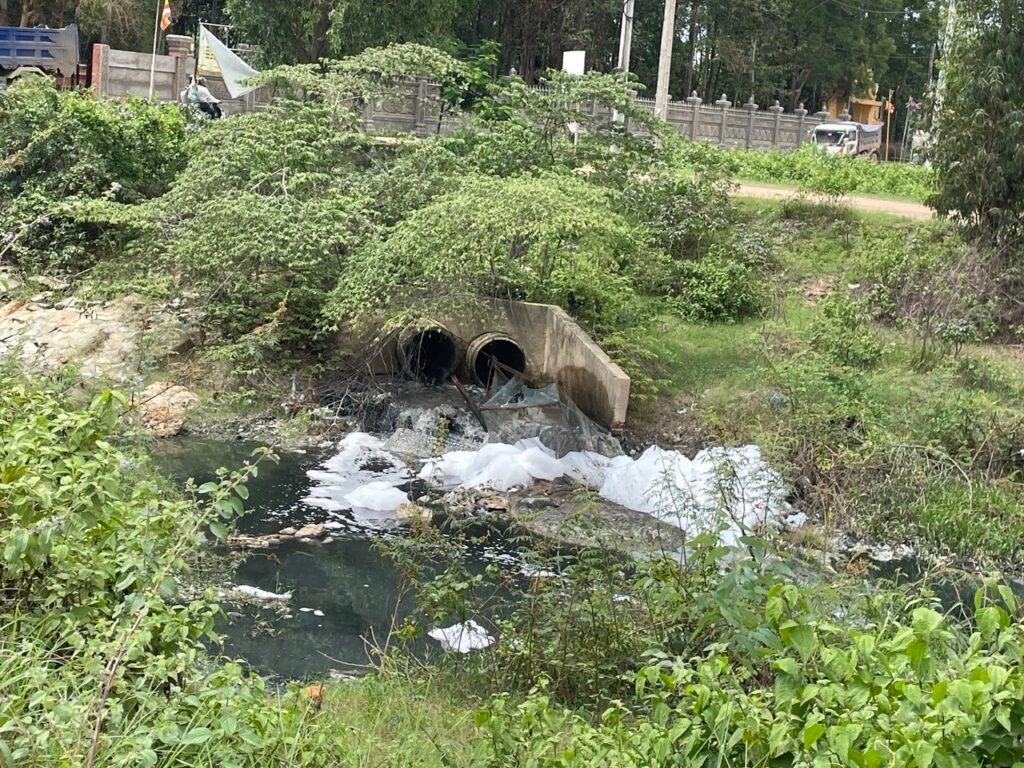
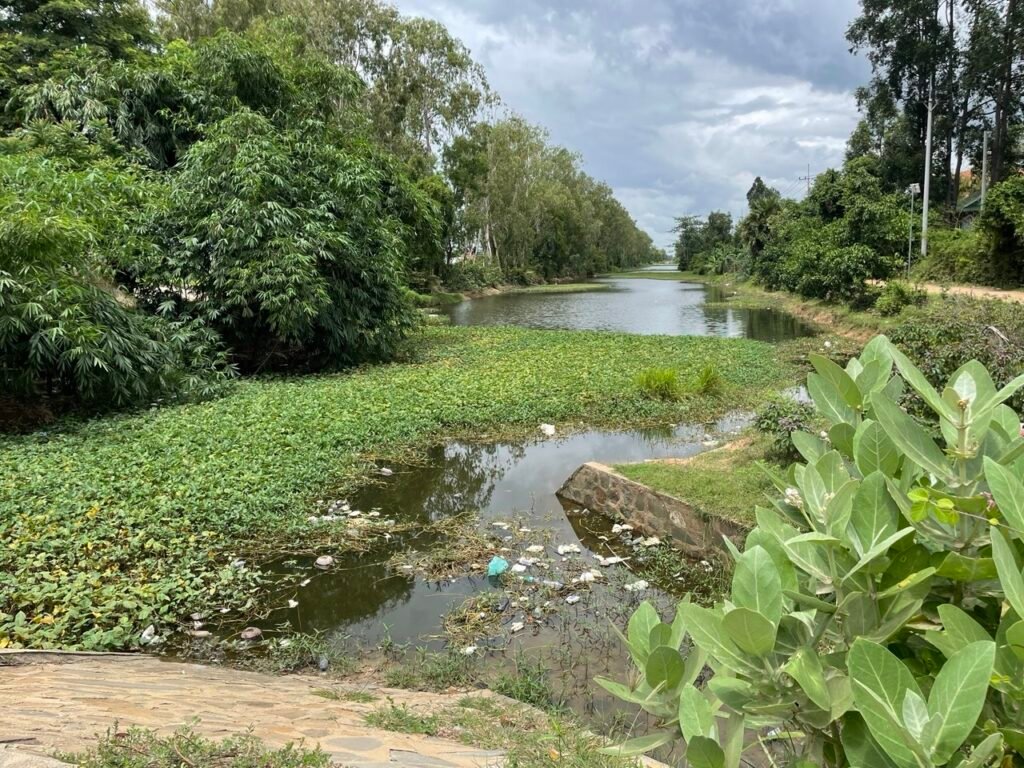
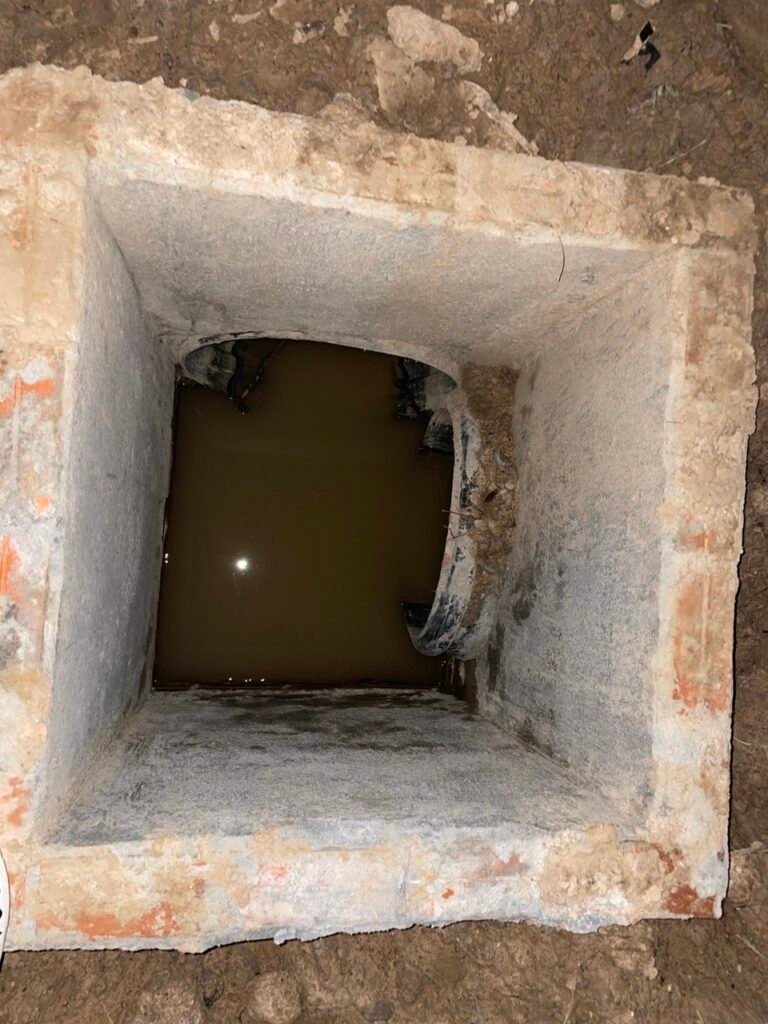
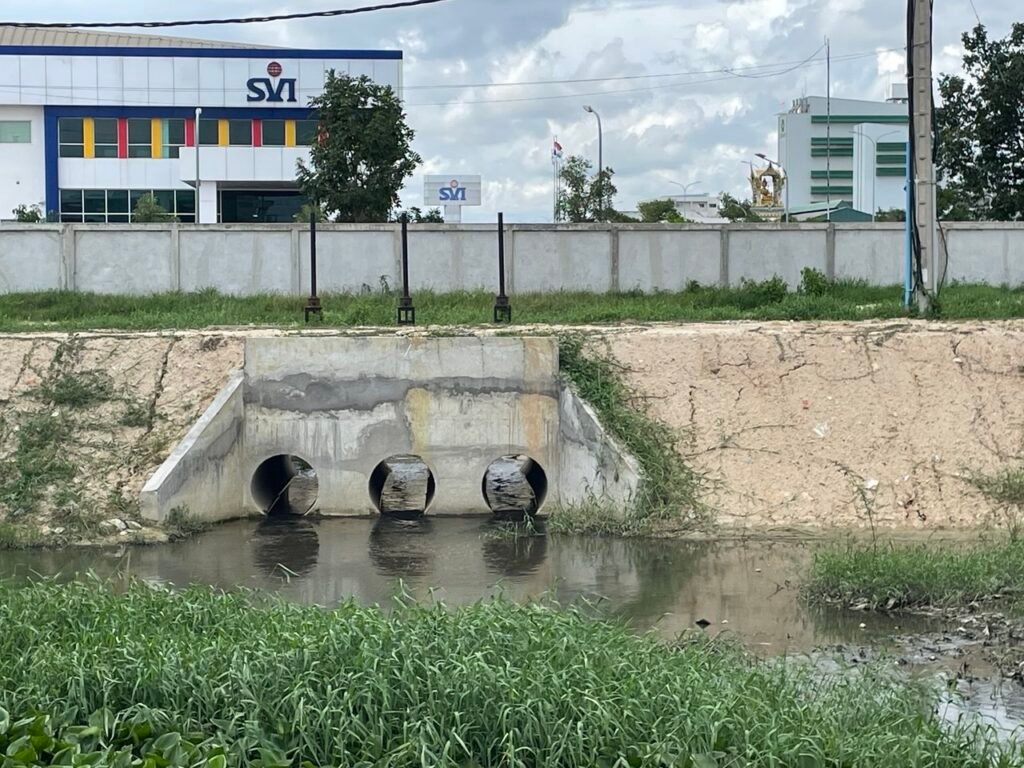
The area that saw mass fish deaths in March is near an industrial area in Phnom Penh. In September, factories could be seen discharging black wastewater into canals leading toward the Prek Tnaut river in its upstream section. However, a visual inspection revealed that the water color upstream was actually quite similar to that of the downstream section.
To date, no official has publicly confirmed the specific cause of the pollution. Mekong Independent contacted Khvay Atitya, the Ministry of Environment’s spokesperson, seeking an explanation for the fish poisoning and information on potential solutions; however, he did not provide a direct verbal response. Instead, he shared a report detailing the inspection of three specific facilities in the area: a yarn spinning and dyeing factory, a denim washing plant, and a company that treats liquid waste from an animal fur processing plant.
Preliminary analysis of water samples collected from the discharge points by the Ministry of Environment team and local authorities indicated that the water quality met established standards. The Ministry of Environment spokesperson stated that there were no suspicious findings regarding the discharge of liquid waste from the three aforementioned factories that would indicate pollution of public waterways.
According to the Ministry of Environment spokesperson, water quality near the Phnom Penh Special Economic Zone also showed no significant issues, with a dissolved oxygen level of 4.83 mg/L, complying with standards.
Continued concerns
The three companies that passed the ministry inspections are Global Xilin, Hi Blue and Tak Sun. Tak Sun is a company providing liquid waste treatment services for the animal fur processing plants of Sunjoy and Cipel, according to the official report.
Hi Blue is located right next to the Prek Tnaut river close to where local residents fish, upstream near the Teuk Thla dam.
Global Xilin is located approximately 4-5 kilometers from the fishing area. A small public canal running past the factory in September contained murky water, and a drainage pipe discharging black water.
The Special Economic Zone is located upstream and houses many large factories such as Coca-Cola, Denso and Minebea. A canal also runs through the area, where a foul odor was present and black discharge could be seen.
Vong Kimhoeun, a resident of Sak Sampov commune, maintains that the fish die-off in the area near his home is caused by the discharge of toxic substances from factories, noting that the small canals carrying factory wastewater contain murky, black water in which aquatic life cannot survive. Regarding this matter, Mekong Independent attempted to contact Chan Yutha, spokesperson for the Ministry of Water Resources and Meteorology, for further information; however, he referred the reporter to Oeung Chantha, the director of the water quality improvement project at the ministry. Unfortunately, the call to Oeung Chantha disconnected immediately after the reporter introduced himself. Meanwhile, Khim Finan, spokesperson for the Ministry of Agriculture, Forestry and Fisheries, could not be reached by phone as of September 20; a message sent via Telegram also remained unanswered.
Beyond the need to ensure fish survival, residents of Sangkat Sak Sampov are urging authorities to intervene and prevent further water pollution. As their area lacks piped clean water, the stream serves as a vital source for daily needs — such as washing dishes and bathing — especially given that local wells often lack sufficient water.
Fishing is no longer enough
Every morning, Sum Mien, the 63-year-old resident of Krang Svay village, Krang Pongro commune, Dangkao district, Phnom Penh, rows his boat along the Prek Tnaut river to set fishing nets — a livelihood he has pursued for over 40 years since 1985. He spends most of the day on his boat setting more than 10 nets, yet the catch remains meager — often insufficient to support his family — ever since water pollution began causing fish die-offs.
According to Sum Mien, prior to the year 2000, he would set just two or three gillnets and catch so much fish that he could barely sell it all fast enough; nowadays, however, he sets 10 to 15 nets, yet on some days, he struggles to catch even 1 or 2 kilograms. The species he catches include Siamese mud carp, sicklefin barb, giant sharkminnow, Mekong silver barb, bagrid catfish, and wallago; however, he notes that bagrid catfish and wallago have been absent this year due to water toxicity issues that occurred in late March.
“Fishing nowadays can’t compare to the past. Back then — in the 90s and even the 2000s — there was such an abundance of fish that we didn’t even know where to sell them all. Now, however, the catch has dwindled; the water quality has deteriorated because of the surrounding factories, and chemical runoff drifts in.”
Nguon Sokhoeun stated that he could no longer rely solely on fishing — despite living near the river — due to unstable fish yields. Instead, fishing has become a secondary activity rather than his primary occupation; he also works in construction, farms rice, and raises cattle.
Similarly, Sum Mien, who once utilized a wide variety of fishing gear, has also had to seek work outside of fishing. He turned to selling ice cream from a mobile cart and cultivating crops along the Prek Tnaut River to make ends meet.
He noted that while many residents previously took up fishing as a profession, the number of fishermen has steadily declined due to the continuous drop in fish yields.
“In previous years, around this time — September — fishermen would flock to this river in large numbers; but now, if you look at the reality, they are all gone — there are no fish.”
This article is published as Creative Commons.