
A year ago this month, the dead body of a South Korean student was found on Cambodia’s Bokor mountain.
After several years of kidnappings, corpses and human trafficking linked to Southeast Asian scam compounds, the case finally led to open acknowledgement of the situation: South Korean President Lee Jae Myung in October called for “all-out” efforts to protect Koreans in Cambodia.
Cambodian authorities have since sentenced six Chinese nationals to life imprisonment over the murder. They have also arrested and deported tens of thousands of foreign nationals over alleged involvement in the wider scam sector.
But other cases received little attention — including three other dead bodies found on Bokor mountain within days of the South Korean student.
Bokor mountain
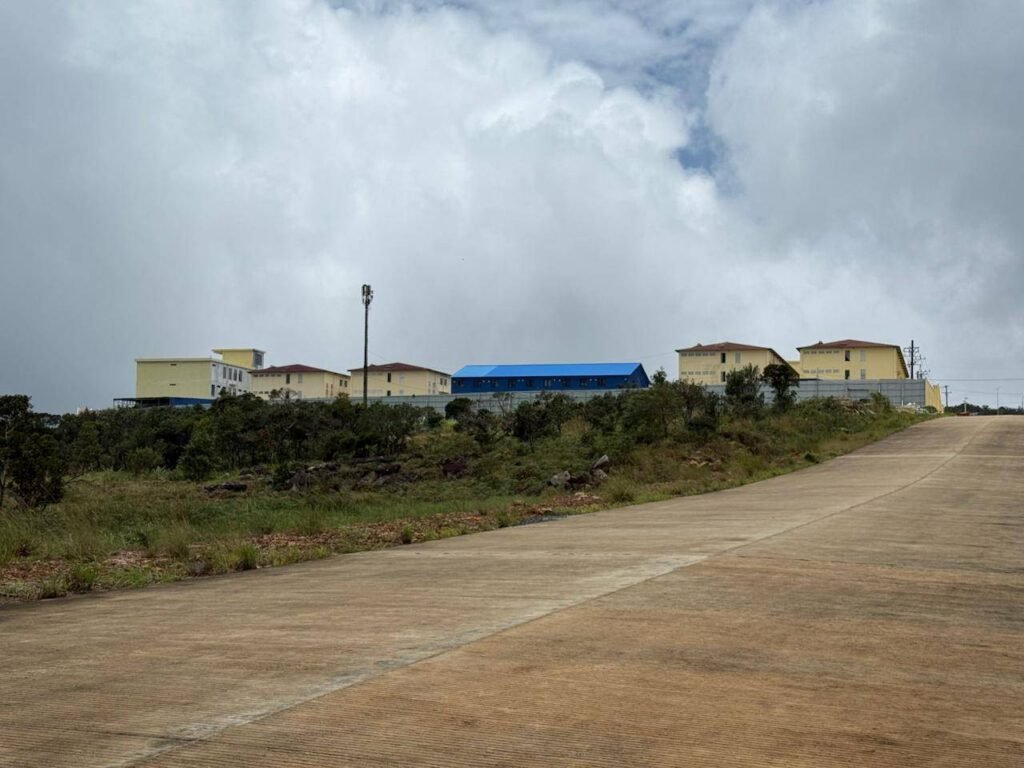
Preah Monivong Bokor National Park, or simply Bokor, was developed as a tourist area, with a winding mountain road leading up to a misty summit, French colonial sites and a casino resort.
Largely controlled by tycoon Sok Kong, the mountaintop saw a series of developments sprawl out around and beyond the Thansur Sokha Casino and Hotel in recent years. News media repeatedly found scam trafficking victims in the compounds, but Sok Kong’s companies denied knowledge of illicit activity.
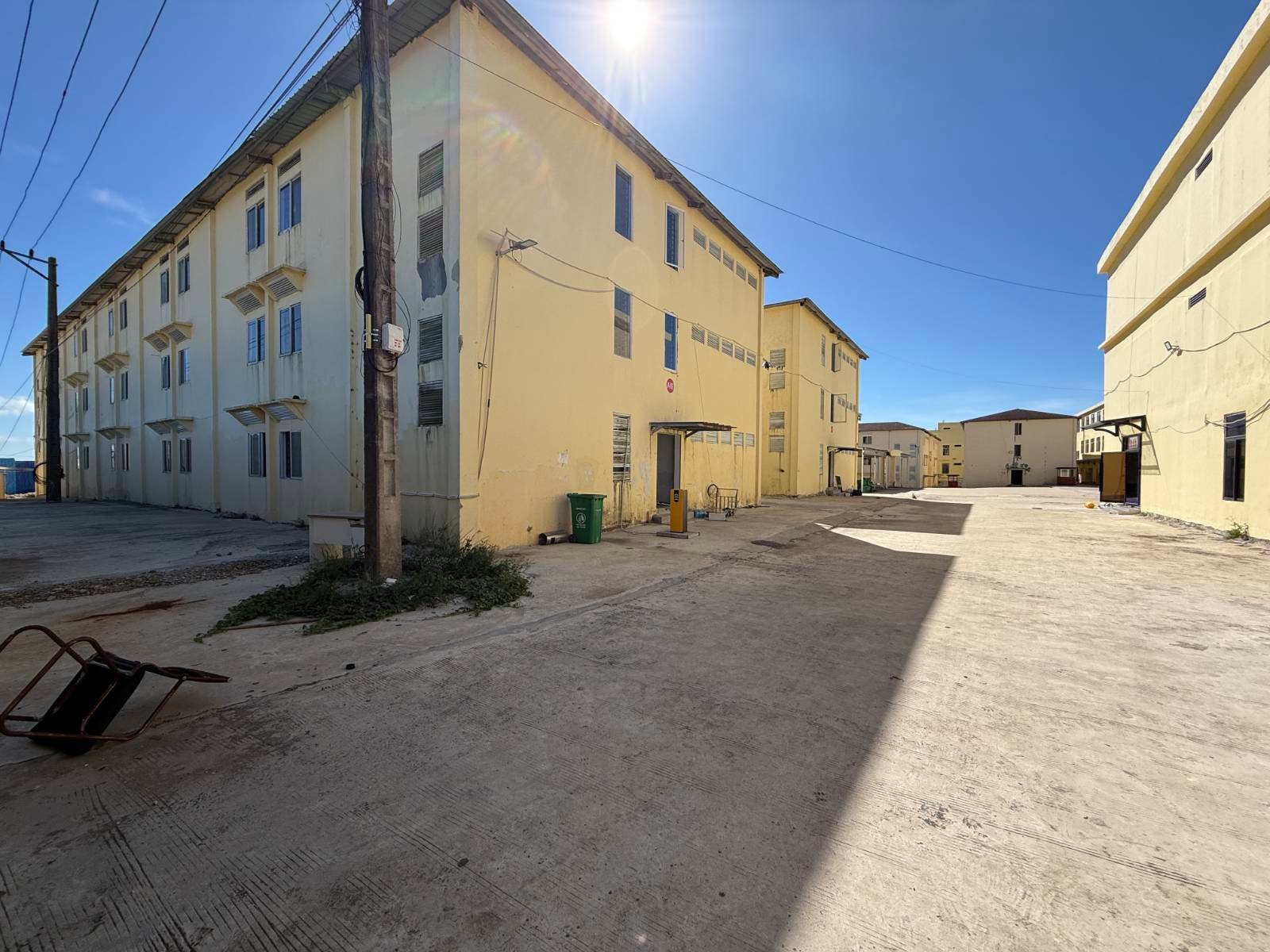
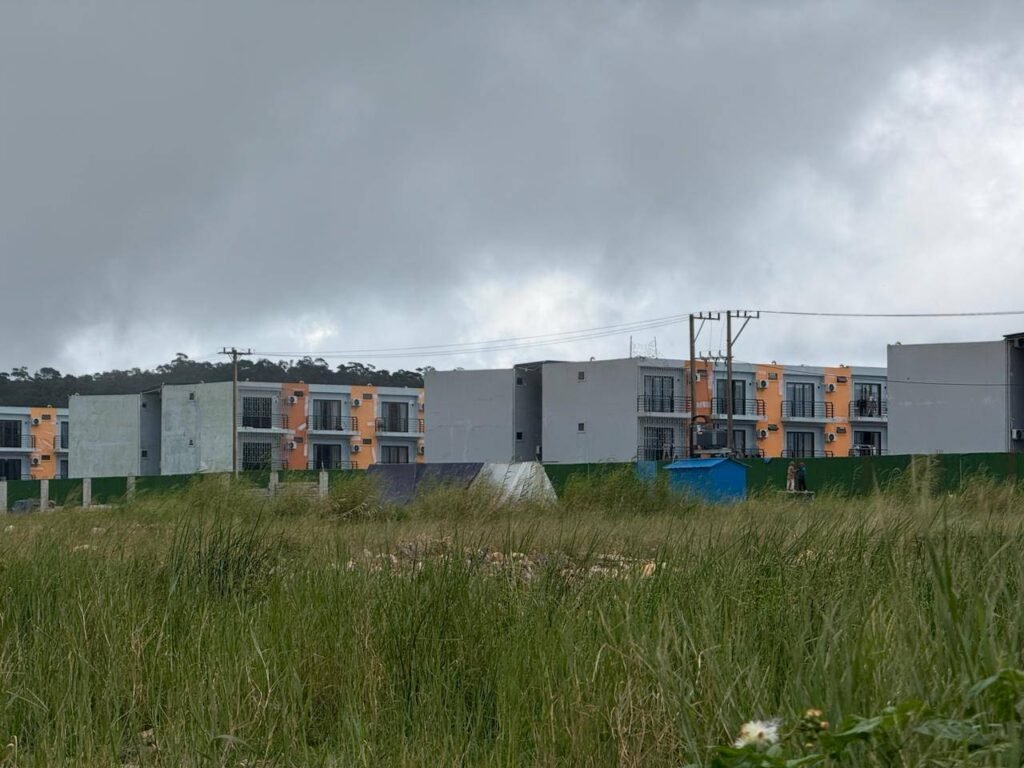
The Cyber Scam Monitor website lists four scam areas: Villa Crown, KP-01, Thansur Sokha Hotel and KP-02. Visiting reporters have also noted three other locations that had the hallmarks of scam compounds — tightly guarded by security in the past, and now abandoned or watched over by police since Cambodia’s scam crackdown.
Bo Ko San: The building is next to a pagoda, and a couple of police officers were seen guarding the building in May.
“Yellow building”: Two Chinese corpses were reportedly found in a rubbish bin here in August 2025. The building was empty and abandoned in May.
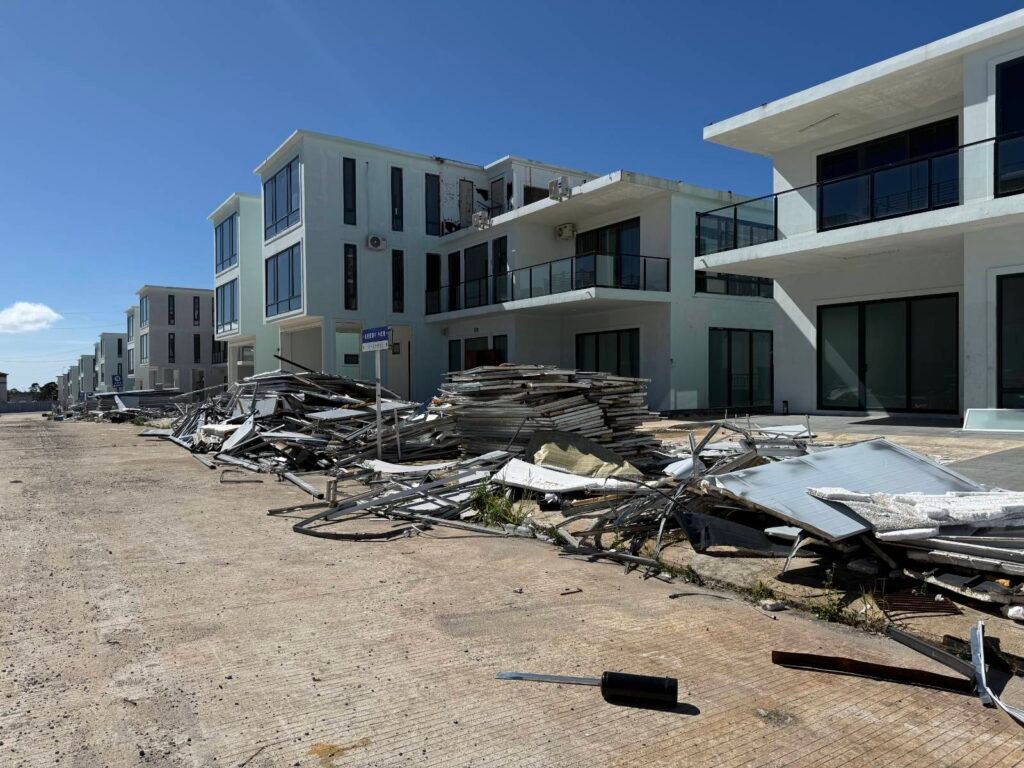
Cambodia Big Mountain Park: Workers were removing metal equipment from the buildings in May.
Local workers said there had been widespread knowledge about violence in the Bokor compounds.
One taxi driver, who declined to be named, said he had driven a Vietnamese group from the international border a year ago as they attempted to rescue a family member.
He took them to military police headquarters, but the group was asked to return to Vietnam, the driver said.
“They showed pictures of the person having been tortured and beaten up. … It was horrible. But we could not get help because the authorities did not want to help them out.”
A 40-year-old food and drink vendor who gave his name only as Heng said he used to deliver food into one of the compounds, and the people inside spoke in fear of torture and electric shocks.
A woman selling food on her motorbike could not give an answer when asked about the South Korean student’s corpse.
“There have been many bodies. Which body are you referring to? There have been many people who have died here, including security guards. You will not know about these incidents and we do not want to talk about this issue.”
A 24-year-old Ugandan man, who asked to not be named, told Mekong Independent he had ended up at Bokor after flying to Malaysia for a false job. After being driven to Thailand, a group of foreign workers from India, Zambia, Kenya and Pakistan had walked for hours through a forest under armed watch to an initial compound where they had their possessions taken and forced to work 15-hour days.
That compound had been raided, and he was transported to Bokor, he said.
“We worked 16 hours a day, received only two meals, and if we failed to meet targets, we were punished with electric shocks,” the man said. “Life became unbearable. We even planned to escape, but before we could act, the police raided the compound.”
The man was stuck in Cambodia, unable to return home.
“Now, I am in Cambodia with nothing. No job, no money, no shelter. Sometimes we sleep on the streets. Finding food is a daily struggle,” he said. “I regret everything. I wish I had never left Uganda. I only wanted to help my family, but instead, I ended up in suffering and fear.I just want a chance to live a normal life and take care of my family again.”
Korean student
According to Cambodian police reports, Park Min-ho’s corpse was found in a pickup truck at 2 a.m. on August 8 last year.
Kampot City Police stopped the Ford F-150 and searched it amid suspicions, the reports say.
After finding the body, police arrested two suspects, 35-year-old Chinese national Li Xingpeng, also known as You Fu; and 43-year-old Chinese national Zhu Renzhe, alias Chea Keu.
One suspect escaped, while questioning led police to search “Borey Crown,” leading to another arrest.
Police said the cause of death was heart attack caused by torture. Park Min-ho had multiple bruises on his body.
For two months, the case appears to have attracted little attention, with only a few reports published in Korean in August after the body was found.
The English edition of Korea JoongAng Daily seems to have first reported on the case on October 9, when Park Min-ho’s family spoke out about being unable to repatriate his body.
He was a student who left Korea in July 2025 to travel. About a week later, the family received a call from his phone number. The caller said Park Min-ho was being held captive and demanded $35,000, according to JoongAng Daily.
Three articles followed on October 11, six on October 12, and six more the following day. Fourteen related articles were published on JoongAng Daily on October 14. They included reports of dozens of missing Koreans in Cambodia.
Am Sam Ath, operations director at Cambodian human rights NGO Licadho, said the case generated an unusual amount of attention — especially when the South Korean president weighed in.
“After this issue, we have seen the [Cambodian] government open the campaign to prevent and crack down on online scams on a large scale — the [murder] case partly contributed to this.”
Jacob Sims, an independent analyst and adviser focused on transnational crime, said major external pressure compelled Cambodia to act.
“Of the countless unresolved violent deaths emanating from Cambodia’s illicit economy, very few ever provoke a meaningful investigation. This situation was different only because it provoked outrage from South Korea and destabilized the bilateral relationship.”
In a press conference on October 13, Yoo Jae-seong, the acting commissioner general of the National Police Agency, criticized Cambodian authorities. “Unlike other Southeast Asian countries, cooperation with Cambodian police has been particularly difficult.”
Three others
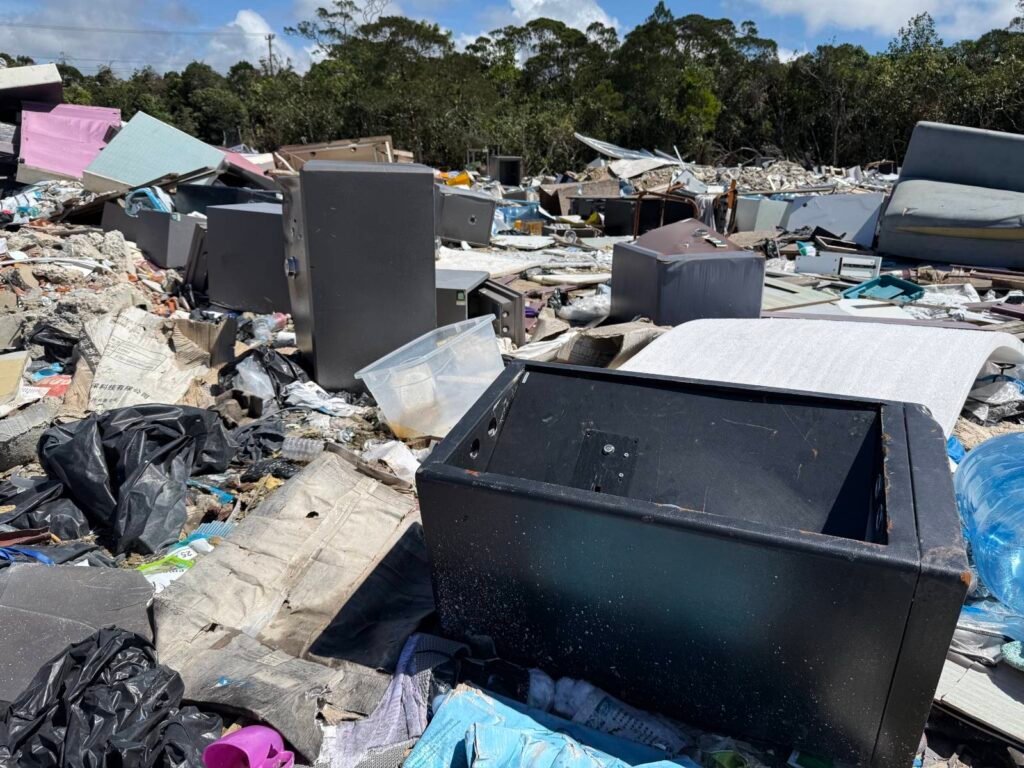
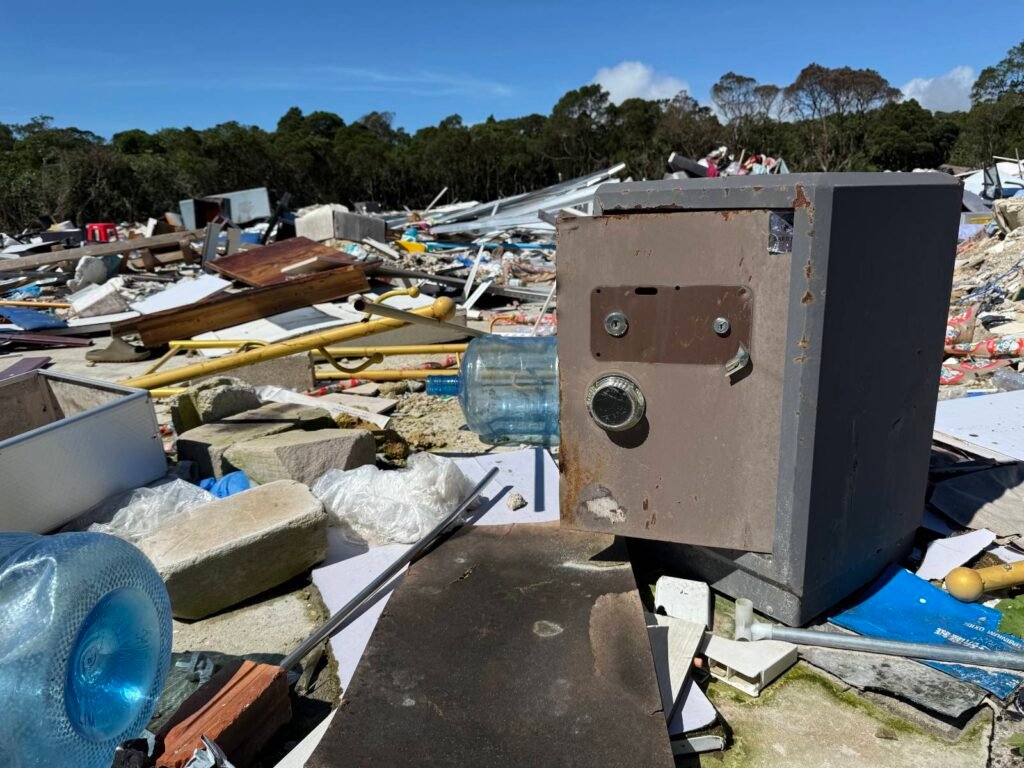
Outside Villa Crown in May, the compound linked to Park Min-ho’s killers, pillows, employment forms, dozens of safes, plastic chairs, a passport, banking receipts and more were dumped in a field.
It was part of an emptying out of Bokor compounds in the months following the South Korean murder.
A security guard at a nearby compound was asked about the case. He said he only knew of two Chinese nationals found dead in a rubbish bin around the same time.
“They had broken arms and legs and they stuffed them into the bins,” he said, declining to be named for risk of getting fired.
The guard’s colleague said the compound had been run by a “very brutal group,” and they had dug a tunnel to escape.
“Before, it was chaos,” he said, recalling a security guard stabbed to death by one of the workers.
The case of two bodies was reported in Chinese media, citing local reports, with graphic photos of the discovered corpses. They were reportedly found on August 6.
A post on the Information Ministry website from August 19 notes another murder.
At midnight on August 10, 2025, the Bokor police department found a Chinese man lying dead in a car. Police identified the location of the incident, which was a building used for online scams, the post says.
They arrested four suspects over torture.
Further published information about either case could not be found.
Kampot deputy governor and spokesperson Ung Chhay declined to comment.
Boeng Touk commune police chief Moun Mach referred questions to city police. Bokor city police chief Prab Samitt referred questions to provincial police. Provincial police chief Mao Chanmathurith hung up the phone.
Boeng Touk commune chief Sun Noun said murder cases were “beyond the capability of the commune.” Bokor city deputy governor Mok Chenda declined to comment.
Sok Kong’s Sokimex Investment Group declined to transfer a reporter to someone who could comment.
Other nearby murders include an assault against three Chinese nationals on March 26, 2025. The victims worked on Bokor mountain, but were attacked elsewhere in Chum Kiri district, a court statement says. One man died and the other two were injured.
Five Cambodian nationals were arrested and sentenced to 10 years in prison.
Srae Chaeng commune chief Kruy Sophea said it had been a chaotic scene. “The car reversed to crash into them. After that, they beat and assaulted them.”
Former Srae Chaeng commune police chief Kong Kob said the incident happened around 3 p.m.
“When I arrived at the scene, I saw [the victim’s] face and mouth full of blood, and I asked my subordinate to stay with him while I chased the suspects into the forest.”
The chase took several hours.
Jacob Sims, the independent analyst, said Bokor mountain had been part of a “horrific chapter in the story of Cambodia’s scam industry.”
“This is a microcosm of Cambodia’s broader scam economy — where local elite impunity reigns supreme and the staggering human toll continues to climb.”
‘Come visit’
This week, Kampot provincial police chief Mao Chanmathurith made a public call for tourists to return to the province.
The South Korean government had lowered travel restrictions, and recent police sweeps had removed 11 small operations that had come to Kampot after scattering from other provinces. They had been found within a week of arriving, he said.
“I would like to inform brothers and sisters, all citizens, local and international tourists that our Kampot province no longer has online scam activities,” he said. “So I appeal to brothers and sisters, all citizens and local and international tourists to come visit happily. … You can come to visit or invest or run other businesses widely.”
Senate president Hun Sen said in a speech on July 24 that Cambodia’s image had been damaged by online scam syndicates.
“This is a global issue. Like I always say, you have to bear responsibility for educating your people to not commit gambling.”
Hun Sen said Cambodia was a victim since the scam syndicates had been run by foreigners.
“We are the real victim. … We must find answers to how they can move into our country without paperwork, and through which country they came in,” he said.
Such questions extended to the South Korean student’s murder.
“I requested the South Korean ambassador to share information: Why did they select Cambodia as the place to kill the Korean student while its mastermind is in Thailand — what is really behind this!”
According Interior Ministry spokesperson Touch Sokhak, Cambodia cracked down on 488 scams locations from January 1 to June 25:
- 139 in Phnom Penh.
- 124 in Preah Sihanouk.
- 79 in Svay Rieng.
- 54 in Banteay Meanchey.
- 22 in Kampot.
- 12 in Kandal.
- 11 in Koh Kong.
- 9 in Mondulkiri.
- 9 in Pailin.
- 6 in Siem Reap.
- 4 in Battambang.
- 4 in Kratie.
- 4 in Tbong Khmum.
- 3 in Kampong Speu.
- 3 in Prey Veng.
- 2 in Oddar Meanchey.
- 2 in Kep.
- 1 in Kampong Cham.
Authorities arrested 20,926 people of 38 nationalities during that time for scam-related crimes. Some 16,127 were being processed for deportation, 2,637 were facing court cases, and 1,666 had been “educated” and allowed to return, Touch Sokhak said.
A press release issued after a Cabinet meeting in July gave somewhat different numbers.
Authorities had checked 28,512 locations for foreign nationals, and investigated and cracked down on 665 of them.
Some 268 court cases were being pursued involving 2,773 suspects, including 353 women and 313 Cambodian nationals, it said.
This article is published as Creative Commons.