
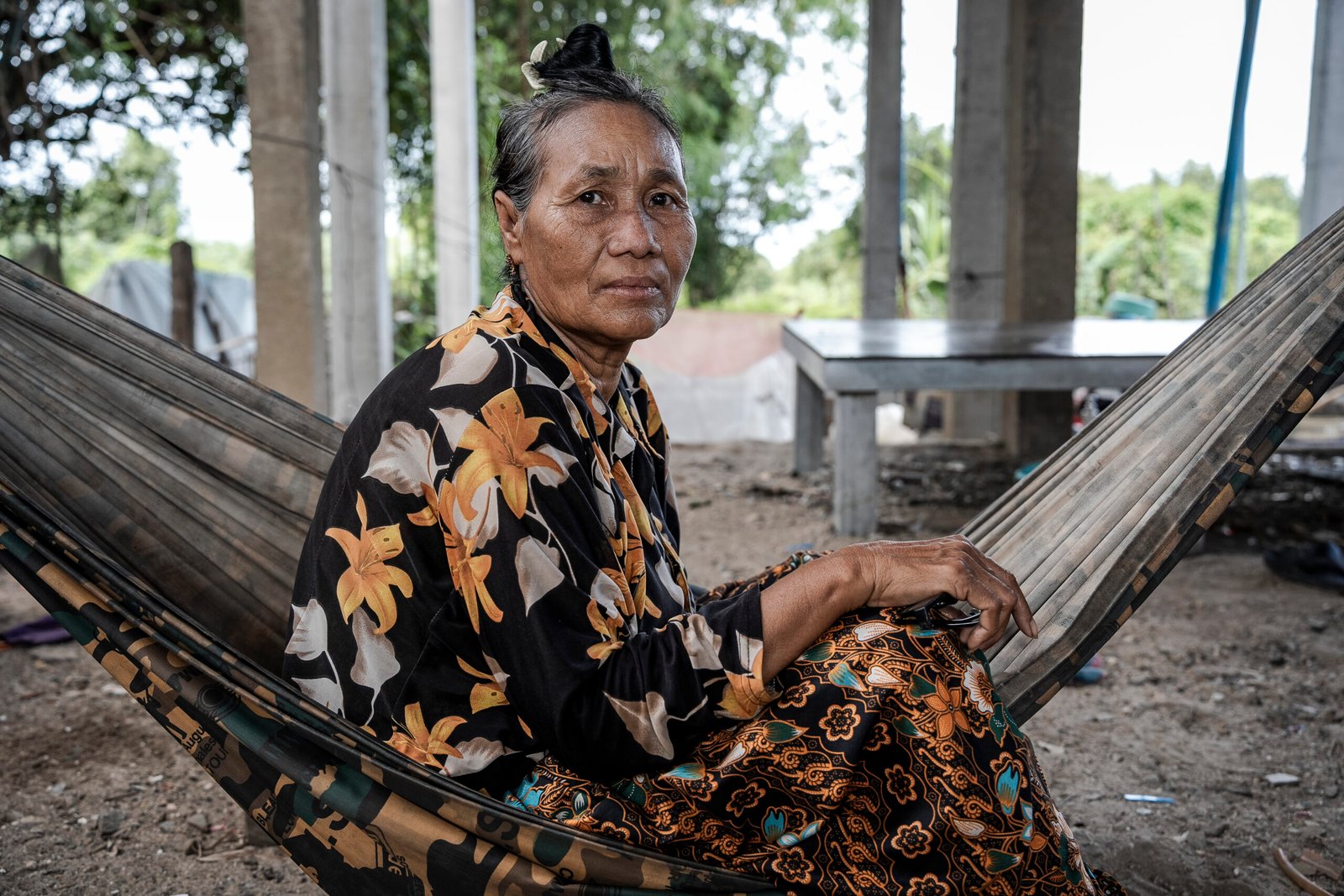
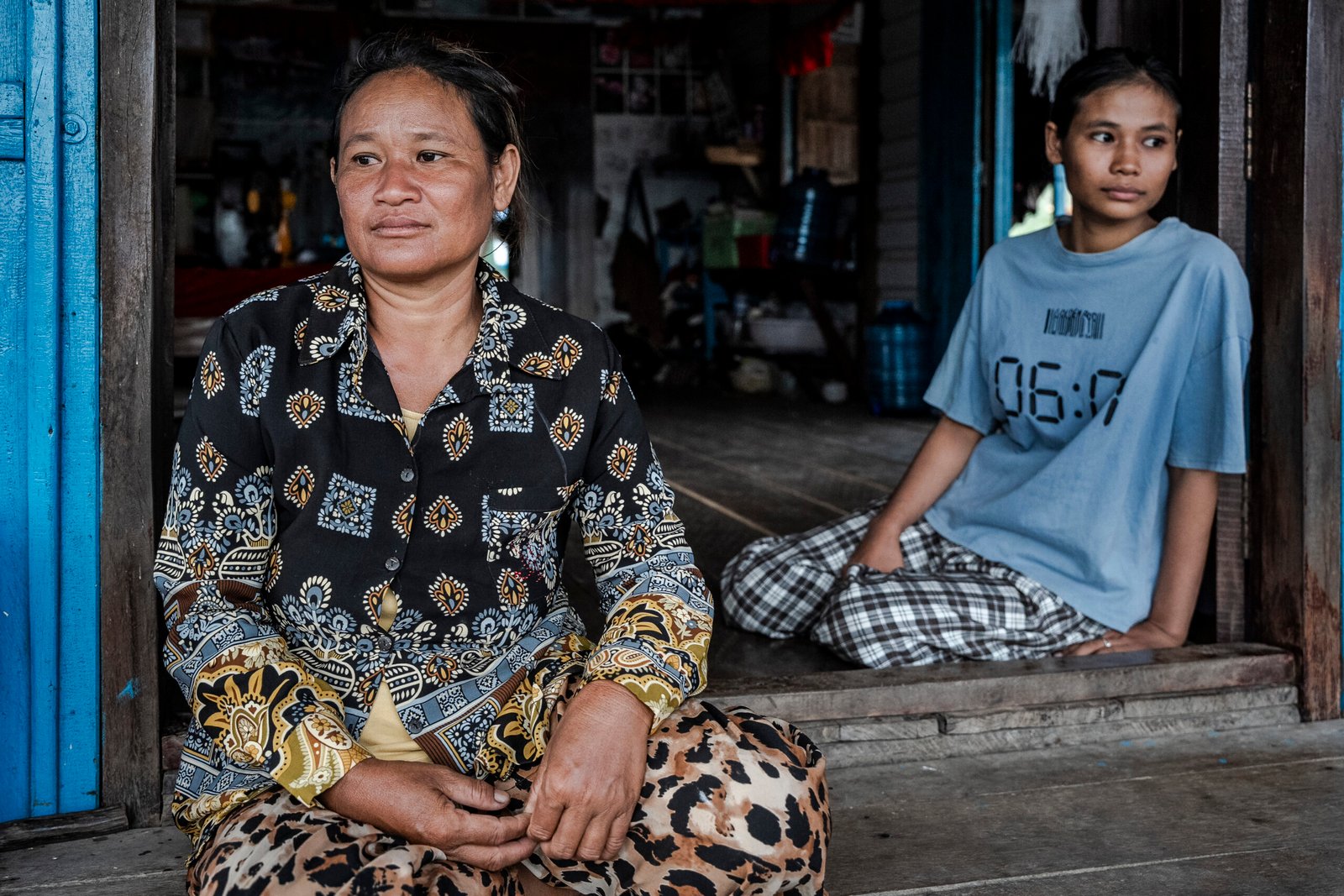
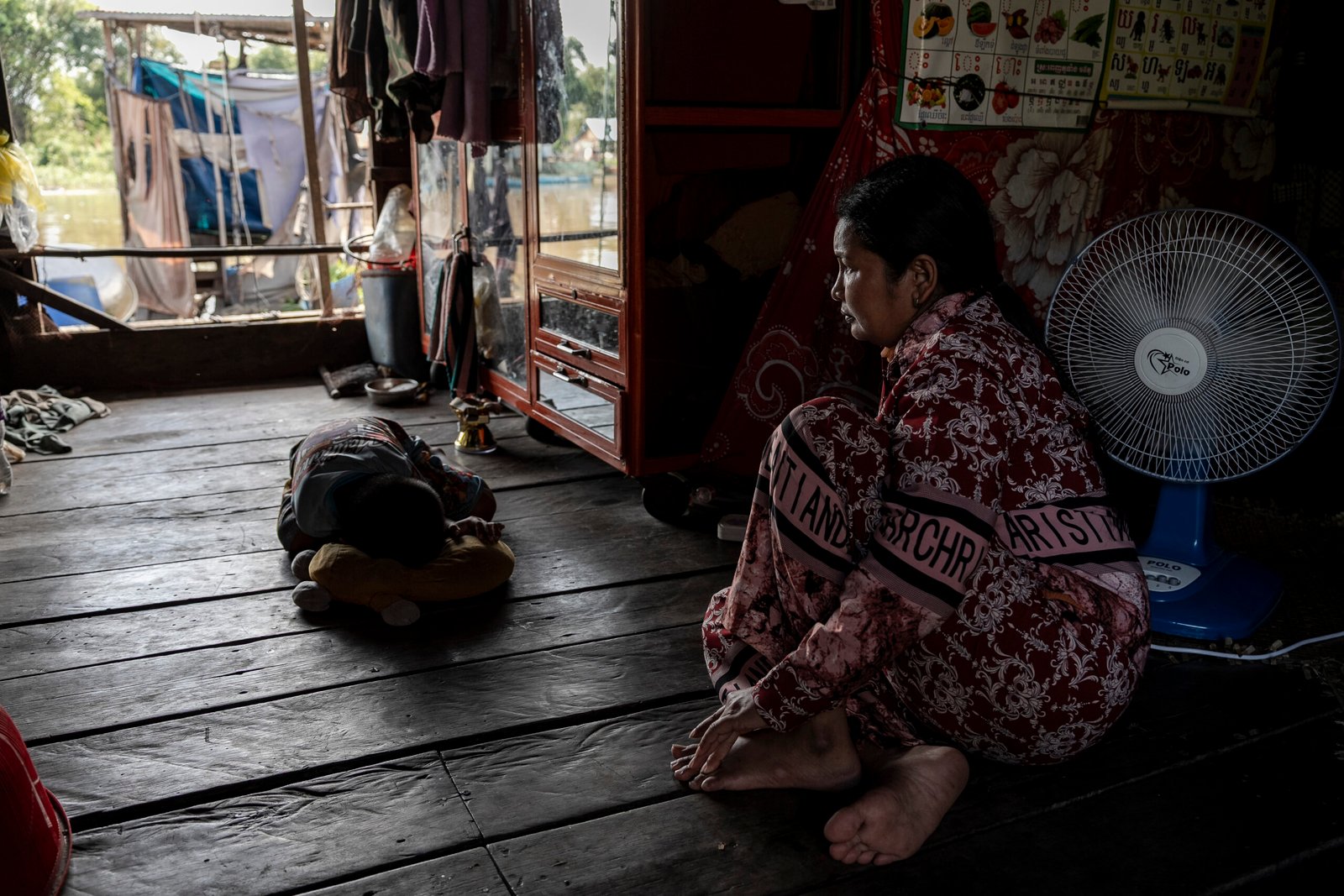
Siem Reap province, Cambodia — A 63-year-old woman watched her two grandchildren play on dry ground beneath her high-stilted house in mid-July.
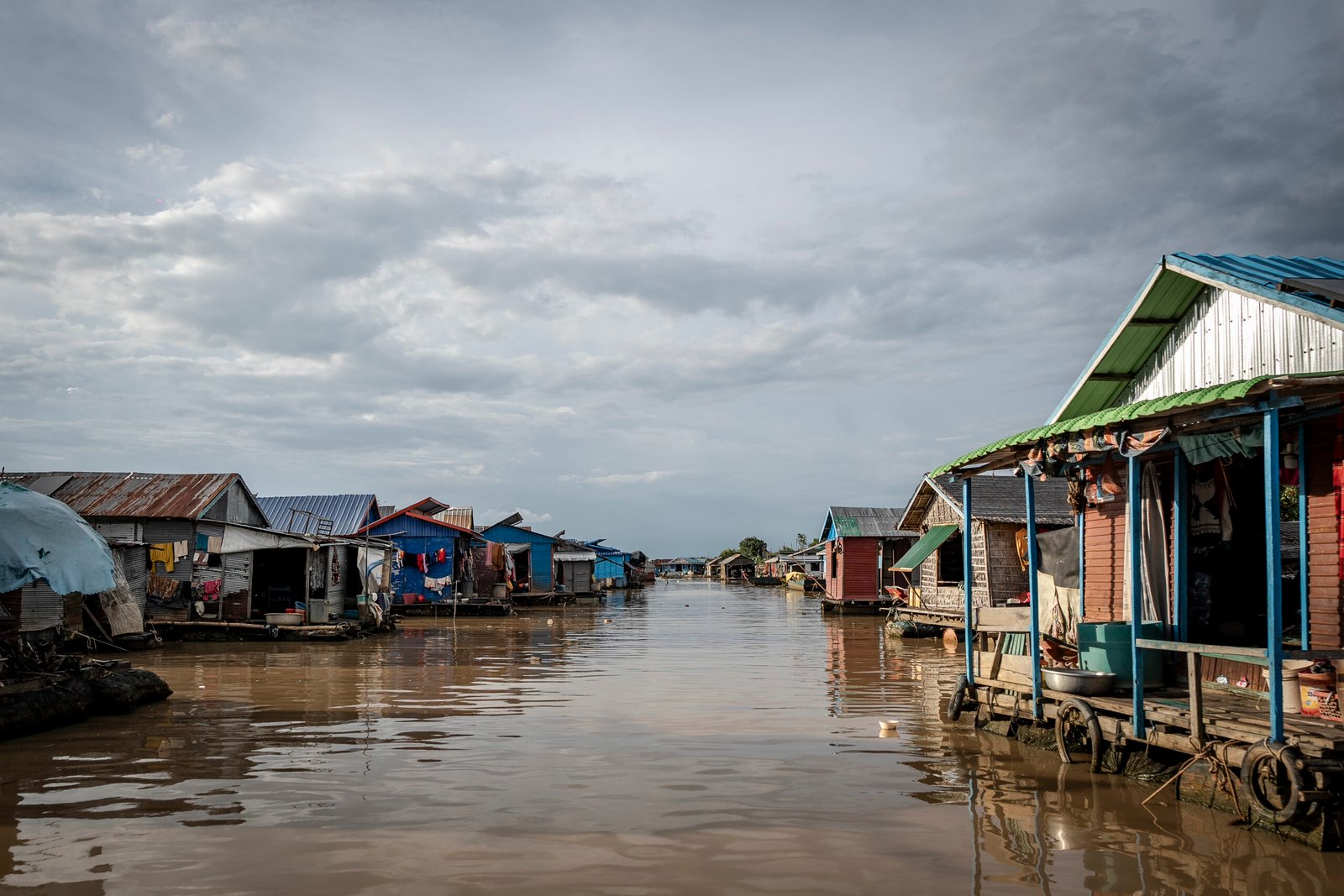
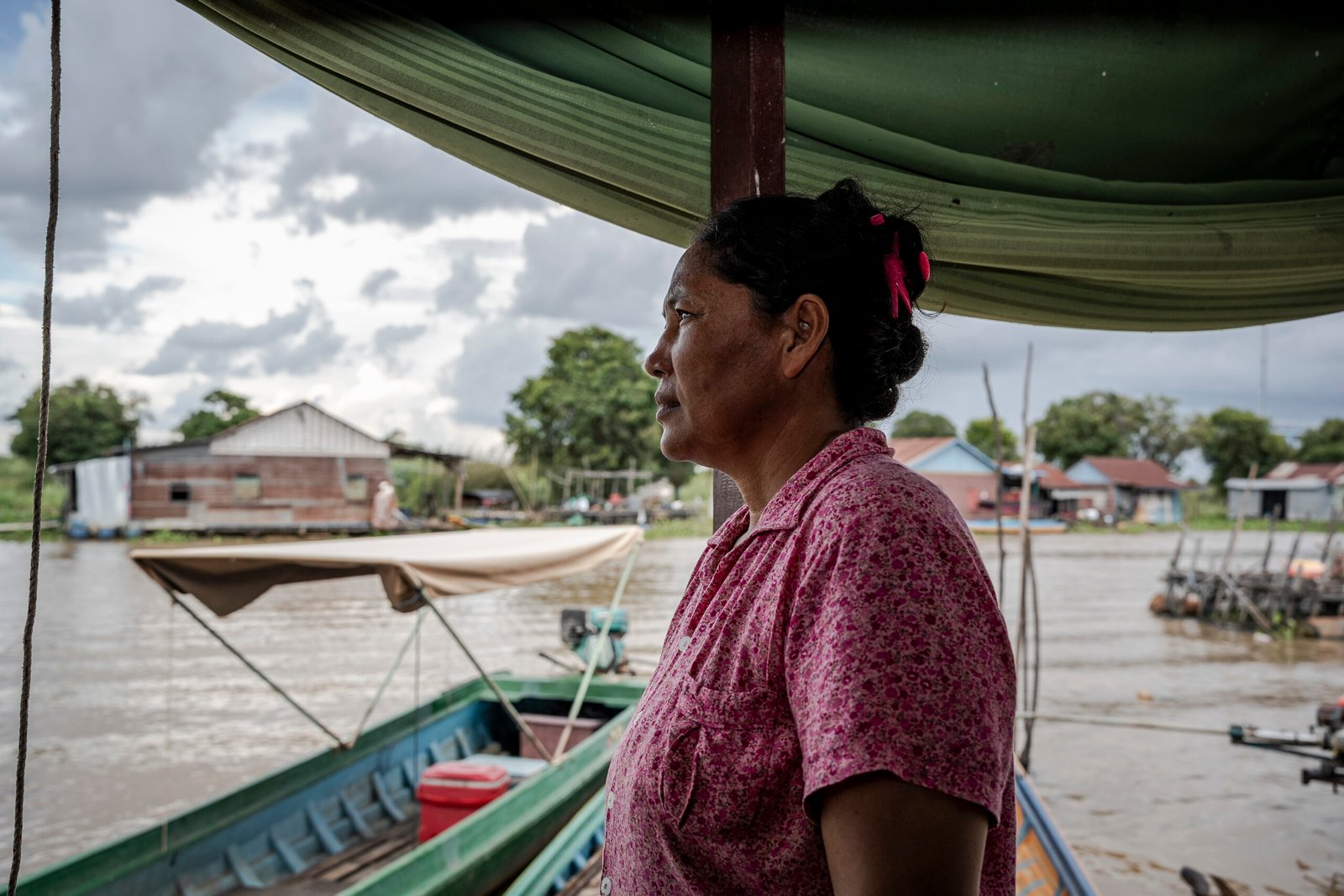
By this time of the year, Pou village in Siem Reap province is normally flooded as the nearby Tonle Sap lake rises and expands with the monsoon. Stilted houses would be perched over the water, while floating houses drift on the bloated river.
When Sok Rina was young, the water would begin rising in June, flooding the riverbank and surrounding forests by July. The floodwaters would become rich with fish, supporting the livelihoods of villages on the water.
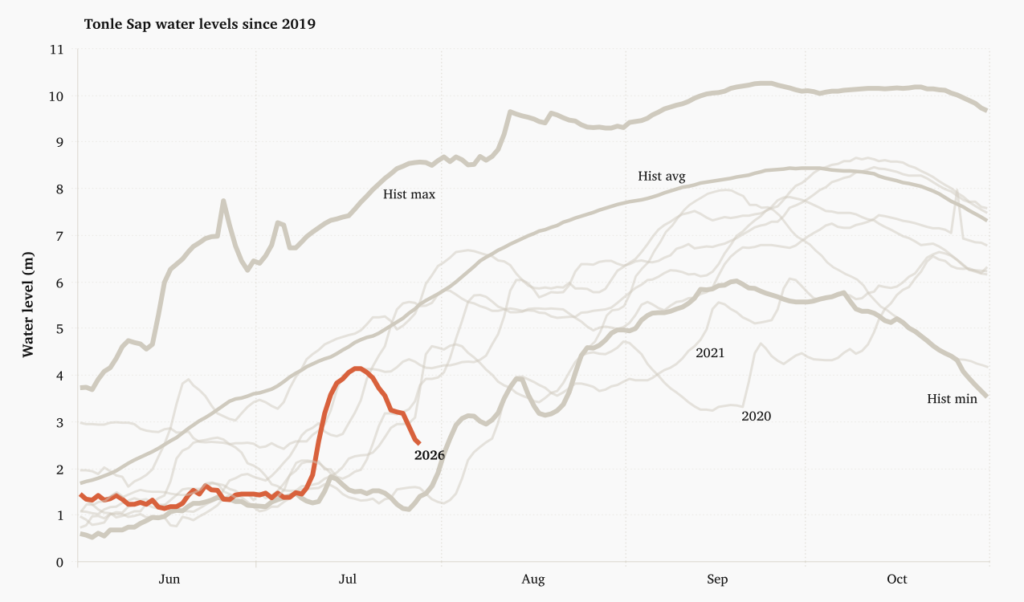
Recently, however, the Tonle Sap has been low, year after year.
Researchers are seeing a change in Cambodian weather patterns as climate change takes hold across the world. The traditional monsoon season in June and July appears to be weakening, even as intense easterly storms return in September and October.
At the same time as weather patterns are changing, more than 200 large dams are planned, completed or under construction in the lower Mekong basin. Together, climate change and hydropower dams are restricting the flow of water into the Tonle Sap.
And without water, there’s no fish. In Siem Reap province, residents of Pou, Me Chrey and Chong Khneas villages say they are facing severe challenges to their survival.
Collapsing fisheries
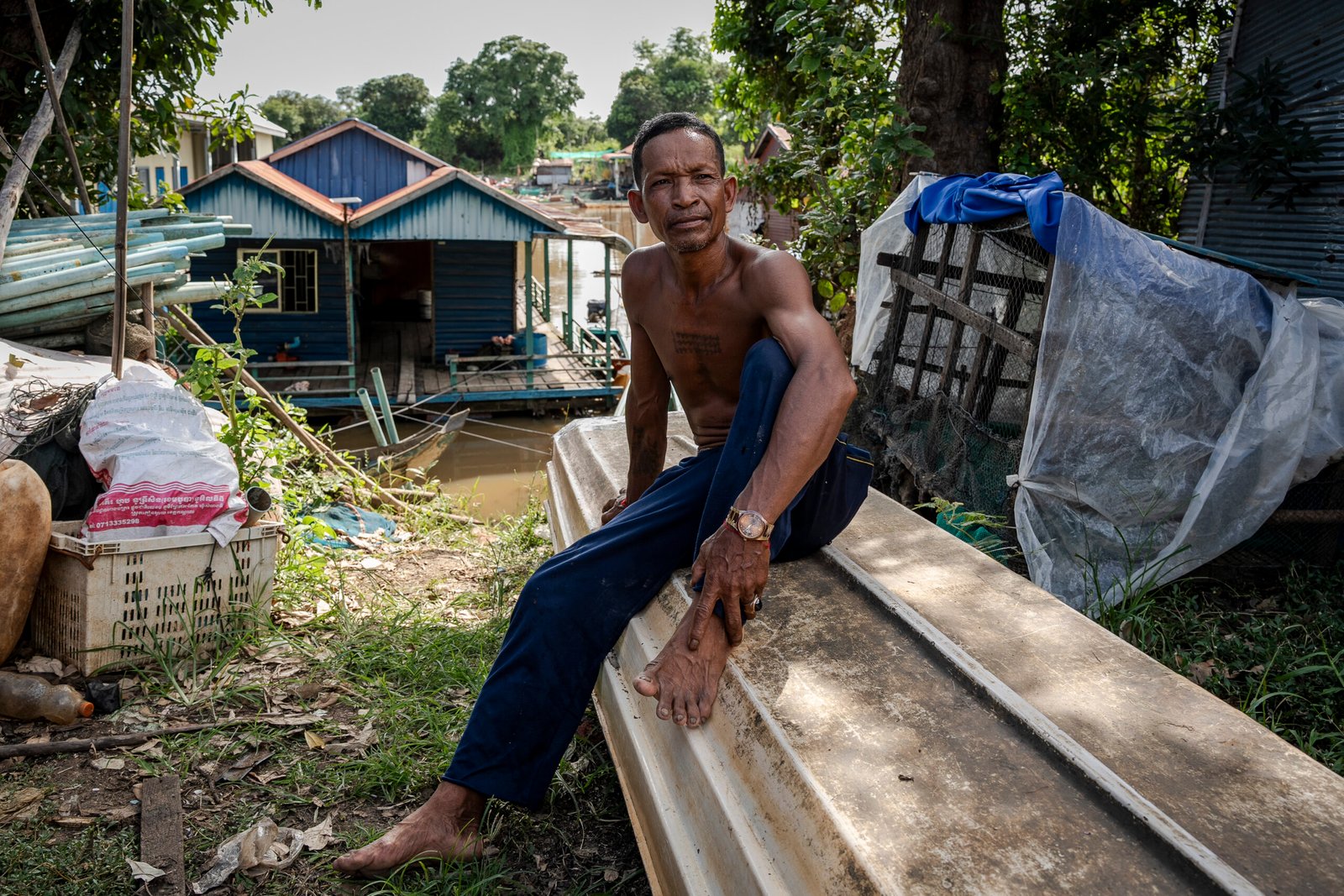
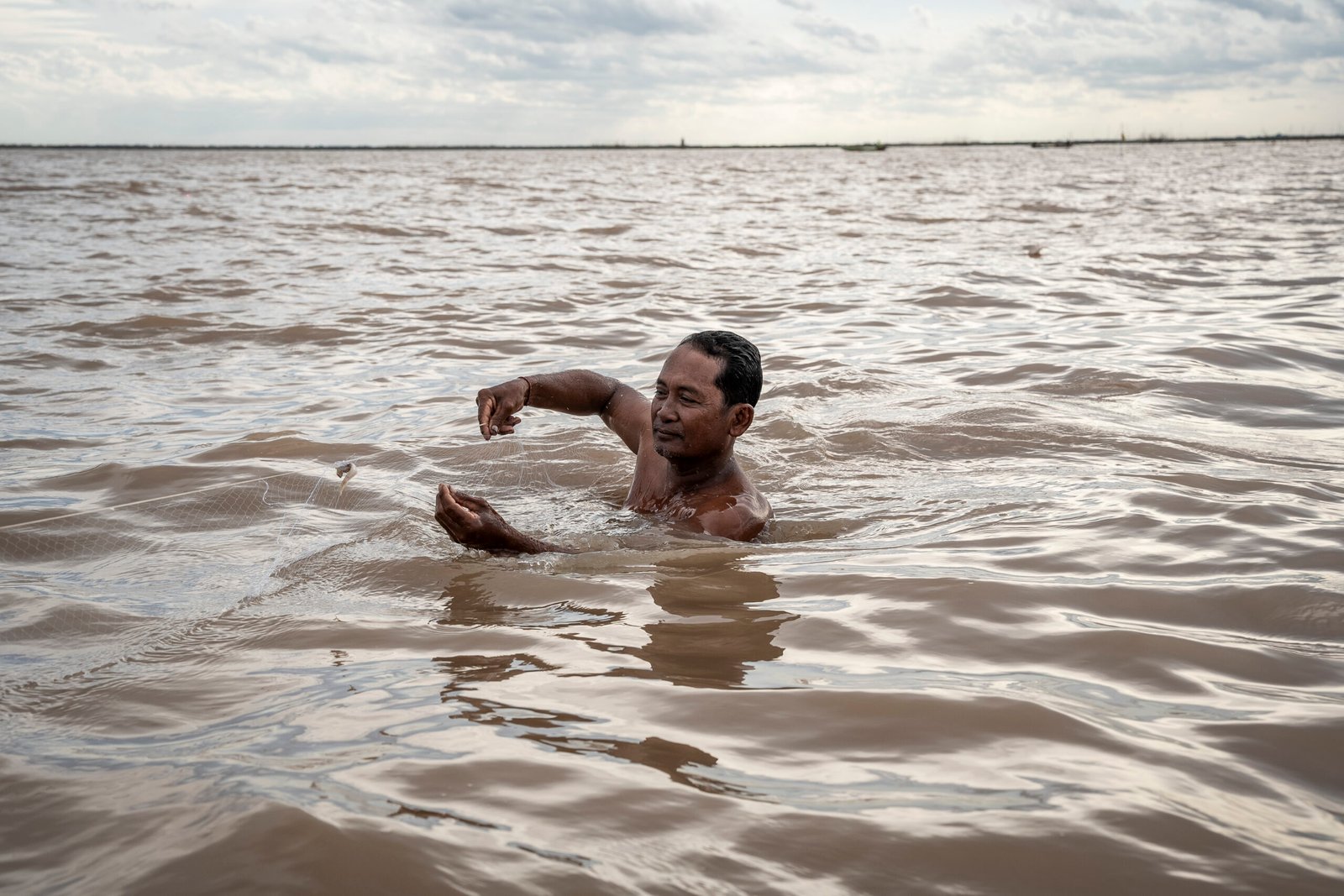
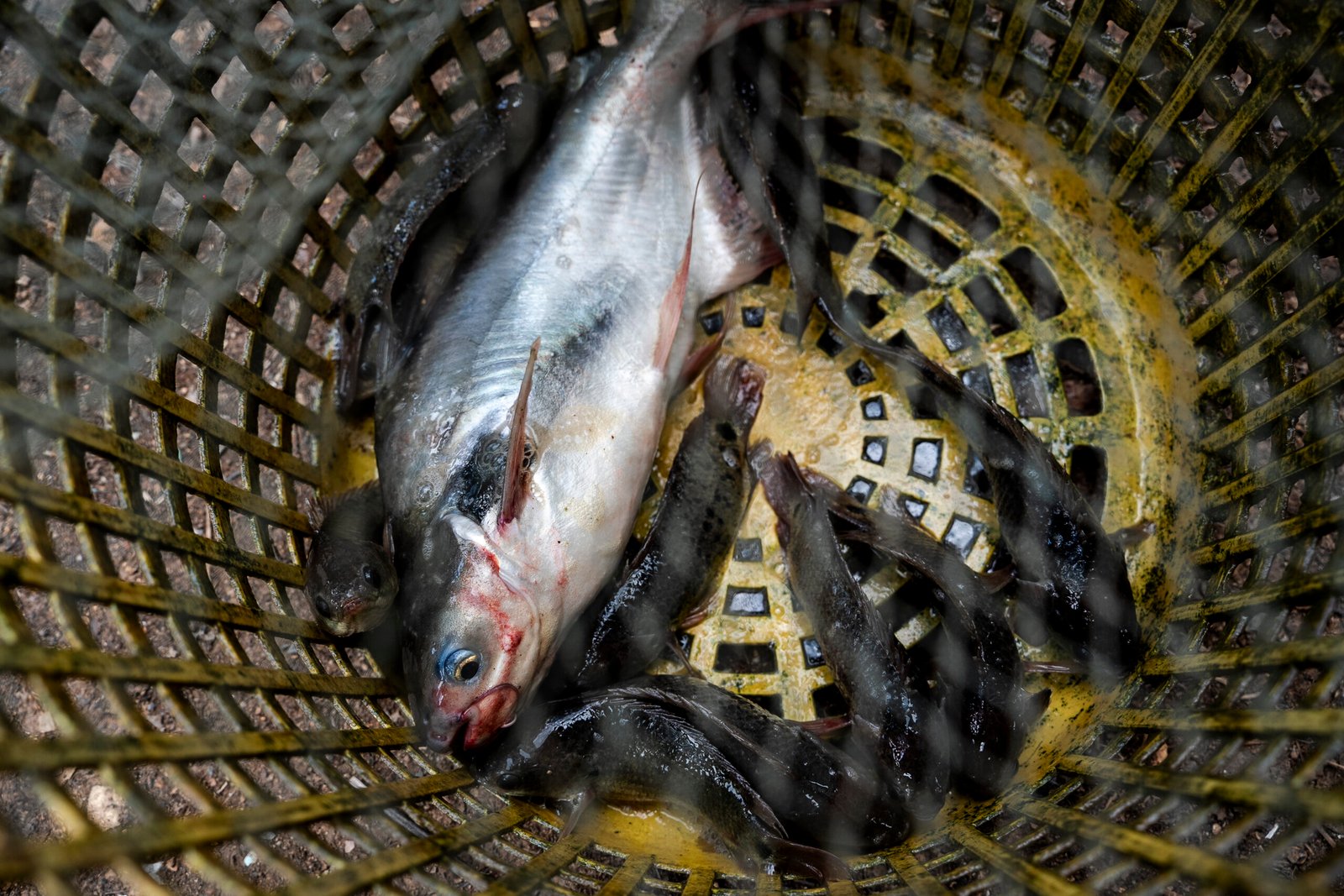
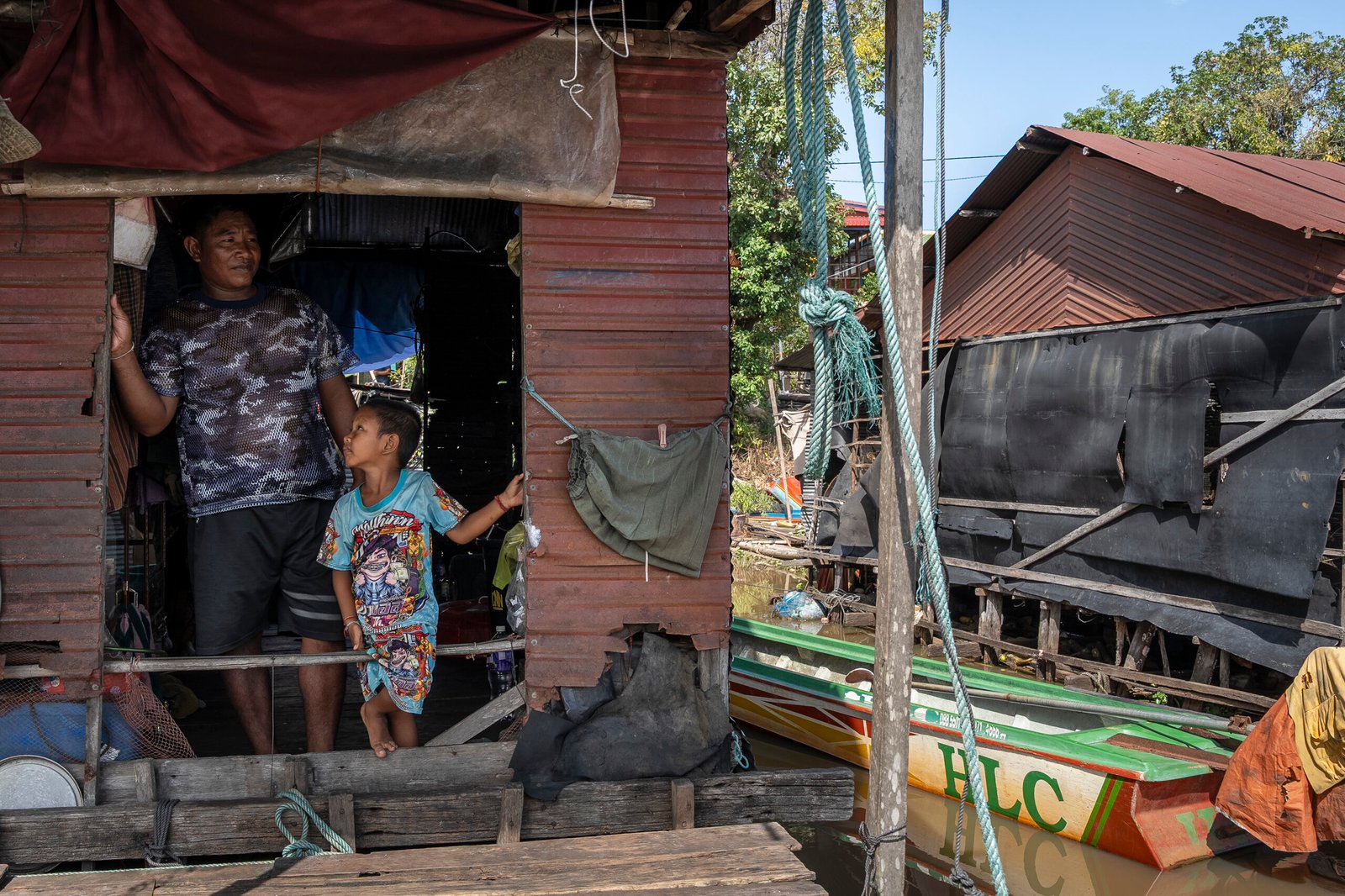
Cheim Oeurn, 40, caught only about 1 kilogram of fish one July morning. It was all small climbing perch and moonlight gourami, which have almost no market value.
The Sangkae river is too low for fish to spawn in the flooded forests around Tonle Sap, he said. Rising water temperatures in shallow areas also threaten to destroy fish eggs.
“If there is a lot of water, there will be more fish; as the water rises, fish will breed. Less water means fewer fish,” Cheim Oeurn said.
In the past, fishers in Pou village could earn 50,000 to 100,000 riel ($12.5 to $25) daily with a 50- to 60-kg catch. Today, they often return with nothing of value.
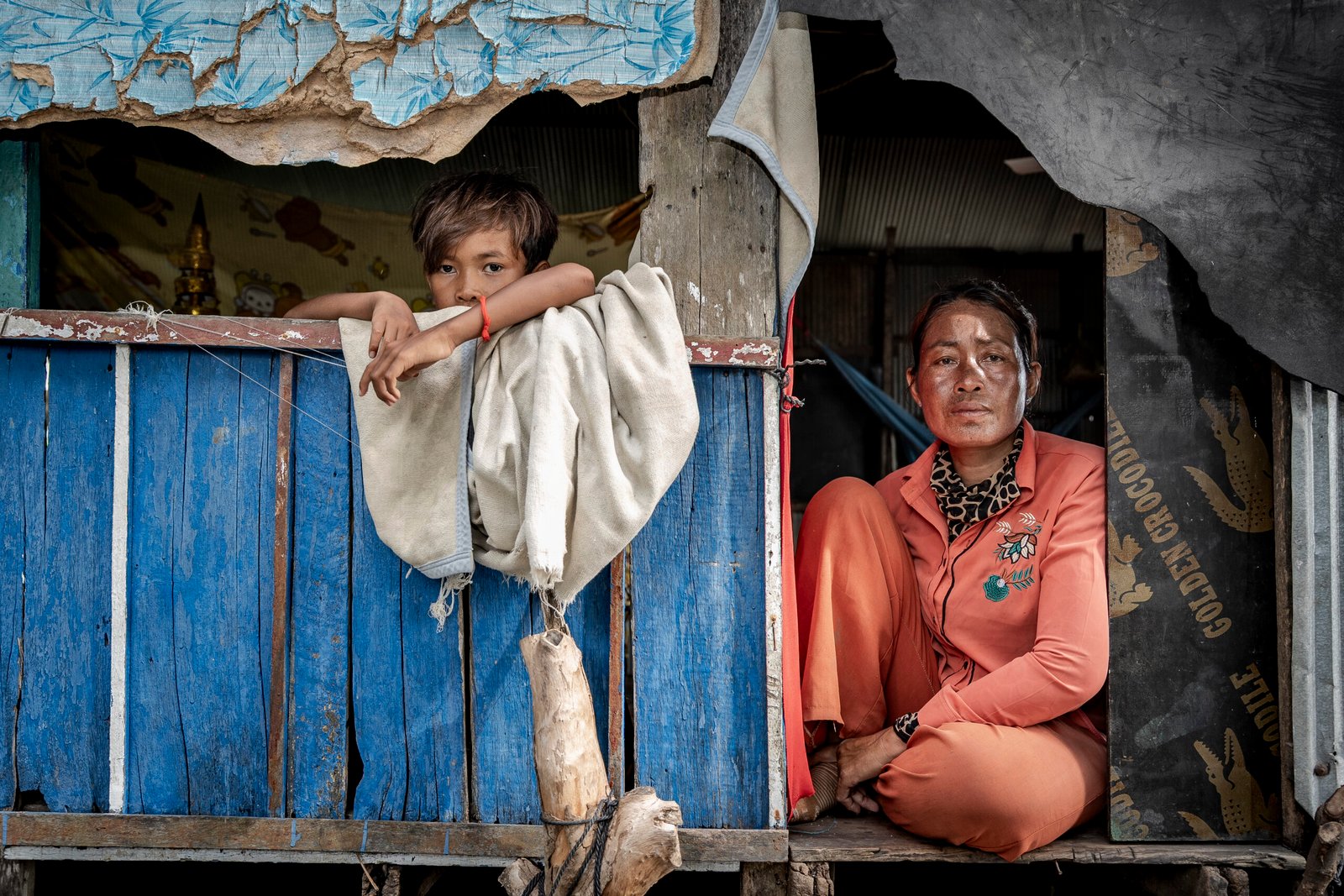
In Chong Khneas village, Choum Chreb said her son had caught exactly five fish after fishing from 4 a.m. on July 23.
“He hasn’t caught any in the past three days, and today’s five fish aren’t even enough to cover the cost of gasoline,” Choum Chreb said.
The family has lived and fished on the Tonle Sap for 25 years, and this life is all they have.
“We lack land to move to,” she said. “We just earn enough to survive on the water.”
The Tonle Sap is Southeast Asia’s largest freshwater lake, and vital to millions of livelihoods. It is connected to the Mekong river, and its flow famously reverses direction twice a year.
In the wet season, the Mekong rises and pushes water into the Tonle Sap. The lake expands and floods nearby forests — creating a unique ecosystem around the lake that supports fish spawning and local livelihoods. In the dry season, the lake drains back into a lowered Mekong river.
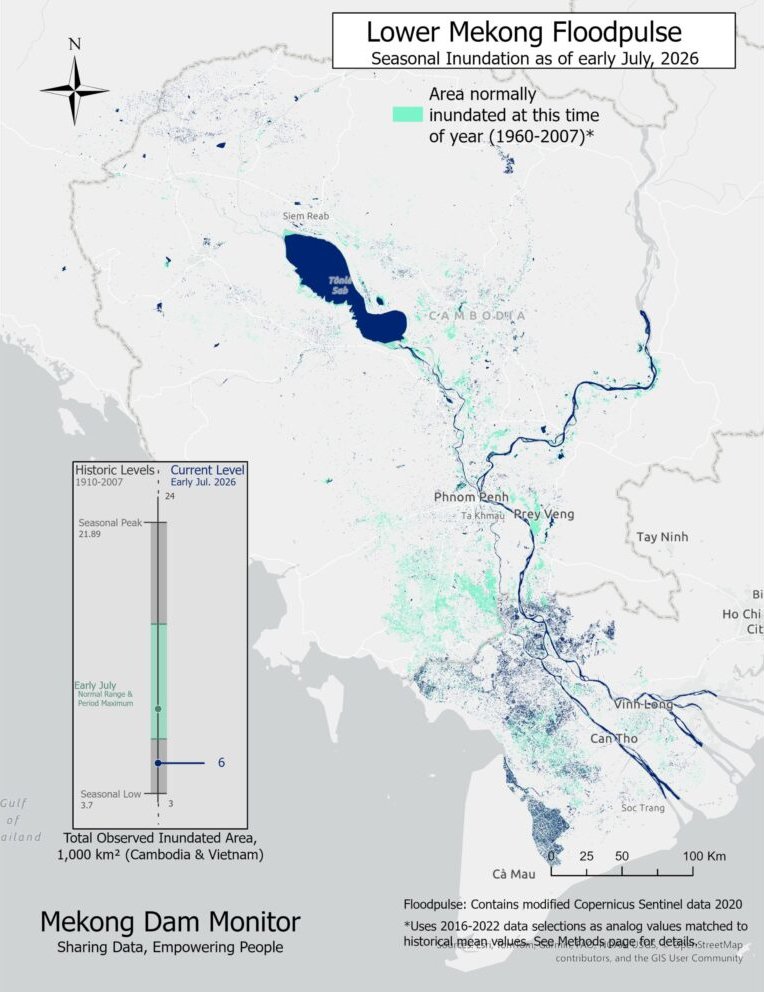
“The reversal is the key driver of the Mekong’s robust fisheries, making the Tonle Sap the largest inland fishery in the world,” says the Stimson Center’s Mekong Dam Monitor.
Two factors
The center has observed stark changes to the region’s river systems, and this year is no different: The Tonle Sap’s reversal started about six weeks late, and the flow is much weaker than average for this time of year. The reverse flow was measured at 4 billion cubic meters, below the average of 11 billion.
Both climate change and hydropower developments have combined to disrupt Tonle Sap water levels and livelihoods.
For the past five years, June and July have had less rain than normal, said Stimson Center Southeast Asia program director Brian Eyler.
“It seems like the traditional monsoon pattern that builds at the beginning of the wet season is weakening in strength,” he said.
At the same time, some recent September and October storms had been “extremely intense,” he said, explaining that the Mekong basin’s wet season was made up of two weather patterns: the early monsoon and the later easterly storms that come from the Pacific Ocean.
It’s during the early rains, however, that hydropower dams fill up their reservoirs. They produce electricity during the dry season by releasing stored-up water, and by the start of the wet season they are typically near-depleted.
“This all makes the expansion of the Tonle Sap Lake get off to a very weak start,” Brian Eyler said.
This year was a case in point. “The Tonle Sap has hardly expanded and this will have a negative effect on fisheries. Just a few weeks ago, parts of the Mekong were recording all-time lows for that time of year.”
Both climate change and dam impacts play a role, but in the immediate term “there is opportunity to rethink the way upstream dams are operated,” he said, suggesting that dams could wait to fully fill up their reservoirs until late in the wet season when there is plenty of rain.
Data from the Mekong River Commission show that water levels on the Tonle Sap river in Prek Kdam, southeast of the lake, have been largely below the historical average during the early wet season for eight years in a row.
Damaged livelihoods
In Siem Reap’s Me Chrey village, Pon Niem said her first daughter dropped out of school in grade 12 and has worked at a garment factory in Kampong Speu province since 2025. Her second son dropped out in grade 11 to start working at the same factory this year. They are now 21 and 19.
“They see the family’s hardships,” the 43-year-old said. “They told their two younger sisters to continue their school, not to worry.”
Preap Nakrei, 40, said her eldest daughter left school in grade eight to work in a restaurant in Siem Reap. Now 18, she works at a cigarette factory in Phnom Penh to help repay family debts.
While lower secondary school is available in the village, upper secondary students from ninth grade must relocate to the district center — a financial burden few families can afford.
“If we could earn 30,000 riel a day, we could support our children’s education,” she said, hoping her younger children will complete high school.
Declining catches have pushed many families into severe debt. Preap Nakrei’s family owes 10 million riel (about $2,500) to a private lender for fishing nets and 3 million riel ($750) to the microfinance institution AMK requiring a monthly interest payment of 45,000 riel ($11.25).
“Under our contract, I was supposed to repay AMK 1.5 million in July, but I could not. I asked them to delay repayment until December, and they agreed,” she said.
Sorn Chavy, 28, a resident of Pou village, faces a similar struggle. Her family owes 2 million riel ($500) to microfinance institution Chamroeun and 3 million riel to AMK, while her husband struggles to catch fish.
In addition to microfinance loans, she owes a private lender approximately 17 million riel ($4,250) for fishing nets and fish-raising expenses. However, she has decided not to start raising fish yet because the water remains too low, which could kill the fish.
“It’s hard for us to move out of this area; I’m three months pregnant and my first son is just 6 years old,” Sorn Chavy said. “Since birth, we have known only fishing.”
A recent study by researchers from the Cambodia Development Resource Institute and Royal University of Phnom Penh observed wide-ranging impacts on communities around the Tonle Sap.
The study highlights a 50% drop in fish production between 2018 and 2020, from 291,260 to 144,635 tons, due to reduced water volumes and shorter flood durations.
“Fishing is no longer reliable, and fishing communities are shifting into farming by clearing the flooded forest areas,” the study says. Meanwhile, more young people are migrating to towns and overseas for employment.
It also notes physical changes in traditional floating villages: “Some floating communities are no longer floating.”
Meanwhile, other communities which split their time on land and water “stay on land longer than on water throughout the year.”
Marks of change
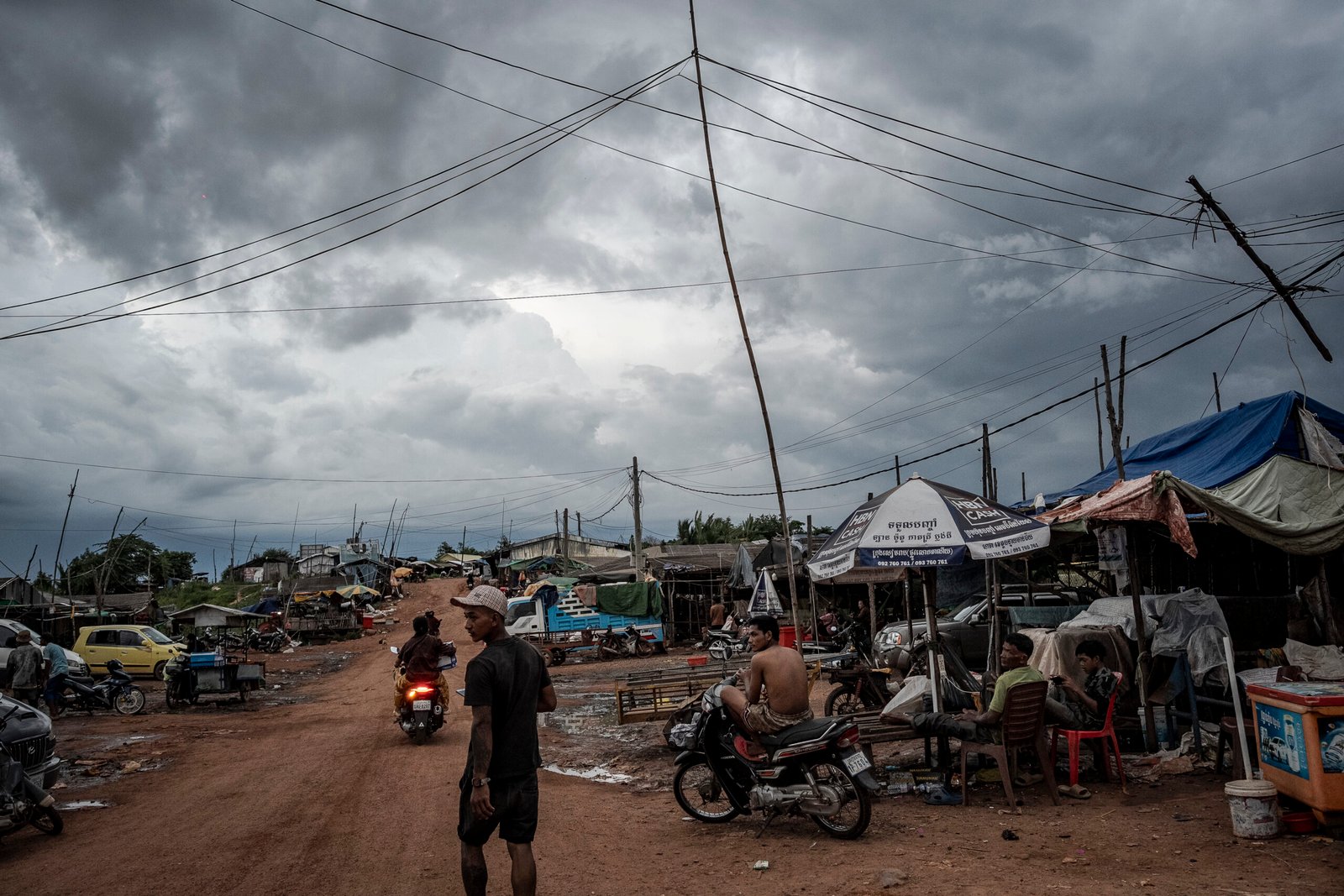
To reach Pou village, one travels down from the Puok district town along a red gravel road pocked with potholes, passing rice fields and dense forests.
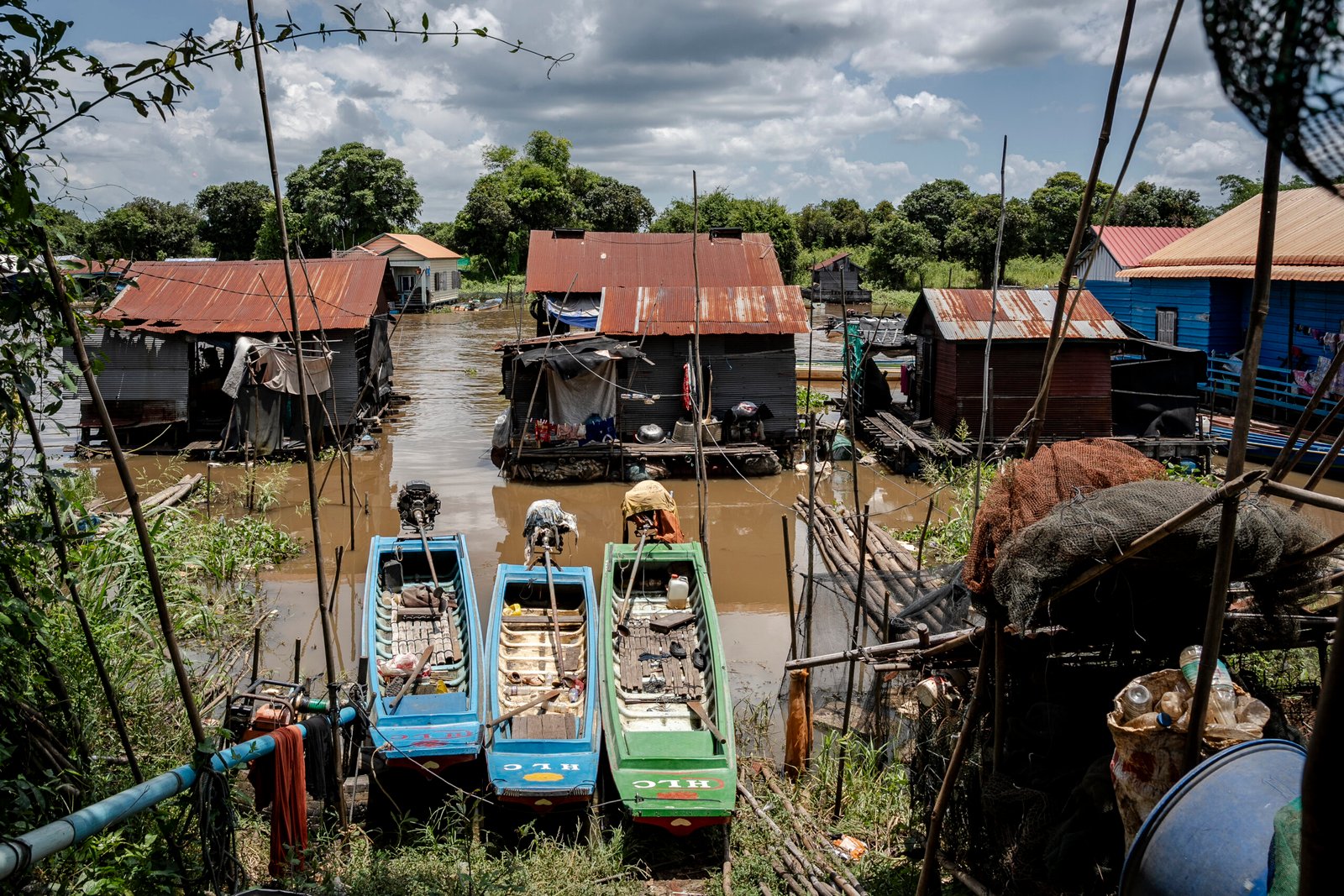
The village reveals the changing climate at a glance: Traditional homes stand high on 5-meter wooden stilts marked by faint waterlines from past floods, but in mid-July the ground beneath them remained dry silt.
Along the Sangkae river, floating houses built on bamboo rafts and empty gasoline drums sat grounded on riverbanks, marooned above water levels that continue to arrive later and lower over time.
Sok Rina said her children — the parents of the grandchildren she kept an eye on — had moved away for work.
Her eldest son, 32, married in 2020 and moved with his wife to Sihanoukville last year. His wife works at a garment factory while he works at a plastic factory. Two other children moved to Sihanoukville for work in tourism, and another to Phnom Penh to work as a swiftlet nest cleaner.
“They dropped out of school because they witnessed our impoverished living conditions,” Sok Rina said. “They used to live with us, and fished, but they couldn’t earn a living. So they migrated for work.”
Living in the village was only getting harder. Last year, the area didn’t flood until August, and the floodwaters stayed just a few weeks until September.
“I’m not sure about this year,” she said.
This article’s text is published as Creative Commons. For questions about licensing the photos, please contact Roun.