
This story is produced by The Xylom, a nonprofit news outlet covering global health and environmental disparities. Subscribe to The Xylom’s newsletter here.
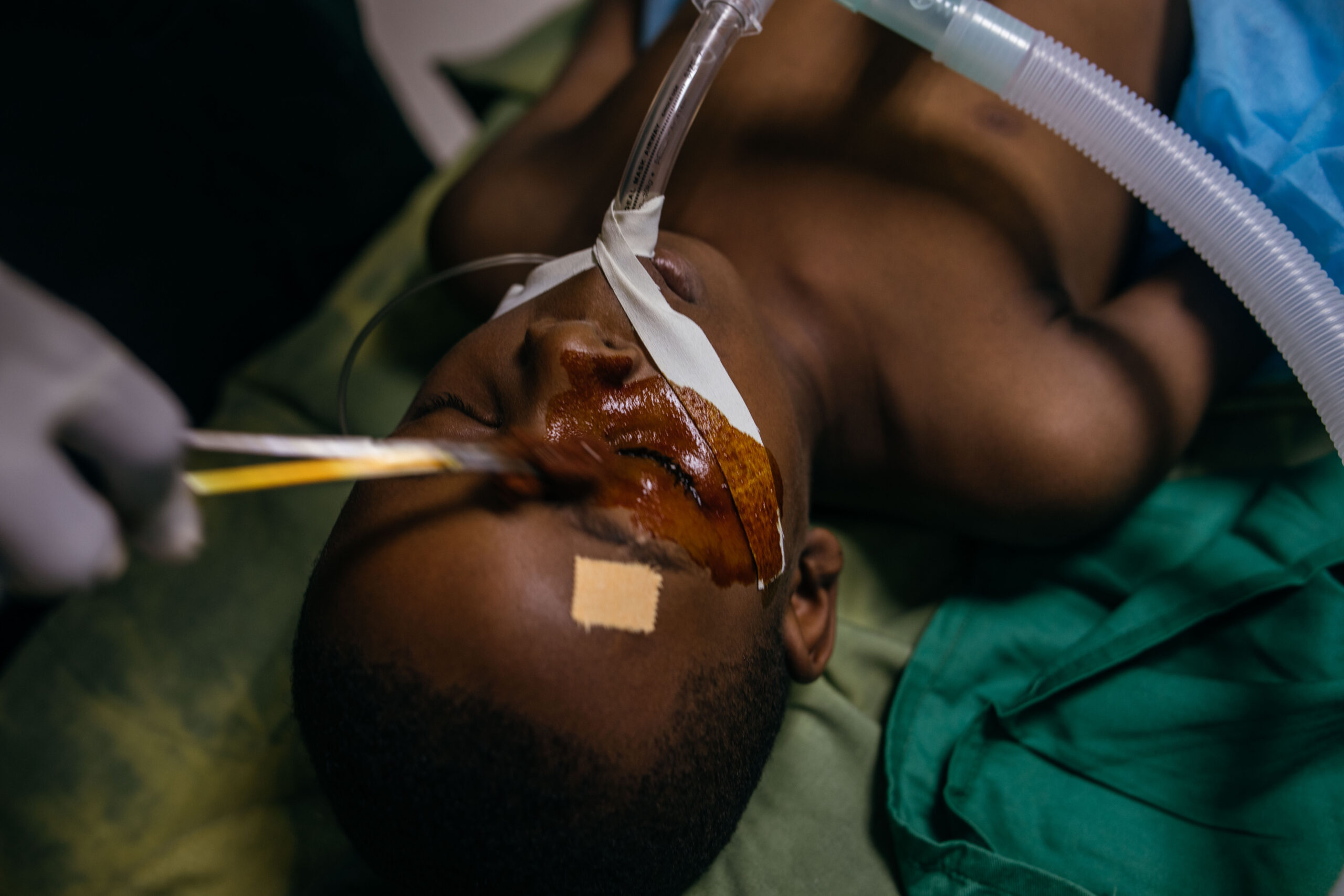
In a displacement camp in Xai Xai, capital of Gaza province in southern Mozambique, six-year-old Phinias Mlambo rubs his red, swollen eyes with a palm laced with dried mud. He is among the 5,000 people still sheltering in tents, schools, and public buildings after floods battered the city from January through February.
During the floods, their wood-and-mud home near the banks of the Limpopo River at Xai Xai was reduced to rubble. As the water levels rose, the family abandoned plans to salvage their household items and ran for their lives to seek shelter in a municipal hall before they were relocated to the camp.
At the camp, a different struggle has emerged.
“He has battled teary eyes for three weeks now,” Esther Mlambo, Phinias’ mother, told me, while holding a small jug of brownish water.
“The nurses said he is developing trachoma, and it is critical that we wash his face with clean water thrice a day. Just take a look [at the water]. There is hardly any clean water for cooking. Water for eyes is a luxury,” she says.
****
A major public health concern in Africa, trachoma is a contagious eye disease caused by the bacterium Chlamydia trachomatis. Though treatable in its early stages, repeated infections can turn the eyelids inward — a condition called trichiasis — causing the eyelashes to scrape the eyeballs and potentially leading to blindness if left untreated.
In 1998, health ministers at the World Health Assembly set a goal to eliminate blinding trachoma as a public health problem by 2020, The Guardian reported. In 2013, Mozambique became the first country where the U.S. Agency for International Development (USAID) and the U.K.’s Department for International Development (DfID) jointly supported nationwide trachoma mapping efforts.
The Trump administration’s freeze of USAID-funded programmes and subsequent gutting of the agency in 2025 put Mozambique in a bind when it comes to neglected tropical diseases, says Mouzinho Saide, the country’s former deputy minister of health and now the director general of Hospital Central de Maputo, Mozambique’s largest public referral hospital.
The network of community health workers who track cases and distribute medicines for trachoma, lymphatic filariasis, and schistosomiasis has been disrupted. “Without them receiving salaries anymore, years of thorough field tracking are going to waste in months,” Saide said.
Developing countries such as Mozambique stockpile medicines in warehouses. When funding is cut, supply chains and local distribution networks can falter, leaving the medicines to expire on shelves. “With neglected tropical diseases, if you jump one treatment cycle, transmission resurfaces, and you are ten years back in progress due to aid cuts,” he added.
Different organizations in Mozambique are racing to ink new agreements with the U.S. government, which has transitioned to an ‘America First Global Health Strategy’. While the U.S. touts this as self-reliance building, Saide is skeptical and worried.
For Mozambique, “the reality means new chaos, and policy inconsistencies that filter down to local health clinics who don’t know where their next batch of treatment medicines and clinical training will come from,” he said.
The climate change factor
The funding crisis comes at a particularly difficult period, as successive climate-induced cyclones have placed Mozambique under near-constant siege since the early 2000s.
The country’s long coastline and flat topography have made Mozambique “ground zero” for climate change, says Tapuwa Nhachi, an expert at the Institute for Law, Development and Democracy.
According to assessments by the United Nations Development Programme Insurance and Risk Finance Facility, Mozambique faces the world’s seventh-highest disaster risk, with climate change being the leading driver.
In January and February 2026, devastating rains hammered vast stretches of central and southern Mozambique, continuing a pattern seen repeatedly over the last two decades. The floods displaced nearly 392,000 people, according to United Nations High Commissioner for Refugees Mozambique Representative Xavier Creach.
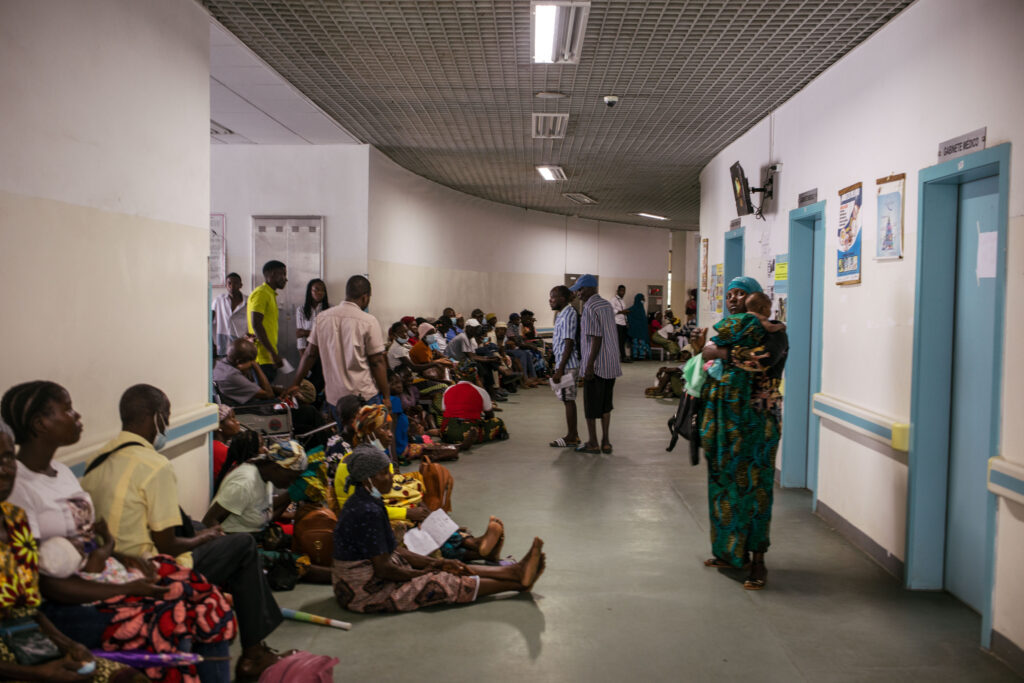
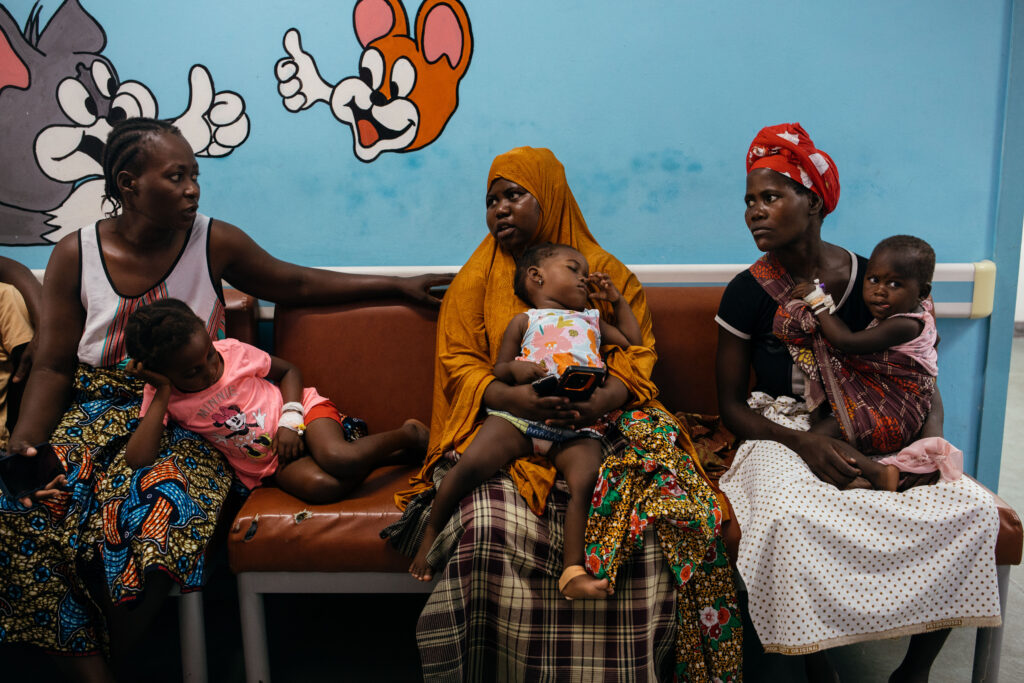
More than 200 health facilities were completely or partially damaged, further complicating efforts to treat trachoma patients. In rural areas — where 21 million people, nearly two-thirds of Mozambicans, live — clinics and their small warehouses store antibiotics. “When they are flooded, anti-trachoma efforts take a pause,” says Manuel Dondo, an immunisation specialist nurse from the Central Hospital in Quelimane, the capital of Zambezia province.
Health workers say the environmental conditions created by the rains also accelerate transmission.
“Recurring tropical cyclones reverse the progress we make in eliminating trachoma. The bacteria that cause it thrive in mud and humidity. Destruction of clinics and displacement of children worsen the situation,” says Celestina da Conceição, the chief medical officer of Maputo province, home to the country’s capital and one of the epicenters of the recent deluge.
Extreme heat and rain create ideal conditions for the infection to thrive, according to Napoleao Viola, the head of the Mozambique Medical Association, who has been treating trachoma patients in rural areas for the past five years.
“During floods, children and their parents are squeezed into overcrowded, unsanitary temporary shelters. The Musca sorbens fly — the vector of the disease — thrives when it interacts with human waste and damp, humid conditions,” he says.
When floodwaters recede, extreme heat often follows, worsening water shortages. In central provinces like Tete and Manica, clean water is scarce, both in times of drought and extreme flooding, Dondo says.
Where the real battle lies
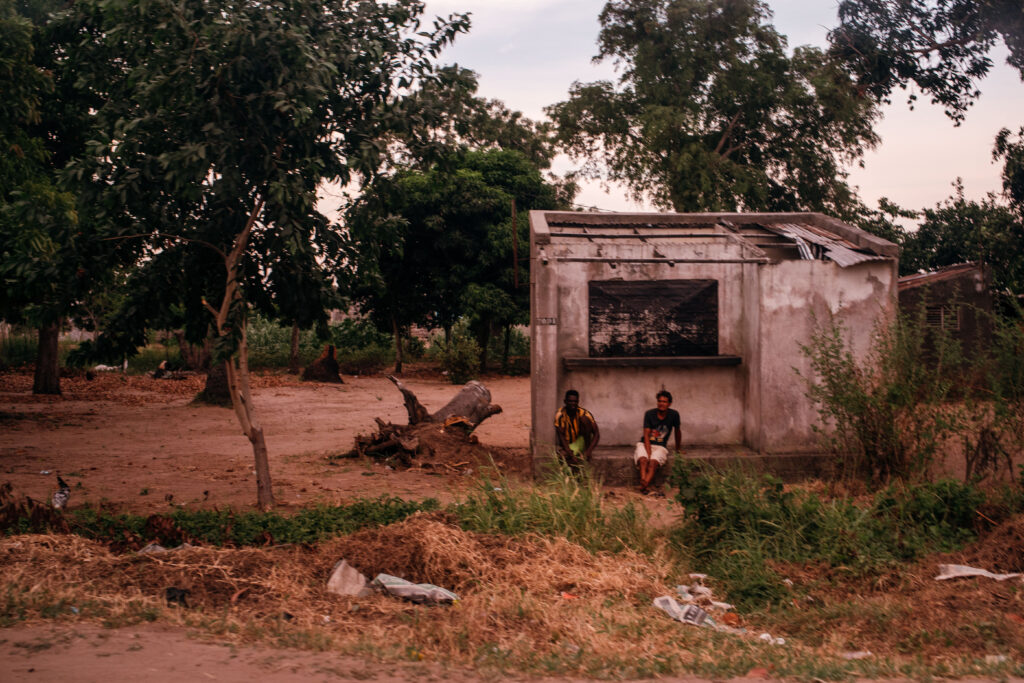
In Sofala province of central Mozambique, exposure to dust also increases transmission.
“We have two problems now. Dirty dust carries this sickness into our children’s eyes, and floods spoil the clean water that doctors say should be used to wash our children’s faces,” says Eva Bula, 35, whose 8-year-old son is battling swelling and scarring inside the eyelid — evident signs of trachoma.
Bula’s family lives in Munhava Matope, one of the poorest shantytowns in Beira, a coastal city in central Mozambique. Over the last decade, extreme weather events have displaced the family four times, making access to potable water a big problem.
Bula’s child has been waiting a long time for bilamellar tarsal rotation surgery, which is provided free at state hospitals with the help of visiting specialists from non-profit organisations. In this procedure, the eyelid is rotated outward through an incision and stitched into place so the eyelashes no longer touch the cornea.
Mozambique has been working for years to eliminate trachoma. The country’s ambitious SAFE strategy (surgery, antibiotics, facial cleanliness, and environmental improvement) requires clean water, a critical and increasingly rare resource, says Viola.
Despite years of mass antibiotic administration and significant progress in eliminating the infection, some districts remain above the 5% elimination threshold that the World Health Organization aims for.
The results of a 2018 survey show the scale of the task at hand: nearly 2.5 million Mozambicans were living in areas requiring mass distribution of azithromycin, an antibiotic used to treat the infection. The study suggested mass distribution of the medicine for at least three years to suppress transmission.
“It is easier on paper than in reality,” says Viola. “We can supply antibiotics to all the children in Mozambique from Maputo in the south to Niassa in the far north. But if the kids are sitting in flooded camps and have no clean water to wash their [faces], the trachoma-causing bacteria will be back in a week.”
Is a trachoma-free future possible?
Despite the challenges, Mozambique has made some strides to improve access to clean water, especially in rural and peri-urban regions in the last two decades, says Candida Maloane, a senior manager in the state-owned National Directorate for Water Supply and Sanitation (DNAAS). Since 2010, through the DNAAS’s National Rural Water Supply and Sanitation Program, supported by the African Development Bank, Mozambique has been drilling boreholes and installing water lines across the country.
“We are trying to move away from shallow wells, which can be easily contaminated by sewage or floods, and adopt cleaner, more reliable water infrastructure like boreholes and elevated storage tanks that survive weather disasters much better,” Maloane says.
With financial support from the World Bank and various UN agencies, Maloane noted the country plans to build multi-purpose dams for agriculture and drinking water, as well as expand desalination plants in coastal areas where salinity makes water unsafe for consumption.
“A trachoma-free future doesn’t magically rest on a supply of antibiotics,” says Viola. “The most important solution is to make poor households resilient against floods that breed bacteria and against extreme heat that makes clean water scarce. Or else our efforts will go in vain because of dirty water.”
In December 2025, Mozambique’s president, Daniel Chapo, unveiled plans to build large surgical centres in Maputo.
“These are grandstanding announcements, building big cathedral-like hospitals in cities, as usual,” says Esther Mlambo, her gaze fixed on her son’s reddened eyes.
“But what about combating trachoma in the countryside and shanty towns? Simple but vital clean water pumps and toilets can stop trachoma. These are not being built, and the existing ones are left to crumble.”