
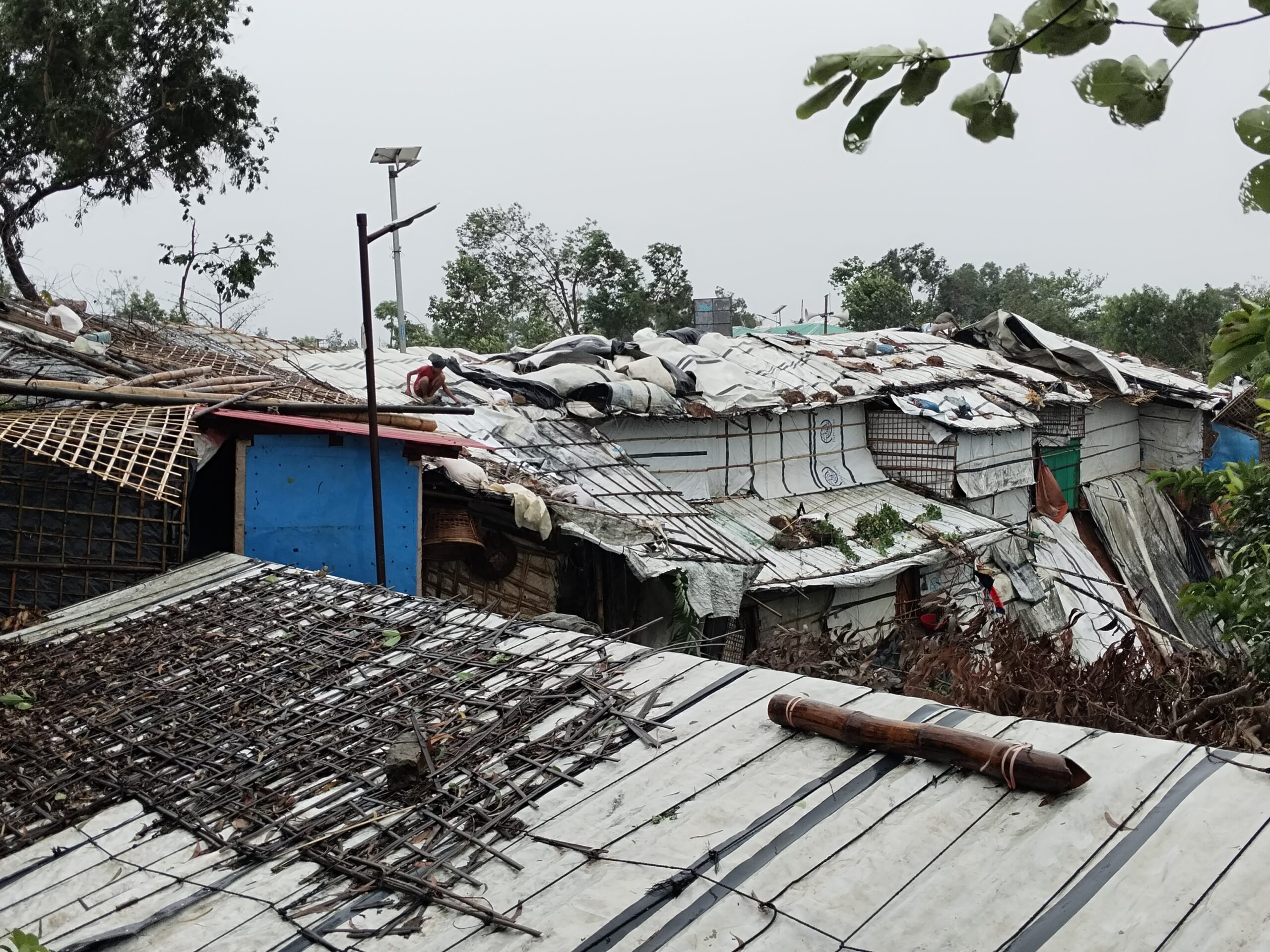
As the monsoon season begins in southeastern Bangladesh, Rohingya refugees living in fragile hillside camps are once again facing life-threatening risks from landslides, floods, and severe weather. Recent incidents across multiple camps have already left several people injured.
On Tuesday, April 28, a landslide struck Camp 17, Block C04 (H-70), damaging a shelter and injuring one resident. The victim, identified as Dil Mohammed, was inside his shelter when the soil suddenly collapsed.
“I heard a cracking sound, and then everything fell on me,” he said while receiving treatment. “I could not move until people came and rescued me.”
Nearby community members quickly rushed to the scene and pulled him out from the debris before taking him to a hospital. His family of seven is now left without a safe place to stay. The landslide, estimated to be around 20 feet in length and 10 feet in height (7m by 3m), occurred in a slope area highly vulnerable to erosion.
In a separate incident the same evening, during Maghrib prayer, a sudden thunderstorm hit Camp 5, Block E, Sub-block E-01, leaving two children seriously injured.
Rohul, a volunteer, described the situation: “The storm came very suddenly. There was strong wind and heavy rain. We heard children crying and found them injured. We carried them to the hospital as fast as we could.”
The children were initially admitted to RTMI Hospital and later referred to Ukhiya Health Complex for further treatment due to the severity of their injuries.
In another alarming incident, a heavy lightning strike during a rainstorm injured six members of three families including three children and three women in Block A-2, Camp 09 (Balukhali-1). The incident occurred shortly after Maghrib prayer, further highlighting the increasing danger posed by extreme weather conditions in the camps.
Health workers warn that such incidents may increase significantly in the coming weeks as the monsoon intensifies.
“Every year during the rainy season, we see many injuries from landslides, flooding, and collapsing shelters,” said a medical staff member. “Low-lying areas in the camps become waterlogged very quickly, and floodwater can enter shelters, putting children and elderly people at high risk.”
According to observations, every rainy season in Rohingya refugee camps results in more than a hundred deaths due to landslides, floods, and storm-related incidents, in unprotected hilly and low-lying areas like the Rohingya camps. Heavy rainfall often causes soil to loosen on hills while simultaneously flooding valleys and pathways, creating multiple layers of danger.
Alarmingly, this year has already seen several injuries at the very early stage of the monsoon, even though the weather has not yet reached its peak severity.
“If people are getting injured now, before the heavy rains fully begin, we are very worried,” said a resident of Camp 17. “When the real rain comes, landslides and floods will be much worse.”
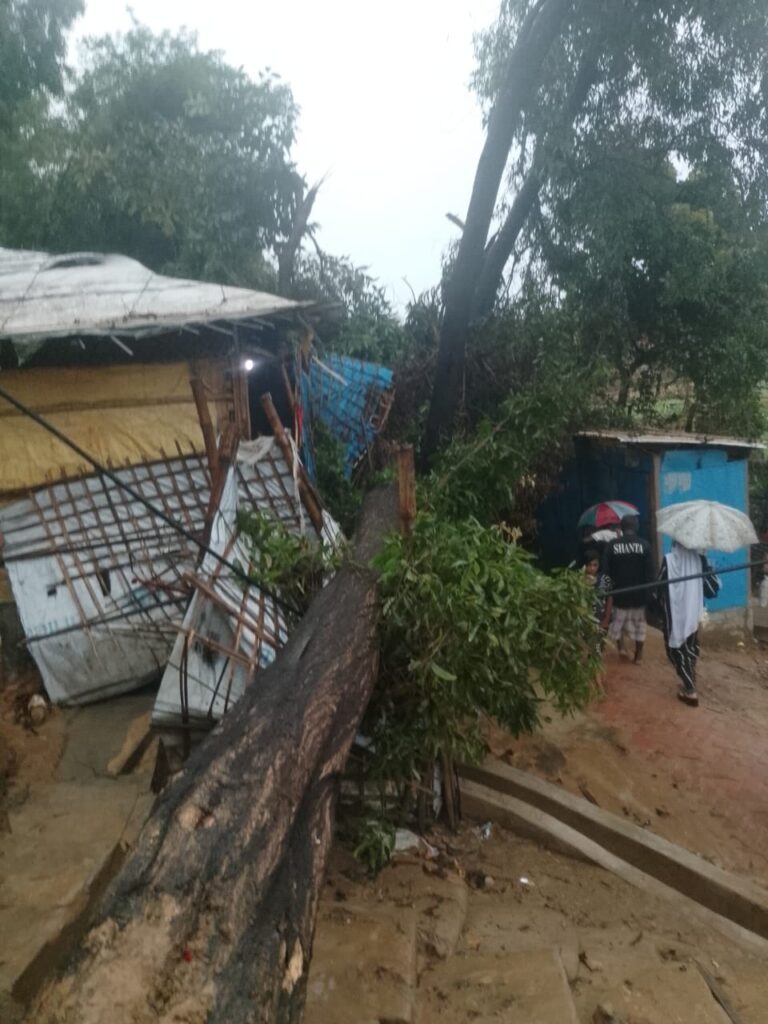
The Rohingya refugee camps in Cox’s Bazar — home to over 1 million displaced people — remain among the most densely populated and environmentally fragile settlements in the world. Families are forced to build shelters on steep slopes and flood-prone land, where even moderate rainfall can trigger landslides or cause water to rapidly accumulate.
Despite ongoing efforts by humanitarian agencies to reinforce shelters, improve drainage systems, and build protective structures, many areas remain at high risk due to overcrowding, deforestation, and limited space.
For many refugees, the rainy season brings constant fear.
“When it rains at night, we cannot sleep,” said a neighbor of the injured victim. “We are afraid of both landslides from the hills and floodwater entering our homes.”
As dark clouds gather over Cox’s Bazar, the start of the monsoon serves as a stark reminder: for the Rohingya community, survival now depends not only on overcoming past persecution, but also on enduring the growing threats of landslides, floods, and extreme weather in an already fragile environment.
Humanitarian workers and community leaders are urgently calling on the international community, donor agencies, and humanitarian organizations to intervene before the situation worsens further. They warn that without immediate action such as strengthening shelters, improving drainage systems, relocating high-risk families, and increasing emergency preparedness, this monsoon season could lead to preventable loss of lives.
“We are asking the world to act before more tragedies happen,” a community representative said. “Every year we wait for disaster response after people are already injured or dead. This time, prevention is urgently needed.”
Aid agencies are being urged to scale up preparedness efforts immediately, as early incidents have already shown that even moderate weather conditions are causing injuries and destruction.
Niyamot Ullah is a researcher, activist and poet from Bangladesh’s Rohingya refugee camps of Cox’s Bazar.
This article is published as Creative Commons.