
A man who was lured to a Cambodian scam operation where he faced violence and was forced to work offered to share his story. Mekong Independent is publishing his account with only a few edits for clarity.
My name is Matovu Shadrack, I’m 24 years old and I come from Uganda, a country full of hope, resilience, and hardworking people but with a problem of a lack of job opportunities and a lot of unemployed youths. Like many young men, I dreamed of finding a better opportunity abroad something that could change my life and allow me to support my family back home. Unfortunately, that dream led me into one of the darkest chapters of my life.
It all started on Facebook. While scrolling one day, I came across a job advertisement offering opportunities abroad, especially in Cambodia. The offer looked professional and convincing, promising a good salary, accommodation, and a better future. Most importantly, the job was advertised as an IT job, something that immediately caught my attention and aligned with my interests.
Interested, I tapped on the link provided in the post, which redirected me to someone claiming to be an HR officer. She then shared her Telegram contact and asked me to continue the conversation there. On Telegram, she conducted what seemed like an interview. It was very simple just a few questions about my background and my willingness to travel. There was nothing formal or detailed about it, but at the time, I believed it was a genuine opportunity.
They confirmed that I had been selected for the IT position and assured me that I would be working in a professional office environment. They promised good pay with a basic salary of $900 per month plus bonuses if you get a good performance which could make the monthly total salary rise to $1,200. They offered food, accommodation, and free medical treatment in case I fall sick at work. However, before traveling, I was told to pay 2 million Ugandan shillings [U.S. $542] for agent and clearance fees. I did not have that kind of money, but I believed in the opportunity so much that I sold all my belongings and even borrowed money from others just to raise the amount. I was determined to change my life.
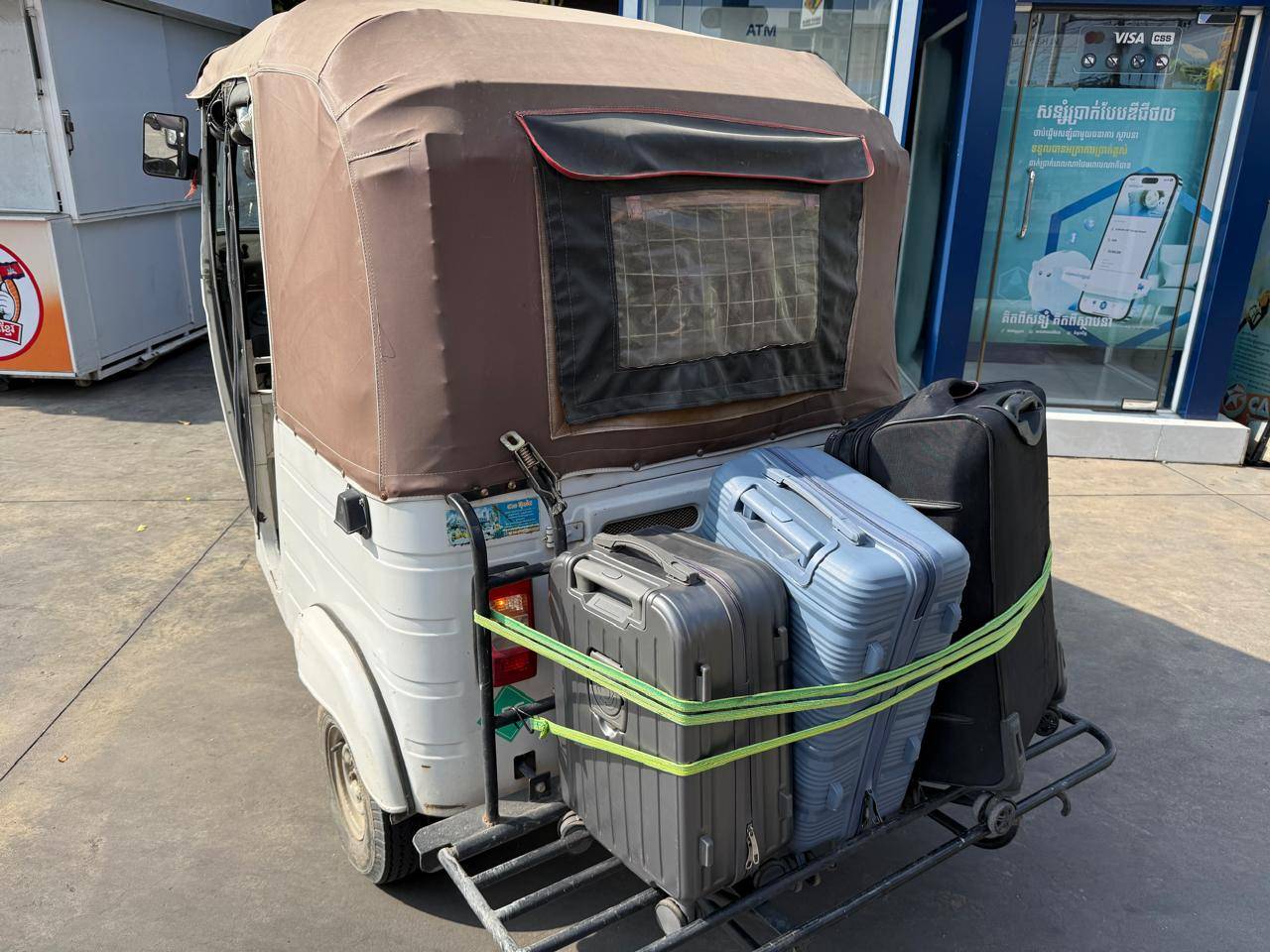
They also arranged my travel by booking an air ticket through Ethiopian Airlines and as well processing the Cambodia visa for free which they sent to me three days before traveling. This made everything seem even more legitimate, and I was told the visa will be extended once I reach in Cambodia. I left Uganda on November 3, full of hope and expectations for a better future. After a long journey, I arrived in Cambodia on November 5, believing I was about to start my new job and a new chapter of my life.
However, everything changed shortly after my arrival. Instead of being taken to a normal workplace, I was transported to a compound in Mondulkiri province and the journey was so long, about eight to nine hours from the KTI International Airport in Phnom Penh to the compound. The moment I entered, I felt something was wrong. The place was heavily guarded, isolated, and tightly controlled. It didn’t feel like a workplace; it felt like a prison.
Upon arrival, my passport was taken from me, and I was not allowed to leave. Fear quickly replaced my excitement. Inside the compound, there were many workers from different parts of the world, Africans and Asians, including people from China. These were the bosses and as well the supervisors. The rest of the nationals were Pakistani, Philippine, Bangladeshi, Kenyan, Ugandan, Nigerian and some other unidentified nationalities and all these were forcefully working under the Chinese bosses, and we had all been brought there under false promises.
The scam compound and the entire operation were run by Chinese nationals, who were the main bosses and controllers of everything inside. They supervised all activities, enforced the rules, and were responsible for the punishment and control of workers.
When I was first taken to the working area, I was given a computer and numbers of people that I should talk to them so that I gain their trust then steal money from them. I immediately told the Chinese supervisors that this was not the job I had applied for. I refused to work and that decision led to one of the most painful moments of my life.
They took me to what I can only describe as a torture room. There, I was severely abused. I was shocked with electricity, stabbed with knives, and beaten brutally. The pain was unbearable. After that, I was locked in the room for two days without proper care. I was bleeding heavily and thought I might die.
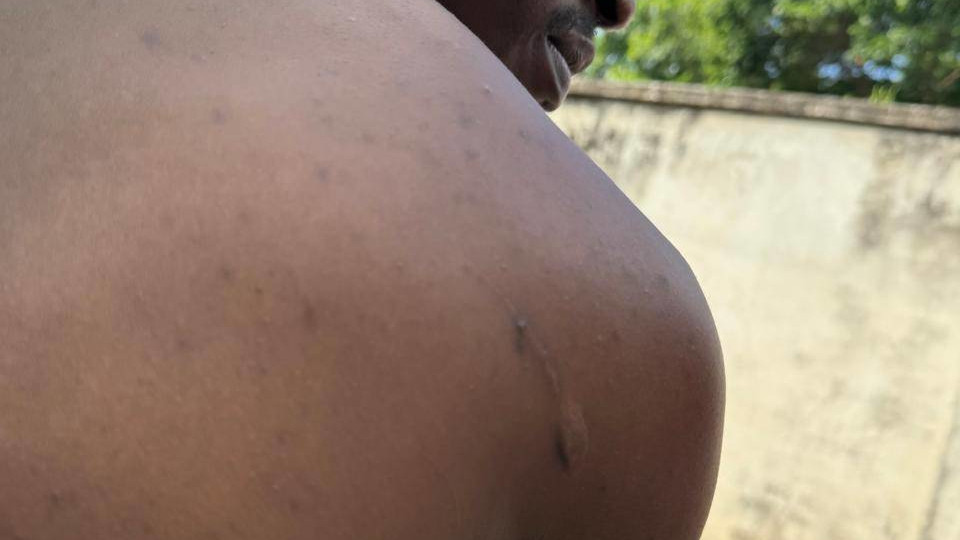
After two days, they came back, gave me food, and treated my wounds just enough to keep me alive. Then they gave me a choice: either I pay them $5,000 USD to secure my release, or I agree to work for them. I had no money, no way to contact anyone, and no options left. I was completely trapped. With no other choice, I was forced to obey them. That is how I was pushed into doing the scam work.
The work we were forced to do was completely different from what we had been told. Instead of working in IT, we were made to participate in organized online scams. The operations mainly targeted victims from the United States and Canada, using carefully scripted messages and manipulation tactics to gain trust and steal money.
For the two months I worked under the Chinese scammers, I was not paid anything at all. The only things provided were basic food and accommodation, just enough to keep us alive and working. There was no salary, no freedom and no dignity.
Life inside the compound was harsh and controlled. We were constantly monitored and pressured to meet strict targets. If you failed, you were punished. Violence was common, and fear controlled everything. What I went through was not unique. Many others suffered similar or even worse treatment.
Emotionally, it was devastating. I felt broken, helpless, and betrayed. Every day was filled with fear and survival. I thought about my family back in Uganda constantly and wondered if I would ever see them again. At the same time, I carried the heavy burden of knowing I had sold everything, borrowed money, and now had debts waiting for me back home.
My escape came unexpectedly on January 21. That day, there was a police raid on the compound. It was chaotic and intense, but it created a rare opportunity. In the confusion, many of us managed to escape. That moment was a turning point in my life, the day I regained my freedom.
Leaving the compound did not mean the struggle was over. When I got out, I had nothing, no money and no clear direction. But I was alive, and I was free.
After escaping, many Africans who had been trapped in similar compounds moved to safer places within Cambodia, especially Phnom Penh. Some tried to return home, while others remained stranded due to lack of resources and proper documentation.
When I escaped from the scam compound, I couldn’t afford going back home because all the time I spent in the compound, I wasn’t given any money, so I depended on fellow Ugandans for survival, especially for shelter and food. They helped me get through those difficult days and I am truly grateful for their support. However, our Ugandan embassy in Malaysia negotiated with the Cambodian government to waive the fines of overstay but didn’t mange to purchase tickets for us. My friends could afford buying their own tickets back home so they eventually returned back to Uganda. I was left on my own, and that was when I began sleeping on the streets of Phnom Penh, struggling day by day to survive.
I had no place to stay, so I slept on the streets and that’s where I found three fellow Ugandans who could only support me with bread and water. We survived on bread and water but still always slept on the streets and through that time I caught a cold and right now I’m suffering from heavy inner cough, and I really need serious treatment. Together with three of my friends who were also victims, we went to Caritas offices seeking help, but unfortunately, we could not be taken into a shelter. With nowhere else to go, we ended up sleeping outside the Caritas offices for four days.
Hope came from an unexpected place. In a WhatsApp group of Ugandans stranded in Cambodia. Through that group, someone shared the contact of a Cambodian journalist*. We reached out, and thankfully, he listened to our story and decided to help us. Through his support, we were able to find shelter, and that is where we are staying right now.
Even with shelter, the struggle continues because I haven’t received treatment yet and the cough I have is really severe and I have inner pain in the chest. Being stuck in a foreign country without stable income or support is extremely hard. Getting a ticket back home is a major challenge, and many of us depend on help from embassies, organizations, or kind individuals.
Even thinking about going back home is painful. My mother is very poor and financially unstable. She raised all four of us as a single mother, and me being the first born, I was like the father in our family but right now I really feel ashamed. I let them down because all their hope was in me since I was the first person to travel abroad and thought I could change the standard and well-being of my whole family. But sadly, I already have loans to repay from the money I borrowed to come here. Everything feels like a mess because of the decision I made to come to Cambodia. The weight of it all is overwhelming.
Living in this situation feels like being forgotten. Each day is uncertain, and survival back home itself is also a challenge. At the same time, we carry the emotional and physical scars of what we went through, along with the financial burden we left behind.
Despite everything, I am grateful to be free. Many people are still trapped in those compounds, suffering in silence. My story is not just mine. It represents the experiences of many others who were deceived and exploited.
I want the world to understand that these scam operations are real and dangerous. They are destroying lives, especially of young people who are simply looking for better opportunities abroad. There is a need for more awareness and stronger action to stop these networks.
If there is one message I want to share, it is this: Do not trust job offers that seem too easy or too good to be true, especially those found on social media. Always verify the information, ask questions, and be cautious.
I still hold onto hope that one day I will return home to Uganda, rebuild my life, and move beyond this painful experience. But I kindly request that if there is anyone who can really help me rebuild my life when I get back home, I would really be grateful.
That marks the end of my sad story as a scam victim in Cambodia.
*Given the extraordinary number of foreign trafficked workers with no place to go, individual reporters for Mekong Independent have provided some donations for shelter and food to some of the trafficked victims they’ve met. This is never done in a “quid pro quo” manner in exchange for information, but rather an individual reporter’s decision to assist people outside of the context of reporting a story.
Readers who are interested in providing financial support may reach out to Mech Dara via his social media channels.