
This article was originally published on HaRDstories as Creative Commons.
Photography by Wissarut Werasopon
For generations, families along Thailand’s Kok River depended on its waters to grow their food and sustain their lives. Now, arsenic and lead from unregulated mines across the border in Myanmar are poisoning those same waters – and the Thai government is struggling to respond.
For as long as she can remember, Saithong Suppathanthamrong and her family have been grateful for their land on the banks of the Kok River in Chiang Mai’s remote Mae Ai district. The rich soil allows them to grow organic passion fruit, sweet potato, pumpkin, and aubergine – produce good enough for Thailand’s royally-sponsored agricultural projects. Now, that same river is the source of their deepest worry.
The family depends on the river to irrigate their land, but the water that once sustained their farm is now working against them. Mining for gold and rare earth minerals upstream has flooded it with toxic chemicals, threatening their crops and the annual income of around 100,000 baht (about 3,050 USD) they depend on.
“I grew up here and have lived on the banks of Kok River my whole life. I knew something was wrong – the river was never so cloudy with muddy sediments like this,” she said.
The Kok and the nearby Sai are among the major rivers of Thailand’s northernmost region, both fed by highland streams in neighbouring Myanmar’s Shan state. Researchers tracking the region say mining operations have spread rapidly across the watershed areas feeding both rivers.
Rare earth elements are a group of 17 metals used in clean energy technology, defence systems, and electronics. Their extraction is chemical-intensive, generating up to 2,000 tonnes of hazardous waste for every tonne produced. Surging global demand has driven a rapid expansion of mining across mainland Southeast Asia – much of it poorly regulated.
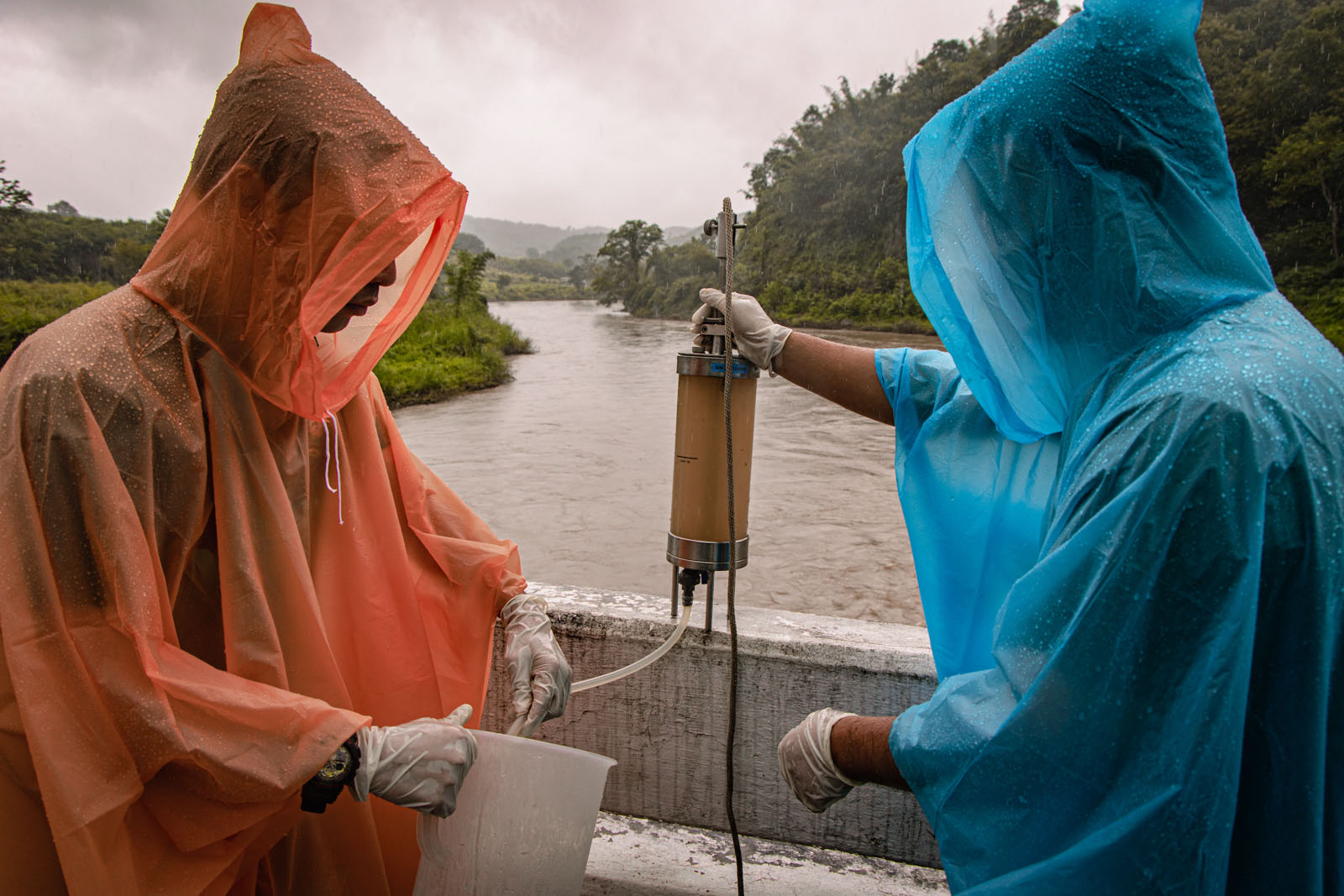
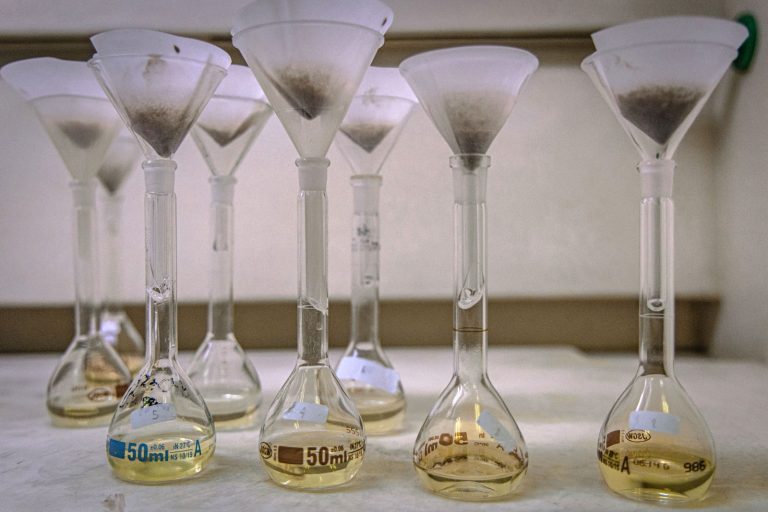
In March 2025, testing by Thailand’s Pollution Control Department (PCD) confirmed the presence of dangerous levels of arsenic and toxic heavy metals in the Kok River. Many families in the area, including Saithong’s, derive up to 80 percent of their irrigation water from the Kok.
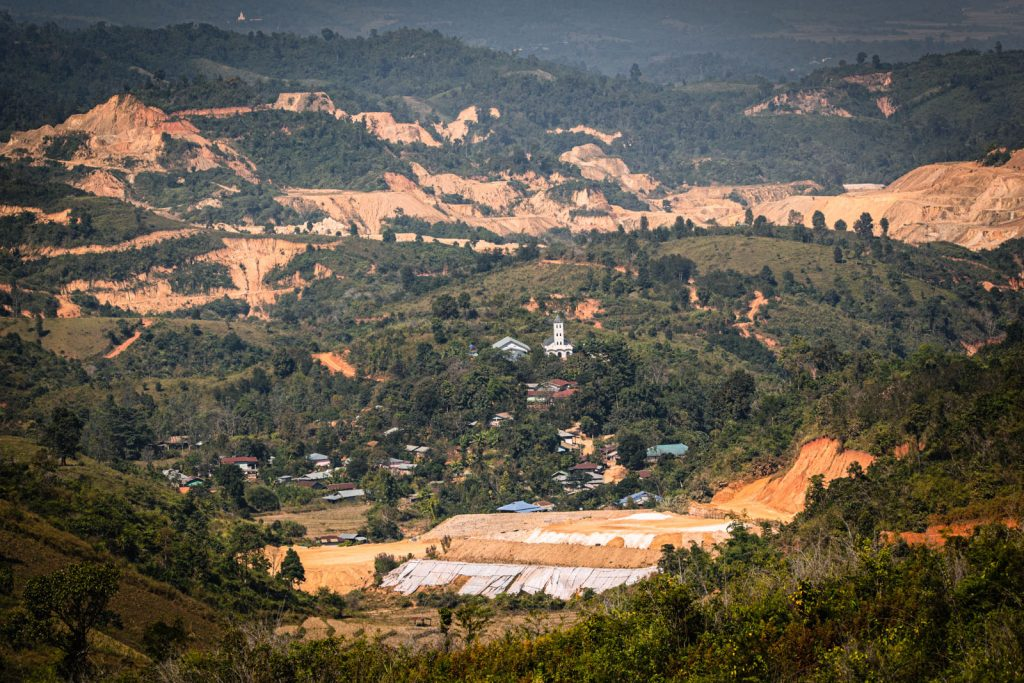
According to the Stimson Center and the Shan Human Rights Foundation, Chinese-owned mining operations began expanding into the watershed of the Kok and Sai Rivers in 2022, following Myanmar’s military coup a year earlier. Much of Shan state was by then contested or controlled by ethnic armed groups, including the National Democratic Alliance Army and the United Wa State Army, leaving environmental oversight effectively non-existent.
“Normally, mining operators are obliged to incorporate pollution control measures to minimise adverse impacts on the environment,” said Tanapon Phenrat, a researcher at Naresuan University’s Natural Resources Remediation and Reclamation unit.
One standard measure is the tailing pond, an engineered basin designed to contain the toxic waste left over from mining. “But the mines in Shan state drain that waste directly into the river,” Tanapon said, “so it is no surprise that the contamination in the Kok and Sai Rivers is so severe.” Thailand requires mines to maintain tailing ponds. Myanmar has no such rule.
Research by Tanapon’s team found that 70 percent of the heavy metal contamination in the Kok River matched the waste signature of rare earth mining. The Sai River told a different story – arsenic concentrations were higher there, with rare earth mining accounting for just 45 percent of contamination, suggesting gold mining was the dominant activity upstream.
That sediment travels downstream, spreading contamination across the entire river basin. For farmers who depend on the rivers for irrigation, it means their crops risk absorbing arsenic and heavy metals, a danger that extends to anyone who eats them.
A separate round of PCD testing, conducted between 4 and 7 November 2025, found unsafe levels of arsenic, exceeding 0.01 milligrams per litre, at numerous points along the Kok, Sai, and Mekong Rivers.
Rivers that once gave, now take away
The Kok and Sai Rivers are minor tributaries of the Mekong, but for communities in Chiang Rai they have long been the lifeblood of local farming and fishing. Families like Saithong’s are now paying the price.
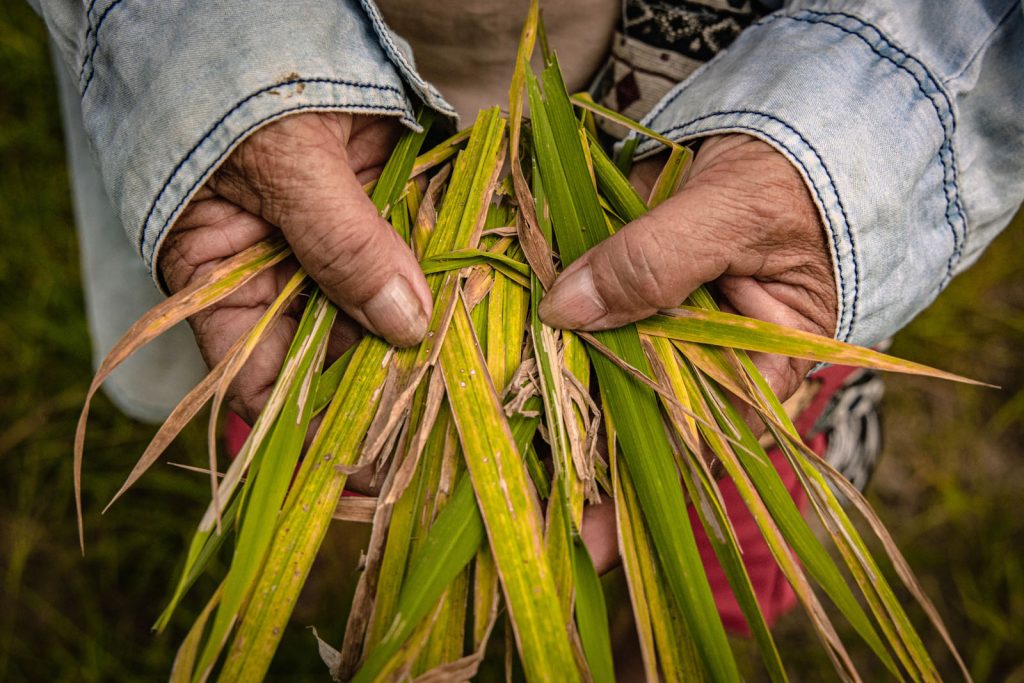
“We had total crop failure two seasons in a row, no income from the farm at all,” she said. “Half our garden is buried under two metres of mud and sand.”
Toxic sediments disrupt the rivers’ hydrology, making them shallower and more prone to flooding, according to Suebsakun Kidnukorn, a lecturer at Mae Fah Luang University in Chiang Rai. Saithong believes the mining upstream worsened the devastating 2024 floods, which buried her farm under a metre of sandy sediment.
“Since the farm was damaged I haven’t been able to grow anything or earn any income from farming,” she said. “It’s very hard – I still have two children to support.”
The family had also relied on the river for drinking water and fishing. Both are now off limits. Saithong has found work at a local agricultural project, earning around 10,000 baht a month, about 300 US dollars, but it is not enough to cover the shortfall.


Fear spreads beyond the riverbank
For farming communities along the Kok River, the contamination had brought a second crisis: the collapse of consumer confidence. The government, many said, had offered little in response.
“We want the government to come up with clearer measures to support farmers,” said Surasak Saengjai, a farmer in Chiang Rai’s Wiang Chai district. “Right now, consumers are avoiding local produce for fear of contamination, and we have no income.”
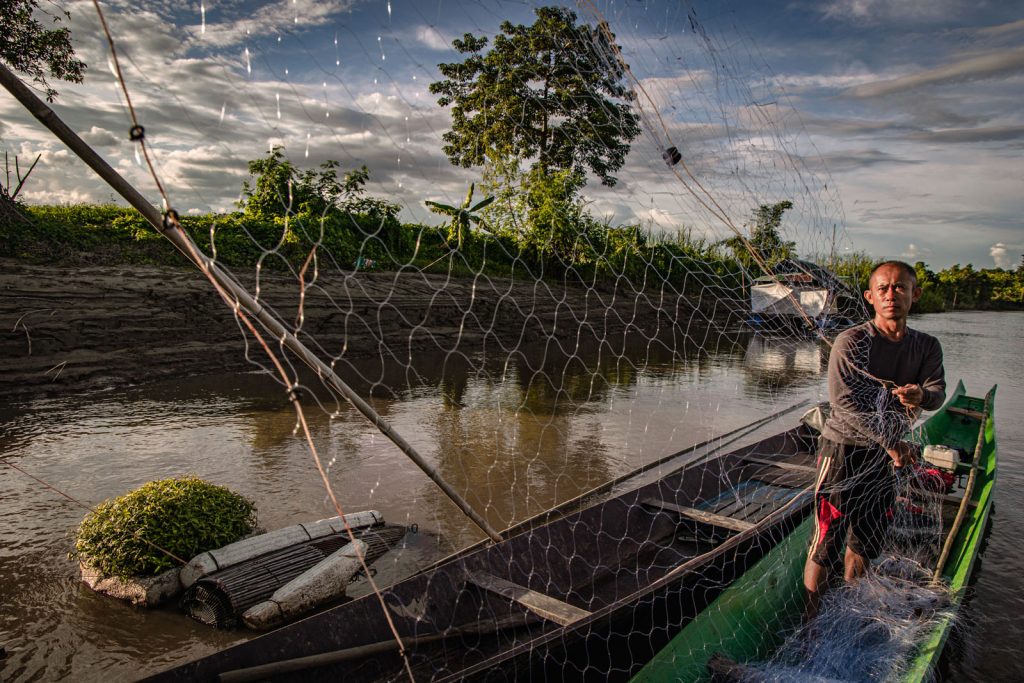
The fear had spread to fish markets too. Sukjai Yana, a fisherman in Chiang Saen district, said locals depend on a six-month fishing season for the bulk of their annual income, typically around 52,000 baht, or about 1,600 US dollars, per person.
“This season I have found many fish with lesions and blisters on their skin,” he said. “People are afraid to eat fish from the Kok River. And so we have no income.”
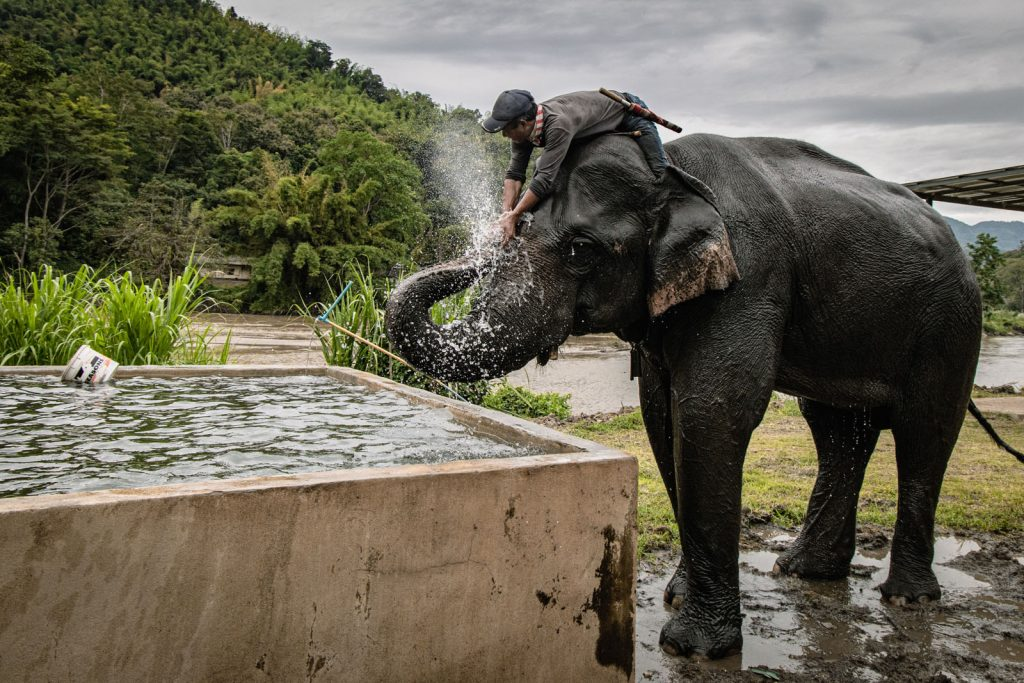
It wasn’t just fish showing signs of contamination. At Ruammit Elephant Camp on the riverbank, the animals that tourists once bathed alongside were developing the same blisters.
Uthen Suphajai, an elephant caretaker at the camp, said the elephants could no longer use the river. “We used to offer tourists the chance to bathe in the river with the elephants,” he said. “We cannot do that anymore.” Seeton Kampaeng, the camp’s manager, estimated tourist numbers had fallen by more than 80 percent.
If the contamination is not brought under control, the economic damage could be severe. Rocket Media Lab, a Thai data journalism platform, estimates potential annual agricultural losses along the Kok River at more than three billion baht (90 million USD), with a further 92 million baht (2.7 million USD) at risk in the fisheries sector.
The poison moves downstream
Niwat Roykaew had been watching the Mekong for decades. As chairperson of the Chiang Khong Conservation Group, a river advocacy organisation based on the Thai bank of the Mekong, he was among those now raising the alarm about what was coming downstream.
Without serious intervention by Mekong states to halt unregulated mining upstream, he warned, the river basin faced “the worst environmental catastrophe this international river has ever endured.” Fishermen in his district had already caught fish bearing the same skin lesions seen on the Kok – evidence, he said, that toxic chemicals had travelled further downstream.
Testing by the PCD in May 2025 found arsenic exceeding safe levels at two points on the Mekong near Chiang Saen, as well as elevated arsenic and lead throughout the Sai River.
“The Mekong River is life for millions of people across six countries. Thailand needs to have a leading role in finding regional collaboration to tackle this crisis,” Niwat said.
A report by the Stimson Center mapped the scale of the problem across mainland Southeast Asia, identifying over 2,400 unregulated mines across Myanmar, Laos, and Cambodia. Dangerous levels of arsenic and other hazardous chemicals, the report found, had also reached the Salween River, which flows through China, Myanmar, and along the Thai border.
“We need to stop irresponsible mining as soon as possible and begin environmental restoration,” Niwat said. “This is a matter of life or death for the people who depend on these rivers for food, water, and their livelihoods.”
Niwat also raised the spectre of the Pak Beng Dam, a hydropower project in the early stages of development in Laos, roughly 70 kilometres downstream from Chiang Rai. If toxic sediments continued to accumulate, he warned, the dam could trap them, turning the reservoir into a permanent source of contamination.
“This must be the government’s first priority, it is a matter of national security,” he said. “Unless Thailand takes a leading role, the entire Mekong River will face inevitable doom.”


Promises, constraints, and little relief
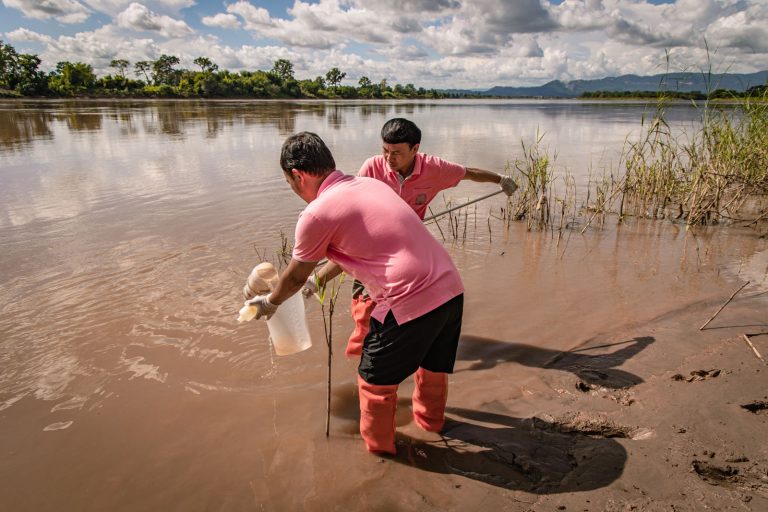
In October 2025, Suchart Chomklin, Minister of Natural Resources and Environment, told reporters he had instructed the PCD and other agencies to conduct regular monitoring of arsenic levels in the rivers, crops, and fish.
“We are arranging for more officers to help with testing, but there are still budget constraints,” he said. The Groundwater Resource Department, he added, was working to identify alternative sources of safe drinking water for affected communities.
That could be because of a lack of financing. Suebsakun, the lecturer at Mae Fah Luang University, said switching water sources would require a budget of around two billion baht. Some progress had been made by the Department of Water Resources, he noted, but how the government intended to fund and deliver the water remained unclear.
On one front, however, the government had backed down. The Department of Water Resources had proposed an 8.6 billion baht plan to build sediment-trapping dykes along the Kok River. Communities pushed back hard, questioning the dykes’ effectiveness, their environmental impact, and what would happen to the contaminated sediment once trapped.
Prasert Jitpleecheep, Deputy Governor of Chiang Rai Province, said water testing in the Kok and Sai Rivers had been conducted at least twice a month since Suchart’s remarks in October 2025, along with testing of drinking water, vegetables, crops, and fish sourced from areas along the Kok River.
On the question of international collaboration, Surasri Kitti-montol, Secretary-General of the Office of National Water Resources, said Thailand was cooperating with the Mekong River Commission to discuss approaches to the arsenic contamination, including enhanced data sharing and the joint development of cross-border water quality monitoring.
Yet for all the monitoring announced, Suebsakun argued there was a critical gap. Test results were not being communicated to affected communities.
“People need accurate, up-to-date information about toxicity levels in their water and food,” he said. “Without it, they cannot make informed decisions about what is safe to consume.”




The law runs out at the border
Prolonged exposure to arsenic, even in small amounts, carries serious long-term health risks, said Amporn Bejapolpitak, director-general of the Department of Health. These include heart disease, neurological disorders, and cancers of the skin, lung, and bladder.
The damage, in some cases, had already begun. A research team from Mae Fah Luang University tested nail and hair samples from 90 people in Chiang Rai and Chiang Mai in February 2025, finding that 16 had arsenic levels exceeding 0.5 milligrams per kilogram. Those individuals were experiencing numbness in their hands and feet, skin irritation, discolouration, and rhinitis.
Arisara Lekkham, deputy dean of the School of Law at Mae Fah Luang University, pointed to the absence of any legal architecture capable of addressing the crisis at its source.
“In the future, we may need to consider a regional environmental restoration fund and establish transboundary river guardians to protect the rights of the rivers and the people whose lives are intertwined with them,” she said.
Every measure proposed so far, she noted, was reactive. The root cause, unregulated rare earth mining across the border, remained unaddressed. The Mekong River Basin agreement provides a framework for regional cooperation, but Myanmar is not a full member. Thailand, she argued, had yet to treat the contamination of the Kok and Sai Rivers as the transboundary crisis it was – and that failure was limiting its ability to push for meaningful action in regional negotiations.
As the sun set behind the mountain ridge, farmer Saithong gathered firewood outside her home. Below her, the Kok River ran dark and murky.
“I just wish everything will return to normal,” she said, “and the river will run clean and clear again.”
Pratch Rujivanarom frequently writes about environmental justice and human rights in Thailand. He graduated with a Master’s degree in International Journalism from Birmingham City University, UK.
Wissarut Weerasopon is a Thai documentary and news photographer. Since graduating with a photography degree from Pohchang Academy of Art in 2017 he has worked with major Thai publications such as National Geographic Thailand.
Edited by Rebecca. L. Root