
This article was originally published on HaRDstories as Creative Commons.
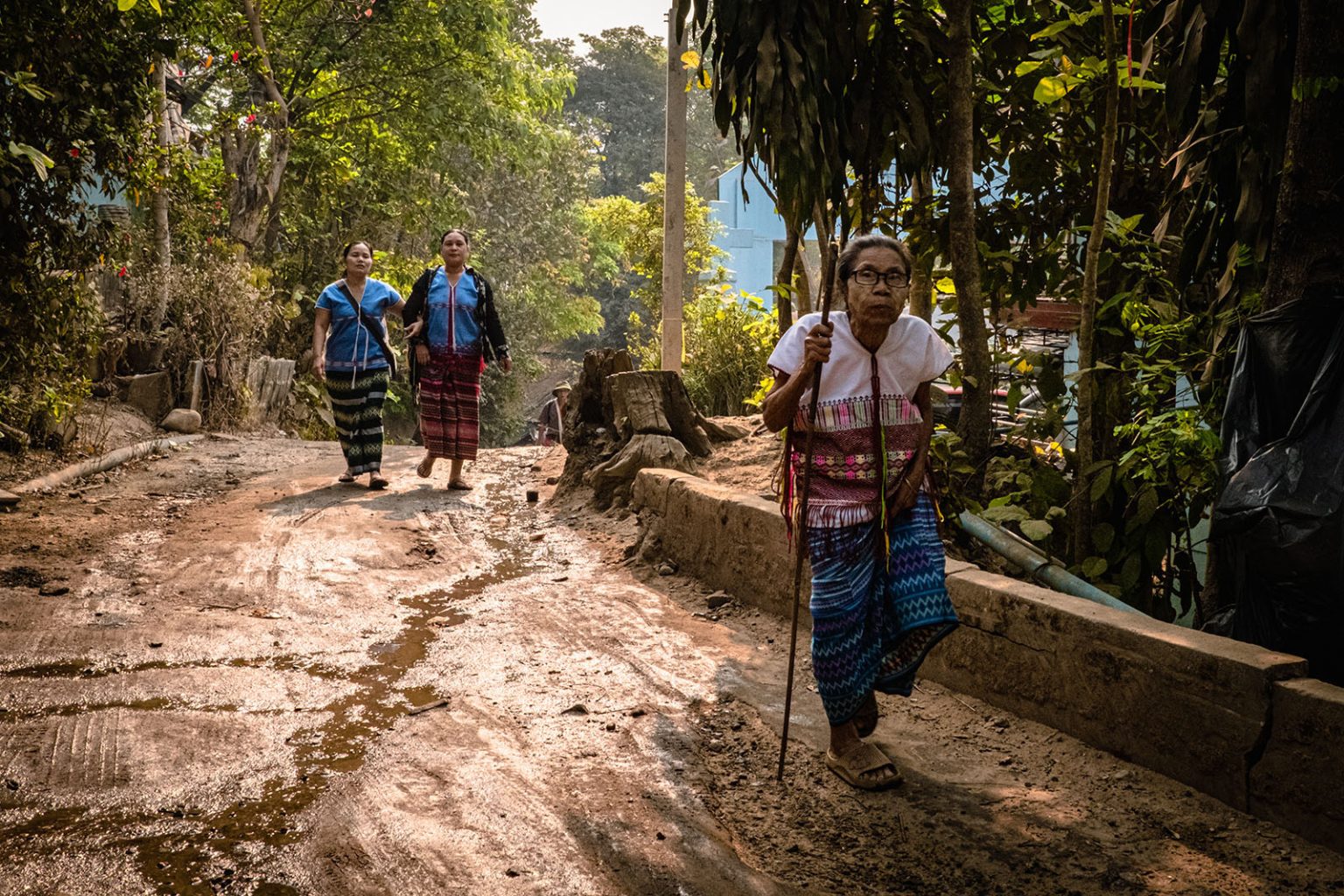
Mae Sot – Khat has lived in the Mae La refugee camp for nearly two decades. At 70, with diabetes and chronic knee pain, he depends on the camp for food and medical care. Over the past year, both have been cut back sharply.
“For chronic patients like me, we still get some basic medication to keep going,” the Karen man said. “But that’s all it is – it’s just enough to stay alive. If any emergency hits, there’s nothing anyone can do. When that happens, we are on our own to find a way out.”
One year ago, the United States announced the termination of 83 percent of its foreign assistance programmes – the culmination of a sweeping aid freeze that had begun when the Trump administration took office in January 2025. Among the programmes affected was funding from the State Department’s Bureau of Population, Refugees and Migration, long one of the largest sources of support for humanitarian operations along the Thai-Myanmar border.
For Mae La and the eight other refugee camps strung along this frontier, home to roughly 100,000 people, the consequences have been severe and accumulating ever since.
A fragile system
For four decades, Thailand’s refugee camp system has sustained this population, most of them ethnic Karen fleeing conflict in Myanmar. The system functioned, but it was structurally fragile: heavily dependent on a small number of international donors.
The Border Consortium, or TBC, is the primary organisation responsible for food, cooking fuel and shelter in the camps along the Thai-Myanmar border, funded largely by international donors including the United States. That funding covered the rice, cooking oil, beans and charcoal that formed the basis of daily survival for the camps’ residents.
Over 80 percent of Mae La’s population of more than 37,000 lost their food assistance when TBC’s funding was cut. Only those classified as Most Vulnerable or Vulnerable – those entirely dependent on aid – continued to receive support.
“As a direct consequence,” TBC told HaRDstories, “TBC can no longer provide food assistance to Standard households, who make up over 80 percent of the camp population.”
Other organisations – including the Karen Refugee Committee, the Karen Women’s Organisation and a network of community-based groups – continue to operate in the camps. But TBC remains the primary provider, and its reduced capacity has left a gap that others have not been able to fill.
Healthcare in freefall
The collapse of international funding has hit healthcare hard. The International Rescue Committee, which previously managed medical services in the camp, has withdrawn. In its place, Tha Song Yang Hospital, a Thai public facility, has been asked to absorb the shortfall.
Patients with chronic illnesses who previously received a two-month supply of medication now receive enough for two weeks. In emergencies, residents must arrange their own transport to outside hospitals and cover all costs themselves.
Even basic preventive supplies have become hard to come by. Residents say rabies vaccines are currently unavailable in the camp, leaving those who need them to travel to Thai hospitals at their own expense. “If your dog bites someone,” one resident said, “you could be fined 6,000 baht.”

Working outside the camp
For most of their time in Mae La, residents have had no legal right to work outside its boundaries. Confined to the camp and barred from the formal labour market, they have depended almost entirely on international aid for their survival.
In August 2025, the Thai Cabinet approved a measure that offered a partial response to the crisis: refugees would be permitted to work legally outside the camps, across 43 provinces in northern and central Thailand. Camp authorities say 1,139 residents have so far been authorised to take up employment.
In practice the programme has brought mixed results. Work depends on companies coming to the camp to recruit, and for the elderly there are no opportunities. Those who do find work report wage discrepancies – initial agreements of 200 baht a day sometimes settle at 150. Language is a further barrier: most residents speak primarily Karen, while agricultural worksites operate in Thai, Burmese or Shan.
“Some are Karen and cannot speak Burmese,” Khat said. “They have grown up and lived only in this camp.”
He noted that some workers, unable to endure the physical demands, return to the camp early.
For the elderly, the chronically ill and those without language skills, the option of outside work does not exist. For them, the shrinking of international aid has no practical substitute.
Looking for a way through
There are no large-scale repatriation programmes. Resettlement to third countries like Australia, Japan, South Korea remains available for only a handful of cases. Returning to Myanmar, where conflict continues, is not an option for most. And staying in the camps has become increasingly difficult.
TBC has pushed back against rumours circulating in the camp that NGOs would fully withdraw by October, saying it has no plans to cease operations entirely. It says it aims to meet the needs of the most vulnerable households as fully as its remaining resources allow.
Thai authorities, meanwhile, are looking for alternatives. “The US budget cuts have reduced funding available for infrastructure, food and medical care,” said Nopparuj Saengsawang, the Mae La camp commander. “These issues are being addressed on a case-by-case basis, and we are seeking support from new international donors.” Discussions are under way with the Japanese embassy and JICA.
Khat’s diabetes and knee pain are managed, for now. The medication arrives, in reduced quantities, every two weeks. What happens beyond that, an infection, a fall, anything unexpected, he cannot say.
“If we eventually get nothing,” he said, “I wonder if we are just left waiting for the day we die.”
This story is part of a collaborative reporting project between HaRDstories and Delta News Agency, supported by the Canada Fund for Local Initiatives.