
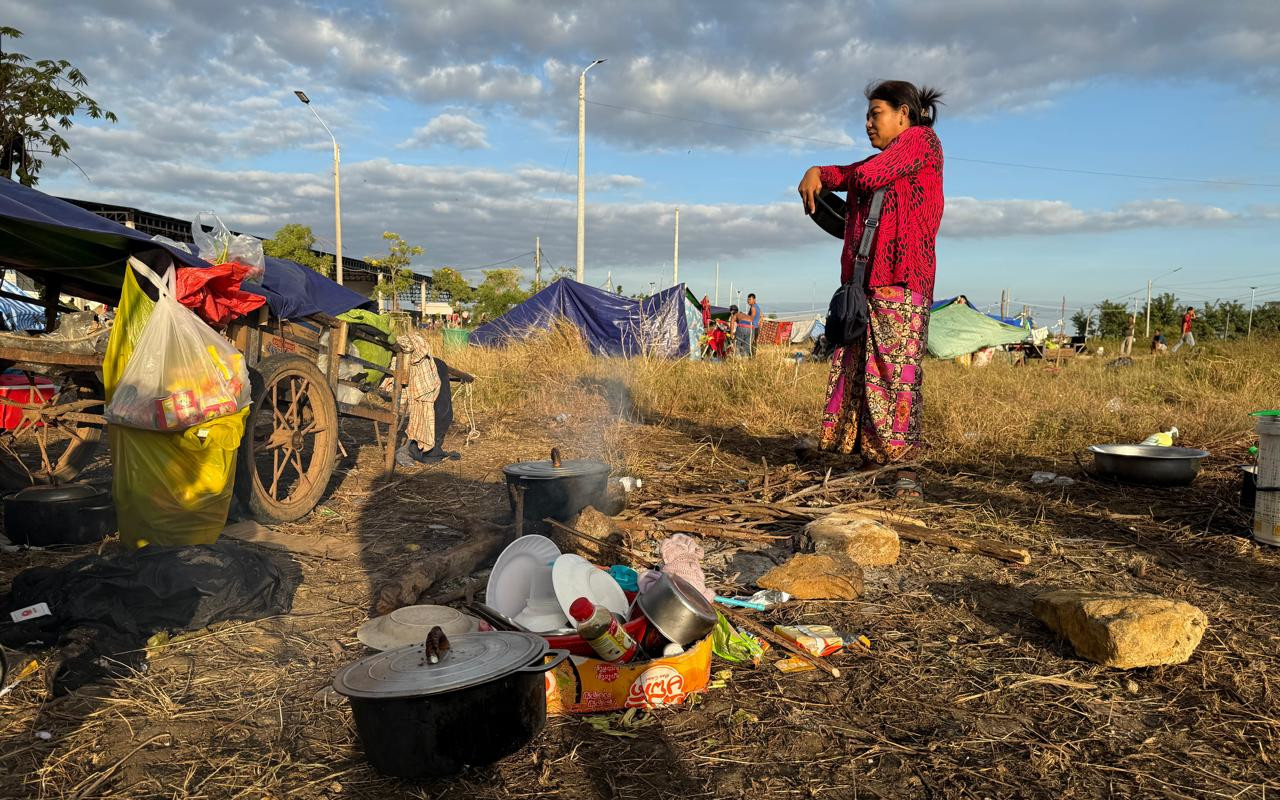
When artillery fire shook Cambodia’s northwest provinces, almost everyone fled, with little thought for the future. Some have started to return now that Cambodia and Thailand reached a fragile ceasefire, and the 18 soldiers captured by Thailand have been returned. But as of Monday, about 200,000 remained in internally displaced persons (IDP) camps across pagodas, emptied markets and roadside fields, waiting to go home.
A reporter for Mekong Independent visited evacuees in camps in Battambang, Banteay Meanchey and Oddar Meanchey provinces on December 16 and 17 in the midst of their stay that would stretch to nearly a month or more. Civilians’ lives and emotions were affected by their exposure to fighting and experience in survival camps.
Escaping their homes
Three days before she fled, Huy Leap, 55, said her village’s chief had warned them that their homes along the Thai border in Battambang province could be targeted.
Leap was still shocked when she heard explosions on December 9.
“We heard the sound of an explosion shaking and echoing across the earth about 3 meters from our homes,” she said. “We almost could not make it in time to flee. … We were too panicked so we forgot to take our rice pot and we only brought one set of clothes. The following day, my husband went back to pick up the rice pot and other kitchen supplies.”
Leap said they arrived at the Hloung Peng pagoda in Battambang province only to find it overcrowded. She was still surprised her home had become a target of conflict.
“They are shelling at the mountain [near my home] because they believe that there is an army base … but there is not.”
Mao Lai, 53, said her travel to the resettlement camp in Battambang’s Khiev Moeung Ou Taki market was terrifying. There was constant traffic, and people were shaken by the sound of artillery and resulting chaos.
“Some kids were separated from their families, and they had to find each other in the morning,” she said.
“I was very terrified and panicked … but after I met up with my brother and sister, [those feelings] went away.”
Twelve-year-old Leakhena, a student who had to stay at the internally displaced persons camp in Battambang’s Hloung Peng pagoda, said that she was in class when they heard artillery.
“I heard a strong explosion while I was writing. Me and another student got really scared [so] we ran to our homes,” she said, adding that she left her electric bike at the school. “One of the students who sits next to me forgot their bags and left them behind at school.”
When she heard artillery in Battambang province’s Sampov Loun district on December 9, Kea, 38, had to figure out a way to move her parents, who are 80 and 76 years old. The family were transported from near the Phnom Dei border checkpoint.
“The explosion occurred in Sampov Loun, close to us, so we needed to flee because our parents are very old and cannot walk.”
So far the displacement camp where they landed, the Khiev Moeung Ou Taki market in Battambang’s Thma Koul district, has taken care of them well, Kea said.
Leaving Sampov Loun was chaotic for Bou Eean, 52, as his family had to leave their homes at 10 p.m. and fled in the dark with only a motorbike.
During the three weeks of fighting, artillery approached their internally displaced persons camp at the Kouk Khmum pagoda in Battambang’s Thma Koul district, but he wasn’t sure what to do if the conflict got too close.
“We do not know where to run anymore because we have escaped from [our homes],” he said. “This is already far for us and if the explosion reaches here, we do not know where to go anymore since we do not have any vehicle to travel.”
Those who stayed behind
Bou Meth, 63, did not want to leave his home. He helped others flee their homes in Battambang’s Sampov Loun area, but then he came back to be with his wife, still at home. Meth said he was formerly a soldier, and had experience with conflict.
“I committed that even if there was an explosion, I will not flee,” he said. “But because we were the only family remaining and it was quiet, we packed up our stuff and came here.”
Meth and others in his village were about to harvest corn and cassava, making this decision to leave especially frustrating, Meth said. “We are angry with them because they do not allow us to stay in peace.”
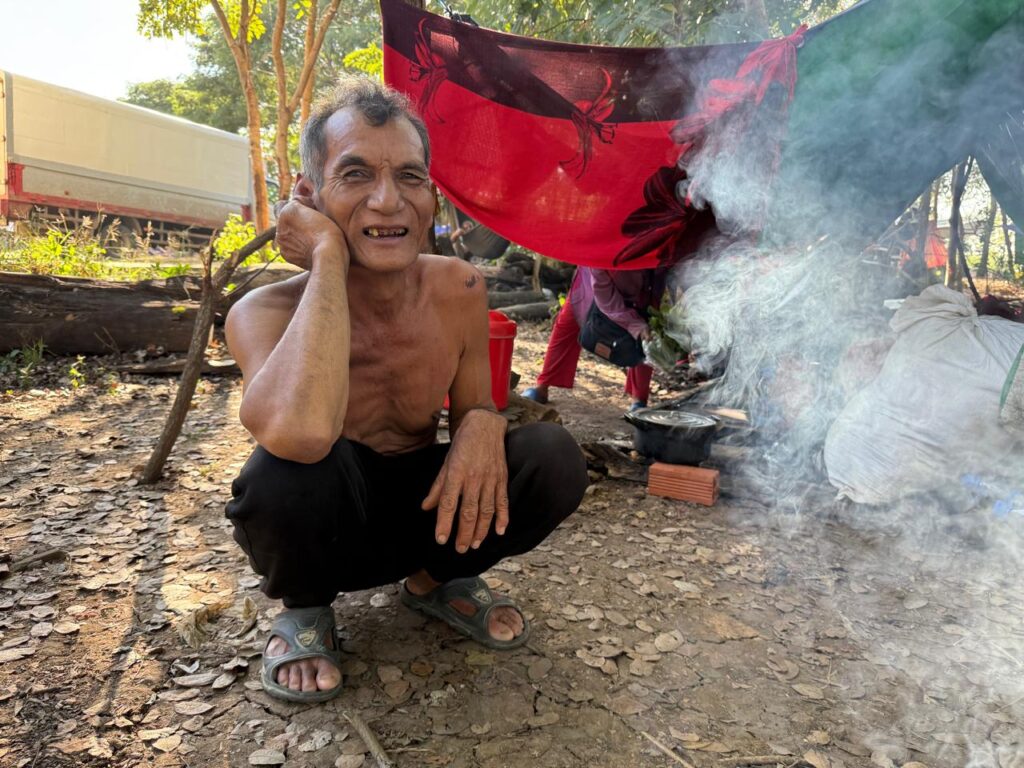
Rath, 58, fled the construction site where he works on December 9, one day after he heard artillery shells going off from the grounds in Banteay Meanchey’s O’Bei Choan district.
He said he left with no supplies, because the cooking supplies were owned by the construction company: “We do not dare to go take them from the building because we are not allowed to.” As he fled with his motorbike, he saw luxury vans and a few buses approach the sprawling complex where he worked to transport Chinese and other foreign workers out.
Some of the Chinese people who live in the O’Bei Choan complex had stayed through the conflict. He joked that they would probably be fine.
“At that time we only saw shelling at our residences, but the shooting did not hit any of the construction areas yet,” he said. “[Thai armed forces] might be afraid to bomb it because they are afraid of the Chinese.”
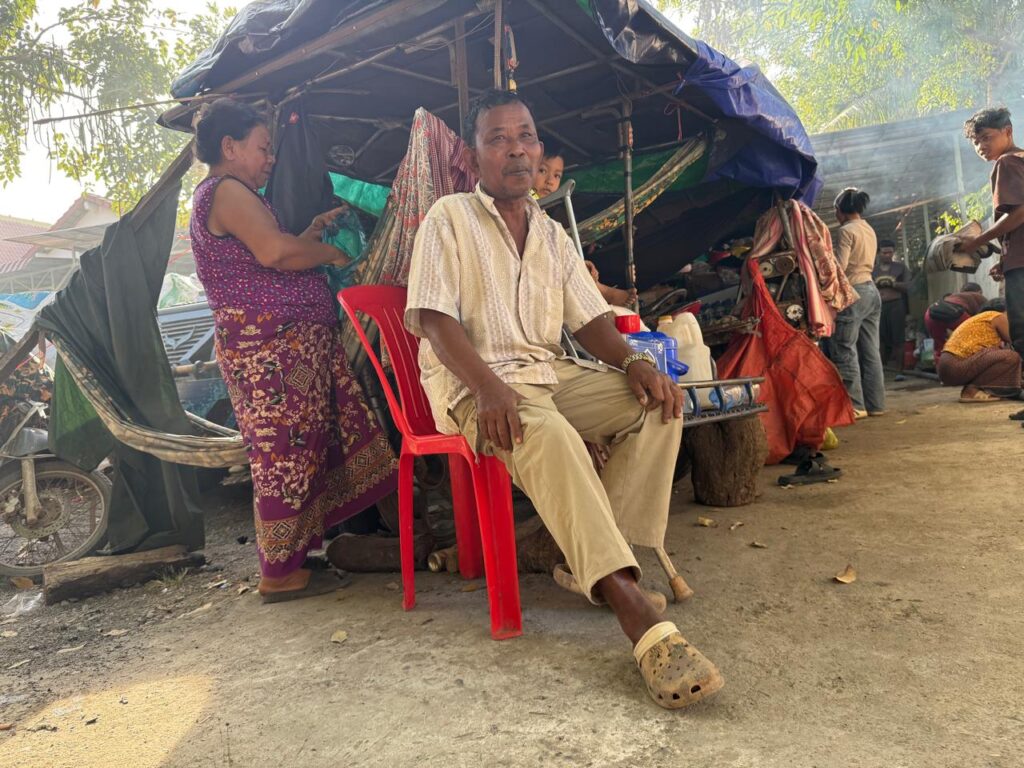
When Lay Seak, 62, and her eight family members decided to escape their home in Phnom Proek near Battambang province’s border with Thailand, her son decided to stay behind at the house.
“Our one son is guarding the home because otherwise there would be burglars breaking in to take our things,” she said.
This son is a cook for a Chinese construction company, and his income supports their whole family, Seak said. She and her husband, who has a broken leg, can’t work, while her second son, also a construction worker, has not been paid by his employer for three months.
“If we were better off, [our son] would come here with us,” she said. “The ones who are well off and have better living conditions, they can flee, while the poor will grasp to stay on at work and earn money to support their family.”
What’s for dinner
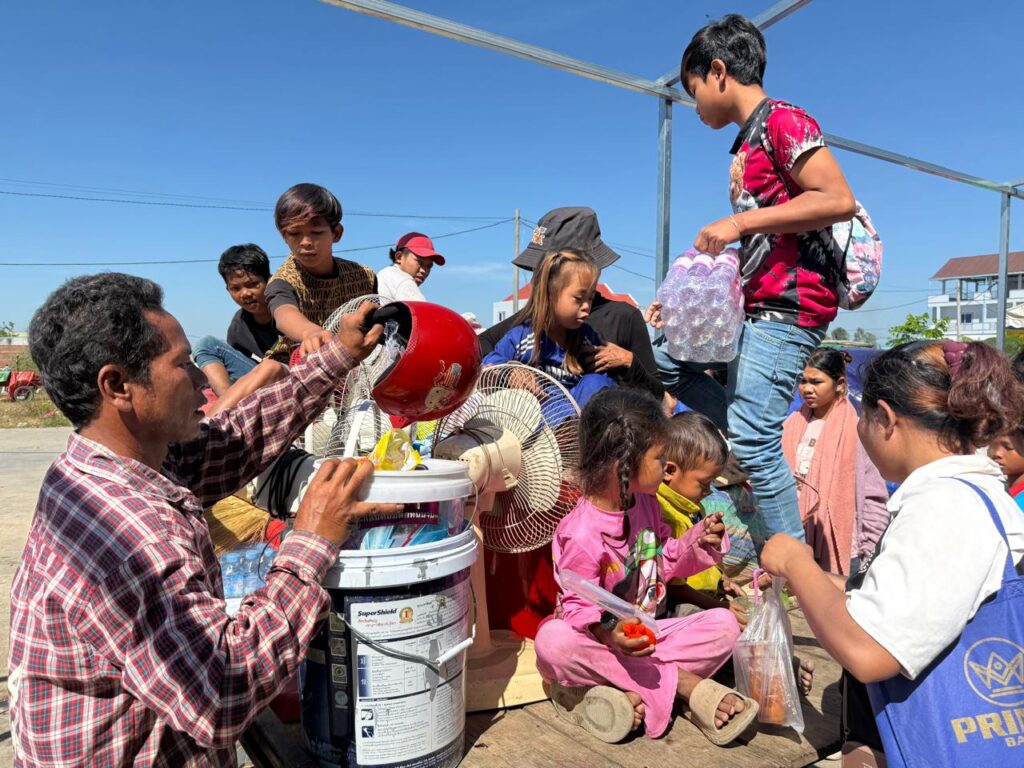
Thirty-one-year-old Veasna was starting to worry about access to water at the Chamkar Ta Dok market IDP camp in Banteay Meanchey. A charity drove by to drop off boxes of bottled water, and Veasna secured one. Between cooking and drinking, the water goes fast, he said.
“How long can we use the 5 kilograms of rice, because I have children and a wife, how long can it last, this box of drinking water,” he said.
If they can’t collect more donations, Veasna said he would consider returning home where at least he can go fishing.
“We just want to survive, we want nothing else.”
When Yin Chonly, 45, arrived in the same camp from the disputed Chouk Chey village, she said she received a mosquito net, pillow, and krama scarf, and for food rations they got a bottle of fish sauce, two eggs, two packages of noodles, one can of fish, 10 kg of rice and a box of drinking water. About a week later, they still received no other distributions, making it a challenge for her family with two children to survive.
Chonly wondered where all those stockpiled donations were going.
“Speaking from the bottom of my heart, it is OK if they bring all the donations to the army, but we do not know where they have taken all of the stuff to,” she said. “We are concerned whether their distribution is happening in a transparent way.”
Local officials at the Hloung Peng pagoda in Battambang started calling a limited number of families up to receive donations. When supplies arrived on December 15, officials called queue numbers 1 through 50, and then 119 through 139. The pagoda only had limited donations, with officials asking the evacuees to be patient.
Hun Yorn, a 70-year-old grandmother waiting with her grandchild, said she got skipped over this time.
Yorn started to panic when she realized this, saying she had arrived with no supplies, having rushed out after trying to secure her chickens and ducks.
“They accused us of pretending to be evacuees and we know it,” Yorn said. “They are worried that the people in this neighborhood will pretend to be evacuees to claim the donations and supplies. They said that we are faking it.”
Another woman in the queue tried to reassure Yorn, telling her there are other sources of supplies at the camp if they don’t get the donation distribution today.
Surviving with no income
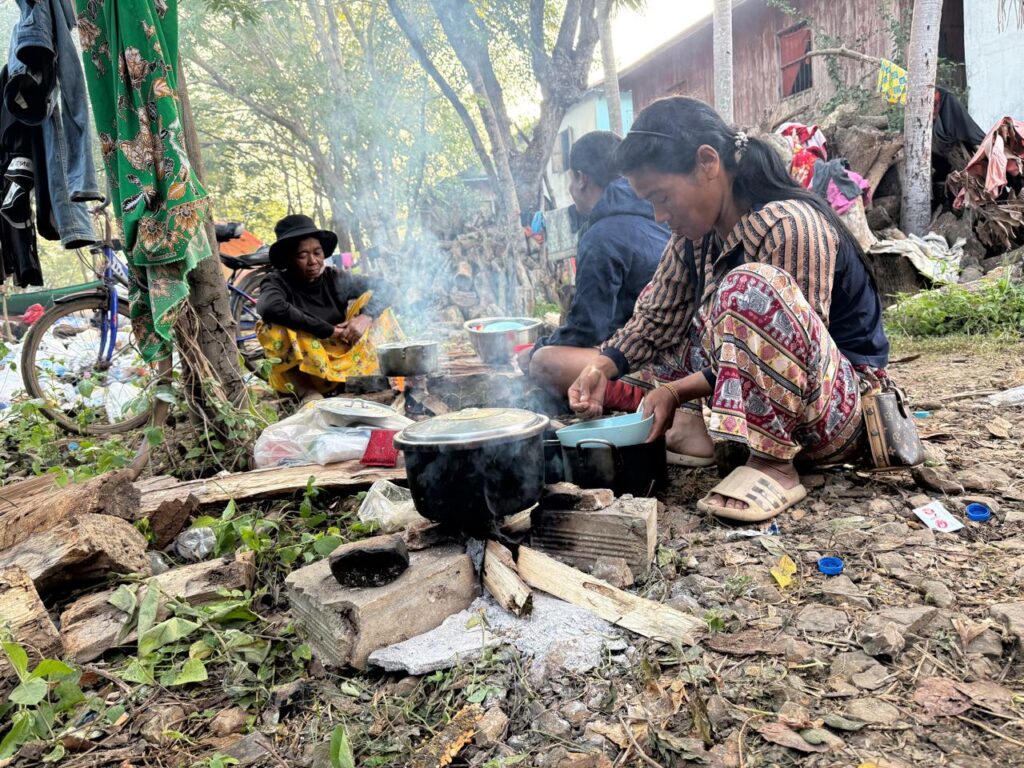
Phon Phally, 46, said she was sleeping with no tent, mat or pillow, and the mosquitos came to bite her nightly at the pagoda in Battambang’s Kouk Khmum commune.
Her family left without their important identifying documents, like ID cards, birth certificates and family book. “We did not have enough time to prepare and did not expect the explosions that quickly.”
She was currently living off donations from the pagoda — rice, canned fish, instant noodles, dried fish and fish sauce, she said. “We barely have money to buy a bottle of water.”
Phally said she sells the few possessions she has at the camp.
A construction worker — who remained anonymous because she worked in construction for a major Chinese development in Banteay Meanchey’s O’Bei Choan district, said she goes to sleep hungry every night.
Usually the construction company would pay them on time, but they hadn’t been paid for two months because of the issues related to the border conflict. That lack of payment left her to sleep without a tent or mosquito net at the resettlement camp in Banteay Meanchey’s Ou Chrouv commune.
“We have worked for them very hard tirelessly … hundreds of workers do not get their payment and they scam us.”
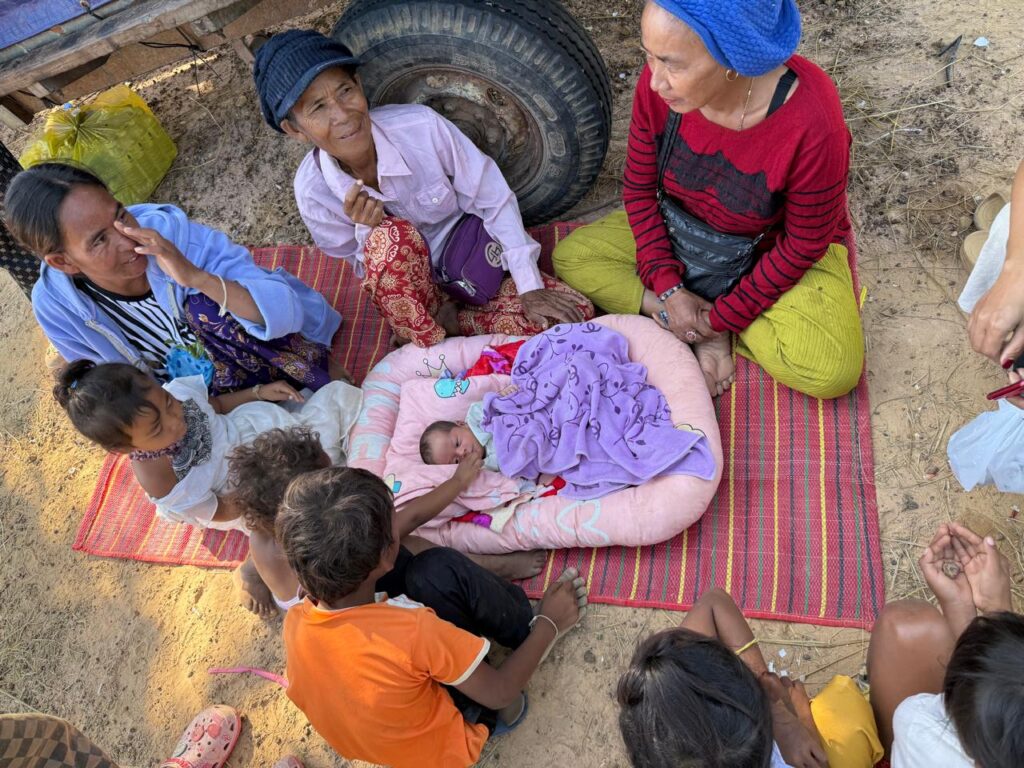
What awaits
Horn Koul, 31, was relieved to arrive at the Khiev Moeung Ou Taki market, which she found to be well stocked with donations. “In here, they provide us enough food and donations come in from everywhere … They have taken care of us well.”
Both she and her husband work in construction in Banteay Meanchey’s Malai district. There they had taken loans from two banks, Prasac and Hatha Bank, which come to collect from her every month, even after they asked for conflict-related delays. She said they had no money to spare on supplies while fleeing their home, and worry it will be gone when they come back.
“We heard many shots that were very close to us, so we were afraid and scared, so we needed to flee … We do not know the situation of our homes because everyone fled from their homes.”
Ouch Rachhay, 53, said he knows his house will be destroyed.
Rachhay is a resident of Chouk Chey village in Banteay Meanchey, one of the villages that Thailand has claimed should be returned to them.
Cambodian Prime Minister Hun Manet already warned civilians that even in a sustained ceasefire, residents from disputed areas will not be able to return immediately, but reassured civilians that an option would be provided for them.
Right now, Rachhay said all he can do is try to fight crowds for a portion of the donations brought to his camp, in the Chamkar Ta Dok market in Banteay Meanchey’s Mongkol Borei commune. But he does not know what his future will hold for him.
“Our homes have been completely destroyed and demolished because they have started firing since very early in the morning around 6 a.m.” on the first day of the December fighting, he told Mekong Independent. .“We have received information that our house have been burned down.”
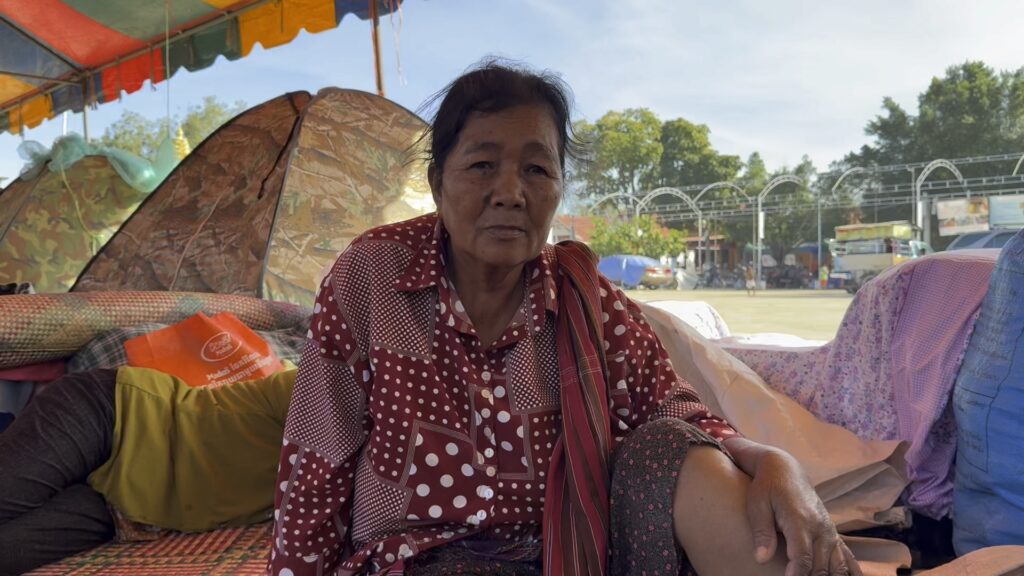
Chuk Chong, a 71-year-old man waiting at Battambang’s Kouk Khum pagoda, said he was waiting to see his fate.
“If our lives are worth it, we will live on and we will escape the bullets,” he said. “It depends on our good luck or bad luck.”
Anger and fear
Kim Sron, 71, arrived in the Utdom Monivong pagoda in Battambang province with her children and grandchildren, because one of her kids was pregnant with their own. But she says she was once a soldier, and she was outraged to leave her home in Sampov Loun near the border.
“If they give me a gun, I will sacrifice my life for a Thai soldier, and even if it’s one Thai soldier, I dare to exchange for it,” she said. Sron said she began exercising while in the camp, just in case she needs to be prepared for battle.
As she spoke to a reporter, Sron demurred from her previous threat. She said she was enraged by the fact that she had to leave her home often over the second half of the year. She said she felt the fighting started without provocation.
“We have never wanted revenge from them, but they keep disrupting our lives again and again,” she said. “We have done nothing to them but their army comes and shoots at us, who are innocent people. We have never wanted to claim anything from them or invade them.”
Sron said she would return to her home in Sampov Loun after her child gave birth, which should happen in days of Mekong Independent’s visit. But until then, she sat with two of her grandchildren, listening to see when local authorities would call her number to pick up donations for the family.
Sa Lainh said she began to cry as she began to flee her home in the Chouk Chey area when the fighting started.
“They asked me to calm down and relax, as we were very upset over our property,” she said. “We can only cry and cry at that time.”
She added that she wasn’t sure how her husband, a police officer, was doing because he had been involved in the conflict. “We just want my husband to be safe, he got injured and poisoned by smoke sent to the hospital for treatment.”
The 67-year-old cried again as she recounted her experience to Mekong Independent. She said she had to leave her home and car behind. She estimates the family invested more than $38,000 into those two assets, but she does not know if they will still be intact when she returns.
“I am speechless about this fighting, I have nothing to say because I have lost everything. The whole village has suffered losses,” she said.
“Everyone has experienced the same, and they cannot cry out for their losses.”
This article is published as Creative Commons.