
This article was originally published on Dialogue Earth as Creative Commons.
In August 2025, Malaysian campaigner Wong Pui Yi stood outside the UN headquarters in Geneva and made an appeal to Global North nations: “Stop treating the Global South as the rubbish bin for plastic waste you cannot handle.”
During that meeting, representatives from 184 countries failed to reach an agreement on a treaty to end plastic pollution. But the need for one has not gone away, particularly for Southeast Asian nations.
The region became the top destination for plastic waste imports following a solid waste import ban by China in 2017. Imports remain at a higher level in some of the region’s countries, according to data from UN Trade and Development. Data from the OECD, a group of mostly high-income countries, found that Malaysia, Indonesia and Vietnam remained the top non-OECD export destinations for waste from OECD countries in 2023.

Some Southeast Asian countries have implemented bans on plastic waste imports. But experts fear this will only lead to a reshuffling of waste to other countries with weaker restrictions, perpetuating the cycle of what critics call “waste colonialism”.
This term, first recorded in 1989, suggests that the trade enables the high-consumption lifestyles of the Global North, with countries in the Global South left to deal with the consequences.
Exporting health and environmental harms
The global waste trade emerged in the 1980s as a means for countries with high recycling costs to send waste to countries where recycling could be done at lower cost. In countries like China, imported waste also filled a gap of raw materials to produce plastics, metals and papers.
Looser environmental regulations in importing countries made the plastics trade commercially viable. “They export the pollution to Southeast Asian countries, since we have less regulation and less control because of our historical context,” explains Punyathorn Jeungsmarn, a plastics campaigner and researcher at the Environmental Justice Foundation.
In theory, the trade is meant to create jobs while developing new revenue streams and recycling infrastructure. In practice, however, it has overwhelmed waste management systems in many importing countries.
Thitikorn Boontongmai is programme manager and researcher at Ecological Alert and Recovery Thailand (EARTH). The NGO inspected several “illegal recycling factories” in eastern Thailand and observed waste simply dumped in landfills rather than processed.
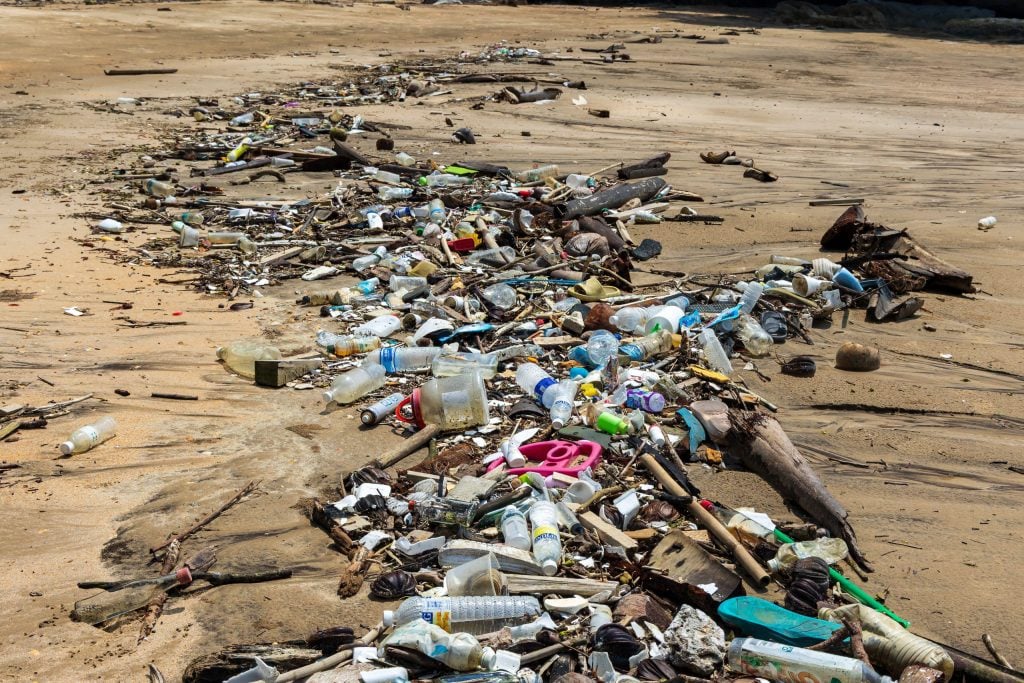
With heavy rainfall, much of this plastic ends up in the oceans by way of the region’s long rivers and coastlines: six of the ten highest plastic polluting countries are in Southeast Asia.
In Thailand, the availability of cheap imported plastics has led to lower demand for recyclables. This lowers prices for the waste pickers who collect and trade these materials, Punyathorn explains. He notes that pickers have threatened to stop collecting waste unless the government bans the import of plastics. “If they stop collecting, then the waste in the ground and on the streets is not collected, and you have a situation where the entire domestic supply chain is disrupted.”
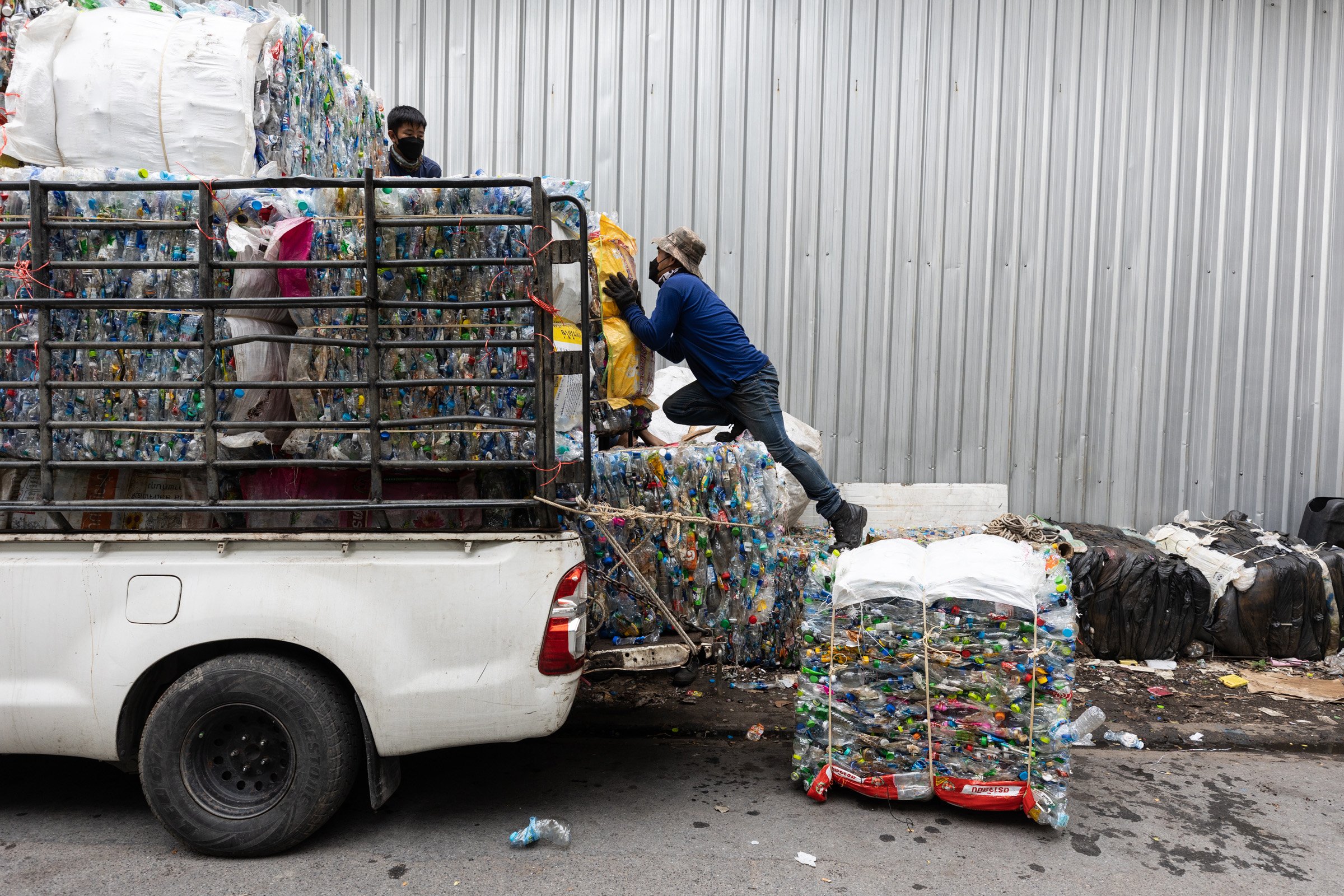
The plastics trade has also affected human health. An investigation by Greenpeace Malaysia around a dumpsite in Pulau Indah found hazardous chemicals and heavy metals such as cadmium and lead. The report noted that these contaminants may cause health issues including cardiovascular, respiratory and cognitive diseases. Between 2018 and 2019, when plastic burning spiked in Sungai Petani, Kedah, community advocates reported a 30% increase in cases of respiratory diseases.
Southeast Asia pushes back
In response to their environmental impacts, several Southeast Asian countries have rolled out restrictions and bans on waste imports. In January 2025, the Thai and Indonesian governments announced the immediate halting of plastic scrap imports.
Fearing the arrival of waste diverted from those countries, Malaysia restricted the inflow of plastic waste. In July 2025, it banned shipments from countries not party to the Basel Convention on the waste trade. A further ban in February 2026 forbade the import of e-waste, introduced shortly after a six-month blanket moratorium on all types of waste import was proposed.
Sedat Gündoğdu, a marine biologist and member of the Scientists’ Coalition for an Effective Plastics Treaty, says complete bans work because “shipping companies will avoid carrying any kind of waste to your country. This is what China did”. But some activists and experts note that bans have not always stopped imports. Thitikorn says EARTH had seen cases of imported plastic waste being declared as something else in Thailand. Campaigners in Indonesia have also documented paper scrap imports being contaminated with plastic, with up to 30% of the import being plastic. These have been sold to brokers or burned as fuel.
“At the end of the day, when it comes to a local level,” Punyathorn says, authorities with power to regulate or permit certain things coming in “may have vested interests that allow them to just… circumvent these [bans]”.
Lukas Fort, who researches Indonesia’s environmental governance at the University of Copenhagen, tells Dialogue Earth that the recycling industry’s dependence on imported plastics “raises the possibility that imports may continue in some form if enforcement is uneven”. He says this is especially so due to the often competing interests of government bodies, for instance the environment ministry and the trade or industry ministry.
Even if bans are effectively implemented, campaigners raised concerns that they would just change where plastic waste ends up. “Every year it’s a new destination,” says Kaustubh Thapa, a post-doctorate researcher at Radboud University’s Faculty of Environmental Science. “Waste traders always will find [new] destinations to exploit.”
An example of this can be seen in 2023, as plastic waste import restrictions were tightening in countries like Thailand. An investigation into customs data during this period revealed that much misreported waste from Europe and North America had been illegally dumped in war-torn Myanmar, transiting through Thailand.
Though Punyathorn thinks the effectiveness of restrictions are limited, he is hopeful about other measures being considered. In Thailand, these include the Sustainable Packaging Act, in which producers will be responsible for post-consumption management of waste, such as recovery and recycling. This act, along with proposed policies on circular economy and a pollution register, show that there is a “growing momentum towards trying to use domestic waste rather than imports”, he notes.
The global plastics treaty
As Southeast Asia deals with the continued influx of imported plastic waste, a global plastics treaty still hangs in the balance. The most recent round of negotiations in Geneva in August 2025 ended with a weakened draft text. Chief among the challenges faced were efforts by oil-producing states to block measures to curb plastic production and regulate chemical additives to plastic.
Even nations pushing for an ambitious treaty have avoided confronting the waste trade directly, Gündoğdu notes, referring to member states of the High Ambition Coalition to End Plastic Pollution (HAC). “How can a high-ambition group not be ‘high-ambitious’ about strict control of plastic waste trade to [countries in] Africa and other countries?” he says, noting that European HAC members are some of the largest plastic exporters to developing countries. Similarly, some Southeast Asian states have had to balance their petrochemical industry ambitions with resolving the negative impacts of imported waste.
“The last negotiation left off on a very uncertain note,” says Punyathorn, highlighting the resignation of former treaty chair Luis Vayas Valdivieso after nations were unable to agree on two drafts he proposed. Since Dialogue Earth spoke to Punyathorn, a new chair was elected, revitalising hopes of momentum towards an effective treaty.

Existing international legislation could provide a guideline for what an effective plastics treaty could look like. In 2019, the Basel Convention was amended to strengthen control of the transboundary movement of plastic waste, notably requiring prior informed consent before such waste crosses borders.
However, being voluntary, the convention is insufficient, says Gündoğdu. A treaty should address the waste trade in a manner aligned with the convention, while consolidating the existing codes for hazardous, non-hazardous and plastics under a single definition of plastic waste to make it more difficult to exploit loopholes, he notes.
One of the key dividing lines in the negotiations – for which next official rounds are anticipated at end-2026 or early 2027 – is whether the treaty will include a cap on plastic production, which is where the harms of the waste trade begin, Punyathorn says.
He explains that countries with more natural gas and oil than needed for energy production will use it to produce plastics, particularly disposable single-use items such as bags, spoons and straws, in order to flush out a high supply as quickly as possible. Once disposed of, these low-quality plastics are harder to collect, recycle and manage, and so are often exported to poorer countries.
He says the best way to stop this is to turn off the fossil fuel tap causing this overflow, “make plastics more expensive, and then you would only have necessary products that can be properly managed throughout the value chain”.
Isa Lim MCIPR is social media officer at Dialogue Earth, based in London. She joined in 2025 bringing experience as a digital communications strategist across mission-driven organisations working towards climate action, including climate tech startups, global NGOs, and higher educational institutions. Isa leads the development of Dialogue Earth’s global social media strategy, amplifying our stories to a growing audience across platforms, formats and geographies. She studied Politics, Languages and Culture at SOAS, University of London. In her free time, Isa enjoys cooking, baking and exploring London’s diverse culinary landscape.