
In front of 3,000 guests, the Cambodian government showed an educational video outlining the dangers of scam operations in the country.
A young Cambodian woman sees a job recruitment ad on her phone promising salaries of $1,000 to $3,000 a month. Her mother speaks of needing money every month to pay for medical treatments and their land, and the daughter soon travels to the city in a black van.
In a compound surrounded by barbed-wire, she learns her job is to scam people online. She is taken to a back room and beaten bloody.
The audience on Wednesday at Koh Pich theater in Phnom Penh included senior officials from the Senate, National Assembly, government ministries, and provincial and local administrations, as well as representatives from police, military, military police, foreign embassies, the U.N. and civic, religious and youth groups.
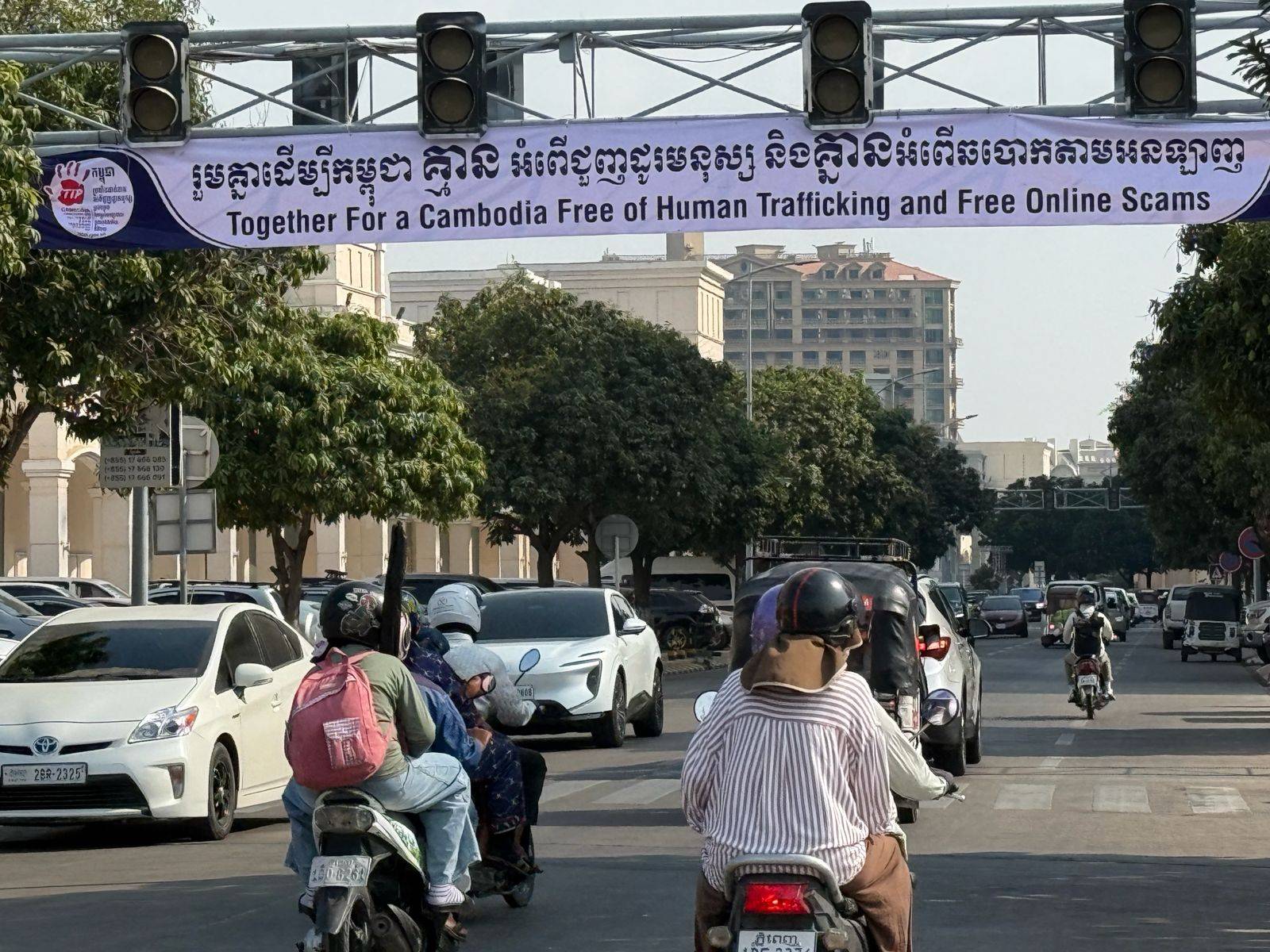
Outside the theater hung large banners among dozens of parked luxury cars:
Youth should be a new generation of capable human capital to eliminate online scams and trafficking in persons.
The family is the first school that teaches children awareness and self-protection against scams and trafficking in persons.
Together for a Cambodia free of human trafficking and free online scams.
Everyone must protect themselves and their families from online manipulation and deceit by scammers.
Interior Minister Sar Sokha presided over the event, and spoke of recent efforts to crackdown on nationwide scam operations.
Some 210,000 foreign workers had voluntarily left the country and 30,000 deported, he said.
The sector had been shrouded in darkness, but now “we have a dim white light, and we should not relax, and continue to pay close attention,” Sar Sokha said.
The government has committed to eliminating the scam industry by April.
“We have very little time to achieve the common goal of the government to clean up and destroy online scams in the Kingdom of Cambodia.”
He said authorities would further tighten controls on landowners housing foreigners. In the past, they had been unable to enter certain buildings, but with recent regulations they were free to take action.
“So please, owners of houses, boreys and buildings that provide shelter, like guesthouses or hotels, give information so that [we can] control the foreigners who stay in the Kingdom of Cambodia.”
Sar Sokha posted a video of the event on his social media page.
Chou Bun Eng, permanent vice chairperson of the National Committee for Counter Trafficking, spoke on Wednesday that 2,919 requests for assistance had been received from families, embassies and others since January 2025.
About 200 locations had been shut down involving 2,500 small and large operations.
She emphasized the importance of strengthening the criminal justice system, including investigations, research, crackdowns and penalties, as vulnerable people continued to believe deceptions and were lured into the traps of criminals.
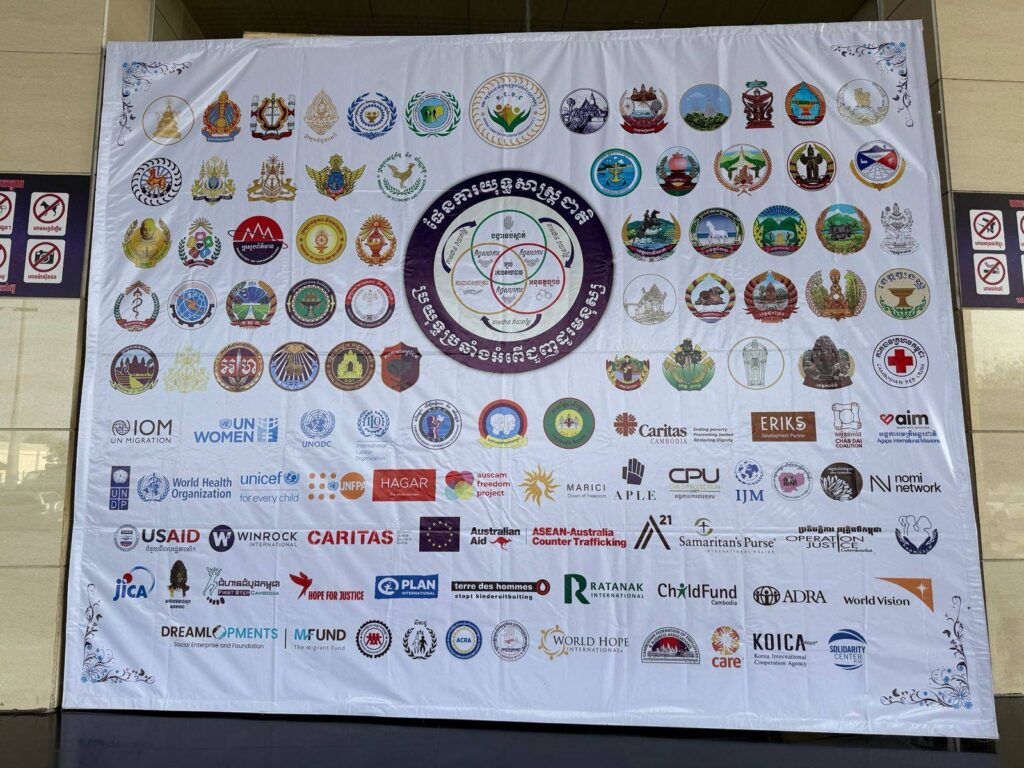
“In this regard, all ministries, institutions, departments and organizations at both the national and sub-national levels have collaborated closely with national and international partner organizations, civil society organizations and the private sector to create a good environment and achieve commendable results,” Chou Bun Eng said.
The latest wave of crackdowns surged in January as Prince Group chairman Chen Zhi was arrested and deported.
The government’s rhetoric is a turn from recent years. Unlike the educational video shown on Wednesday, denials of torture and forced labor were common in recent years.
Some prominent Cambodian tycoons and politicians have also been accused of involvement in the industry. The U.S. has sanctioned tycoon and senator Ly Yong Phat, while Thailand has issued arrest warrants for Ly Yong Phat and senator Kok An.
OpenCorporates has meanwhile recorded the Commerce Ministry’s business registry as listing Sar Sokha as a former director of Jinbei Investment until 2018 alongside Chen Zhi. Jin Bei is the name of several hotels allegedly linked to the Prince Group and scam operations in Sihanoukville. The Cambodian government has issued a statement that Sar Sokha is not an investor in Jinbei and not involved in its work.
Sar Sokha’s wife, Ke Suon Sophy, was head of the Prince-sponsored Visakha football club, according to a Fresh News article from 2019. The club’s stadium was called Prince Stadium until the name was changed. Ke Suon Sophy’s father is former military commander-in-chief Ke Kim Yan. In 2024, two commune officials in Preah Sihanouk province said land at the sites of two scam raids was owned by Ke Kim Yan, CamboJA reported.
Prime Minister Hun Manet also spoke openly about the scam industry in Cambodia in a rare interview with AFP this week.
“The scam network, what we call the black economy, is destroying our honest economy. It has put a bad reputation on Cambodia,” Hun Manet told AFP.
“This is the reason why we need to clean this out.”
Hun Manet added that Chen Zhi had operated as “just a businessman” until allegations surfaced. “We did not know that he was the kingpin.”
Vorn Pov, president of an informal workers’ union, the Independent Democracy of Informal Economy Association (IDEA), told Mekong Independent after attending the event that the government had clearly acknowledged that the story of online scams and related human trafficking in Cambodia was true.
Referring to the educational video, he said, “The ones who cannot scam people, they will beat, hurt and torture them, resulting in almost losing their lives.”
“In the end, the government’s message clearly stated that human trafficking occurs due to financial issues, and only the police can help them.”
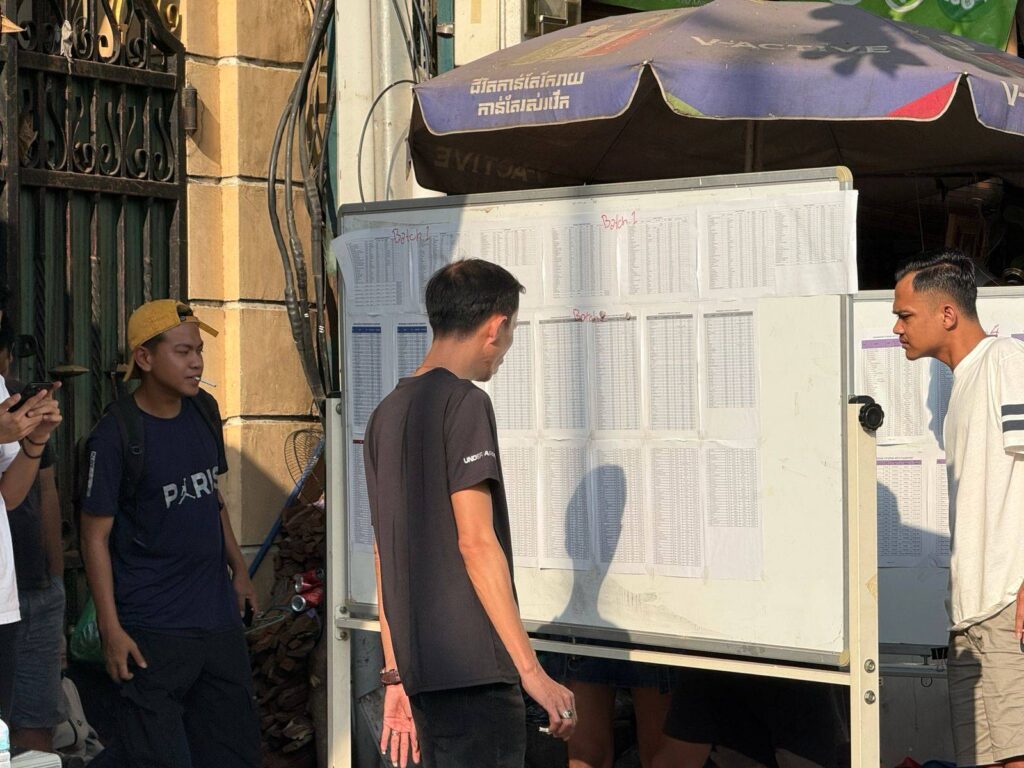
Since January’s crackdown, thousands of foreign workers have been left stranded in Cambodia, struggling to live as they try to find a way home.
Asked why the workers could not get help, Vorn Pov said “each NGO has its own mission.”
“Another thing is that supporting something like this, in our country, is very strict, and people do not dare to put their hand up on this. Because when we help them, we are afraid that we will make a mistake,” he said.
He referred to the arrest of a journalist in Poipet earlier this month for claiming there was violence against foreigners in a building suspected of operating online scams about 100-200 meters away from a city military police building.
“He has been arrested and already imprisoned because he reported about the online scam, so that is scaring people from cooperating,” he said. “Helping foreigners who are the victims of kidnapping to work in online scams — it is a very terrifying thing now. I and other people do not dare to do it.”
He nevertheless called for assistance for the stranded foreign workers.
“Cleaning up online scam is the right thing to do, and to make the outcome even better, they should help to send the foreigners who have been cheated back to their homeland, while the ones who have not yet returned, provide them enough food, and check their health and treat them.”
He also urged the arrests of the masterminds behind the scam industry.
“When we build a dam, we need to build it upstream and not downstream — when we build the dam downstream, the water keeps flowing.”
Licadho operations director Am Sam Ath said helping the workers was for the government.
“There is uncertainty, because civil society does not have the figures, or have what to work on the issue, because this is the responsibility of the authorities and government.”