
This article was originally published on HaRDstories as Creative Commons.
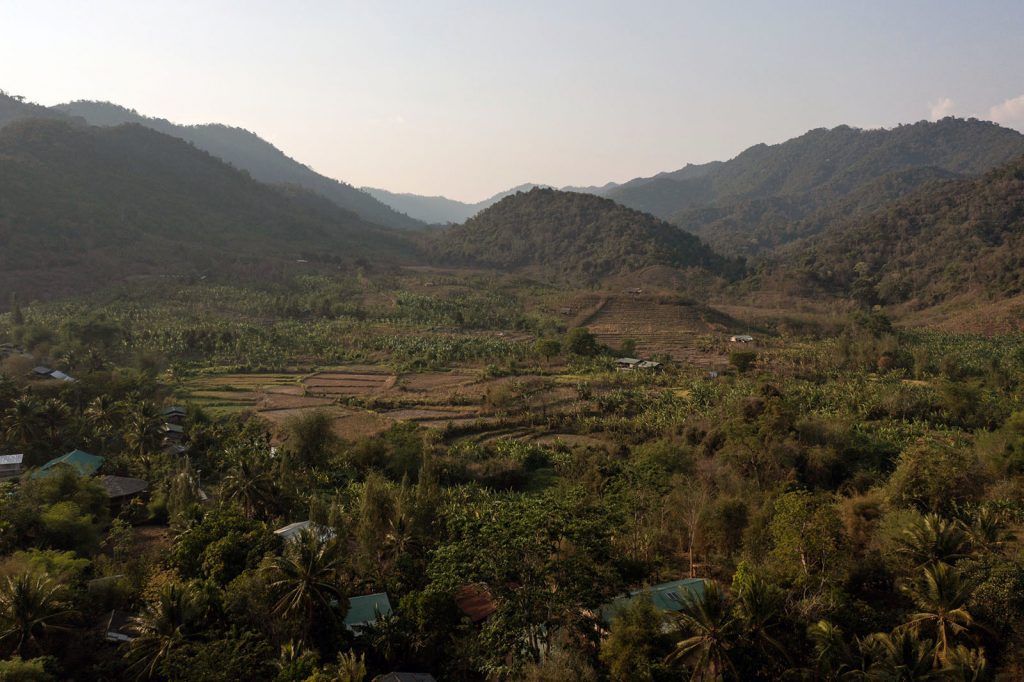
Phetachaburi — When Pongsak Tonnamphetch thinks of home, he sees the forested valleys of Upper Bang Kloi: rice fields, corn crops, vegetable gardens, houses scattered within a half-hour’s walk through the mountains. Park rangers evicted his family in 2011, and he hasn’t been allowed to return.
Where Pongsak sees home, the Thai government sees protected forest – part of Kaeng Krachan National Park, a UNESCO World Heritage site where human settlement is prohibited.
This fundamental disagreement has shaped 30 years of conflict between the Bang Kloi Karen community and park authorities. Three government committees have tried and failed to bridge the divide. Now officials are preparing to establish a fourth, operating under a new law that, for the first time in Thai history, recognises ethnic minorities’ rights to manage land and resources.
Whether that legal shift will prove enough to break the stalemate is the question facing 37 Karen families who want to return to Upper Bang Kloi – and the dozens more struggling to survive in the government resettlement area below.
Memories of the mountains
Pongsak, 29, was born in Upper Bang Kloi. When most villagers were ordered to relocate in 1996 to an area designated as Lower Bang Kloi, his parents refused.
“Back then, my parents wouldn’t come down,” he recalled. “They tried to flee deeper into the forest to preserve our original way of life. In the zone where we lived, called Upper Bang Kloi, there were about five to six houses. They weren’t set up next to each other, but you could walk between them in 20-30 minutes.”
He grew up shuttling between worlds. During term time, he lived with an aunt near a Border Patrol Police school. On holidays, he’d hike back up to help his parents farm. “We’d help each other harvest chilis and vegetables, and bring them down to give to the parents of friends who were living below,” he said.
That arrangement ended in 2011. During “Operation Tanao Sri”, park rangers demolished structures and burned homes they identified as illegal settlements. Villagers say more than 20 families lost their homes. Park officials maintain they were enforcing national park regulations against unauthorised construction.
“My family had to permanently evacuate around 2011 due to increasingly violent pressure,” Pongsak said.
Courts later ruled that officials had violated procedural guidelines during the evictions and ordered 50,000 baht compensation per family. Six families who brought legal action received payment.
Akarin Tonnamphetch grew up knowing only Lower Bang Kloi. At 21, he’s never experienced the abundance his elders describe – the life of farming their own rice and vegetables, of building homes from forest materials, of relative self-sufficiency in the mountains.
“Living in Lower Bang Kloi, we have to buy everything we eat,” he said, sitting outside his brother’s house where he lives. “Even to build a house, we have to buy corrugated iron, buy all materials and equipment.”
He works day labour in nearby Nong Ya Plong district, earning 400 baht, about 13 USD, on the days he finds work.
Villagers say the resettlement land is too small and degraded for their traditional rotational farming. That split has become central to the dispute: whilst 37 families reportedly want to return to Upper Bang Kloi, others have chosen to remain below.
Why solutions keep stalling
Pongsak now serves as a village representative on the problem-solving committee. He says previous panels developed workable proposals – pilot programmes for rotational farming in Upper Bang Kloi, improved land allocations below – but they were never implemented.
The problem, according to Pongsak, is that implementing agencies like the Ministry of Natural Resources and Environment and the Department of National Parks refuse to accept and follow those resolutions, instead trying to force unsuitable farmland on the villagers.


Ministry officials have not publicly explained why committee recommendations go unimplemented. The legal framework is clear: national park law prohibits permanent settlement in protected areas, and Kaeng Krachan’s UNESCO World Heritage status requires strict conservation measures.
Apinan Thammasena, who manages communications and cultural Restoration at the Sirindhorn Anthropology Centre and serves as secretary of an independent fact-finding committee for Bang Kloi, has watched the pattern repeat across governments.
“The state still views ethnic groups primarily through a security lens, prioritising state justice and state security first,” he said.
He identifies two main obstacles. The first is public perception: decades of conservation messaging have convinced many Thais that ethnic minorities damage forests. The second is internal division within Bang Kloi itself – a split officials use to argue that relocation has been largely successful.
“The public should accept that even if they are a minority, we should respect the rights of minorities who want to return,” Apinan said. “In terms of cultural rights, they have the right to go. But in Thai society, cultural rights are valued less than legal rights.”
A new legal framework
The ethnic rights bill took effect in September, Thailand’s first comprehensive law addressing ethnic group rights, including provisions for land and resource management.
Activist Pachorn Khamchamnarn sees potential in its provisions. “We will have a national committee with the Prime Minister as chair, serving as a direct channel for complaints and problem-solving alongside the Council for the Protection of Ethnic Group Lifestyles,” he said. Crucially, “this council is a space where ethnic brothers and sisters will be able to sit inside it and participate in considering and solving their own problems.”
But he’s realistic about institutional resistance. “There’s no way they’ll let villagers have the power to determine their own lives or manage their own land and resources,” he said. “Because everything is locked down by forest science, forestry academics, and laws centralised in a single ministry. No matter what, they guard their power.”
The new committee being formed under caretaker Prime Minister Anutin Charnvirakul follows the same tripartite structure as before: villagers, state officials, and academics.
What comes next
Pongsak is clear about what he considers a fair resolution. “We need the people who wish to return to farm in their original place to be able to go back and restore their way of life,” he said. “And the people who remain below must receive adequate land and water allocations for actual livelihood.”
Park officials maintain that allowing permanent settlement in Kaeng Krachan would undermine its protected status and create precedents that could threaten conservation areas nationwide. They argue that Thailand’s environmental commitments, including UNESCO World Heritage designation, require strict limits on human activity in protected forests.
The fourth committee, whenever it’s formally established, will face these same tensions. But it will operate under a legal framework that, at least in principle, elevates ethnic group rights to unprecedented status in Thai law.
This story is part of a collaborative reporting project between HaRDstories and the Indigenous Media Network (IMN), supported by the Canada Fund for Local Initiatives.