
This article was originally published on HaRDstories as Creative Commons.
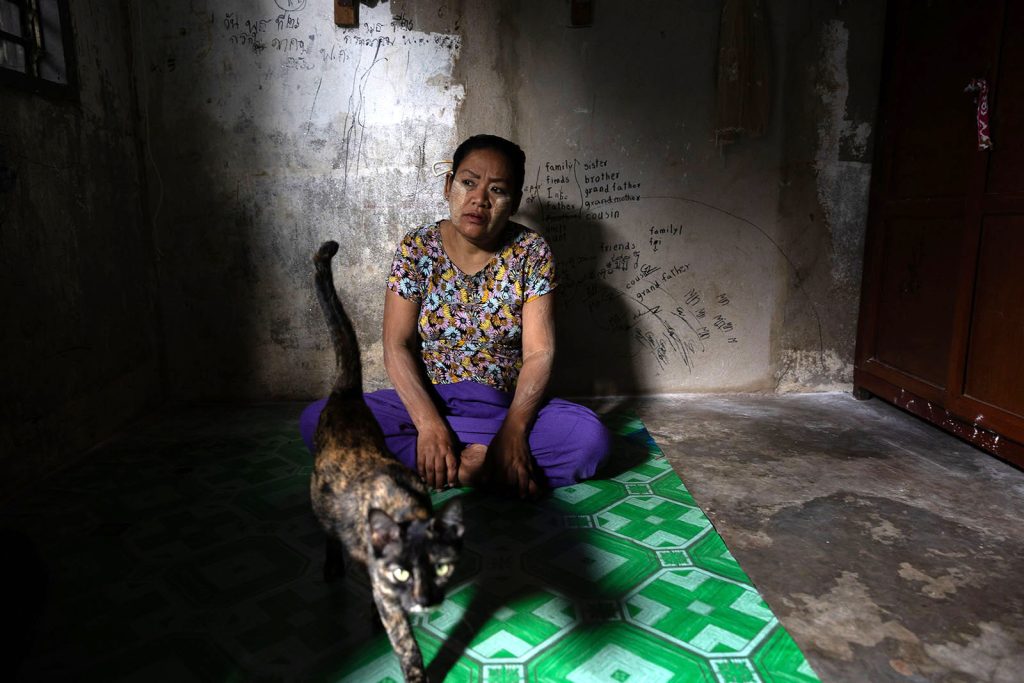
Mae Sot – In a small room barely eleven square metres, Ma San Aye lives with her two sons. Her eldest, now nearly 20, works in construction to pay the rent. He left school at 14, when his mother lost her job.
That was April 2020, when the Royal Knitting factory abruptly closed, leaving Ma San Aye and around 230 other garment workers without jobs or the wages they were owed. The factory’s Japanese owners quietly left the country as COVID-19 swept through Thailand, shuttering operations without warning or severance pay.
The workers took their case to Thai labour courts. In 2021, a court ruled in their favour, ordering the factory to pay 32 million baht, about one million dollars, in unpaid wages and compensation.
Five years later, Ma San Aye has never received a single baht.
The workers say they were producing clothing for Otto Group, a Germany-based retail giant, right up until the factory closed in 2020. Otto categorically denies this in a statement on its website, saying its business relationship with the factory ended in 2017.
Now labour rights advocates are pressing Otto Group to use its commercial influence to help workers collect what they’re owed.
Five years later
Ma San Aye had worked at Royal Knitting for more than 20 years. The factory, known locally as Yamaken, produced knitted wool garments in Mae Sot, a border town where Myanmar migrants form the backbone of Thailand’s garment industry. She earned just over 6,000 baht monthly (193 USD), enough for her family to live steadily.
Her room is near the shuttered factory, part of an area now inhabited mostly by workers affected by the closure. Rows of rental rooms line the streets. Some residents have rented land and built makeshift shelters.
“For me, it was terrible luck,” Ma San Aye said, tears streaming down her face. “I’m over 40, so I can’t find work anywhere else anymore. I lost my job. I couldn’t find another one. Their father died not long ago, so my eldest had to leave school.”
Since losing her job, Ma San Aye has taken odd jobs when available. A heart condition prevents her from doing heavy labour, and factory managers have passed her over for full-time positions. She relies on her eldest son, who works as a masonry labourer. Between them, they earn around 3,000 baht monthly (96 USD).
Her husband fell ill during the pandemic and died, leaving 20,000 baht (644 USD) in debts. “I couldn’t pay it, so I even ran away once,” she said. “Later I felt bad about it and came back, apologised to the creditors, and stayed on.”

A hollow victory
As one of the factory’s longest-serving workers, Ma San Aye would have received hundreds of thousands of baht in compensation – enough to clear her debts and support her family.
But the three Japanese owners, registered as company directors, refused to comply and left Thailand. One reportedly paid 2.2 million baht (70,854 USD) of his personal liability. The other two paid nothing, leaving 29.8 million baht outstanding (959,757 USD).
“They won their case. But there are no employers left, so they didn’t get compensation,” said U Moe Kyaw, leader of the Yaung Chi Oo Workers’ Association, which assists Myanmar migrant workers with labour rights cases.
The Association worked with the Clean Clothes Campaign (CCC), an international labour rights organisation, to bring attention to the case and pursue accountability from brands connected to the factory.
The case exposes weaknesses beyond enforcement. “Thai law does not require companies to save money for severance on an ongoing basis in an escrow account,” said Bent Gehrt of the Worker Rights Consortium, which monitors garment factories worldwide for labour rights violations. “As a result, often when factories close down they don’t have the money for severance.”
Around 60 workers over the age of 40 found themselves unable to find new employment. Factory managers prefer younger workers, and COVID-era closures had flooded the market with job seekers.
Ko Kyaw Zay Ya, a worker leader pursuing the case, has refused full-time employment to remain available for court hearings. He survives on freelance jobs whilst his wife works in Bangkok, supporting the family. They live apart so he can continue the fight.
“Even if we can’t get anything more, we don’t want this sort of thing to happen again,” he said. “Now the lives of around 60 people and their families have been ruined.”
Pressure on Otto Group
With the owners beyond reach, labour rights advocates turned to the brands the workers say they were producing for when the factory closed.
Royal Knitting’s parent company was Yamaken Apparel, which supplied multiple international brands. Workers said they were making items bearing Otto branding right up until the closure and kept packing lists and labels as evidence. They said the labels included Otto Group brands such as Sieh An!, Ambria, Rick Cardona by Heine, and Ashley Brooke by Heine.
Otto Group, one of the world’s largest e-commerce companies, categorically rejects any connection to production at Royal Knitting in 2020. “The Otto Group cannot assume the obligations of third parties that arose years after the business relationship ended,” Otto stated in its October 2025 response.
The company said its records show the disputed goods were manufactured elsewhere, and dismissed workers’ documents as unverifiable and possibly “remaining stock from older orders.”
However, Otto acknowledged in 2021 that Yamaken Apparel owned Royal Knitting and remained an Otto supplier until August 2020, four months after the factory closed.

The Worker Rights Consortium (WRC) argued in a report that brands cannot disclaim responsibility for labour violations at factories they sourced from within months of closure. The report stated that brands have “an obligation to ensure that severance is paid – if not by the factory’s owner, then by the brands themselves.”
In February 2025, the Clean Clothes Campaign filed a formal complaint with Germany’s Federal Office for Economics and Export Control (BAFA) on behalf of ten workers, under Germany’s Supply Chain Due Diligence Act. The complaint argues that Otto should use its leverage with Yamaken to help workers collect the court-ordered compensation.
Otto had already taken legal action against CCC in 2024. CCC signed a cease-and-desist declaration with a penalty clause but filed the BAFA complaint regardless. As of January 2026, BAFA has not announced a decision.
Still waiting
Ko Kyaw Zay Ya still tracks the scattered workers, following those who moved to Bangkok, returned to Myanmar, or relocated elsewhere. He lives near the shuttered factory.
“I’m continuing with this case for all workers in Thailand,” he said. “Even though we won our case, if these things keep happening, what’s still weak? What needs fixing? That’s why I’m carrying on.”
“Compared to the profits of large companies, our compensation is tiny,” Ko Kyaw Zay Ya said. “But it could change our lives enormously.”
Ma San Aye thinks of Buddhist teachings about karma and its consequences. She said if she has no food, she won’t eat; if she falls ill, she won’t seek treatment.
But she hasn’t entirely given up. If compensation comes, she would clear her debts first, then support her youngest son’s education.
“I’ll die happy when my debts are cleared,” she said.
This story is part of a collaborative reporting project between HaRDstories and Delta News Agency, supported by the Canada Fund for Local Initiatives.