
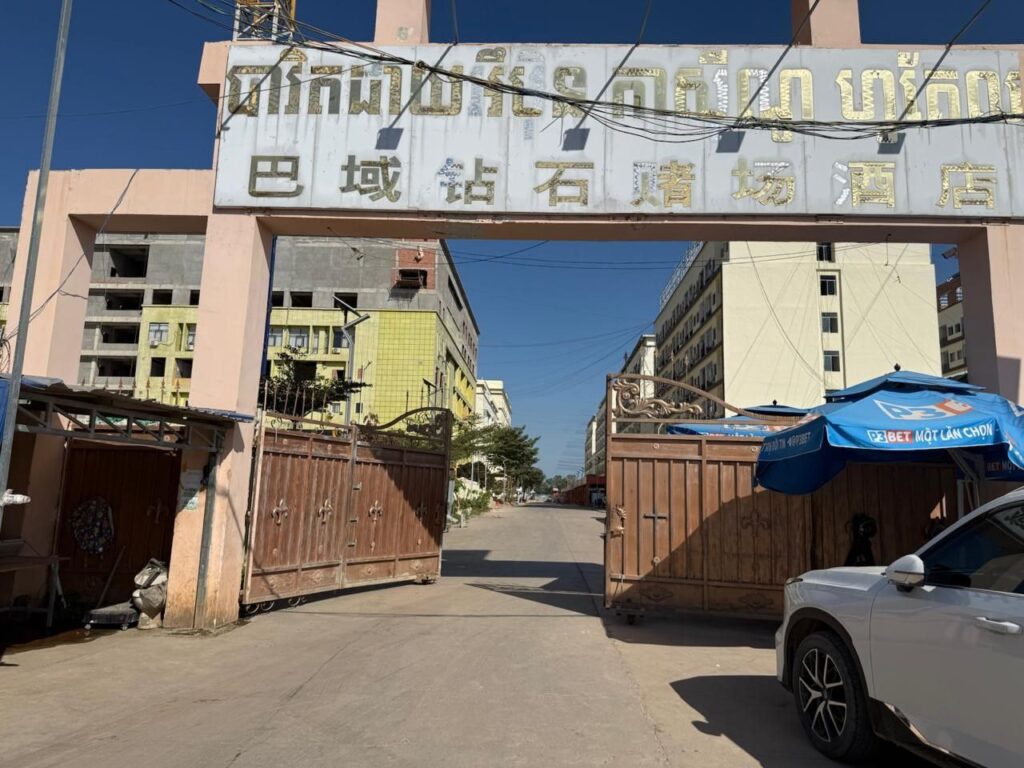
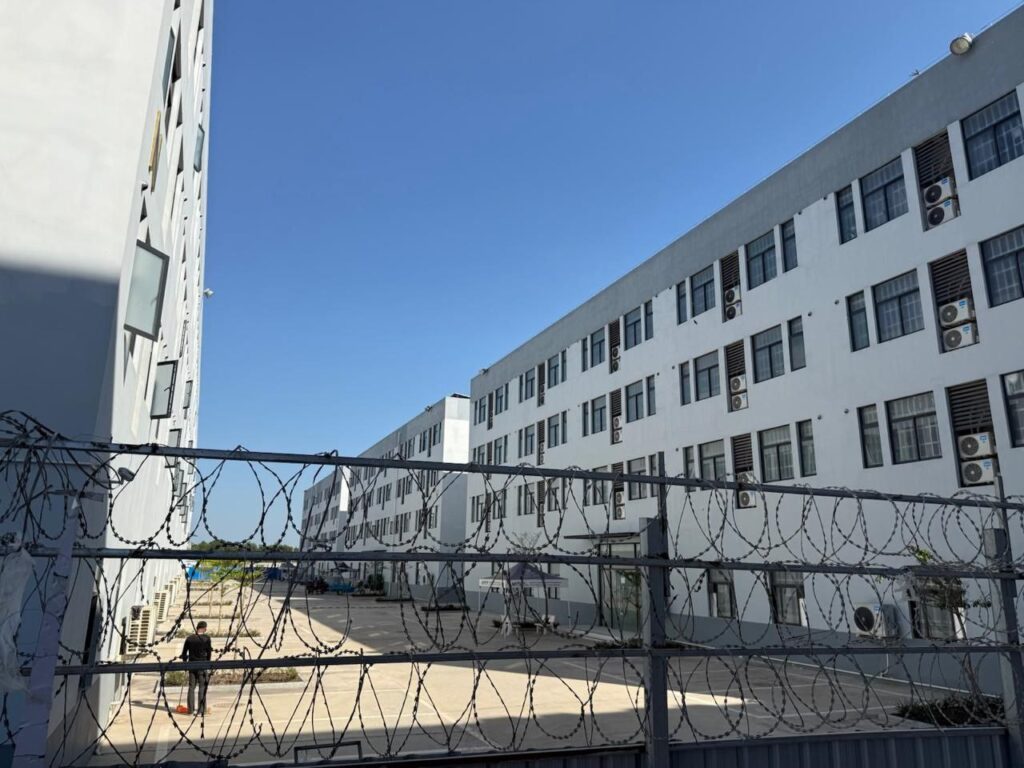
Buses, police cars, military police trucks and motorbikes queued for hours in front of A7 Casino, a 22-building park in Cambodia’s Svay Rieng province. Police strolled in front of the gates with AK-47 rifles. More than 2,000 people would be escorted out of the remote Bavet city compound, police later would report.
Mekong Independent witnessed hundreds of foreigners loaded into buses, some with wrists bound in zip ties, and witnesses said the two-day raid was a “dramatic, chaotic event” at an alleged scam compound called A7 Park, or Van Chheung Casino. It came about two weeks after an exodus of scam workers began at Svay Rieng and across the country, and appeared to target stragglers who had yet to shut down their operations.
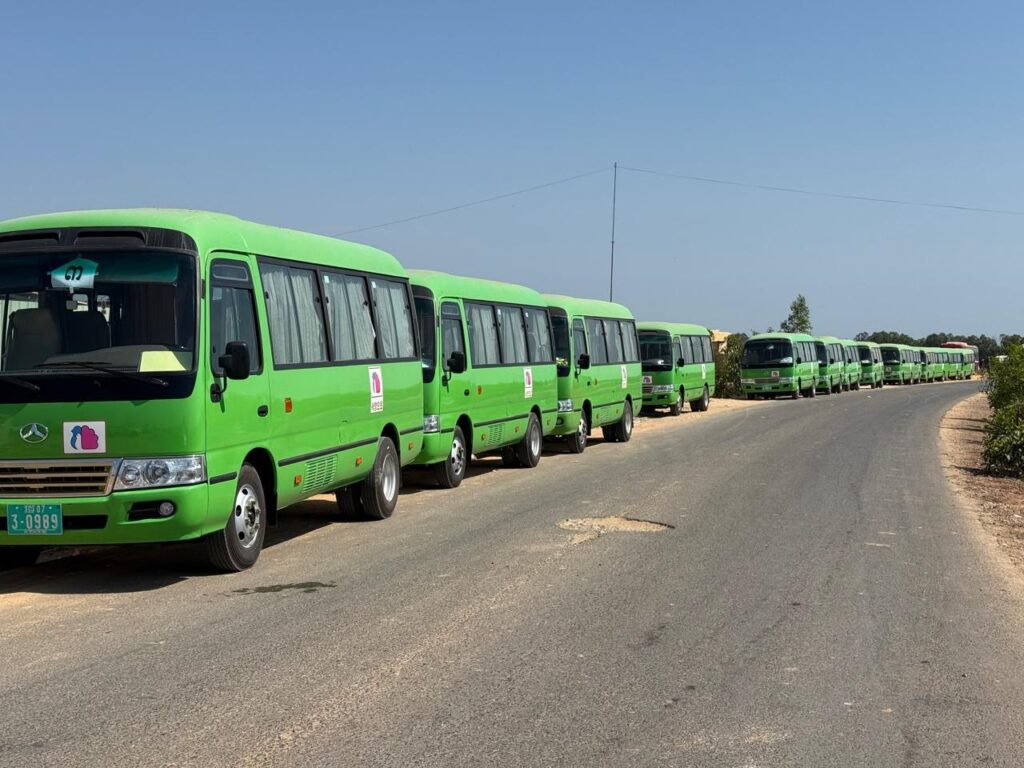
On February 1, a long line of green minibuses rolled into the compound’s gates in the late morning, and police began loading in people who had their hands in zip ties. A Cambodian construction worker who had helped build A7 Park had observed the operation for the past two days, and believed that workers found without passports had been bound.
The buses rolled in and then out after they were loaded, many heading toward Phnom Penh, one official said. They paused for a lunch break after nine buses were filled, and then continued with the rest.
Just before the operation breaked for lunch, a reporter heard multiple voices shouting all at once, coming from one of the buildings within the park. The screams sounded distant but were still audible. Police continued their operation, strolling around with their rifles and carrying plastic bags, seemingly confiscated from inside the compound.
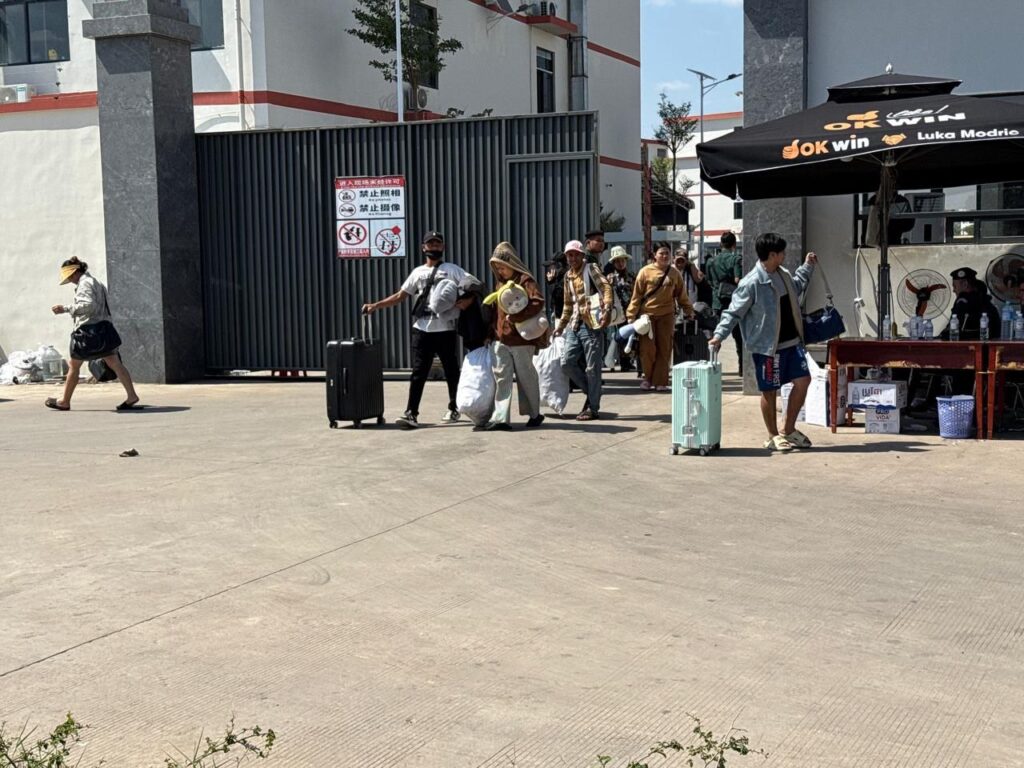
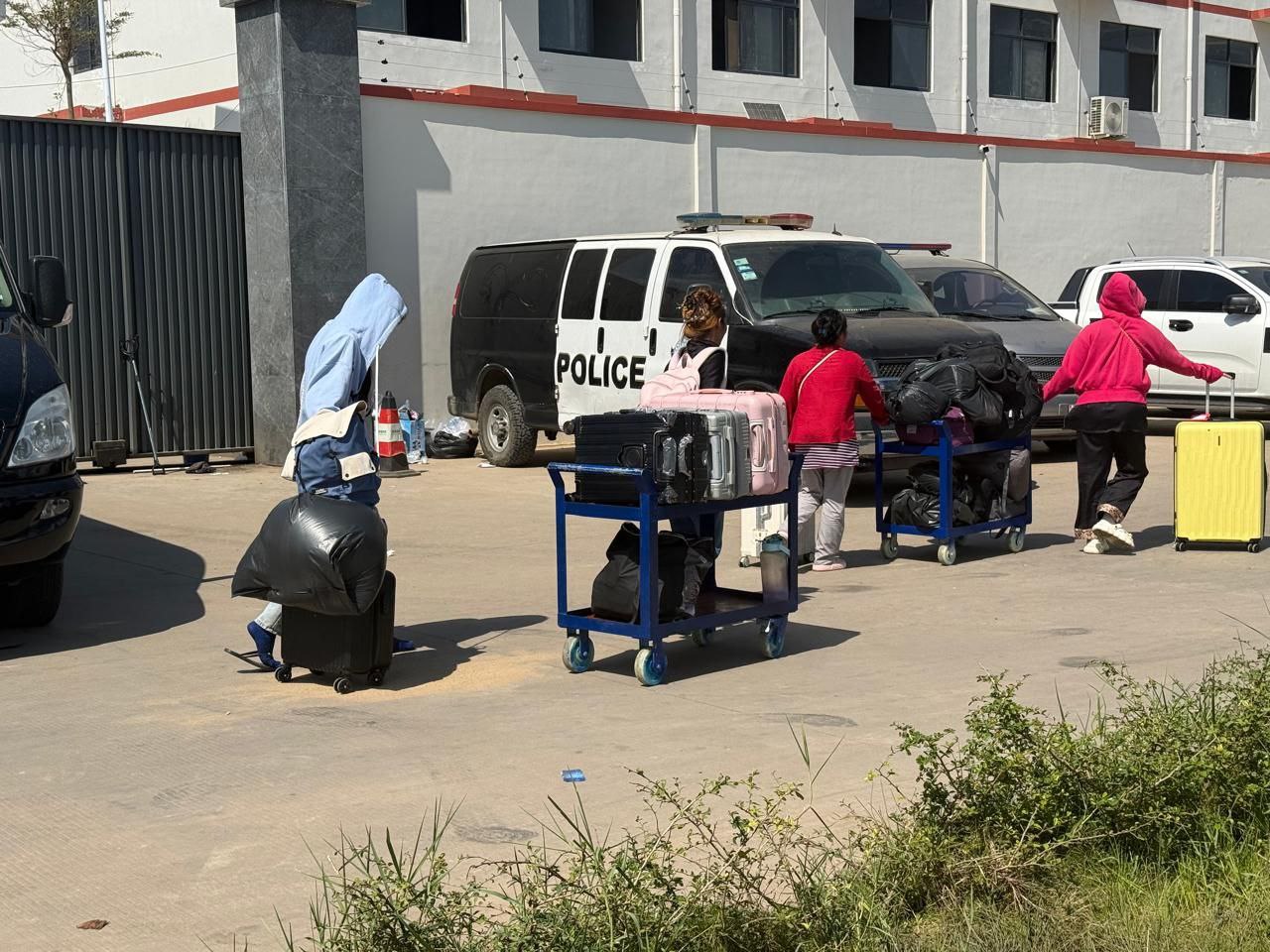
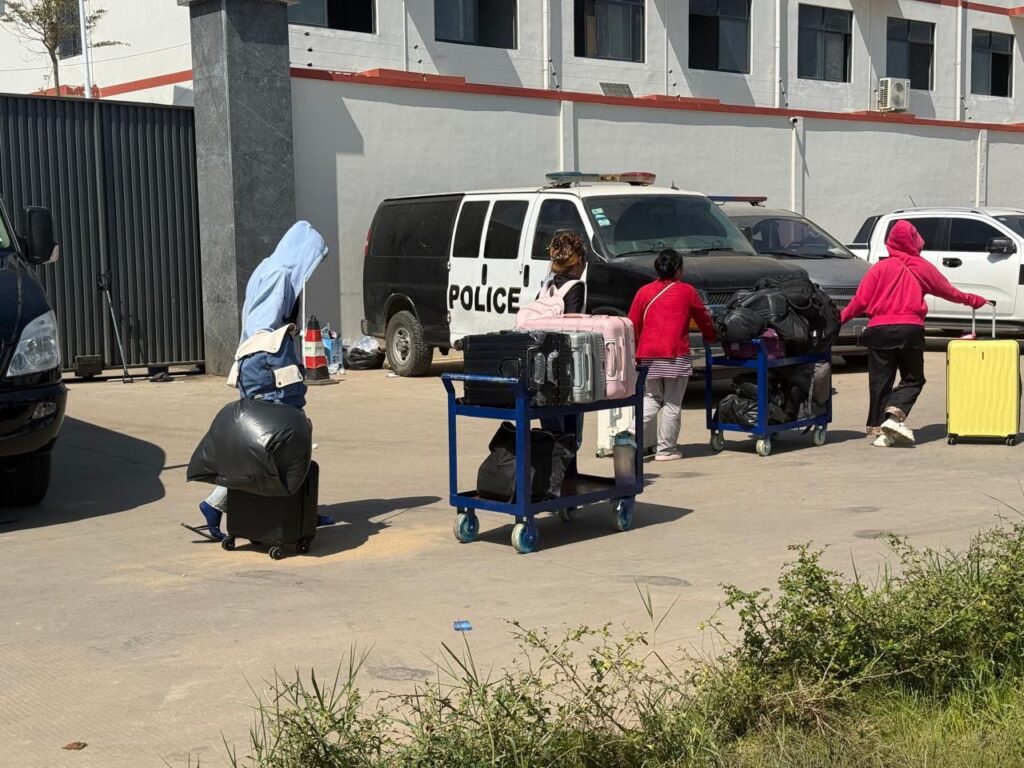
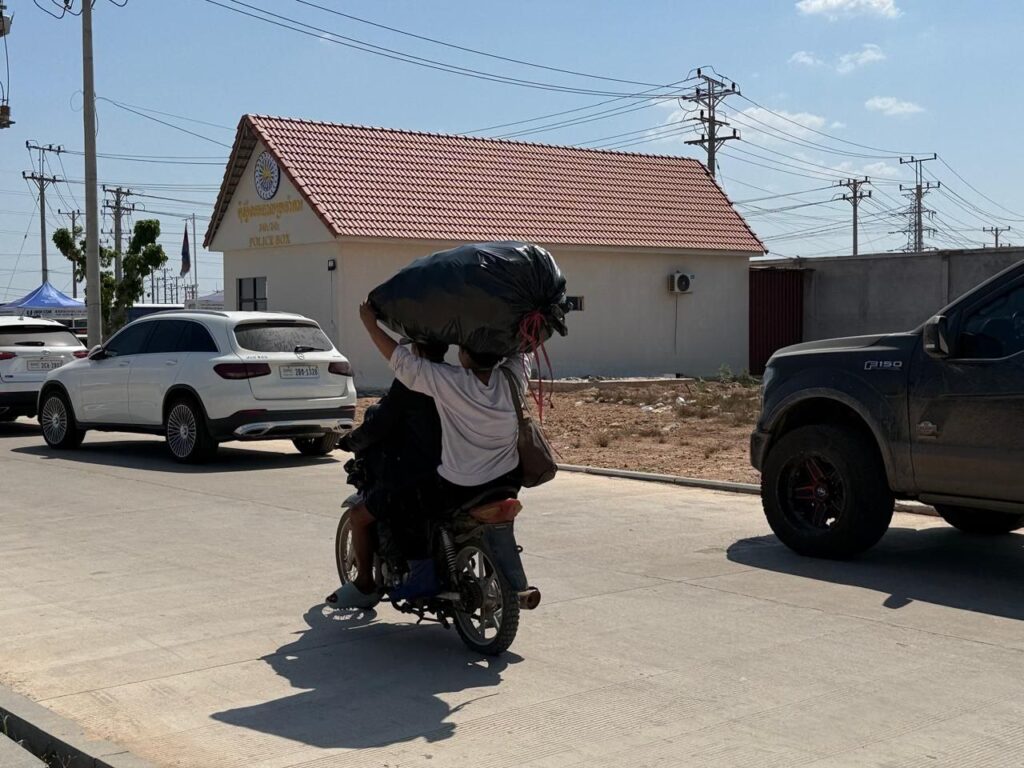
Some foreigners appeared to have managed to leave on their motorbikes or cars ahead of a raid, though a group of around 10 police inspected vehicles at a checkpoint at the park’s gates. Inside, authorities were going through the buildings systematically, sometimes moving different foreigners between places inside the park, as if sorting by nationality. Some Cambodian workers carried bags above their heads, while others lugged a suitcase in one hand and oversized stuffed animals under their other arms.
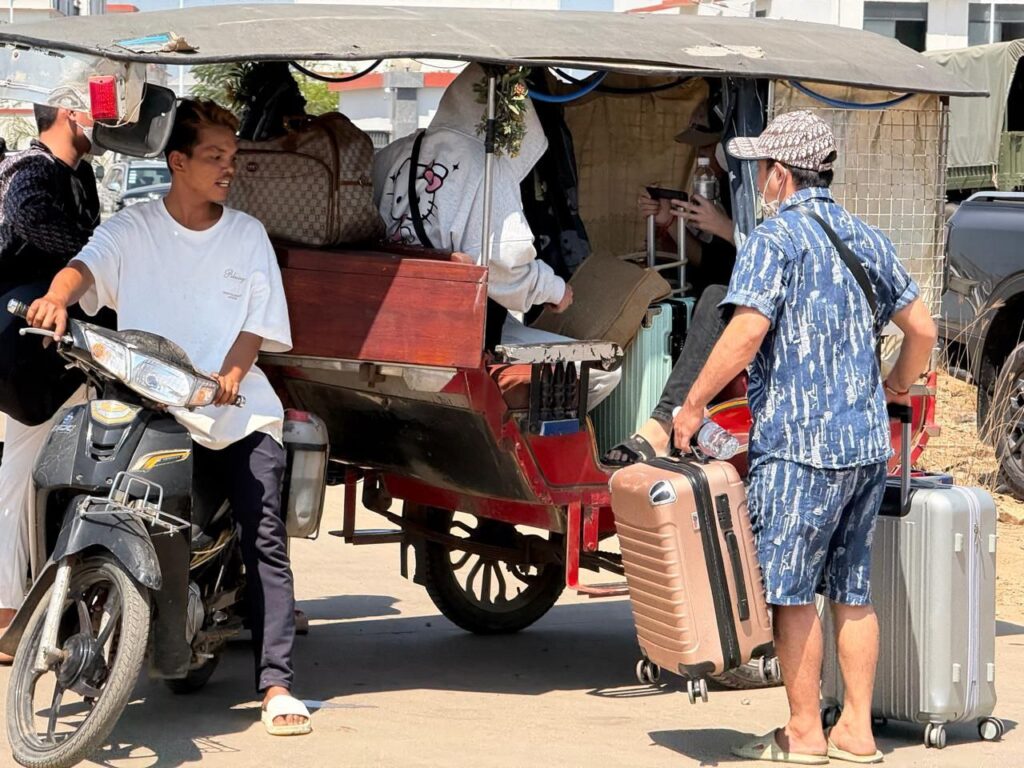
A group of five or six foreigners exited the gate and stood outside, trying to find and negotiate with a tuk-tuk driver to get away from the park. There was a police box also just outside the gate.
Those who came in and out of the buildings had to show a photo ID, seemingly distributed to the park’s staff. Cambodian cleaning staff walked out of the compound holding plastic bags and occasionally carrying out food such as frozen meat.
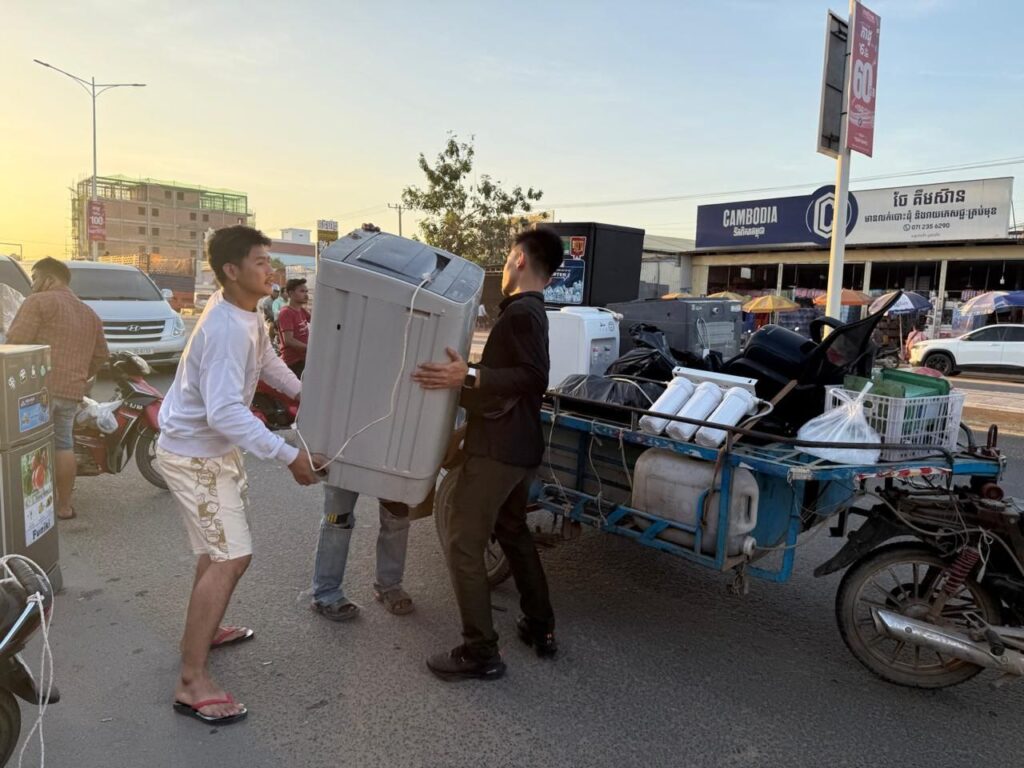
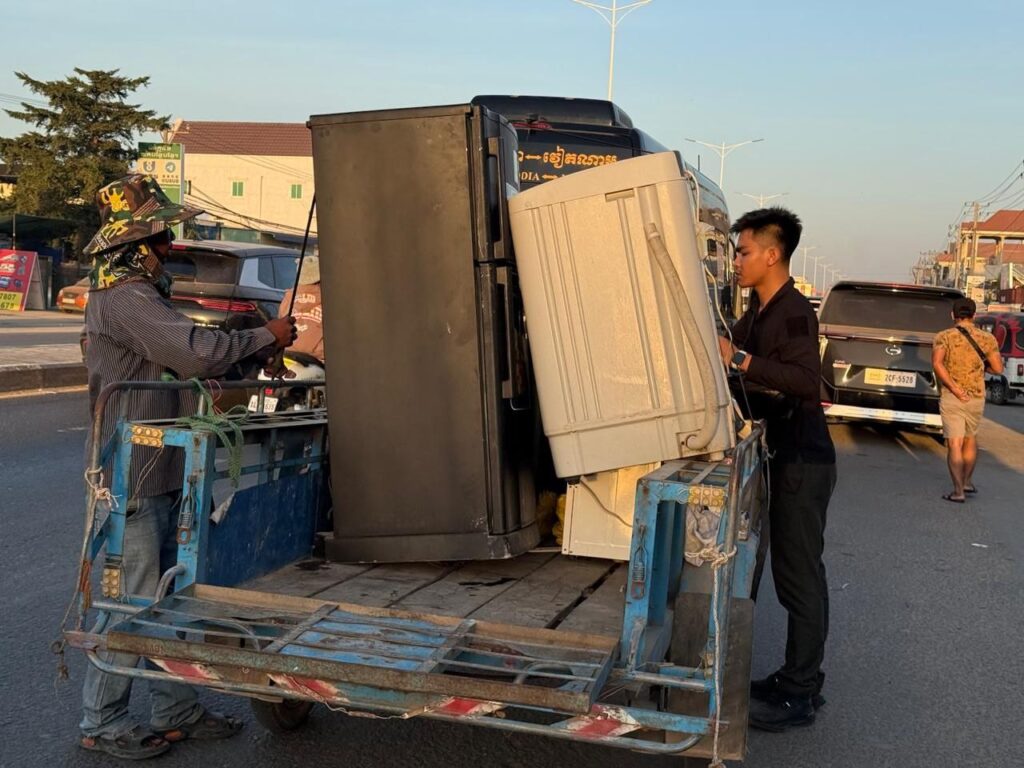
Police carried goods in plastic bags out of the building, including, among other things, tennis rackets. Some civilians began hauling large equipment back inside the compound’s gates with flatbed trolleys — one man carried a refrigerator, while others seemed to have air conditioning units or other expensive furniture. A man wearing a prosecutor’s uniform questioned aloud who would be responsible for any objects if they are lost.
Cambodian National Police reported on Sunday that they had detained a total of 2,022 foreign nationals from the compound’s 22 buildings. Their arrest count includes 1,792 Chinese, 179 Myanmar nationals, 117 Vietnamese, 36 Indians, 30 Nepalese, 5 Taiwanese, 2 Laotians, 1 Malaysian and 1 Mexican. More than 700 law enforcement officials participated in the raid, according to the national police’s post.
Svay Rieng deputy police chief Buntha Virak said on Wednesday that his department had joined raids at six different compounds since the start of this year, including the raid at Van Chheung casino, also known as A7 Park. He noted that they detained thousands of people from these raids, but some locations had appeared to be emptied by the time authorities arrived.
Vietnamese nationals who were arrested in the raids were returned to Vietnamese authorities to be processed and sent across the border, while around 500 other foreigners were sent to the Immigration Department in Cambodia’s capital.
“We still have many of them because the General Department of Immigration’s temporary shelter center is full,” he said.
Virak said in the coming days, each compound must be emptied, and the Svay Rieng provincial administration has informed officials that any business related to online scams must move out.
AKs in the air
The construction worker, who had observed workers with their wrists zip-tied, explained that the first day of the raid at Van Chheung casino was more chaotic.
When police arrived on Saturday, foreign workers started running from the buildings and trying to escape. Authorities then began banning taxi and tuk-tuk drivers from approaching the location, trying to prevent foreigners from escaping.
“At about 12 p.m. [on Saturday], [police] fired many shots” into the sky, he said. “We do not know whether the Chinese people also fired shots or not, but they have fired at least a hundred shots.”
Videos circulating on social media after the raids showed authorities holding AK-47s pointed toward the air in front of the compound. Other videos showed workers trudging through rice fields around Bavet, but it’s not clear whether they escaped.
The Cambodian worker then described a violent encounter, allegedly between police and one Chinese man who worked in the compound.
“One Chinese man has been beaten unconscious to scare other people from attempting to escape, and he could hardly even breathe,” he said. “We do not know whether he tried to run or what, we can only watch it.”
One police officer who spoke anonymously to Mekong Independent described similar commotion on the raid’s first day.
“It is very similar to when a person attacks a dog,” he said. “When the dog gets scared, it will go out of control. We cannot control them easily, they are outraged.”
The officer witnessed people trying to escape, so the authorities acted to try to control the situation, he said.
“They broke windows and doors to get out, but because there are so many armed forces, they got scared of us too.”
“We watched and guarded them, and when they started to scream and make chaos, we suppressed them quickly. We cannot be off guard.”
He also alluded to the fact that one foreigner was beaten, but he did not provide details about what happened.
“There was a lead instigator who gave an order. … That person has been taken to the hospital. The more you screamed out, the more you suffered.”
A PassApp driver in his 40s, who gave his name as Hong, told Mekong Independent that he hadn’t given many rides as a result of this raid. He said that foreign workers were quickly overwhelmed by authorities at Van Chheung casino.
“They did not have a clear direction to run, many of them ended up getting arrested by police and sent back into the building [for processing],” he said. “It was a dramatic, chaotic event. They stopped us from taking clients.”
However, Hong added that more people had fled from other compounds in Bavet, including Le Macau, Bavet Yongyuan Casino and Hotel, New World Casino, and others, so he kept busy. A reporter also drove past the Silver Star casino, which appeared empty though there were a few security guards outside the building. Silver Star was raided in November, and police found backdrops featuring fake U.S. Department of Justice and FBI signs for scam calls.
Throughout the city, a reporter witnessed foreigners walking with suitcases and others only hauling plastic bags and phones. Most were trying to cover their faces, and those without masks held a hand in front of their faces.
Many of the compounds appeared to be empty or have very few workers still left, save for security guards posted in front of Heng He 1 and Heng He 2 compounds. Around the backside gate of the massive Crown Casino complex, a reporter spotted a large sign, warning punishments against workers caught without legal documentation to be in Cambodia. For the first offense, workers would be charged $5,000 and risk legal action, while for a second offense, the foreign worker would be charged $10,000 and would be dismissed from the company.
The construction worker who spoke to Mekong Independent said he didn’t know what to do next, as he had debts and had not been paid by the boss of the construction project. But he noted that the foreigners being taken out of the compounds were also suffering.
“They have been sold and lived like prisoners and were beaten up,” he said. “Now police come to get them out and send them back to the real prison.”
This article is published as Creative Commons.