
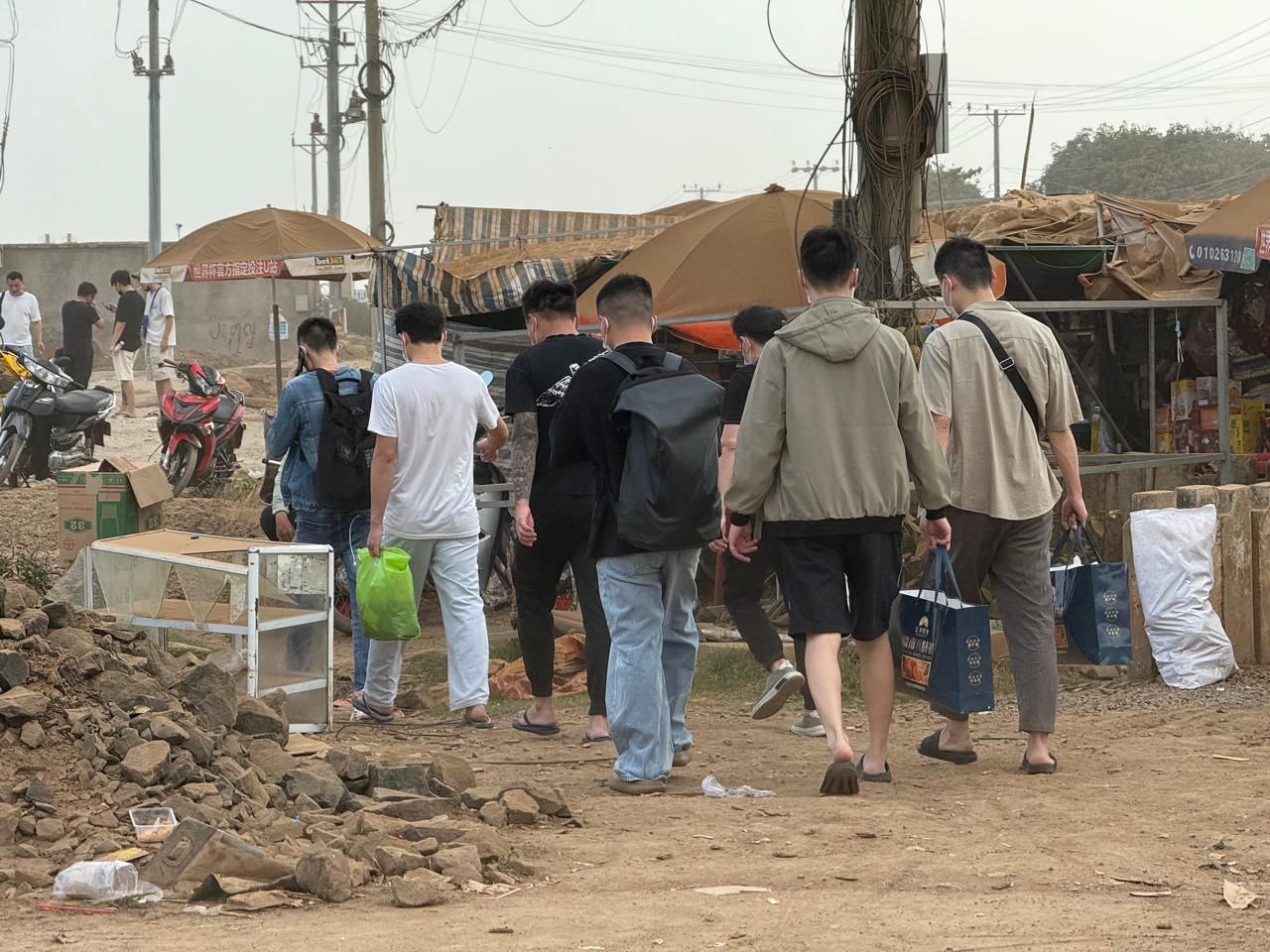
Major scam complexes sprung up around remote border crossings in recent years as Cambodia’s global scam industry expanded beyond Sihanoukville. But over the past week, those new constructions were also emptied out in a chaotic exodus that raised questions around the fate of scattered workers and whether the lucrative industry would once again return.
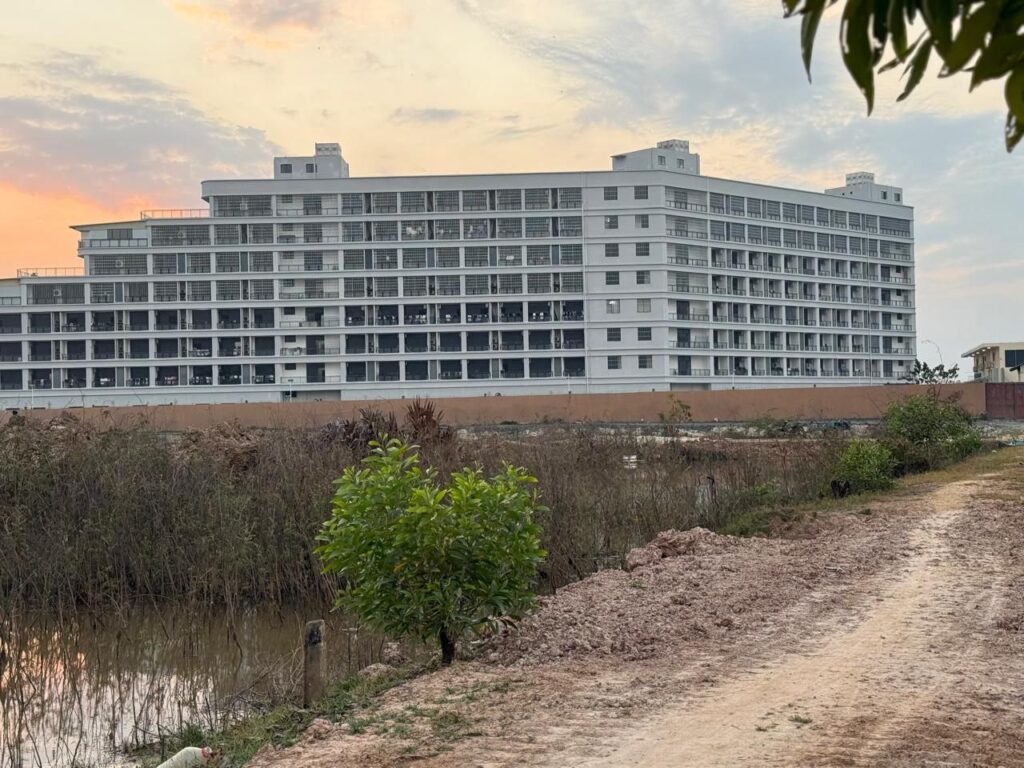
Around a large building built near Tbong Khmum province’s border with Vietnam, dirt had been kicked up into the air by cars, tuk-tuks and motorbikes roaming the area around 2 p.m. Saturday.
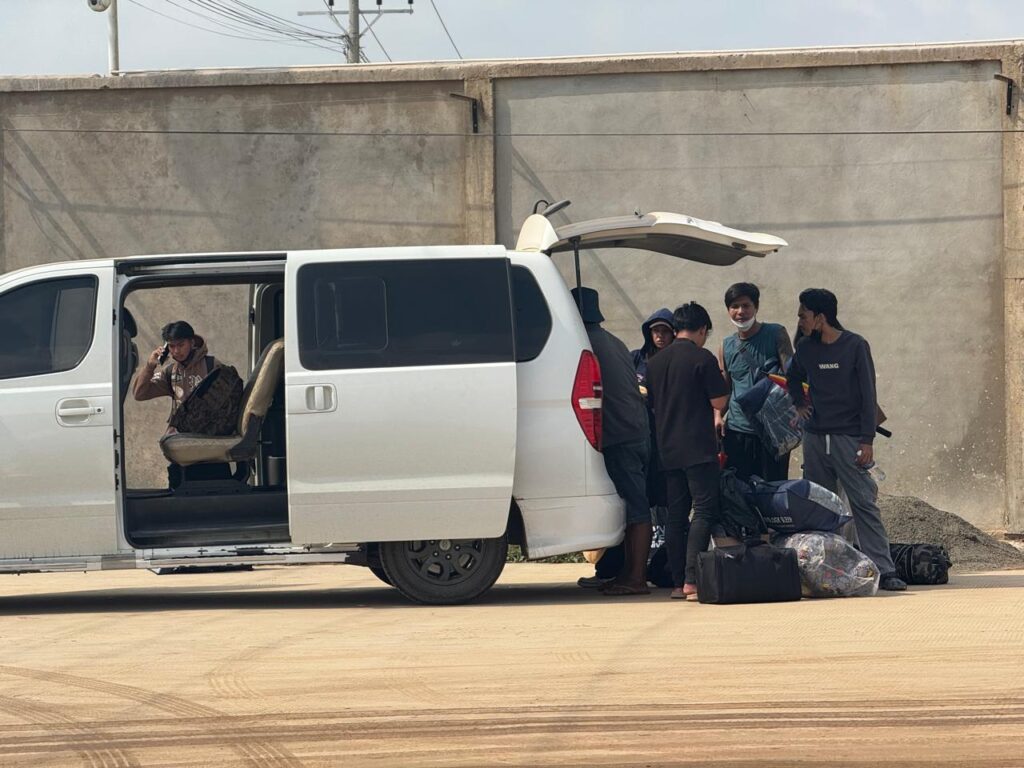
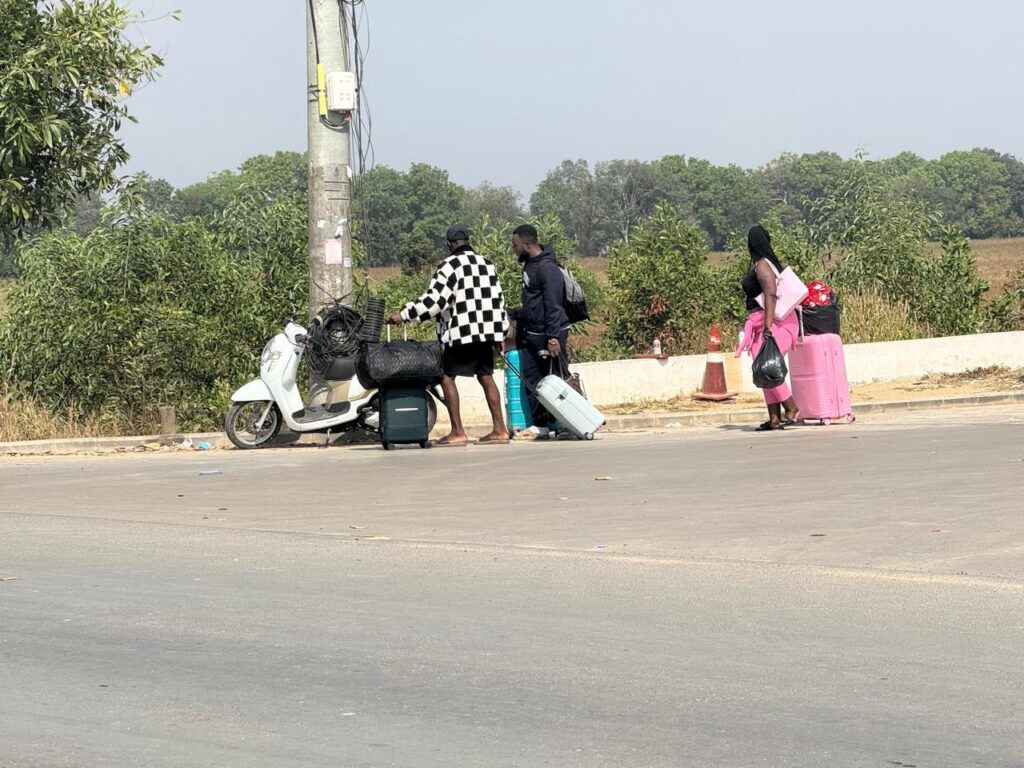
First, a few people left the building with backpacks and paper or plastic bags. Some waited for associates with suitcases as taxi drivers approached to negotiate prices. About 10 security guards directed traffic. Over about three hours, a crowd packed cars, motorbikes and other vehicles with belongings and left the compound.
“Some people already fled a couple days earlier, but my boss just allowed me to come out of the building today,” one woman said.
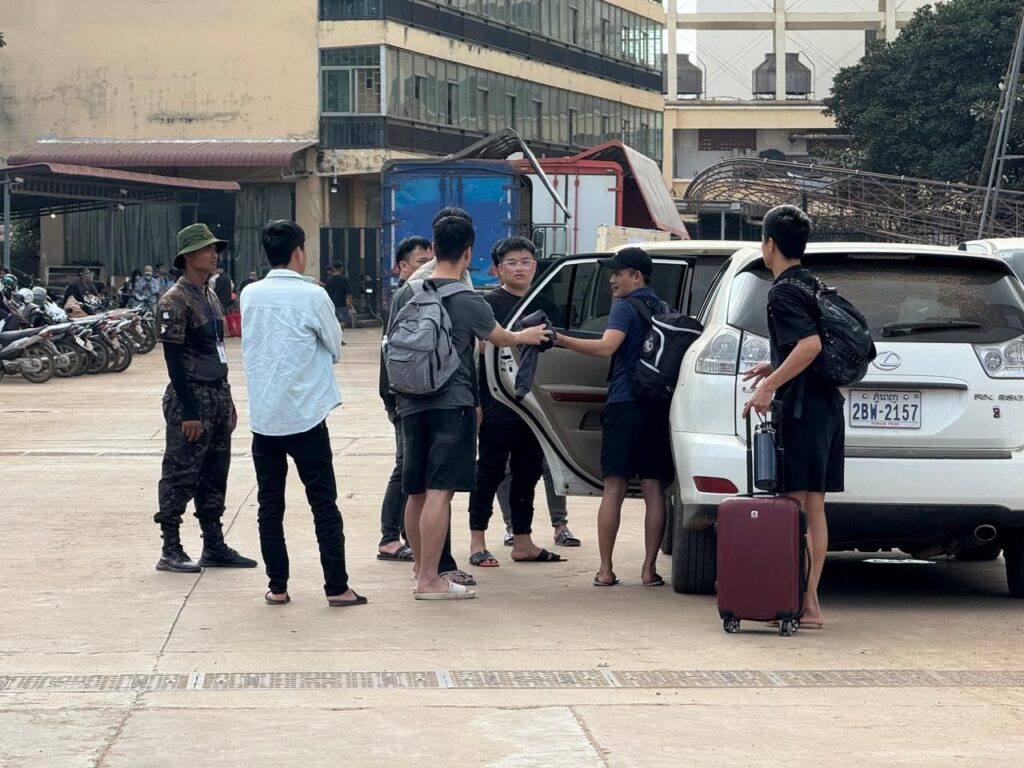
An ice-cream seller in the area said things had been chaotic with foreign workers leaving. “The traffic has been so bad for the recent two or three days,” he said.
“We have seen police cars with sirens moving into the seven-story building — this is full-swing fleeing.”
“Some Chinese people have not found [places to] stay yet and they are scattered everywhere on the roads,” he added. “Some people cannot find a house to stay in or rest. … Some sit on the street and wander all over the place — they do not know their destinations.”
Mao, a 40-year-old bread-seller, said the building had only been built in the last two to three years.
“This time might be very serious,” she said, alluding to previous “crackdowns” on Cambodia’s scam industry that failed to stamp out the operations.
“Some people without passports run all over the place and they don’t know where to go. Some people leave with only their clothes on their body with nothing — they have one shirt and one pair of pants and a phone,” she said. “Some Chinese people do not have any money with them because they have been cheated by their boss and it is like us in other countries who have been trafficked and cheated.”
But the chaos had been lucrative for taxi drivers, she noted. “They still keep coming out and the traffic is so stuck. Some dare to give $400 or $500 to run away because they do not want to be captured by police — the ones profiting most are drivers.”
A cleaner for a building known as “T3” said there had been 200 cleaners there, but all had left. “I do not know what will happen to me next.”
Licadho operations director Am Sam Ath said the latest crackdown, which had come amid heightened international pressure, especially from South Korea and the U.S., was bigger than previous ones.
“This time it’s broader and it’s almost everywhere, especially areas with many foreign [workers].”
The government should have a clear mechanism for workers to be questioned, kept safe or extradited, he said. Asked why the scattering workers were receiving little support from local and international NGOs, Sam Ath said civil society organizations followed policies, and the chaotic situation made it difficult to handle.
“When we look at the current crackdown, some foreigners have become scared and are running all over the place,” he said.
“To ensure that this crackdown is effective and the scam online buildings don’t return … it is up to the next mechanism. … [If] we cannot control the scattering [of workers] effectively, the scam issue may happen [again] in the future.”
About 20 km away near the Meun Chey border crossing in Prey Veng province, a bus and about a dozen cars waited to pick up departing workers from another recently built compound.
A woman selling dried clams said she had seen thousands of people leaving both night and day. “We have seen many people coming out because they are afraid of being arrested,” she said.
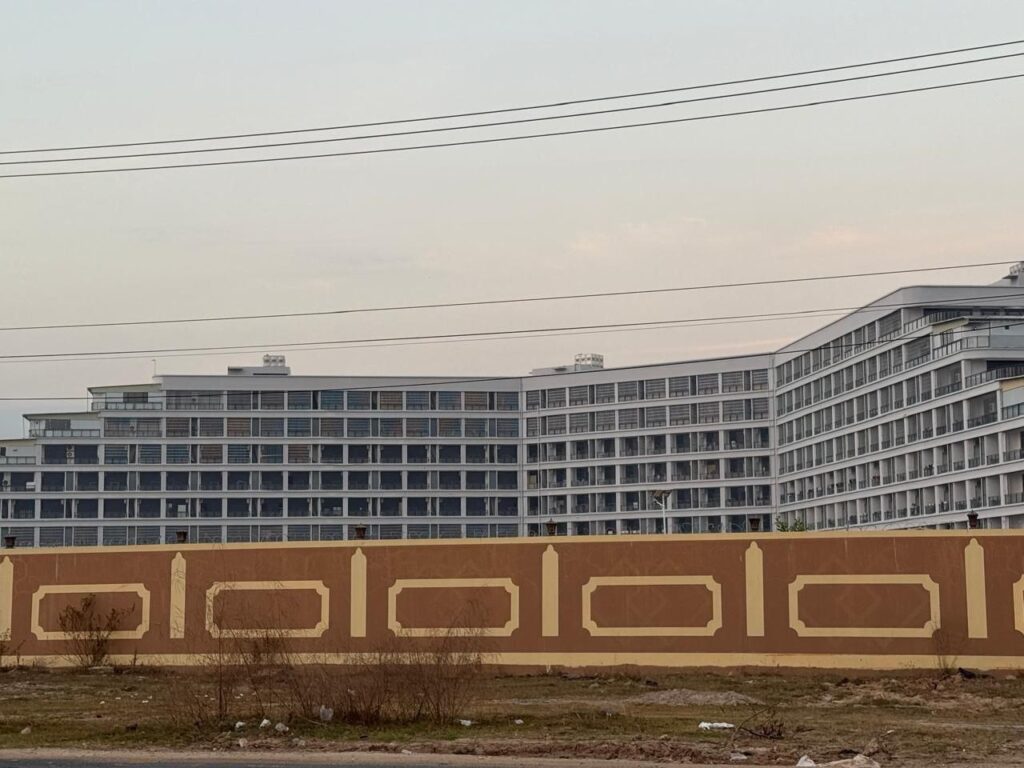
At another compound along National Road 8 nearby, Nak, a 40-year-old tuk-tuk driver, said the peak of the exodus had been Friday. Videos online showed fleeing workers pursued by armed security guards, and two workers taking shelter in a merchant’s cart with a knife and demanding they be transported away from the compound.
The site contained many finished and unfinished buildings. Lim, a 30-year-old construction worker, said large teams had worked on the site until a week ago.
“The workers have gone to their homes. Now it is very difficult to find work. They have already packed up their materials. Each day about 10 cars carried workers back home,” he said, adding that he remained waiting to collect his salary.
A sugarcane-juice seller said people had been flooding out of the building.
“They run for their survival. … They have been leaving for three or four days straight,” he said. “Yesterday, a few Chinese people carrying backpacks walked across the rice field. … I don’t know where they were going.”
This article is published as Creative Commons.