
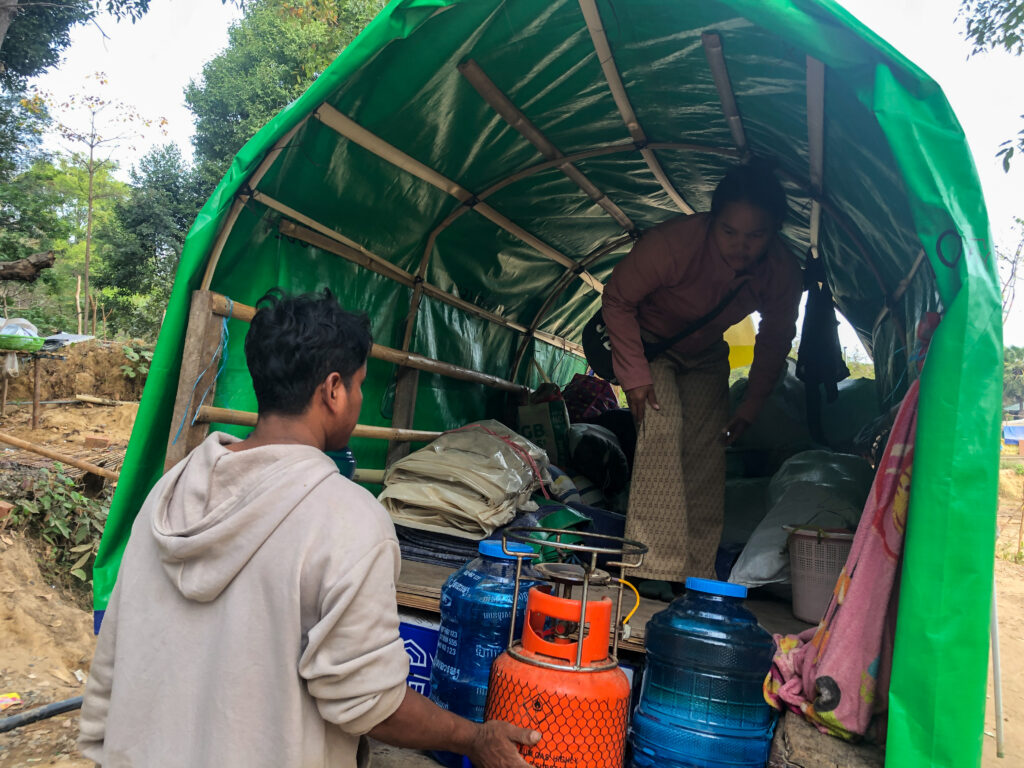
Five children clambered onto a plastic-tarped wagon hitched onto the back of the family’s tractor. Then Khieu Chhorvy lifted grandpa, who relies on a walking stick, carefully onto the same trailer.
The wagon was packed with cups, pots, plates, baskets, and food, all strapped together under the plastic tarps which the family had slept beneath for more than a month since evacuating the Thai-Cambodia conflict on December 8. Khieu Chhorvy’s husband cranked the tractor engine, her oldest daughter followed behind on a motorbike, and the extended family began their journey home just after 8 a.m. on January 15.
It was the second time Khieu Chhorvy, 35, had fled home with her family in six months. The first time was in July, when political disagreements over borders and troop movements ignited volleys of artillery fire. Then overnight on December 8, the shelling started again, and this time the fighting lasted for weeks as fighter jets crossed Cambodian skies.
At one point, around 1 million civilians in Thailand and Cambodia had evacuated their homes. By Thursday, almost three weeks after the latest ceasefire, the number of evacuees at one displacement camp about 15 minutes’ drive from Preah Vihear city, in northern Cambodia, had dwindled from over 1,000 to around 200.
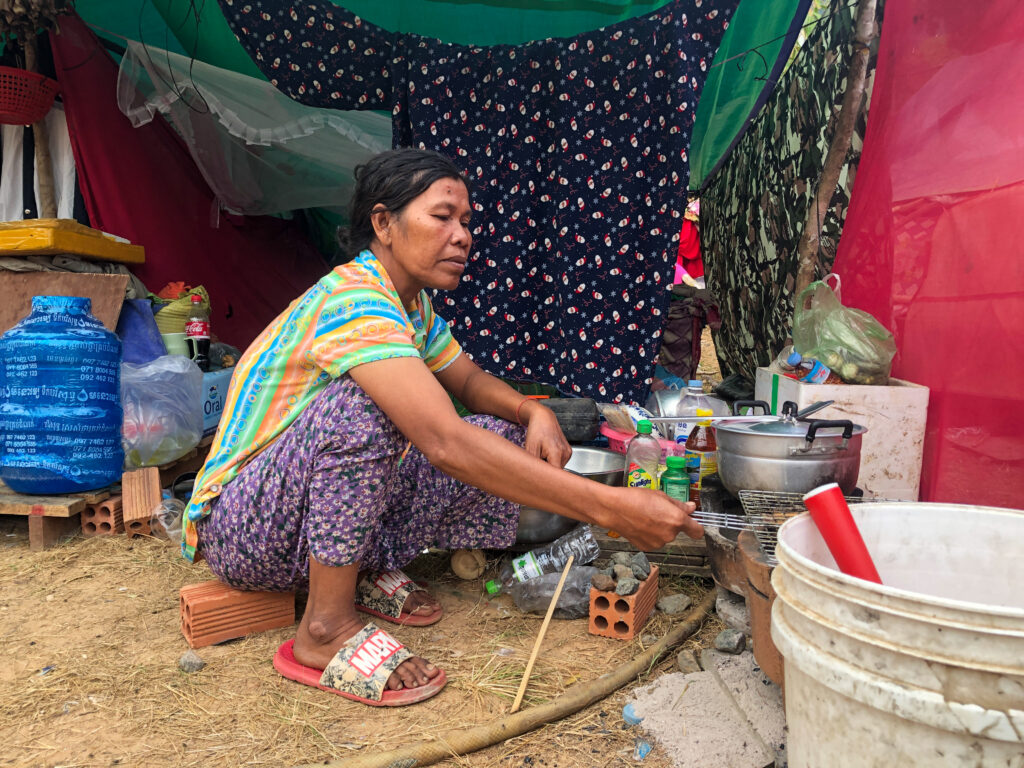
Soun Chanthy, 52, was cooking rice porridge and grilled fish at a tent near Wat Peoung Preah Kou Preah Keo Mean Rith pagoda’s dirt-road entrance. She is a widowed rice farmer from Preah Vihear’s Kantout commune, and was relying on charity and donations to get through the days.
If she could collect about US$10, she could afford to transport her brother, daughter and herself back home, she said. But she had no such prospects for now.
And if she returned home, would she be able to evacuate again?
“I’m worried there will be a border clash again, and I don’t know if I will be able [to afford] to come back here.” A neighbor had brought her there in December.
Between aid agencies, charities, corporate sponsors and the state, donors have furnished the displacement camp with toilets, a makeshift classroom, garbage collection and basic necessities.
“It’s better than it was during the first clash” in July, Soun Chanthy said.
The temporary classroom, manned by volunteer teachers, was one thing that kept Khieu Chhorvy’s family at the same pagoda for an extra week after the ceasefire before they set off on their trailer.
“My children can study here, but in my village the school is still closed,” she said. She also knew her house had been damaged by shelling. Still, the thought of being back home had excited her and the children, and she worried about the safety of her daughters in the camp.
Just outside the pagoda’s entrance, the family tractor scraped an oncoming car. The car’s driver appeared frustrated, but in the end there was no need for compensation in difficult times.
The tractor crawled slowly along the road north, which is well-paved and connects Preah Vihear city with the world-heritage and tourist site of Preah Vihear Temple, right near the border. The temple has been a major source of Thai-Cambodia tensions, with a 1962 ruling putting it under Cambodian jurisdiction but disputes breaking out into open conflict in 2008. In the latest clashes, accusations of damage to the temple have closed it off.
On Thursday, the road was mostly quiet, though military trucks and motorbikes often passed by. The five children on Khieu Chhorvy’s tractor made faces out of the back of the wagon. About halfway there, a black sedan stopped in front of the tractor, and two well-dressed youth and two monks distributed packets of chips to the family.
A little further along, the proprietor of a small roadside shop selling water and gasoline said she had also evacuated and was robbed while her house was empty. She is about 40 km from the border, but is near a Cambodian military base that was engaged in artillery exchanges, she said.
After four hours to drive 80 km, the family turned onto a dirt road that runs through their village, Sok Senchey, about 13 km from Thailand.
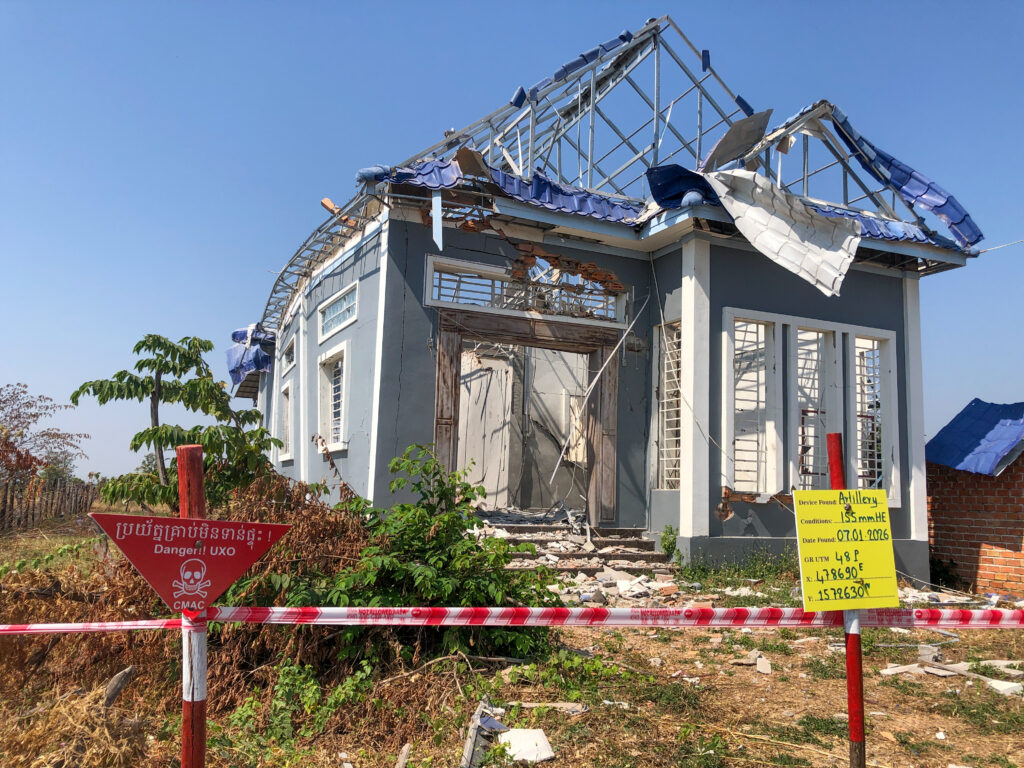
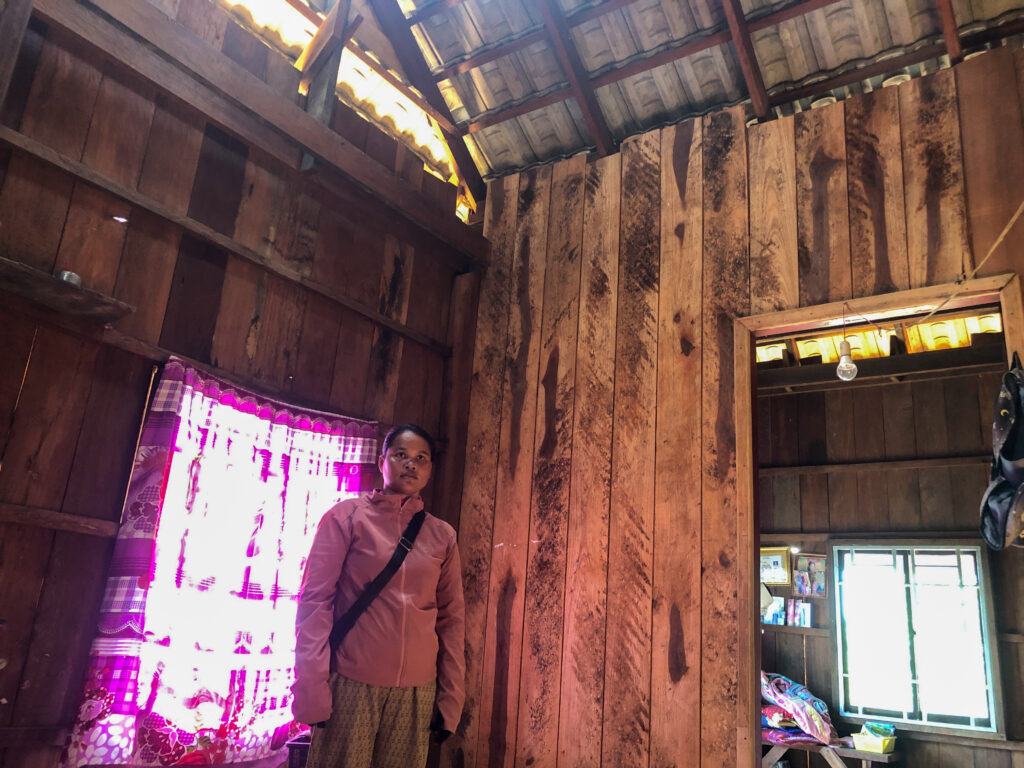
“I’m so happy that I can come back to repair my house,” Khieu Chhorvy said.
The holes in her walls were about the size of bullets. The ones in her roof were bigger, taking out a corner of her house.
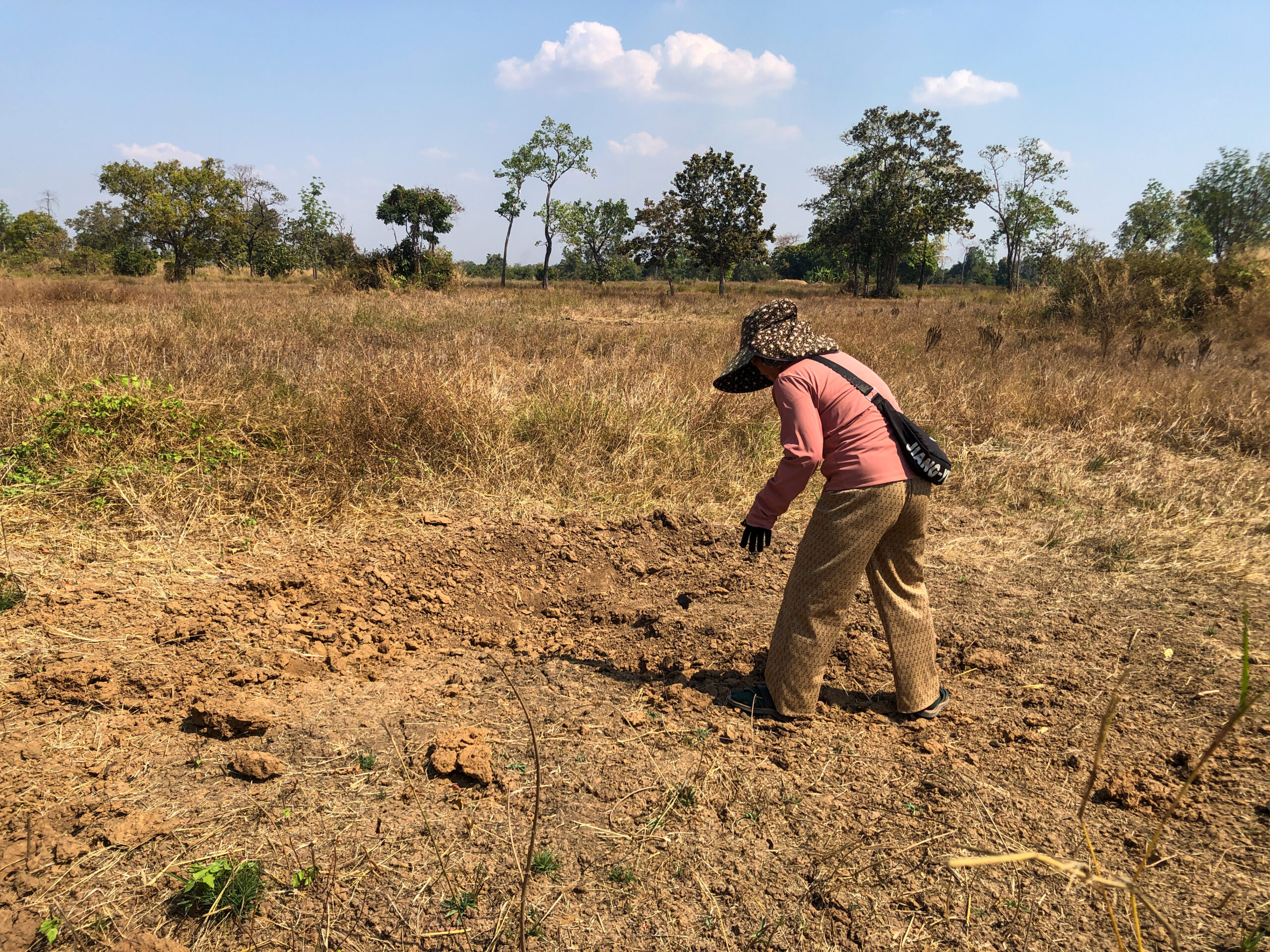
In the rice fields out back were three craters about 2 meters wide, and in a black bucket were dozens of pieces of metal shrapnel her husband had already gathered from all over the property.
But the repairs would have to wait. Khieu Chhorvy said she would sell corn at the market while her husband would work at nearby mango farms. Maybe they would have enough money after Khmer New Year in April. The family also had a $3,000 microfinance loan for the tractor, for which they hadn’t been able to make a payment last month. Luckily, no officer came to collect during their relocation. Still, they didn’t want to pay for repairs if fighting could break out again and cause more damage.
“For now I am still worried that a clash might happen again. I’m worried that I’ll have to evacuate again.” Khieu Chhorvy also worried about her children’s education. “When the school remains closed, I feel upset. They can’t catch up on the lessons. As a mother, I don’t want to see my children stop studying.”
Ultimately, however, she would be willing to evacuate again if told to do so, and simply make things work.
“Yes, I feel upset to see that my house got damaged, but I am so happy that the bomb did not drop on my house,” Khieu Chhorvy said. “When I arrive home, I feel safe and comfortable.”
This article is published as Creative Commons.