
This article was originally published on HaRDstories.
Bangkok — After ten years, the 2015 Erawan Shrine bombing, which killed 20 people in the heart of Bangkok, will soon reach a verdict. The two Uyghur defendants have been detained for over a decade in conditions United Nations experts have deemed “arbitrary and discriminatory”.
In the criminal courtroom, Yusufu Mieraili, 36, appeared frail and diminished in his pale yellow prisoner’s shirt and black trousers. A decade ago, when he was first arrested, news photographs showed the 180cm man looking healthy. Now, after ten years in detention, he looked small and worn.
Another Chinese Uyghur man Bilal Mohammed, 40, presented a similar appearance. Both men have been detained for over a decade in one of Thailand’s longest-running criminal cases.
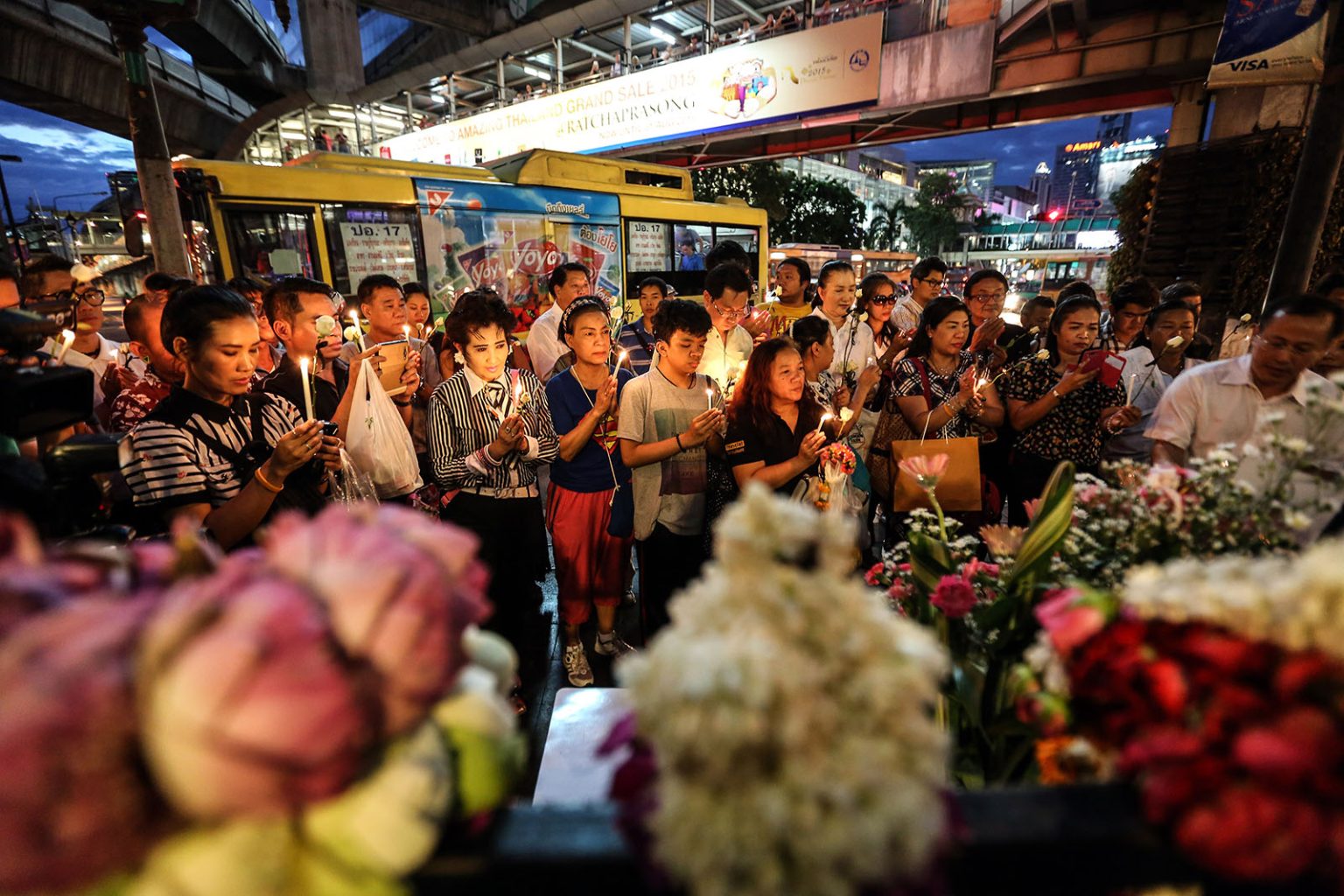
On 17 August 2015, a bomb exploded at the Erawan Shrine in Bangkok’s shopping district, killing 20 people and injuring more than 120, many of them Chinese tourists. The blast occurred during peak hours. CCTV footage captured an individual in a yellow T-shirt abandoning a rucksack shortly before the explosion.
Thai and Chinese officials have said the blast was revenge for Thailand’s forcible return of more than 100 Uyghurs to China, including a group deported a month before the bombing. Officials characterised the attack as retaliation for actions that disrupted a lucrative human trafficking network.
No victim family members attended the recent court hearings. The 20 people killed reportedly included six Thais, five Malaysians, five mainland Chinese, two Hong Kong residents, one Indonesian, and one Singaporean – among them a shrine caretaker and office workers.
The Military prosecutor indicted Mieraili and Mohammed on ten criminal charges related to the bombing. If convicted, both men could face the death penalty.
In their testimonies, Mieraili and Mohammed denied the accusations and stated that Thai authorities and individuals appearing to be Chinese had tortured them to extract confessions. Mieraili said he came to Thailand on a tourist visa hoping to resettle in Turkey to study. Mohammed said he was temporarily staying in Thailand with a false passport whilst awaiting travel to Malaysia for work.
A decade of delays
The case has progressed slowly, beset by multiple obstacles: it was initially heard in military court before being transferred to civilian court; nearly 500 prosecution witnesses were originally listed before the court agreed to reduce the number; new judges were appointed; and difficulties arose in finding trusted Uyghur interpreters to ensure fair trials for the defendants.
On 15 January 2026, Mieraili was examined at Bangkok South Criminal Court, whilst Mohammed’s examination was carried out in December 2025. The process has been delayed once again, as the scheduled date to finalise related documents on 21 January was postponed to 11 February owing to the prosecutor’s unavailability.
The verdict is expected by April.
“The investigation, prosecution, and trial of Bilal Mohammed and Yusufu Mieraili have been rife with human rights violations and have exposed some of the systemic deficiencies of Thailand’s criminal justice system,” said Teppei Ono, vice-president of the International Federation for Human Rights (FIDH), following Mohammed’s examination in December.
UN findings of arbitrary detention
Since their arrest in August 2015, both men have been detained by Thai authorities at military facilities newly set up in Bangkok before being moved to civilian facilities in 2025.
Following a review of the case submitted by human rights groups, the UN Human Rights Council Working Group on Arbitrary Detention (WGAD) concluded in August 2025 that the detention of Mieraili and Mohammed was arbitrary and discriminatory, based on their Uyghur ethnicity. Both men were arrested without a warrant and faced ill-treatment during their detention, according to the findings. The allegations were directed towards Thai and Cambodian authorities, the latter being involved in Mieraili’s arrest.
Between 2022 and 2024, both men reportedly appeared before the court in poor condition during their detention at the Thung Song Hong remand facility. On at least one occasion, they appeared in wheelchairs. According to their testimony, they were not allowed to contact relatives or spend time in the prison yard, and their health had deteriorated after they refused to eat pork provided at the facility, contrary to their Muslim faith.
“The Working Group is extremely concerned by the ongoing poor detention conditions to which Mr. Mohammed and Mr. Mieraili have been subjected during their prolonged detention,” the WGAD document stated. “The presumption of innocence is one of the fundamental principles of a fair trial.”
Rights groups said there was a pattern of persecution of Uyghurs by the Thai authorities. Between 2014 and 2023, at least five Uyghurs, including a newborn infant and a child, reportedly died in prolonged detention in Thailand.
The two defendants’ health conditions reportedly improved in 2024 following complaints from rights groups and media attention. On 3 March 2025, Mieraili and Mohammed were transferred from the Thung Song Hong temporary remand facility to Bangkok Remand Prison in Chatuchak district.