
This article was originally published on Mongabay as Creative Commons.
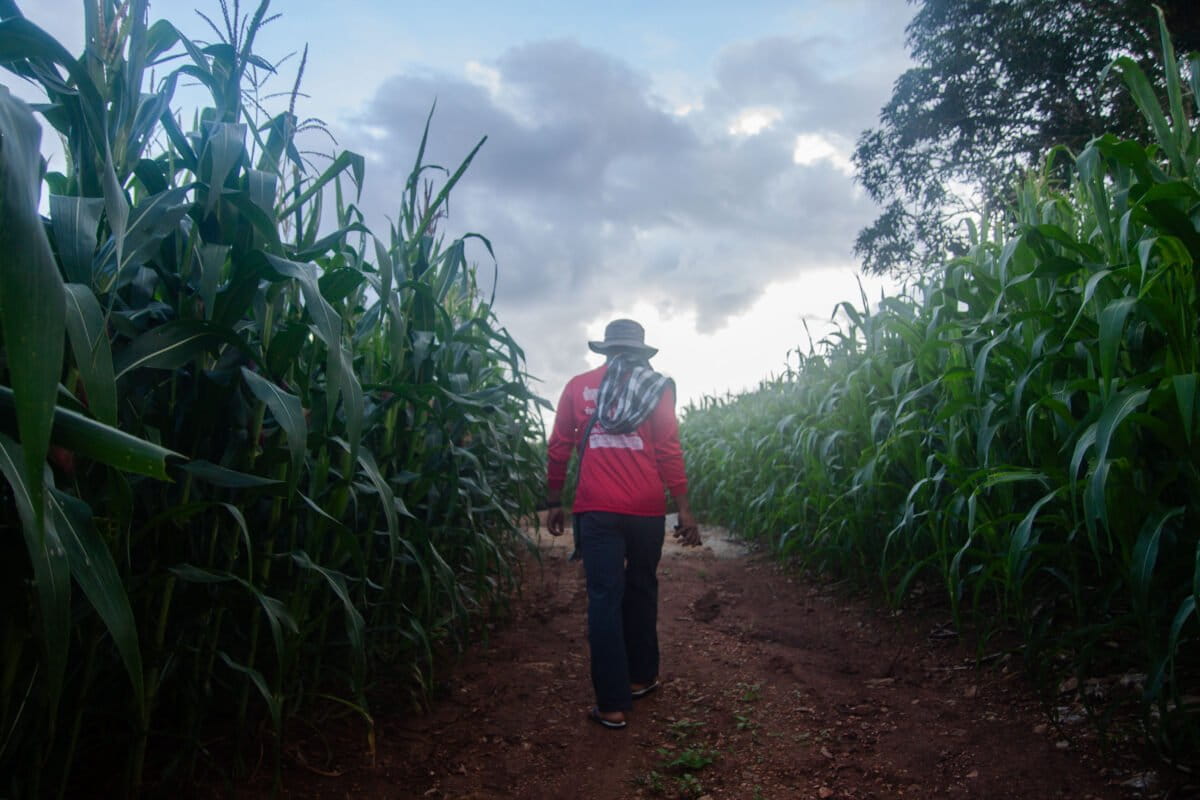
Mae Cham/Omkoi, Thailand — Rain lashed down in the northern Thai village of Nong Krating as Sawattiphon Wongkasettakon described the worsening air pollution that sweeps in through the mountains here each year.
“It didn’t used to be so bad, but in the last three years it’s become impossible to ignore,” Sawattiphon, a former deputy chief of the village, told Mongabay on the porch of his home in August. “The sky gets dark, it’s uncomfortable when we breathe. It blows in from the maize farms.”
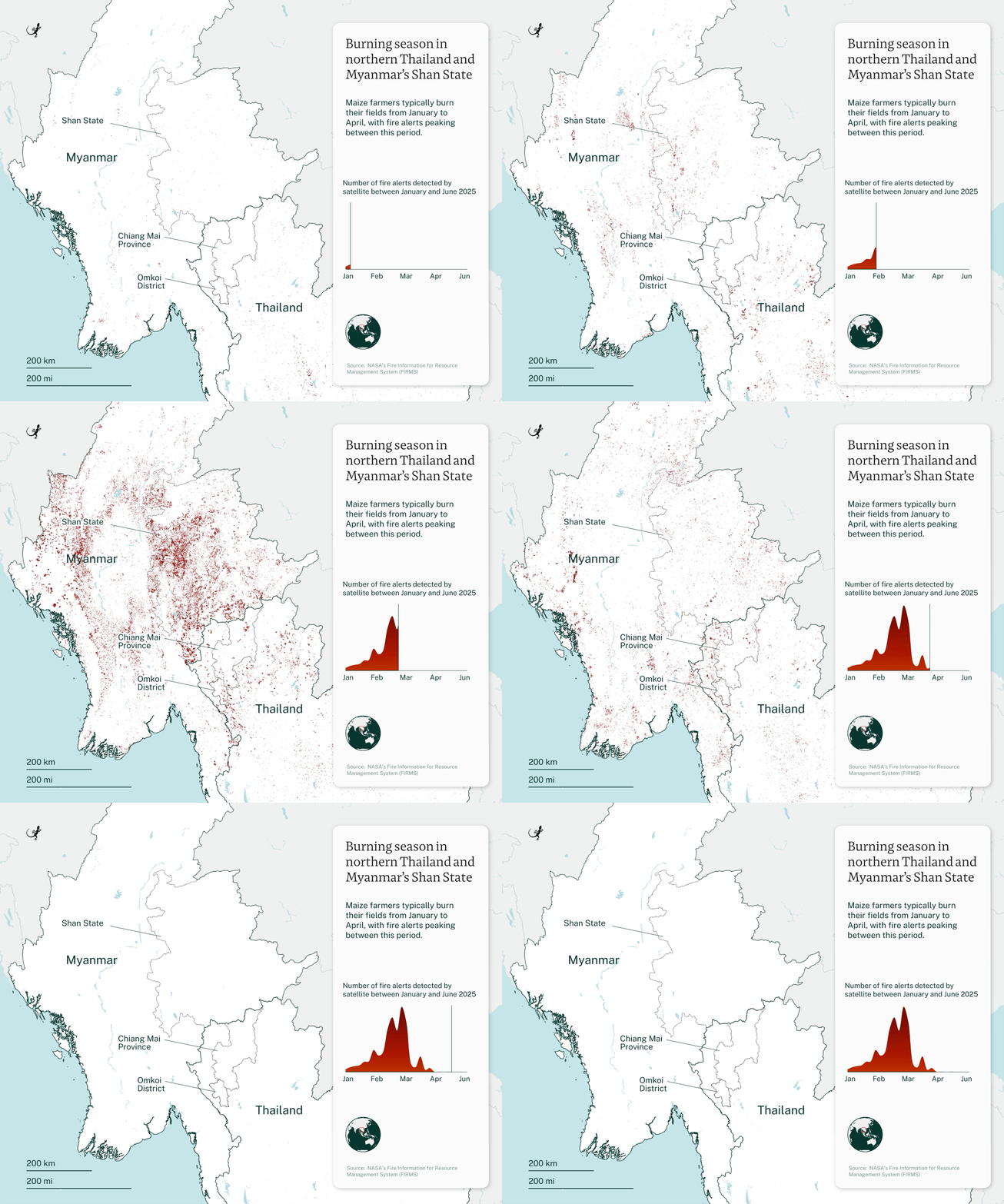
Farmers in the region straddling northern Thailand, Myanmar’s Shan state and Laos grow maize to supply Thailand’s booming animal feed industry. Every year before the planting season, they set controlled fires to clear their fields of crop stubble left over from the harvest. The result: surging air pollution that sends the region’s towns and cities shooting up the rankings of the world’s most polluted places every February-April, when the burning peaks.
To fix the problem, Thai leaders have tried everything from threatening to cut farmer subsidies and restricting where they can plant maize, to promoting alternative livelihoods and introducing microbial sprays for stubble decomposition. But nothing seems to break the cycle of seasonal haze, which still reaches levels more than 14 times higher than what’s considered safe by the World Health Organization.
In Omkoi district, which encompasses Nong Krating village in Chiang Mai province, local officials decided years ago that enough was enough. In 2017, fearing the loss of the forests in which residents forage for herbs and vegetables, along with deteriorating air quality and further restrictions on maize farming, district officials took the drastic step of banning the cultivation of maize entirely.
“People in neighboring districts were planting too much maize, clearing forest, creating bald hills and burning their fields after the harvest,” Sawattiphon said, adding that the measure had broad support. “We didn’t want our farmers to destroy our forests — we wanted to protect our natural resources and prevent the spread of bald hills you see across Chiang Mai.”
Maize is a leading crop in northern Thailand, grown largely in response to the mountainous topography, scarce natural water supplies and demand from agro-industrial giants like Thailand’s Charoen Pokphand Group and Betagro, which use maize for animal feed. Thailand has become a leading exporter of pork and poultry products, and its own meat consumption is growing too, creating more demand for maize.
After harvesting maize, usually from October through December, farmers set controlled fires to clear their fields of leftover stubble in time for planting a new crop ahead of the next rainy season. The practice leaves a charred, scarred, barren moonscape across the horizon, until the next planting cycle, and fills the air with particulate matter less than 2.5 micrometers in diameter, known as PM2.5, that can penetrate deep into the lungs and cause severe health problems.
Agricultural burning in northern Thailand is just one cause of the country’s air pollution problem, which has reached a crisis point nationally. While farmers are estimated to be responsible for roughly one-third of PM2.5 pollution — that rises to 51% in Chiang Mai province during the March-April burning season, according to one 2024 study — the industrial, energy and transport sectors all release various pollutants, from PM2.5 to sulfur dioxide and nitrogen dioxide.
In September 2025, Bangkok and four northern provinces were declared pollution control zones, granting authorities emergency powers when pollution peaks. But northern Thai maize farmers, many of them trapped in debt and operating at slim or even negative margins, say they see no way around burning their fields each year, which remains cheaper than any alternative method offered so far for clearing their land.
“Mostly, farmers burn their fields to save money,” Sawattiphon said.
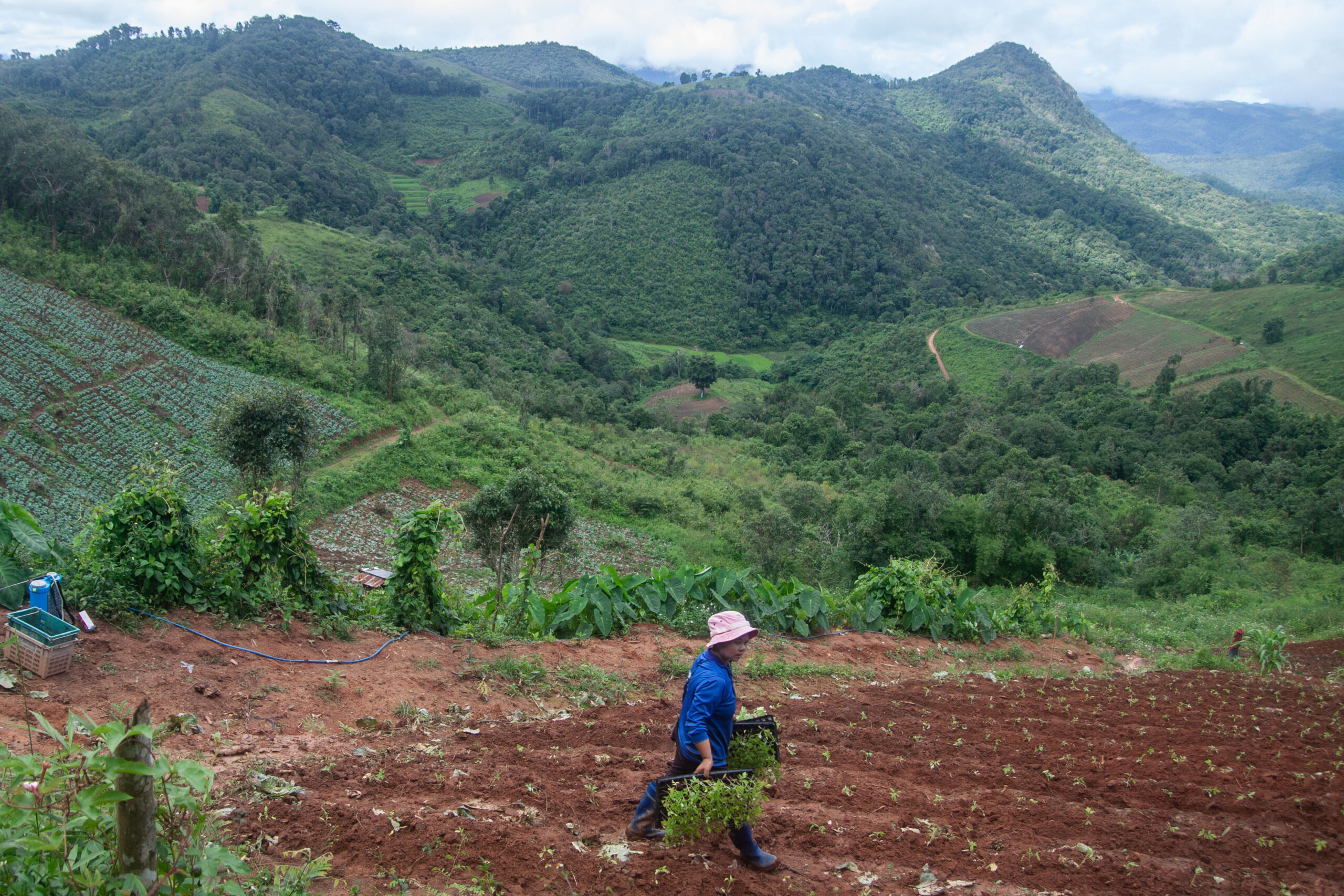
As the air pollution issue began to garner more attention and new restrictions were applied to burning, Omkoi district set itself apart from the rest of Chiang Mai province by eschewing maize in favor of seasonally rotating crops across farm plots. The crops, ranging from tomatoes and pumpkins to cabbage, green beans and rice, are rotated after each harvest with some fields left fallow to allow the soil to recover nutrients naturally. This uses significantly less land than maize farming in other districts. Farmers complement their agricultural yields by foraging for wild vegetables and herbs, even as other communities’ forests are felled to make way for maize farms.
Despite these efforts, the problem of air pollution — and the criticism for it — are things Omkoi’s residents have had to live with. For many farmers, the stigma they face for farming maize is unfair; the burning will continue until a realistic solution is found, but for now, most feel there’s no choice but to burn their fields.
“Society is blaming us for the air quality problem, even though we control our fires. They blame us for the forest fires, even though our livelihoods are tied to the forests — do they think we would destroy our own rice pot?” Sawattiphon said, noting that they still breathe the same smoky air as everyone else in the province.

Forests, rivers and clean air lost to maize
It’s a different story in Mae Cham district, some 130 kilometers (80 miles) north of Omkoi in Chiang Mai province, where 34,295 hectares (84,745 acres) of forest were cleared for maize across the Kok and Kham river basins from 2014-2024, according to a Greenpeace report.
Repeatedly planting the same crop in the same field drains the soil of nutrients. So when Thailand’s rainy season arrives, the weakened topsoil, along with the agricultural chemicals farmers have come to rely on, is washed away downslope, creating toxic mudslides that end up in local waterways.
“The river used to be full of fish and aquatic life, but now it’s full of sediment runoff from the mountains,” Somkiat Meetham, an agricultural expert and president of the Orphya Institute, an NGO in Mae Cham district, told Mongabay. “The freshwater biodiversity is gone.”
Maize-driven forest loss has exacerbated flooding and landslides, the Greenpeace report says. In August, Typhoon Kajiki inundated 14 northern Thai provinces, resulting in landslides that killed at least 10 people and affected nearly 56,700 more. As of Oct. 6, at least 12 people had lost their lives to resurgent flooding across 16 provinces, affecting more than 100,000 households.
Watcharakon Jatoenpun, a maize farmer in Mae Cham district who goes by the nickname Sprite, said he remembers seeing the sky full of smoke as far back as 20 years ago, but initially he didn’t associate it with farming. Now the connection is inescapable.
“My head doesn’t feel healthy, I can feel the smoke in my eyes, in my nose — it gives me a headache,” Sprite told Mongabay at his field. “You can feel it throughout your body when you breathe.”
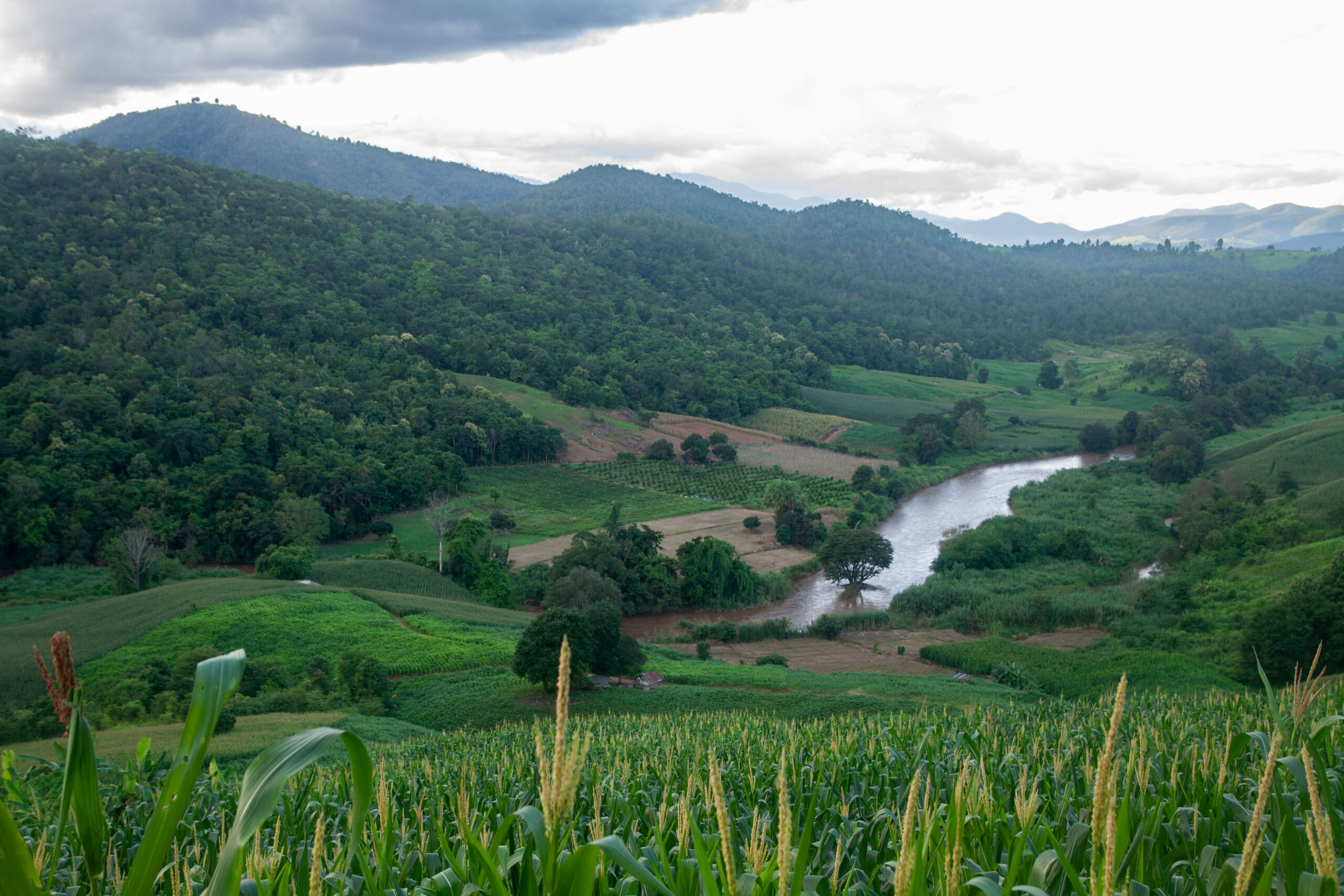
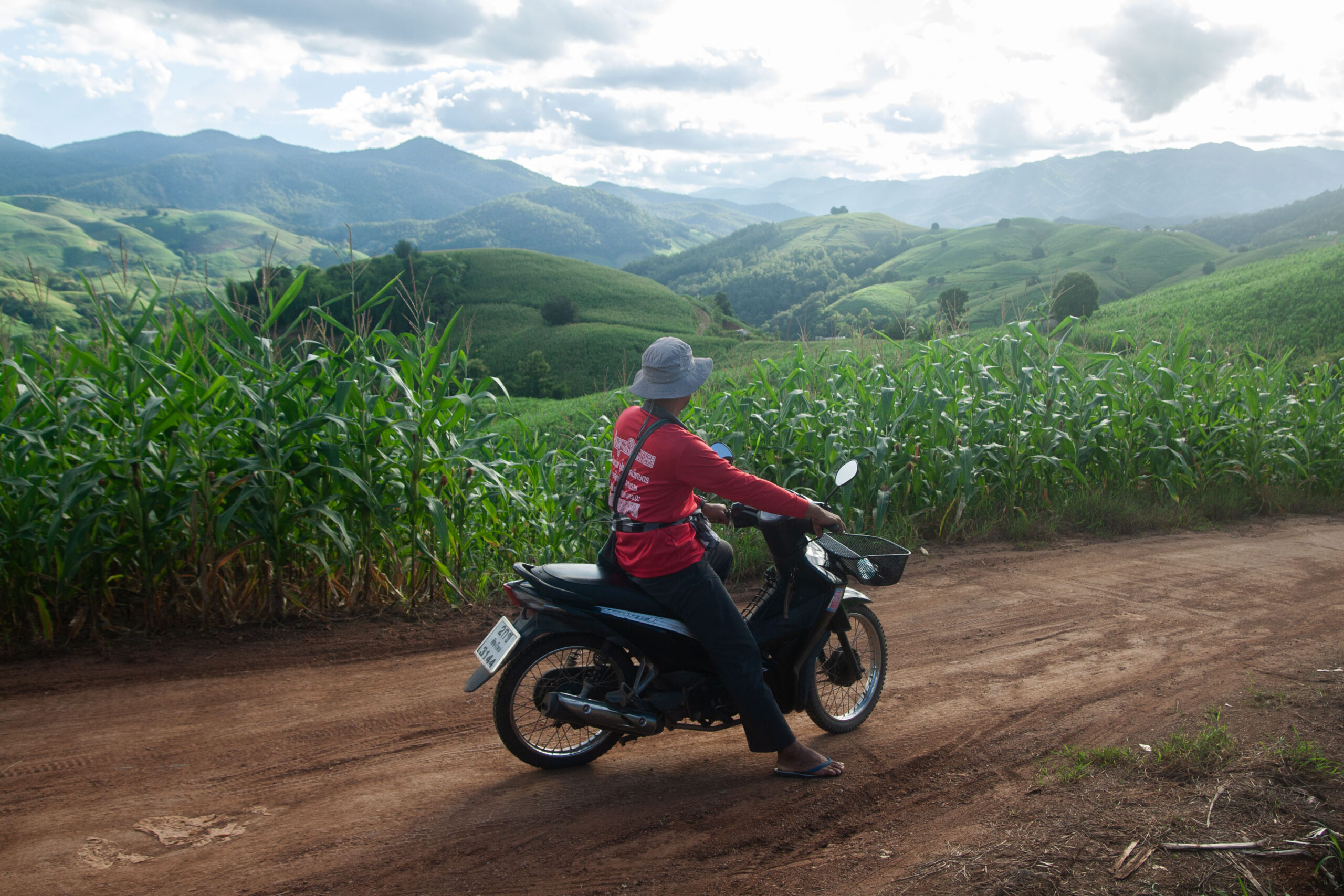
From the mountainous peaks of Sprite’s farm, the extent of maize cultivation across the district is visible as the hills appear carpeted with greenery. Sprite joked that while it may look beautiful now, during the August rainy season, at harvest time, the mountains will be bare and the sky will be black with smoke.
For farmers, whose burns happen just once a year, there’s a level of hypocrisy among the city dwellers who blame them for sullying the air while they themselves drive cars daily, work in factories and consume products that contribute to the problem.
“I feel like those people who blame us for air pollution are the ones who eat the meat and the eggs that come from animals fed on our maize,” Sprite said, though he acknowledged that some maize farmers in Mae Cham had continued to burn their fields without care. “If I could tell the public anything, I’d say if you stop consuming, I’ll stop producing.”
Breaking the cycle of maize and haze
In 2013, Thailand began implementing zero-burn periods, with farmers banned from setting fire to their fields during certain months. Similarly, a team of professors at Chiang Mai University have developed an app to track fires. But best efforts so far have failed to make significant changes to agricultural practices that drive the seasonal pollution spikes. World Bank data show that PM2.5 pollution exposure fell consistently in Thailand between 1990 and 2011, only to climb again from 2017 to 2020. But air quality remains stubbornly dangerous throughout burning season.
Solutions that take the needs of farmers into account aren’t being explored, according to Somkiat, the agricultural expert.
“Definitely, the soil quality degrades over years and so the yields tend to reduce year on year due to repeated farming, which then increases the reliance on chemical fertilizers and pesticides, which in turn raises the cost of farming maize,” said Somkiat, who explained that five years ago, every rai (0.16 hectares, or 0.4 acres) farmed used to produce 1,000 kilograms (2,200 pounds) of maize, but now farmers are reporting between 750 and 850 kg (1,650 and 1,870 lbs) harvested per rai.
Between declining yields and rising costs, maize farmers in Chiang Mai must often pinch pennies to survive, Somkiat said, driving them to burn their fields rather than hire laborers or rent machinery to clear stubble.
“Farmers end up locked into debt,” he said. “This cycle repeats itself every year because farmers don’t make enough profits to begin the next year’s harvest without taking out another loan. It becomes a vicious cycle.”
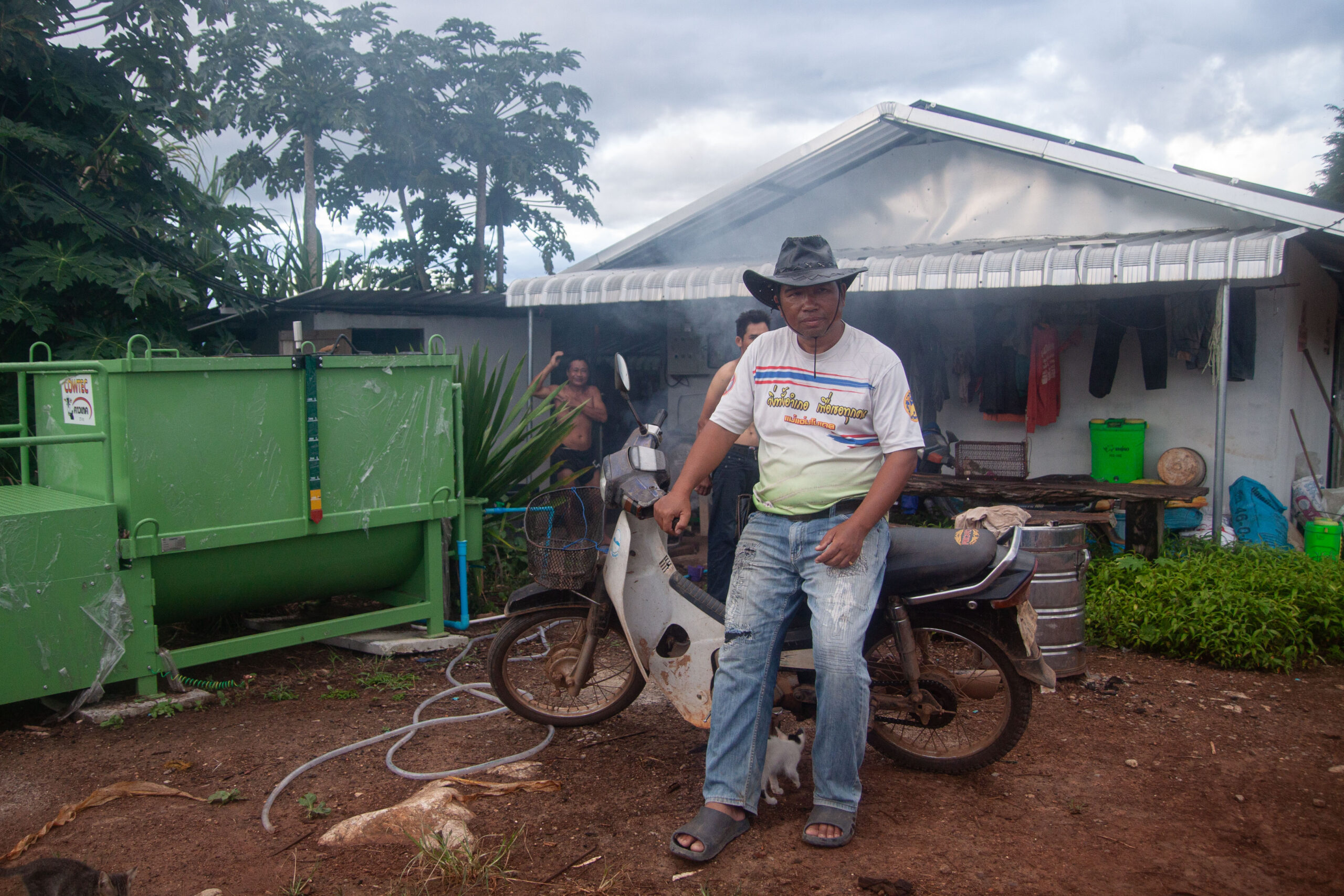
According to Somkiat, 2023 data produced by Chiang Mai provincial authorities suggested that of the 42,627 bank accounts registered in Mae Cham district, 20,878 had less than 1,000 baht (around $31) in savings. Another 15,341 accounts had a balance between 10,000 and 29,999 baht ($310 and $924), while just 366 accounts across the whole district had more than 100,000 baht ($3,100) in savings.
Almost everyone in Mae Cham district farms, Somkiat said, but the number of those cultivating maize fluctuates year on year depending on maize prices and the availability of loans from institutions like the government-controlled Bank for Agriculture and Agricultural Cooperatives.
Proposed solutions, Somkiat added, have failed to account for Mae Cham’s geography and the limited options available to most of its residents. Burning bans have reduced farmers’ contribution to air pollution, but not stamped it out.
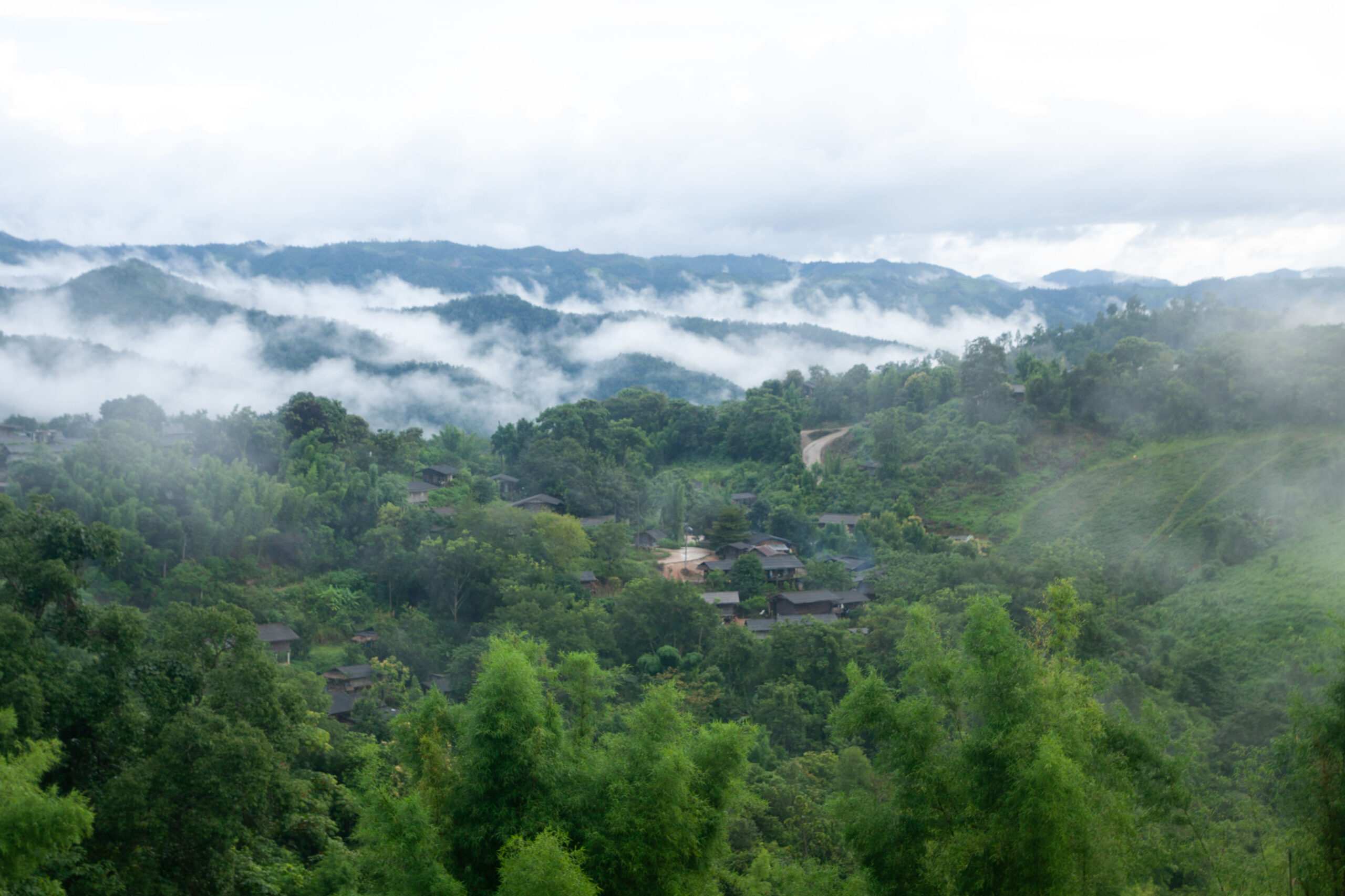
Even when local officials opt to address the problem themselves, as with the Omkoi maize farming ban, other policies and industries can threaten to undermine the gains made. That’s what’s happening in the ethnically Karen village of Kabeudin, also in Omkoi, where a company is seeking to open a lignite mine that would consume much of the village.
Corn or coal
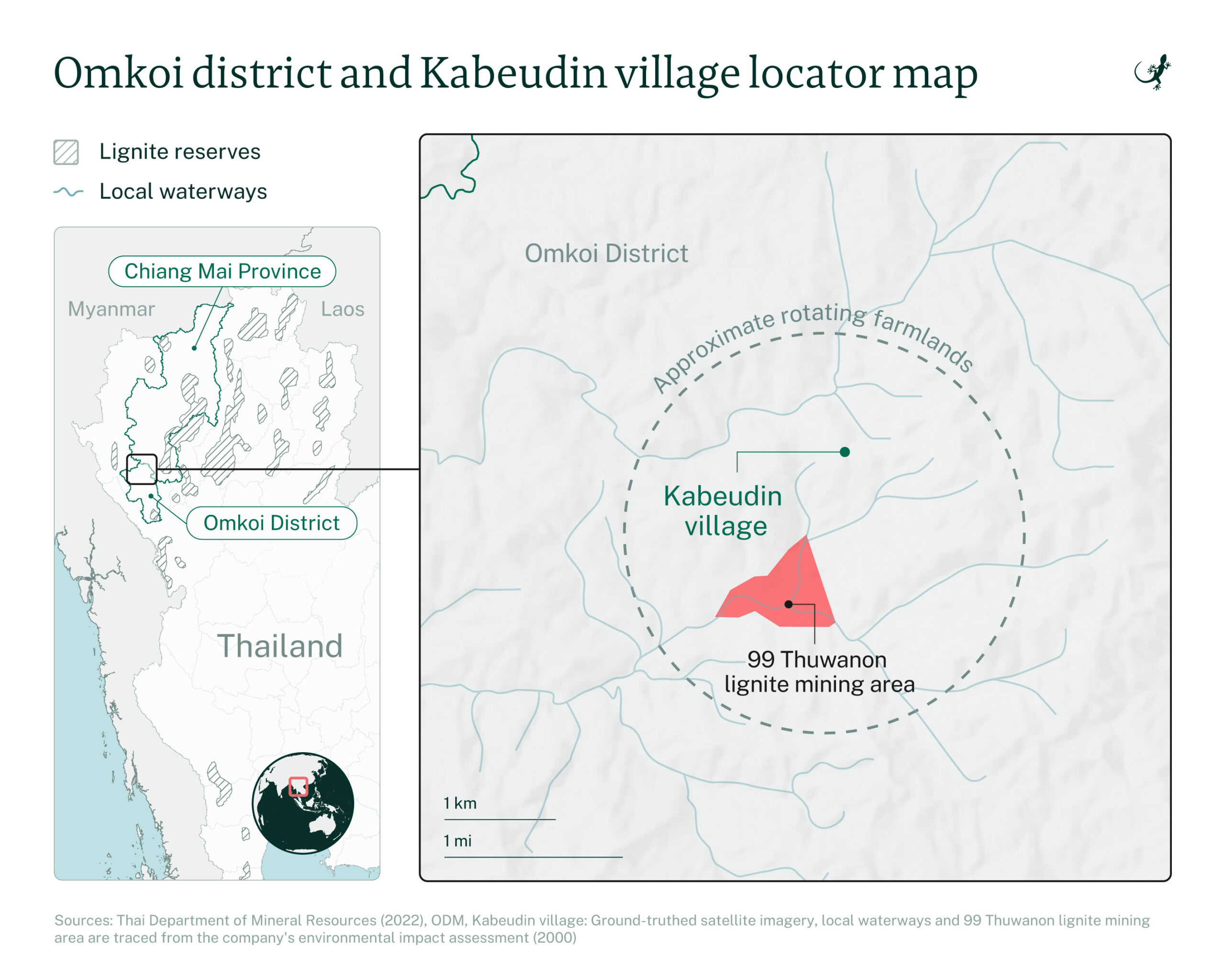
The company, 99 Thuwanon, was established in 1999 and subsequently requested a roughly 45-hectare (111-acre) mining concession from Thailand’s Office of Natural Resources and Environmental Policy and Planning (ONEP). The site overlapped with more than 40 plots of farmland within Kabeudin village.
Lignite, a low-grade form of coal, is the key fuel for the Mae Moh power plant in neighboring Lampang province, where residents have reported an array of health complications due to the mining and burning of lignite.
99 Thuwanon eventually received its concession, but Kabeudin residents didn’t find out until 2019. They immediately protested the company’s plans, with local resident Pornchita Fapathanphai, who goes by the nickname Duang, at the forefront of these efforts.
“We mapped every rice field, every livestock grazing field, every home, the forests, and then we overlaid the various impacts that the mine would have,” Duang, now 25, told Mongabay in an interview. “It would affect seven villages, either through acid mine drainage in the watershed or through dust associated with the mining and transportation of coal.”
In September 2022, the Chiang Mai Administrative Court issued a temporary protection order preventing 99 Thuwanon from opening its mine — at least until ONEP could be satisfied that Kabeudin residents had approved the project.
As of September 2025, the court had yet to reach a final verdict, and the temporary protection order still stood, leaving the lignite lodged firmly under the rice fields.
“We felt like we won, but we still worry because we know the coal is still here and the company has persisted, so we have to as well,” Duang said.
Mongabay was unable to find any publicly listed contact details for 99 Thuwanon. According to Duang, the company has lobbied local officials and tried to meet with villagers to get them to accept the project, but Mongabay was unable to contact the company to verify these claims.
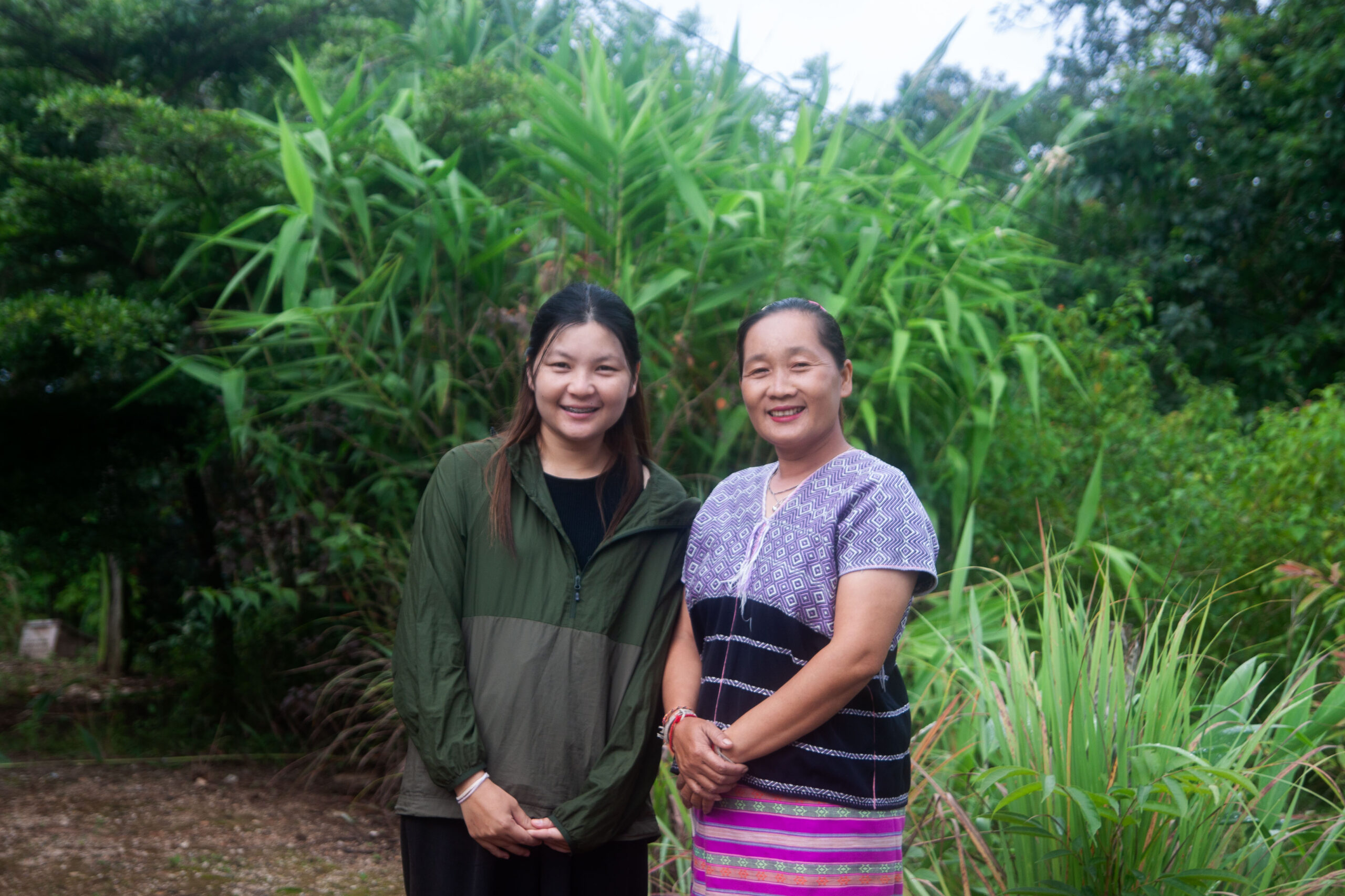
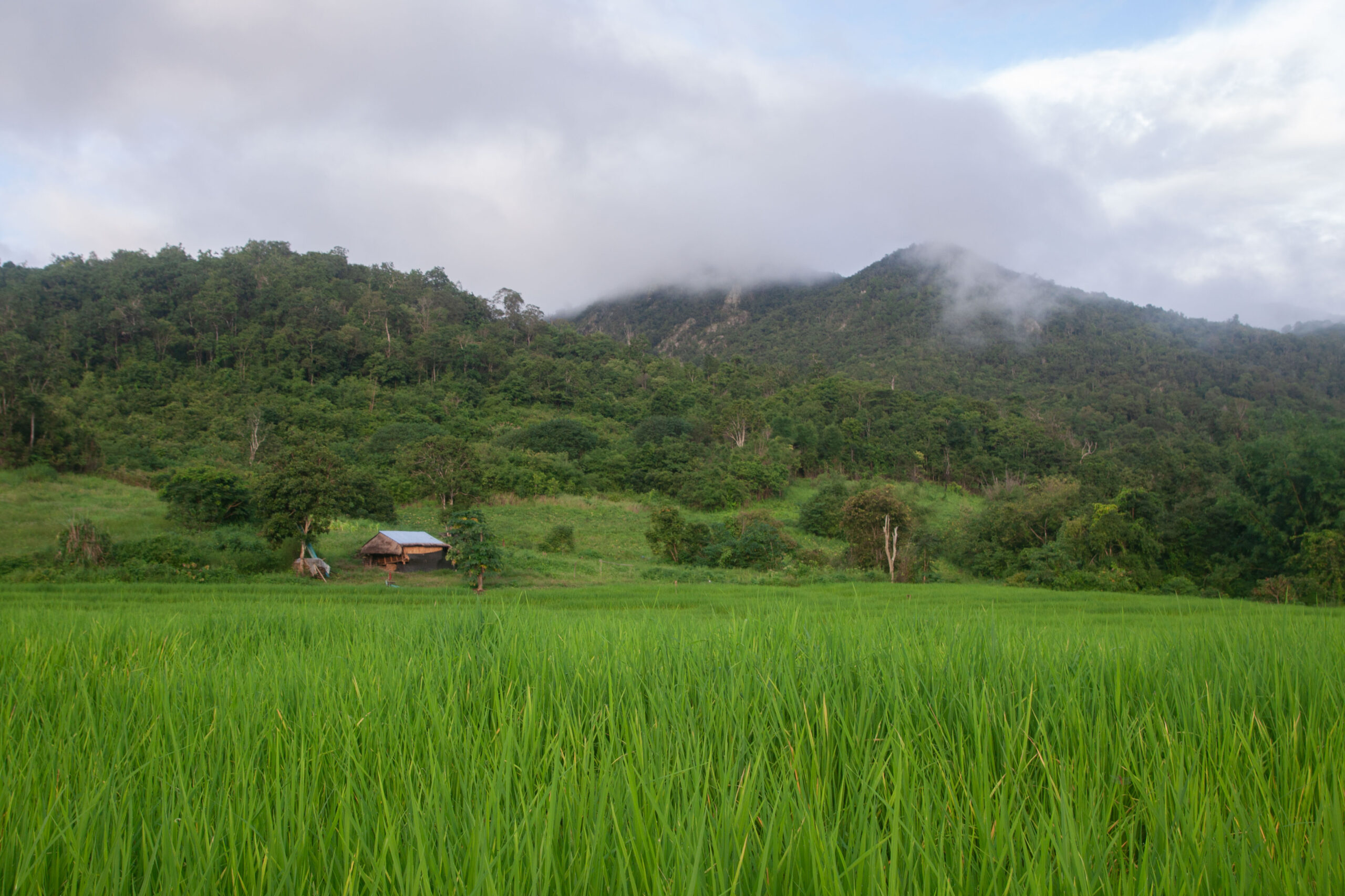
Kabeudin’s coal stays underground, for now
Farmers making good-faith efforts to clamp down on burning like those in Omkoi district should be supported rather than confronted with a coal project that would consume their fields while creating even more air pollution, said Siwatt Pongpiachan, director of the National Institute of Development Administration’s Center for Research and Development of Disaster Prevention and Management.
“The extension of coal plants under the [power development plan] underscores a policy contradiction: restrictions on maize expansion in areas like Omkoi sit uneasily alongside new lignite projects that will dwarf the agricultural emissions [farmers] seek to curb,” he said. “This reflects fragmented governance where different agencies operate with conflicting agendas.”
99 Thuwanon’s environmental impact assessment, seen by Mongabay, estimates the concession holds 700,000 metric tons of lignite reserves — tiny in comparison with the Mae Moh mine, which supplied the power plant there with 12.7 million metric tons in 2024 alone. The same assessment notes that up to 380,000 liters (100,000 gallons) of water would be needed each day to wash coal minerals, presenting a contamination risk to not just Kabeudin but at least five other villages downstream. On top of this, the mining concession would overlap significantly with the community’s spirit forest, but the company has persisted even after the court’s injunction.
One of the company’s directors, Srisatporn Yodpayung, consistently comments on a Facebook page that Duang uses to promote Kabeudin, and while Duang said the comments don’t amount to harassment or threats, she thinks they’re a way for the company to let the community know that it’s still watching. Mongabay was unable to find publicly listed contact details for Srisatporn or reach them via Facebook.
Kabeudin’s resistance to the lignite mine hardened after residents met with community activists in Mae Moh district who had been sickened by exposure to chemicals released by the coal plant there.
Duangjai Wongsathong, a Kabeudin farmer who joined the delegation to Mae Moh, said hearing about the community’s experience showed her what was possible in terms of how they could win and what was at stake if they lost. But she said she left wondering why the government was allowing such issues to fester in the first place.
“I think the Thai government needs to stop mining companies from operating like this,” she said. “Our village provides us with everything we need — why dig here?”
She said she was proud Kabeudin had stopped farming maize and burning land. Still, she said, “Every year, we suffer other people’s pollution in our village.”
Citation:
Chansuebsri, S., Kolar, P., Kraisitnitikul, P., Kantarawilawan, N., Yabueng, N., Wiriya, W., … Chantara, S. (2024). Chemical composition and origins of PM2.5 in Chiang Mai (Thailand) by integrated source apportionment and potential source areas. Atmospheric Environment, 327, 120517. doi:10.1016/j.atmosenv.2024.120517